
Curators of Human Civilization’s Journey
TRAVEL BEYOND DESTINATIONS


Masters of Civilization Travel Routes | Educational Journeys Worldwide
Journeys Through the Minds That Shaped Humanity
by Christone Holidays
Across continents and centuries, a few rare minds altered how humanity thinks, creates, believes, and dreams. Through carefully crafted cultural journeys, Christone Holidays invites you to walk their paths — not as a tourist, but as a seeker of meaning.
Travel the paths of great minds—Masters of Civilization routes across history, culture & knowledge with immersive educational journeys worldwide.

Masters of Civilization is a signature Christone Holidays experience series that invites travelers to walk through the lives, ideas, and landscapes of the world’s greatest minds — where art, history, philosophy, and travel merge into deep cultural awakening.
| Entering a global museum of human genius.
Civilization advances not through empires, but through minds.
🏛 Masters of Civilization
Global Cultural Portals
🇮🇹 Renaissance Italy
Leonardo da Vinci
The Mind of the Renaissance
Science · Curiosity · Observation · Harmony

🇬🇷 Ancient Greece
Socrates
The Father of Questioning
Wisdom · Ethics · Inquiry · Moral Courage

🇬🇷 Ancient Greece
Aristotle
The Architect of Knowledge
-
Logic. Biology .Political science .Ethics . Physics
-
Metaphysics . Literary criticism

🇮🇹 Renaissance Italy
Michelangelo
The Soul of the Renaissance
Faith · Struggle · Divine Power · Heroic Form

🇬🇷 Ancient Greece
Plato
The Architect of Ideal Thought
Philosophy · Truth · Higher Reality

🏛 THE SACRED TRINITY OF WESTERN THOUGHT
Socrates → Plato → Aristotle
Socrates – The Question
He taught humanity how to think.
↓
Plato – The Vision
He taught humanity what to seek.
↓
Aristotle – The Structure
He taught humanity how to understand reality itself.
↓
Modern Civilization
Science · Ethics · Politics · Education · Logic · Medicine · Law
How Thought Became Civilization
🏛 Masters of Civilization
Global Cultural Portals
The Language of Nature
Mathematics · Patterns · Divine Proportion
🇮🇹 Medieval Italy
Leonardo Fibonacci
The Language of Nature
Mathematics · Patterns · Divine Proportion

🇮🇹 Italy
Galileo Galilei
The Man Who Gave Eyes to the Universe
Telescope, moon, stars, Renaissance sky

🇩🇪 Germany
Albert Einstein
The Mind That Bent Time
Relativity · Cosmos · Space · Imagination

🇬🇧 England
William Shakespeare
The Voice of Human Emotion
Love · Power · Jealousy · Tragedy · Humanity

🇬🇧 U.K – England
Isaac Newton
The Lawgiver of Nature
-
Classical geometry
-
Light prism
-
Motion diagrams
-
Enlightenment-era England

-
Galileo asks: What is really out there?
-
Newton answers: How does it work?
-
Einstein asks again: What is reality made of?
This is not just history —
it is the evolution of human understanding.
🌠 Galileo
-
Telescope
-
Moon phases
-
Early star charts
-
Renaissance night skies
🍎 Newton
-
Classical geometry
-
Light prism
-
Motion diagrams
-
Enlightenment-era England
🌌 Einstein
-
Spacetime
-
Relativity
-
Cosmic curvature
-
Modern physics
🏛 Masters of Civilization
Global Cultural Portals
🇪🇸 Spain
Pablo Picasso
The Fractured Mind of Modernity
Cubism · Rebellion · Shattered Reality

🇹🇷 Turkey / Persia
The Poet of Divine Love
Spiritual Ecstasy · Mysticism · Unity

🇳🇱 Netherlands
Rembrandt
The Light of Humanity
Shadow · Empathy · Emotional Truth

🇫🇷 France
Claude Monet
The Painter of Light
Impression · Atmosphere · Fleeting Beauty

🇯🇵 Japan
Hokusai
The Poet of Nature
Impermanence · Waves · Mountains · Silence

🇨🇳 China
Confucius
The Moral Architect of Society
Ethics · Social Harmony · Duty · Respect

🇦🇹 Austria
Wolfgang Amadeus Mozart – The Sound of Genius
Music · Emotion · Divine Harmony

🇪🇸 Spain
Salvador Dalí
The Architect of Dreams
Surrealism · Subconscious · Illusion

🇮🇳 / 🇳🇵 India – Nepal
The Path of Awakening
Compassion · Mindfulness · Liberation

🇮🇹 Italy
Dante Alighieri
Dante Alighieri – The Poet of Heaven & Hell

🇫🇷 France
Auguste Rodin
The Sculptor of Emotion
Movement · Passion · Tension in Stone

🇫🇷 Paris
The Da Vinci Code Cultural Trail – Secrets & Symbols of Paris
The Madness of Beauty
Passion · Color · Obsession

🇮🇷 Persia
Omar Khayyam
The Philosopher of Time & Wine
Astronomy · Poetry · Mathematics · Existential Thought

🇷🇺 Russia
Fyodor Dostoevsky
The Depth of Human Psychology
Faith · Suffering · Redemption · Inner Conflict

Masters of Civilization
Where Genius Shapes the World
A global journey into the minds, monuments, philosophies, and sacred architectures that defined human history.
Civilizations are not built by chance. They are carved by thinkers, sculpted by artists, shaped by architects, and illuminated by spiritual visionaries. Masters of Civilization is Christone Holidays’ most ambitious intellectual travel series — designed for seekers, students, architects, artists, historians, and cultural explorers.
Each journey becomes a living classroom where history, art, sacred geometry, philosophy, and civilization converge.
What is Masters of Civilization?
A Global Intellectual & Cultural Exploration Platform

Masters of Civilization is a carefully curated collection of heritage journeys, study tours, and immersive experiences that connect travelers directly with the foundational ideas, masterpieces, and sacred knowledge systems of human civilization.
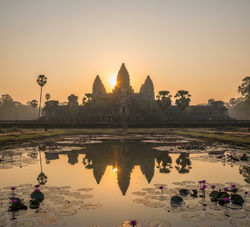
From Renaissance Florence to Ancient Egypt, from Jerusalem’s spiritual geometry to Angkor’s cosmic temples — this series traces the deep patterns that shaped humanity’s greatest achievements.
This is travel for thinkers. For dreamers. For creators. For students of civilization.
Core Themes & Pillars
Sacred Geometry & Cosmic Architecture
Understanding divine proportions, cosmic alignments, temple mathematics, and sacred spatial intelligence.
Art, Sculpture & Human Expression
Following the lineage of genius — Michelangelo, Leonardo, Raphael, Bernini, Rodin, Da Vinci, and beyond.
Philosophy, Theology & Civilizational Thought
Exploring how belief systems, metaphysics, and philosophy structured societies.
Empire, Power & Cultural Identity
Rome, Greece, Egypt, Persia, Byzantium, Ottoman, Mughal, and European monarchies.
Pilgrimage & Spiritual Civilizations
Jerusalem, Vatican, Mecca (external studies), Varanasi, Bodh Gaya, Angkor, Lumbini.
Signature Journey Series
1. Sacred Geometry Pilgrimage – Global
Jerusalem – Vatican – Angkor – Egypt – Machu Picchu – Chartres – Florence
A world-first intellectual pilgrimage decoding sacred proportions, cosmic alignments, and divine architecture across civilizations.
2. Renaissance Masters – Italy & France
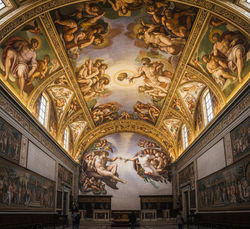
Florence – Rome – Vatican – Milan – Paris – Louvre – Sistine Chapel
Walking inside the minds of Leonardo, Michelangelo, Raphael, Donatello, Bernini, and Caravaggio.
3. Holy Land: Birth of Monotheism
Israel – Palestine – Jordan – Egypt Extension
Tracing the origins of Abrahamic faith, prophetic traditions, sacred landscapes, and spiritual geometry.
👉 Explore Holy Land Journey
4. Ancient Egypt & Lost Knowledge Systems
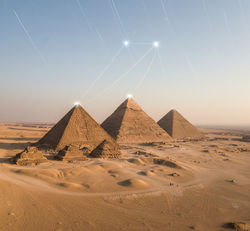
Giza – Luxor – Karnak – Aswan – Abydos
Understanding cosmic architecture, stellar alignments, pyramidal energy, and ancient engineering genius.
👉 Explore Ancient Egypt Journey
5. Classical Greece & Roman Empire
Athens – Delphi – Rome – Pompeii – Naples – Sicily
Philosophy, democracy, empire, law, and monumental architecture.
For Whom is This Designed?
Who Should Experience Masters of Civilization?
• Architecture & Design Students
• Art History & Fine Arts Students
• Theology & Philosophy Scholars
• Heritage Researchers
• Film & Creative Professionals
• Cultural Explorers
• Premium Experience Seekers
• Schools, Colleges & Universities
Educational & Institutional Programs
Academic & Institutional Study Tours
Christone Holidays curates highly specialized educational journeys for:
• Architecture Schools
• Fine Arts Institutions
• History & Archaeology Departments
• Theology Colleges
• International Universities
Programs include: • Expert academic guides
• Site-based lectures
• Sketching & documentation sessions
• Museum-based learning modules
• Cultural immersion workshops
Why Masters of Civilization by Christone Holidays?
Civilization-First Philosophy
We design journeys around cultural intelligence — not sightseeing.
Scholarly Depth + Luxury Comfort
Intellectual depth blended with seamless premium travel.
Curated Global Network
Historians, archaeologists, theologians, art experts, architects.
Narrative-Led Experiences
Each journey is a story — not an itinerary.
 |  |
|---|---|
 |  |
 |  |
Christone Holidays

🏛 Masters of Civilization
The Universal Genius of the Renaissance
Leonardo da Vinci – The Universal Genius of the Renaissance | Masters of Civilization – Christone Holidays
Explore Leonardo da Vinci’s art, science, inventions, and legacy through immersive storytelling, visuals, and cultural travel experiences by Christone Holidays.
Leonardo da Vinci
The Universal Genius of the Renaissance

Artist · Scientist · Inventor · Visionary · Philosopher


Christone Holidays
The Man Who Redefined Human Possibility
Leonardo da Vinci was not merely a painter — he was the very definition of human potential. Living during the height of the Italian Renaissance, Leonardo united art, science, engineering, anatomy, philosophy, and imagination into a single extraordinary mind. His curiosity knew no boundaries, and his genius reshaped how humanity understands creativity, knowledge, and invention.
From the enigmatic smile of the Mona Lisa to visionary flying machines centuries ahead of their time, Leonardo’s legacy transcends history. He represents the eternal human desire to understand the world — and ourselves — more deeply.
At Christone Holidays, Leonardo’s journey becomes more than a story. It becomes a pathway to immersive cultural travel, where travelers step inside the very streets, studios, and inspirations that shaped the greatest mind of the Renaissance.

Masterpieces That Changed Civilization
🖼 Mona Lisa – The Mystery of Humanity
Christone Holidays – Masters of Civilization

The Mona Lisa transcends portraiture. Her subtle smile, haunting gaze, and atmospheric depth create an emotional dialogue that continues to intrigue humanity across centuries. Leonardo infused psychology, science, and artistic mastery into a single expression — transforming a painting into the most studied and celebrated image in human history.
Christone Holidays
🖼 The Last Supper – The Divine Moment
Leonardo da Vinci | Masters of Civilization – Christone Holidays
The Last Supper captures the precise instant when Jesus reveals his betrayal, freezing human emotion, divine drama, and spiritual intensity into a single eternal frame. Leonardo revolutionized narrative painting by blending psychology, composition, and sacred symbolism — transforming a biblical scene into one of the most powerful emotional expressions in human history.

Christone Holidays
🖼 Vitruvian Man – The Geometry of Life
Leonardo da Vinci | Masters of Civilization – Christone Holidays
The Vitruvian Man reveals Leonardo’s profound belief that the human body reflects universal harmony. By merging anatomy, mathematics, and philosophy, he demonstrated that human proportion mirrors cosmic order — transforming a simple sketch into one of civilization’s most powerful scientific and symbolic images.


🖼 Codex Atlanticus – Blueprint of the Future
Leonardo da Vinci | Masters of Civilization – Christone Holidays
The Codex Atlanticus unveils Leonardo’s visionary genius, containing thousands of sketches that explore flight, hydraulics, mechanics, architecture, and military engineering. These notebooks reveal a mind that lived centuries ahead — designing machines, concepts, and systems the world would only realize generations later.

Christone Holidays
🧭 Leonardo da Vinci – Life Journey Timeline
Florence → Milan → Rome → Amboise
In the Footsteps of Genius – Leonardo’s Living Journey Across Europe
Leonardo da Vinci’s life unfolded across the artistic and intellectual capitals of Renaissance Europe. Each city shaped a chapter of his genius — from youthful curiosity in Florence, to engineering brilliance in Milan, philosophical maturity in Rome, and timeless legacy in Amboise.
Through Christone Holidays, this becomes a living journey — where travelers don’t merely visit cities, but walk inside the evolution of human thought itself.
Florence – The Birth of Genius
"Where genius first awakened.
The artistic heart of Renaissance Italy where Leonardo’s curiosity awakened, shaping the foundations of modern creativity, science, and human-centered thought.

Christone Holidays
Florence → Milan → Rome → Amboise
●────────────●────────────●────────────●
Birth → Innovation → Reflection → Eternity
🏛 MICHELANGELO
The Soul of the Renaissance
Masters of Civilization | Christone Holidays

Discover Michelangelo’s divine art, sculpture, architecture, and spiritual legacy through immersive cultural storytelling by Christone Holidays.
Michelangelo Buonarroti
Michelangelo Buonarroti
Sculptor · Painter · Architect · Poet · Visionary

Christone Holidays
Where Stone Became Spirit
Michelangelo did not sculpt marble — he released the soul trapped within it. A master of form, emotion, and divine expression, Michelangelo transformed stone, pigment, and space into living spirituality. His works speak of human struggle, divine aspiration, and timeless beauty, shaping the spiritual identity of Western civilization.
Through sculpture, painting, architecture, and poetry, Michelangelo explored the deepest questions of existence — suffering, redemption, faith, and transcendence. His creations remain sacred symbols of humanity’s eternal longing for meaning.
At Christone Holidays, Michelangelo’s legacy becomes a soulful cultural journey — guiding travelers into the sacred heart of Renaissance Italy.
David – The Triumph of Human Will
A towering symbol of courage, strength, and inner resolve — David embodies humanity’s victory over fear and limitation.


Life Journey Timeline – Travel Narrative Edition
Florence → Rome → Carrara → Vatican → Rome
The Five Dimensions of Michelangelo’s Genius
Domain Expression
🗿 Sculpture Divine human anatomy
🎨 Painting Sacred storytelling
🏛 Architecture Celestial geometry
✍ Poetry Spiritual reflection
🧠 Philosophy Human suffering & redemption
Follow the extraordinary life journey of Michelangelo — a soul carved from stone, faith, and divine obsession. This immersive timeline traces his path across Renaissance Italy, revealing how cities, patrons, struggles, and spiritual devotion shaped the greatest sculptor-painter-architect of all time.
From the raw marble yards of Carrara, where he personally chose his stone, to the artistic crucible of Florence, the political power of Rome, and the sacred heights of the Vatican, each destination unfolds a chapter of creative torment, faith-driven genius, and artistic transcendence.
This is not a biography.
It is a travel narrative of human greatness, inviting travelers to walk through the landscapes that forged immortal masterpieces.

🏛 Florence – Birth of Artistic Fire
Life Journey Timeline – Travel Narrative Edition
Michelangelo Buonarroti (1475 – 1564)
Florence – The Forge of Genius
Under the Medici patronage, Florence shaped his artistic discipline. Here, Michelangelo carved David, defining Renaissance ideals of human perfection, strength, and spiritual beauty.

Christone Holidays
Florence – The Return of the Master
In later years, Florence welcomed him back as a living legend, where he refined his vision in architecture, designing the Laurentian Library and Medici Chapels.
Rome – Eternal Legacy
Michelangelo spent his final years shaping St. Peter’s Basilica, leaving behind architectural language that still defines Western civilization.
Walk the Sacred Path of Michelangelo – Italy with Christone Holidays
Journey through Florence, Carrara, and Rome to uncover Michelangelo’s sacred legacy. From towering marble sculptures to divine frescoes and celestial architecture, experience the Renaissance as a living spiritual pilgrimage.
👉 Explore Italy with Christone Holidays
🌐 https://www.christoneholidays.com
📩 info@christoneholidays.com
Socrates – The Father of Critical Thought
(Masters of Civilization by Christone Holidays)
Socrates – The Father of Critical Thought
Where questions became the beginning of wisdom

Socrates did not write books. He shaped minds.
Walking barefoot through the streets of ancient Athens, he challenged kings, poets, generals, and ordinary citizens — not to teach answers, but to awaken inquiry. His relentless questioning transformed human consciousness, laying the foundations of philosophy, ethics, democracy, and education.
More than a thinker, Socrates was a living revolution, proving that wisdom begins when certainty ends.
This is the journey into the origins of reason itself.
Socrates – The Architect of Human Reason
Socrates transformed human thinking by introducing critical inquiry, ethical reasoning, and intellectual humility. Instead of providing doctrines, he created a method — questioning — that dismantled false certainty and awakened inner wisdom.
His legacy became the foundation of:
-
Philosophy
-
Ethics
-
Democratic thought
-
Education systems
-
Scientific reasoning
-
Western intellectual tradition
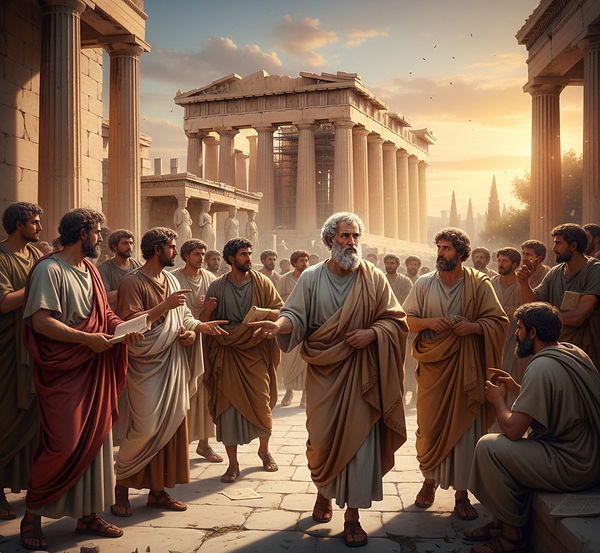
👉 The Socratic Method – Learning Through Questioning

By asking carefully crafted questions, Socrates guided individuals toward discovering truth within themselves — a method still central to modern education, law, psychology, and leadership training.
Ethics & Moral Consciousness – Knowing the Good
Socrates believed that true wisdom lies in understanding virtue. His teachings shaped concepts of morality, justice, integrity, and the ethical life.


Christone Holidays
👉 Trial & Death – Martyrdom of Truth
Christone Holidays

Socrates calmly drinking hemlock surrounded by grieving disciples
Condemned for “corrupting the youth,” Socrates accepted death rather than abandon truth — becoming humanity’s first philosophical martyr.

Life Journey Timeline – Travel Narrative Edition
Socrates’ Athenian Journey – The Birthplace of Thought
Route:
Athens Agora → Acropolis → Gymnasiums → Prison of Athens

Christone Holidays
Walk through ancient Athens — the city that birthed philosophy, democracy, and public debate. Every street, marketplace, and temple became Socrates’ classroom, where questioning replaced dogma and dialogue replaced authority.
From the Agora’s open debates to the solemn silence of his prison cell, Socrates’ journey shaped human civilization forever.
Travel Experience Integration – Christone Holidays
Walk with Socrates – Philosophical Athens Experience
Explore ancient Athens through immersive storytelling tours — walking the Agora, Acropolis, and philosophical academies where Western thought was born.
Designed for seekers, thinkers, educators, and cultural explorers, this experience transforms travel into intellectual awakening.
Walk in the Footsteps of Socrates – Athens, Greece
Experience Athens not as a tourist — but as a seeker of wisdom.
Through immersive storytelling journeys curated by Christone Holidays, travelers walk the ancient paths where Socrates questioned, taught, debated, and ultimately surrendered his life for truth. From the vibrant Agora to the silent prison cell, this intellectual pilgrimage transforms physical travel into inner awakening.
Every step becomes a dialogue.
Every ruin becomes a question.
Every horizon becomes a reflection.
This journey connects travelers not merely to Greece — but to the very origins of human consciousness.
Experiential Zones
👉 Agora of Athens – The Classroom of Humanity
Walk through the birthplace of open debate and democracy. Here, Socrates transformed marketplaces into intellectual arenas, proving that wisdom belongs to all.
👉 Ancient Gymnasiums – Foundations of Education
Explore the ancient academies where physical discipline and intellectual rigor merged into holistic human development.

👉 Acropolis & Parthenon – Sacred Geometry of Thought
Above the city rises the symbolic heart of Greek civilization — where beauty, proportion, logic, and ethics converged into timeless architecture.
👉 Trial & Prison of Socrates – The Price of Truth
Stand at the place where conscience defeated fear — and truth triumphed over life.
Socrates – The Architecture of Human Thought
1. The Philosophy of Questioning
Socrates believed that unexamined life is not worth living.
He rejected blind belief, inherited dogma, and unquestioned authority. Instead, he introduced a radical idea:
| Truth must be discovered, not inherited.
Through questioning, he dismantled false certainty, allowing authentic wisdom to emerge. His dialogues forced individuals to confront contradictions within their own beliefs — awakening intellectual humility.
This became the foundation of:
-
Logical reasoning
-
Scientific method
-
Critical education
-
Democratic debate
2. The Socratic Method – Engine of Learning
Socrates developed a dialogue-based method where knowledge is born through inquiry.
How it works:
-
Ask → Challenge → Clarify → Reflect → Discover
Rather than giving answers, Socrates created mental mirrors through which individuals could see truth themselves.
This method is still used today in:
-
Universities
-
Law schools
-
Medical education
-
Leadership coaching
-
Therapy
-
Psychological inquiry
3. Ethics & Moral Awakening
For Socrates, virtue was knowledge.
He believed:
| When people truly understand what is good, they naturally act rightly.
Thus, wrongdoing was not evil — it was ignorance.
This revolutionary idea shifted humanity away from punishment-based morality into conscience-based ethics, shaping modern legal and moral philosophy.
4. The Courage of Truth
Socrates stood against political power, social pressure, and public hostility.
When sentenced to death, he refused escape.
| To live unjustly was worse than to die unjustly.
His acceptance of death transformed him into humanity’s first intellectual martyr, teaching that truth must be lived — not merely spoken.
5. Legacy – How Socrates Built Civilization
Socrates’ influence flows through:
Socrates → Plato → Aristotle → Western Thought → Modern Civilization
From:
-
Philosophy
-
Political science
-
Psychology
-
Ethics
-
Education
-
Scientific logic
Every modern discipline carries the intellectual DNA of Socrates.
Travel Experience Integration – Christone Holidays
Walk with Socrates – Philosophical Athens Experience
Explore ancient Athens through immersive storytelling tours — walking the Agora, Acropolis, and philosophical academies where Western thought was born.
Designed for seekers, thinkers, educators, and cultural explorers, this experience transforms travel into intellectual awakening.
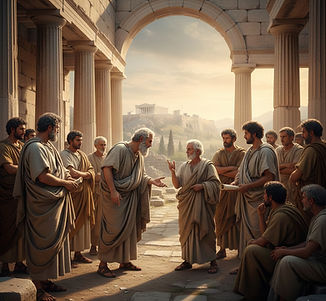
The Birth of Dialogue

Ethical Reflection
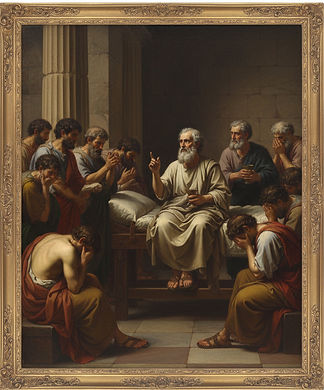
Martyrdom of Thought
🏛 PLATO – THE ARCHITECT OF IDEALISM
(Masters of Civilization by Christone Holidays)
Plato – The Architect of Idealism
Where thought ascended toward eternal truth
Plato did not merely interpret reality — he imagined a higher one.
Student of Socrates and teacher of Aristotle, Plato shaped civilization by proposing that beyond the physical world exists a realm of perfect ideas — eternal, flawless, and divine. Through philosophy, myth, dialogue, and visionary political thought, he built the foundations of metaphysics, education, political theory, and spiritual inquiry.
His legacy is not confined to books.
It lives within every search for truth, beauty, justice, and meaning.
Plato – A Brief Life Journey (427 BC – 347 BC)
From Noble Birth to Eternal Legacy
Birth & Early Life – Athens (427 BC)
Plato was born into a distinguished aristocratic family in Athens, during the golden age of Greek civilization. Surrounded by politics, poetry, and philosophy from childhood, his early life was shaped by a deep exposure to intellectual refinement, civic duty, and cultural excellence.
Originally destined for political leadership, Plato’s life changed forever when he encountered Socrates — the man who would awaken his philosophical destiny.

Christone Holidays
Student of Socrates – The Turning Point
Under Socrates’ guidance, Plato abandoned political ambition and embraced the pursuit of truth, wisdom, and moral understanding. He became Socrates’ closest disciple, recording his dialogues and immortalizing his ideas.
The execution of Socrates in 399 BC devastated Plato and permanently altered his worldview. This tragic event convinced him that true justice could only exist through philosophical governance, not popular politics.
Years of Travel & Intellectual Expansion
Following Socrates’ death, Plato traveled extensively across the ancient world — to Egypt, southern Italy, and Sicily — studying mathematics, science, mysticism, and political systems.
These journeys enriched his vision, blending:
-
Greek rationalism
-
Egyptian sacred knowledge
-
Pythagorean mathematics
-
Political philosophy
Together, they formed the foundations of his metaphysical worldview.
Founding the Academy – Birth of Higher Education
Returning to Athens, Plato founded the Academy — the world’s first known institution of higher learning.
For over 40 years, the Academy became the intellectual heart of Western civilization, nurturing thinkers, scientists, statesmen, and philosophers — including Aristotle, his greatest student.
Later Life & Final Years
Plato spent his final decades writing his immortal dialogues — The Republic, Symposium, Phaedo, Timaeus, and Critias — shaping philosophy, politics, ethics, and metaphysics for all future generations.
He died peacefully in 347 BC, in Athens, leaving behind a legacy that continues to define human thought itself.
Legacy of Plato
Plato’s ideas shaped:
-
Western philosophy
-
Christian and Islamic theology
-
Political theory
-
Educational systems
-
Metaphysical inquiry
His intellectual lineage flows:
Plato → Aristotle → Science → Universities → Modern Civilization
427 BC – Born in Athens
407 BC – Becomes student of Socrates
399 BC – Execution of Socrates
399–387 BC – Travels across Egypt, Italy, Sicily
387 BC – Founds the Academy in Athens
347 BC – Death in Athens
🏛 What Does “Plato Influenced Christian & Islamic Theology” Actually Mean?
This does NOT mean Plato taught Christianity or Islam.
It means:
Plato’s philosophical framework became the intellectual foundation upon which Christian and Islamic theology was constructed.
In simple terms:
🧠 Plato gave humanity the mental tools to understand God, soul, heaven, truth, morality, and spiritual reality.
Early Christian Thinkers Who Used Plato:
-
St. Augustine (most important)
-
Clement of Alexandria
-
Origen
-
Plotinus (Neo-Platonism → Christian theology bridge)
St. Augustine openly said:
Plato prepared the human mind to understand Christianity.
Major Islamic Philosophers Influenced by Plato:
-
Al-Farabi
-
Avicenna (Ibn Sina)
-
Al-Ghazali
-
Ibn Rushd (Averroes)
These thinkers built Islamic theology, philosophy, medicine, science, and metaphysics using Platonic + Aristotelian logic.
| One Greek philosopher shaped the spiritual language of half the world.
Plato shaped Christian & Islamic theology
We mean:
✨ He shaped how humanity understands God
✨ He shaped how heaven is imagined
✨ He shaped how the soul is explained
✨ He shaped how divine truth is reasoned
Christone Holidays | Curators of Human Civilization
Masters of Civilization · Global Cultural Routes · Experiential Learning Travel
We do not sell destinations. We curate civilization.
🧭 Travel Experience Integration – Walk the World of
Plato
Destination Core: Athens, Delphi, Corinth, Piraeus
Civilizational Theme: Birthplace of Western Philosophy
✨ Experience Narrative
Follow the footsteps of plato, where philosophy was not taught in classrooms,
but lived in marketplaces, streets, courts, and public debate.
From the Agora of Athens to the sacred silence of Delphi,
this journey becomes an exploration of truth, ethics, courage, and human questioning.
🏛 Key Heritage Touchpoints
-
Ancient Agora – Socratic dialogues & public debates
-
Acropolis & Parthenon – Intellectual and cultural zenith
-
Temple of Apollo, Delphi – Oracle wisdom & cosmic questioning
-
Prison of Socrates – Final moments & moral sacrifice
-
Academy of Plato – Birthplace of structured philosophy
🎓 Immersive Experiences Curated by Christone Holidays
-
Guided philosophical walking tours in Athens
-
Storytelling sessions on Greek thought under sunset skies
-
Private museum interpretation with expert cultural historians
-
Soundscape journeys recreating ancient Greek life
-
Thematic heritage dining inspired by classical Greece
At Christone Holidays | Curators of Human Civilization,
we don’t sell destinations —
we design immersive civilizational experiences that allow travelers to walk inside history, thought, art, and human brilliance.
Every master we explore becomes:
A living travel route.
Christone Holidays designs journeys where travelers do not just see the world — they understand civilization.
🏛 Aristotle – Architect of Human Knowledge
(Masters of Civilization by Christone Holidays)

Aristotle – Architect of Human Knowledge
The Mind That Structured Civilization
Christone Holidays
If Socrates taught humanity how to question,
and Plato revealed what truth might be,
Aristotle taught the world how to think, analyze, classify, and understand reality.
Aristotle (384 BC – 322 BC)
The Philosopher Who Organized Human Thought
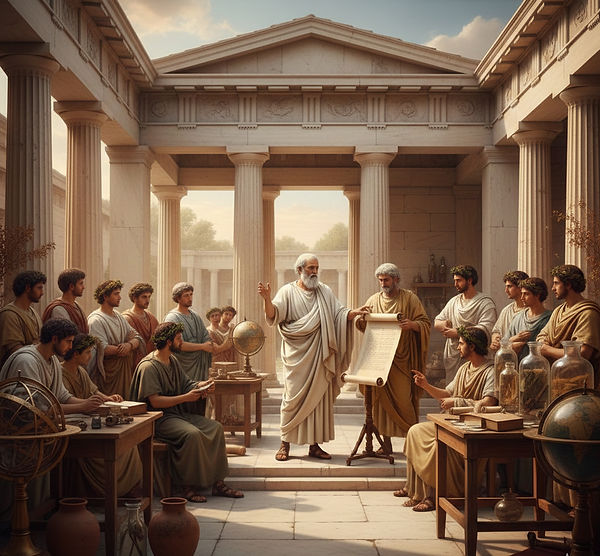
Aristotle teaching at the Lyceum in ancient Athens — surrounded by scrolls, botanical specimens, astronomical instruments, and young scholars, warm Mediterranean light, classical Greek architecture, intellectual atmosphere, timeless philosophical depth, cinematic heritage realism
Who Was Aristotle? – Civilizational Introduction
Aristotle was not merely a philosopher.
He was the first true scientist of humanity, the architect of logic, biology, political science, ethics, metaphysics, literary criticism, astronomy, and natural observation.
His mind created the blueprint of human reasoning that still governs modern education, science, and governance.
Without Aristotle, modern civilization would lack its intellectual skeleton.
A Brief Life Journey – Travel Narrative Edition
(384 BC – 322 BC)
🌱 Stage 1 – Birth & Early Genius
Stagira, Macedonia (384 BC)
Born into a medical family, Aristotle grew up surrounded by natural observation, anatomy, and scientific curiosity — forming his lifelong dedication to empirical learning.
🏛 Stage 2 – Student of Plato
Athens – The Academy
At just 17, Aristotle entered Plato’s Academy, spending 20 years mastering philosophy, metaphysics, mathematics, and dialectics — before eventually surpassing his teacher in scientific methodology.
👑 Stage 3 – Tutor of Alexander the Great
Macedonian Royal Court
Aristotle became the personal tutor of Alexander, shaping the mind of the greatest conqueror in history — influencing leadership, ethics, governance, and diplomacy.
🏛 Stage 4 – Founder of the Lyceum
Athens – Lyceum School
Here Aristotle built the first research university, introducing:
-
Systematic observation
-
Scientific classification
-
Logical reasoning
-
Structured curriculum
⚰ Final Journey – Exile & Death
Chalcis, Greece (322 BC)
Facing political persecution, Aristotle left Athens, stating:
“I will not allow Athens to sin twice against philosophy.”
Domains of Genius – What Aristotle Gave Humanity
Field Contribution
Logic Foundations of reasoning
Biology First biological classification
Ethics Virtue ethics & moral philosophy
Politics Political theory & governance
Metaphysics Nature of existence
Astronomy Early cosmology
Literature Poetics & dramatic theory
Core Philosophy Explained – Human-Centered Thinking
🧠 Rational Inquiry
Knowledge begins with observation and logic, not belief alone.
⚖ The Golden Mean
Virtue exists between extremes — balance creates excellence.
🏛 Political Wisdom
A healthy society requires ethical leadership and educated citizens.
🌿 Empirical Science
Truth must be observed, tested, and categorized.
Organon – The Birth of Logic

Christone Holidays
Nicomachean Ethics – Virtue & Happiness

Christone Holidays
Life Journey Timeline – Travel Narrative Edition
Stagira → Athens → Macedonia → Athens → Chalcis
●────────●────────●────────●────────●
Walk the World of Aristotle
Follow Aristotle’s footsteps through:
-
Stagira – His birthplace
-
Athens – Academy & Lyceum
-
Pella – Royal court of Alexander
Signature Experiences:
-
Philosophy walking trails in Athens
-
Lyceum archaeological interpretation tours
-
Leadership & ethics immersive workshops
-
Ancient Greek science storytelling sessions
This journey transforms travelers into thinkers.
Aristotle built the intellectual architecture of civilization.
Christone Holidays now transforms that architecture into unforgettable journeys.
Leonardo Fibonacci – The Man Who Gave the World Its Hidden Code
(Masters of Civilization by Christone Holidays)
Mathematical Heritage Journeys | Christone Holidays
Where Numbers Become Culture, and Travel Becomes Understanding.
Leonardo Fibonacci - Architect of Numerical Harmony
Leonardo Fibonacci (c.1170 – c.1250)
The Mathematician Who Revealed Nature’s Secret Language

Christone Holidays
If Leonardo da Vinci revealed the beauty of human genius,
Fibonacci revealed the mathematical code behind creation itself.
Who Was Fibonacci? – Civilizational Introduction
Leonardo Fibonacci was the bridge between Eastern and Western knowledge.
By introducing Indian-Arabic numerals and mathematical logic to Europe, he transformed:
-
Commerce
-
Engineering
-
Architecture
-
Navigation
-
Science
-
Economics
Without Fibonacci, modern banking, architecture, science, and computing would not exist in their present form.
A Brief Life Journey – Travel Narrative Edition
(c.1170 – c.1250)
🌍 Stage 1 – Birth
Pisa, Italy
Born in Pisa, a powerful maritime republic, Fibonacci grew up amidst merchants, ships, and international trade — igniting his mathematical curiosity.
🌊 Stage 2 – Learning in the Islamic World
North Africa & Mediterranean Trade Cities
Traveling with his merchant father, Fibonacci studied advanced mathematics under Arab scholars, discovering:
-
Zero
-
Decimal systems
-
Algebra
-
Geometry
🧠 Stage 3 – Liber Abaci
Pisa – 1202 AD
Fibonacci published Liber Abaci, introducing Europe to:
-
Modern numbers
-
Calculations
-
The Fibonacci Sequence
🌿 Stage 4 – Legacy
Italy
His work reshaped European education, architecture, commerce, and scientific inquiry.
The Fibonacci Sequence – Nature’s Secret Code
1, 1, 2, 3, 5, 8, 13, 21...
This sequence appears everywhere:
-
🌻 Sunflowers
-
🐚 Seashells
-
🌪 Hurricanes
-
🌌 Galaxies
-
🏛 Architecture
-
🎨 Renaissance Art
Fibonacci revealed that mathematics is the language of nature.
Masterpiece Knowledge Panels
Liber Abaci – The Birth of Modern Mathematics

The Golden Ratio – Divine Proportion

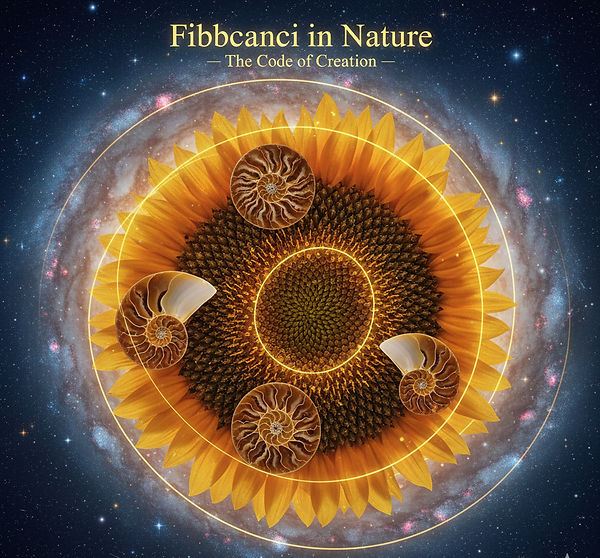
Fibonacci in Nature – The Code of Creation
✨ The Golden Ratio – Divine Proportion
The Golden Ratio is the mysterious mathematical harmony that governs beauty across the universe. Expressed as 1.618, it appears in architecture, art, music, and the very structure of life itself. From the proportions of the human body to the façades of ancient temples, Renaissance masterpieces, and modern design, this ratio creates a sense of natural balance that the human eye instinctively finds beautiful. Leonardo da Vinci, Michelangelo, and countless artists unknowingly followed its guidance, embedding divine geometry into their creations. The Golden Ratio reveals that beauty is not random — it is mathematically encoded into existence, shaping how we perceive perfection, symmetry, and aesthetic truth.

Christone Holidays
Christone Holidays
Christone Holidays
🌿 Fibonacci in Nature – The Code of Creation
The Fibonacci Sequence unfolds silently through nature, shaping the growth of flowers, the spirals of seashells, the branching of trees, the patterns of hurricanes, and even the swirling arms of distant galaxies. Sunflower seeds arrange themselves in perfect Fibonacci spirals, pinecones form precise numerical sequences, and nautilus shells grow in flawless logarithmic curves. These patterns allow life to grow efficiently, distribute energy wisely, and achieve perfect balance. Through Fibonacci’s discovery, humanity glimpsed a profound truth: nature is not chaotic — it is written in numbers, guided by a universal intelligence that harmonizes mathematics, beauty, and life itself.
Life Journey Timeline – Travel Narrative Edition
Pisa → Mediterranean Trade Cities → Pisa → Italy
●────────────●────────────●────────────●
Travel Experience Integration – Christone Holidays
Walk the Path of Mathematical Genius
Explore:
-
Pisa – Birthplace & medieval trade center
-
Mediterranean Trade Routes – Knowledge exchange corridors
-
Florence & Rome – Renaissance applications of Fibonacci’s work
Signature Experiences:
-
Mathematical heritage walking tours
-
Renaissance architecture decoding sessions
-
Golden ratio photography workshops
-
Science + art fusion storytelling journeys
Travel where numbers become beauty.
🏛 Gaudí & Divine Architecture
(Masters of Civilization by Christone Holidays)
Where Mathematics Becomes Faith, and Architecture Becomes Prayer
🏛 Sacred Geometry Trails – Gaudí & Divine Architecture
Tracing the Divine Code Embedded in Stone, Light & Form
Across civilizations, sacred architecture has never been random.
Hidden within temples, cathedrals, mosques, and monuments lies a divine mathematical intelligence — Sacred Geometry.
Antoni Gaudí transformed this ancient wisdom into living architecture, allowing stone, light, and geometry to praise creation itself.
What Is Sacred Geometry?
Sacred Geometry is the ancient science of divine proportion, expressing the belief that creation itself follows precise mathematical order. Across civilizations — from Egyptian pyramids and Greek temples to Gothic cathedrals and Islamic mosques — sacred geometry governs spatial harmony, spiritual alignment, and cosmic balance.
These geometric forms are believed to reflect the architecture of the universe itself, translating invisible cosmic laws into visible beauty. When humans build using sacred geometry, architecture becomes a bridge between earth and the divine.
Sacred geometry transforms stone into spirituality.
Gaudí – The Architect Who Made Geometry Pray
Antoni Gaudí did not design buildings.
He grew them.
By merging:
-
Golden Ratio
-
Hyperbolic curves
-
Helicoid spirals
-
Fractal geometry
-
Organic mathematics
Gaudí created architecture that breathes, flows, and worships.
For Gaudí, geometry was not decoration — it was devotion.
“Nothing is art if it does not come from nature.” – Antoni Gaudí
👉 Sagrada Família – The Cathedral of Divine Mathematics
Barcelona | Construction Began: 1882 | Gaudí Took Over: 1883 | Still Under Construction
The Basílica de la Sagrada Família is the most ambitious sacred architectural project in human history. Originally started in 1882, it was transformed by Antoni Gaudí into a living mathematical cathedral that merges Christianity, nature, and sacred geometry into one divine structure.
Gaudí devoted the last 43 years of his life to this project, treating it not as a building, but as a spiritual mission. Every tower, façade, column, and window follows precise mathematical laws — hyperbolic curves, golden ratios, fractal geometry, and organic forms inspired by trees, bones, shells, and natural growth patterns.
The interior columns rise like forests, the stained-glass windows create cosmic light symphonies, and the façades narrate the Birth, Passion, and Glory of Christ through symbolic geometry rather than traditional sculpture alone.

Christone Holidays
A living equation of faith, geometry, and cosmic symbolism, where every column, spiral, and window aligns with sacred mathematical harmony.
Sagrada Família – The Cathedral of Divine Mathematics

Christone Holidays
Sagrada Família is not architecture — it is a prayer built from mathematics.
Civilizational Significance:
It represents the fusion of faith, science, art, and nature — a modern sacred monument for humanity.
Casa Batlló – The Dragon of Light & Geometry
A flowing masterpiece inspired by organic geometry, bone structures, and chromatic light.
👉 Casa Batlló – The Dragon of Light & Geometry
Barcelona | Originally Built: 1877 | Redesigned by Gaudí: 1904–1906
Originally a conventional building, Casa Batlló was completely reimagined by Gaudí between 1904 and 1906, transforming it into one of the most surreal architectural masterpieces in the world.
Inspired by Saint George and the Dragon (patron saint of Catalonia), the structure symbolizes the dragon’s spine through its curved roof, bone-like balconies, skull-shaped windows, and flowing organic façade. The entire building is based on natural geometry — no straight lines, only curves, waves, and living forms.
Light, color, and space move fluidly through the structure, guided by sacred proportions and organic mathematical harmony. The interior ventilation system, natural lighting, and spatial flow were centuries ahead of their time.
Casa Batlló is where mythology, geometry, and light become architecture.
Civilizational Significance:
It symbolizes the fusion of spiritual symbolism, natural law, and modern design — proving that architecture can be alive.

Christone Holidays
Park Güell – The Geometry of Nature
A surreal landscape where geometry merges with earth, curves imitate waves, and columns rise like ancient forests.
👉 Park Güell – The Geometry of Nature
Barcelona | Built: 1900–1914
Originally planned as a utopian residential garden city, Park Güell became one of Gaudí’s most poetic creations between 1900 and 1914.
Instead of rigid urban design, Gaudí shaped the park using topography, curves, organic geometry, and sacred proportions, blending architecture seamlessly into the landscape. Columns resemble ancient trees, pathways flow like rivers, and terraces follow natural contours of the land.
Mosaics, spirals, and patterns throughout the park follow mathematical symmetry and sacred geometry, while colors and forms reflect cosmic harmony and Mediterranean light.
Park Güell is not designed — it is grown.
Civilizational Significance:
It represents Gaudí’s vision of a world where humans live in harmony with nature, geometry, and the divine order of creation.


Christone Holidays
Unified Civilizational Interpretation
Together, these three masterpieces represent:
-
Faith → Sagrada Família
-
Myth & Light → Casa Batlló
-
Nature & Harmony → Park Güell
Forming a trinity of divine architecture:
Spirit · Nature · Mathematics
Sacred Geometry Across Civilizations – Global Trail Concept
Civilization Sacred Geometry Expression
Egypt Pyramids & cosmic alignment
Greece Parthenon & Golden Ratio
India Temple mandalas & cosmic diagrams
Islamic World Infinite geometric tessellations
Gothic Europe Cathedrals & divine proportions
Spain Gaudí’s organic geometry
This journey becomes a global sacred geometry pilgrimage.
🌍 Global Sacred Geometry Pilgrimage
Academic Architecture & Design Study Tours | Christone Holidays
| Civilization-based architectural immersion programs
This journey is ideal for:
-
Architecture students
-
Interior design students
-
Urban planning students
-
Landscape design students
-
Fine arts students
-
Heritage conservation students
-
Philosophy & sacred studies students
Why Sacred Geometry Is Perfect for Academic Travel
Sacred geometry is the universal language connecting:
-
Mathematics
-
Architecture
-
Nature
-
Spirituality
-
Culture
-
Design
This makes it:
-
Cross-disciplinary
-
Deeply intellectual
-
Experiential
-
Visually unforgettable
🌐 Global Sacred Geometry Trail – Academic Circuit Concept
An international architecture pilgrimage route:
🇪🇸 Spain – Gaudí & Organic Geometry
Barcelona → Montserrat → Girona
🇮🇹 Italy – Renaissance Proportion
Florence → Rome → Vatican
🇬🇷 Greece – Golden Ratio Origins
Athens → Delphi → Epidaurus
🇫🇷 France – Gothic Sacred Architecture
Paris → Chartres → Reims
🇪🇬 Egypt – Pyramid Geometry
Giza → Saqqara → Luxor
🇮🇳 India – Mandala & Temple Science
Khajuraho → Konark → Madurai → Hampi
🇹🇷 Turkey – Byzantine & Islamic Geometry
Istanbul → Konya
🇲🇦 Morocco – Infinite Islamic Patterns
Marrakech → Fes
Life Journey Timeline – Gaudí’s Sacred Path
Reus → Barcelona → Sagrada Família → Eternal Legacy
●────────●────────────●────────────●
Gaudí’s Sacred Geometry Masterworks
Explore the architectural universe of Antoni Gaudí — where mathematics, nature, spirituality, and imagination unite to form the most poetic structures ever created.
Casa Milà (La Pedrera) – The Living Stone
Built between 1906 and 1912, Casa Milà defies all architectural conventions with its flowing stone façade, undulating balconies, and sculptural rooftop forms. Designed as a living organism rather than a static structure, the building embodies Gaudí’s belief that architecture should imitate the rhythms, curves, and breathing motion of nature itself. Its rooftop chimneys resemble abstract warriors, while its internal courtyards optimize natural light and airflow — centuries ahead of sustainable design principles.

Christone Holidays
Sacred Geometry Trails – Gaudí & Divine Architecture
An Intellectual Travel Experience by Christone Holidays
Travel Experience Integration – Christone Holidays
Sacred Geometry Trails – Signature Journey
Destinations Covered:
-
Barcelona – Gaudí’s divine masterpieces
-
Montserrat – Mystical sacred mountain
-
Girona – Medieval geometry & mysticism
-
Andalusia – Islamic geometric wonders
Signature Experiences:
-
Sacred architecture decoding walks
-
Golden ratio photography sessions
-
Geometry & meditation workshops
-
Light & space storytelling tours
-
Divine proportion sketching experiences
This journey awakens both mind and soul.
Gaudí carved prayers into stone.
Christone Holidays now transforms those prayers into journeys of awakening.

🔭 🇮🇹 GALILEO GALILEI
The Eye of the Universe
Masters of Civilization | Christone Holidays
Galileo Galilei – The Eye of the Universe
Before Galileo, humanity believed the heavens were perfect.
After Galileo, humanity learned to observe truth.

Christone Holidays
WHO WAS GALILEO?
Galileo Galilei was the father of modern observational science.
He replaced belief with evidence, speculation with observation, and inherited dogma with measurable truth.
By turning the telescope toward the sky, Galileo shattered centuries of assumption and proved that the universe was dynamic, imperfect, and governed by discoverable laws.
He did not challenge faith —
he challenged blindness.
PHILOSOPHICAL LEGACY
Galileo introduced a radical idea:
Nature speaks in the language of mathematics —
and truth must be observed, not inherited.
His method became the foundation of:
-
Modern science
-
Experimental physics
-
Astronomy
-
Engineering
-
Rational inquiry
A BRIEF LIFE JOURNEY
Travel Narrative Edition (1564 – 1642)
🌱 Birth
Pisa, Italy – 1564
Born into a scholarly family, Galileo displayed early talent in mathematics and mechanics.
🎓 Learning & Teaching
Pisa → Padua
At the University of Padua, Galileo refined his experimental methods and mechanical thinking.
🔭 The Telescope Revolution
Venice → Florence
In 1609, Galileo improved the telescope and turned it skyward — changing civilization forever.
⚖️ Conflict & Trial
Rome
His discoveries contradicted Church doctrine, leading to trial and house arrest.
🕯 Final Years
Arcetri, Italy – 1642
Blind yet unbroken, Galileo continued to think, calculate, and inspire until his death.

Christone Holidays
The Telescope – The Instrument of Truth
Galileo transformed a simple optical device into a scientific instrument, proving that observation could reveal universal truth.
🔭 The Telescope – The Instrument of Truth
When Galileo turned the telescope toward the heavens, he transformed a simple optical device into the most powerful instrument of truth the world had ever known. For the first time in history, celestial bodies were not imagined or philosophically assumed but directly observed and recorded. The telescope revealed mountains on the Moon, countless unseen stars, and planets in motion, proving that the universe was not a perfect, immutable realm but a dynamic and evolving system. Through the telescope, Galileo established observation as the foundation of scientific knowledge, forever shifting humanity from belief to evidence and marking the true beginning of modern science.
| Christone Holidays — Exploring Humanity Beyond Belief
Christone Holidays
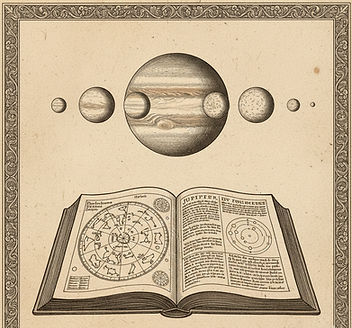
Moons of Jupiter – Proof of a Moving Universe
Moons of Jupiter – Proof of a Moving Universe
🌕 Moons of Jupiter – Proof of a Moving Universe
When Galileo observed four small lights orbiting Jupiter in 1610, he uncovered one of the most decisive truths in human history: not everything in the universe revolves around Earth. These moons—Io, Europa, Ganymede, and Callisto—moved faithfully around Jupiter night after night, offering undeniable visual proof that celestial bodies could orbit something other than our planet. This single observation shattered the Earth-centered worldview that had dominated thought for centuries and provided direct evidence for a dynamic, multi-centered cosmos. The moons of Jupiter did more than transform astronomy; they changed humanity’s understanding of its place in the universe, replacing certainty with inquiry and belief with observation.
Exploring Humanity Beyond Belief
Journeys inspired by curiosity, culture, and human thought.
🌍 Our Philosophy
Christone Holidays — Exploring Humanity Beyond Belief
At Christone Holidays, we celebrate humanity’s timeless journey of curiosity and understanding. Across cultures and civilizations, people have always looked beyond the familiar — seeking meaning through art, science, philosophy, and lived experience. Our journeys are inspired by those moments when human thought expanded, ideas connected, and understanding deepened. We invite travelers to explore the world not only through places, but through the stories, minds, and discoveries that shaped our shared civilization.

Sunspots – The Imperfect Heavens
Description:
Sunspots revealed that even the sun was changing, contradicting the idea of perfect celestial spheres.
When Galileo observed dark marks moving across the surface of the Sun, he revealed a profound truth: even the heavens were not perfect and unchanging. These sunspots, once thought impossible on a divine celestial body, demonstrated that the Sun itself was dynamic and evolving. By carefully recording their movement, Galileo showed that celestial change was a natural part of the universe, not a flaw or illusion. This discovery quietly transformed human understanding, replacing the idea of a flawless sky with a living cosmos shaped by motion, time, and natural law — bringing the heavens closer to human comprehension.
🌕 Phases of Venus – The Dance of Planets
When Galileo observed Venus through his telescope, he noticed that the planet passed through a full set of phases, much like the Moon. This simple but powerful observation revealed that Venus orbits the Sun rather than the Earth, providing clear visual support for the heliocentric model of the universe. The phases of Venus demonstrated that planets move in harmonious patterns around a central star, transforming the heavens from a static backdrop into a dynamic celestial dance. With this discovery, Galileo helped humanity understand that planetary motion follows natural order and rhythm, reshaping how we perceive the structure of the cosmos.

Christone Holidays
Christone Holidays
🌕 Phases of Venus – The Death of Geocentrism
Galileo’s observation of the full sequence of Venus’s phases delivered a decisive blow to the Earth-centered model of the universe. Through his telescope, Venus was seen shifting from crescent to full, a pattern that could only occur if the planet orbited the Sun rather than Earth. This simple yet powerful evidence revealed that Earth was not the cosmic center, but one participant in a larger, orderly system of planetary motion. The phases of Venus marked the quiet end of geocentrism, replacing centuries of assumption with observable truth and opening the path toward a modern understanding of the cosmos.

Christone Holidays
LIFE JOURNEY TIMELINE
Pisa → Padua → Venice → Florence → Rome → Arcetri
●────●────●────●────●────●
TRAVEL EXPERIENCE INTEGRATION
Scientific Heritage Journeys – Galileo’s Italy
(Pisa – Birthplace
-
Padua – Teaching years
-
Venice – Telescope innovation
-
Florence – Court astronomer
-
Rome – Trial and legacy
PHILOSOPHICAL LEGACY
Galileo introduced a radical idea:
Nature speaks in the language of mathematics —
and truth must be observed, not inherited.
His method became the foundation of:
-
Modern science
-
Experimental physics
-
Astronomy
-
Engineering
-
Rational inquiry
🌍 Official Site Disclaimer
Disclaimer:
All content presented on the Christone Holidays website, including narratives, timelines, visual interpretations, and thematic journeys, is based on established historical records, widely accepted scholarly research, and cultural studies. Creative storytelling, artistic visualizations, and interpretive descriptions are used thoughtfully to enhance understanding, engagement, and appreciation of human civilization. This content is intended for educational, cultural, and travel inspiration purposes and does not seek to promote, oppose, or interpret any belief system, ideology, or doctrine.

🍎 🇬🇧 ISAAC NEWTON
The Lawgiver of Nature
Masters of Civilization | Christone Holidays
Isaac Newton – The Lawgiver of Nature
If Galileo taught humanity how to observe the universe,
Newton taught humanity how the universe works.
WHO WAS ISAAC NEWTON?
Isaac Newton transformed human understanding of nature by revealing that the universe operates according to universal, mathematical laws. Where earlier thinkers observed motion and change, Newton explained them with precision, showing that the same principles governing a falling apple also govern the movement of planets and stars. His work unified the heavens and the Earth into a single, coherent system, laying the foundations of classical physics and shaping scientific thought for centuries.
CORE IDEA OF NEWTON
Newton’s genius was not discovery alone —
it was unification.
He proved that:
-
Motion follows laws
-
Gravity governs both Earth and cosmos
-
Light behaves predictably
-
Nature can be described mathematically
The universe was no longer mysterious chaos —
it became an intelligible system.


Newton revealed a universe governed by order, balance, and reason —
a vision that continues to shape science, engineering, and human thought.
LIFE JOURNEY
-
Woolsthorpe, England – Birth & early insight
-
Cambridge University – Intellectual formation
-
The Plague Years – Period of greatest discovery
-
Royal Society, London – Recognition & legacy
🍎 Isaac Newton – Life Journey (1643–1727)
Born in rural Woolsthorpe, England, Isaac Newton rose from humble beginnings to become one of the most influential minds in human history. Educated at the University of Cambridge, his greatest breakthroughs emerged during the plague years, when isolation allowed deep reflection on motion, gravity, light, and mathematics. Returning to academic life, Newton published Principia, a work that unified the laws of nature and transformed scientific thought across Europe. Later, as President of the Royal Society and Master of the Royal Mint, he shaped both intellectual and civic institutions. Newton’s life journey reflects the power of quiet inquiry, discipline, and reason — a legacy that continues to govern how humanity understands the physical universe.
KEY PILLARS
1️⃣ Laws of Motion – The Grammar of Movement
2️⃣ Universal Gravitation – The Invisible Force
3️⃣ Calculus – The Mathematics of Change
4️⃣ Optics – The Nature of Light
Laws of Motion – The Grammar of Movement
Newton’s Laws of Motion revealed that all physical movement follows clear and predictable rules. Whether a falling apple, a moving carriage, or a planet in orbit, motion could be understood through universal principles rather than guesswork or tradition. These laws explained how objects move, resist change, and interact through force, providing humanity with a new language to describe the physical world. Through them, nature became readable, measurable, and governable by reason.
Newton illustrating the laws of motion with early scientific instruments."Motion follows universal rules."

Christone Holidays

Universal Gravitation – The Invisible Force
With the law of universal gravitation, Newton unified the Earth and the heavens under a single force. He demonstrated that the same attraction pulling an apple toward the ground also governs the motion of the Moon and planets. Gravity revealed the universe as an interconnected system, where every mass influences every other. This insight dissolved the ancient divide between celestial and terrestrial realms, replacing mystery with mathematical harmony.
Newton connecting falling objects and planetary motion through gravity."One force binds Earth and cosmos."
Calculus – The Mathematics of Change
To describe motion, growth, and transformation, Newton developed calculus — a revolutionary mathematical framework capable of measuring continuous change. Calculus allowed scientists to calculate speed, acceleration, and the evolving paths of objects over time. It became the foundation for physics, engineering, astronomy, and modern technology, enabling humanity to model complex systems with precision and foresight.
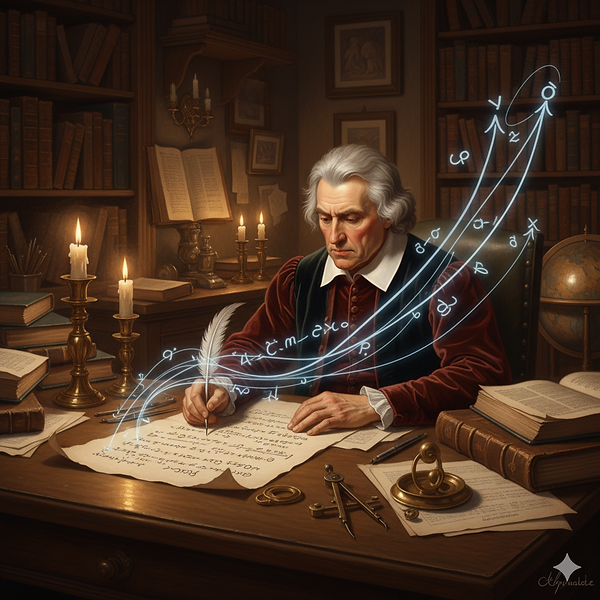
Newton developing calculus to describe motion and change."The language of continuous change."

Optics – The Nature of Light
Newton’s experiments with light revealed that white light is not pure, but a mixture of colors. By passing light through a prism, he showed that color is a fundamental property of light itself, not a distortion caused by objects. This discovery reshaped understanding of vision, optics, and perception, influencing science, art, and instrumentation. Light, once symbolic and mystical, became measurable and understood.
Newton demonstrating that white light contains the spectrum of colors."Light reveals its hidden colors."
Optics – The Nature of Light
Newton’s experiments with light revealed that white light is not pure, but a mixture of colors. By passing light through a prism, he showed that color is a fundamental property of light itself, not a distortion caused by objects. This discovery reshaped understanding of vision, optics, and perception, influencing science, art, and instrumentation. Light, once symbolic and mystical, became measurable and understood.
Newton demonstrating that white light contains the spectrum of colors."Light reveals its hidden colors."


Principia – The Architecture of the Universe
In Philosophiæ Naturalis Principia Mathematica, Newton brought together his discoveries into a single monumental work. Written in precise mathematical language, the Principia laid out the laws governing motion and gravity with unmatched clarity and rigor. It became one of the most influential scientific texts in history, shaping human understanding of the universe for more than two centuries and establishing science as a disciplined pursuit of universal truth.
Newton’s Principia illustrating the mathematical structure of the universe."Newton’s Principia illustrating the mathematical structure of the universe.
Isaac Newton – Life Journey (1643–1727
_edited.jpg)
🌌 Albert Einstein -the cosmic mind of humanity.
(Masters of Civilization by Christone Holidays)
Albert Einstein – The Geometry of the Cosmos
The Man Who Rewrote Reality
Albert Einstein (1879 – 1955)
The Mind That Reshaped Space, Time, and the Universe
If Newton explained how the universe moves,
Einstein revealed how reality itself is woven.
Einstein – The Geometry of the Cosmos

Who Was Einstein? –
Albert Einstein was not merely a physicist.
He was a revolutionary thinker who transformed humanity’s relationship with reality itself.
Before Einstein, time was fixed, space was absolute, and gravity was a force.
After Einstein, time could slow, space could bend, and gravity became geometry.
He did not explain the universe.
He redefined its structure.
A Brief Life Journey – Travel Narrative Edition
(1879 – 1955)
🌱 Birth & Early Curiosity
Ulm, Germany – 1879
Born into a modest family, Einstein showed early fascination with light, magnets, and mathematical patterns, questioning reality from childhood.
🎓 Education & Awakening
Munich → Zurich
At the Swiss Federal Polytechnic in Zurich, Einstein mastered mathematics and physics, while cultivating deep philosophical inquiry.
💡 Miracle Year – 1905
Bern, Switzerland
Working as a patent clerk, Einstein published four papers that shattered classical physics, introducing:
-
Special Relativity
-
Photoelectric Effect
-
Brownian Motion
-
Mass–Energy Equivalence (E = mc²)
This single year changed science forever.
🌌 General Relativity – 1915
Berlin, Germany
Einstein introduced General Relativity, revealing gravity as the curvature of spacetime, unlocking cosmic understanding of black holes, gravitational waves, and cosmic expansion.
🕊 Exile & Global Legacy
Princeton, USA
Fleeing Nazi Germany, Einstein settled in America, becoming a global symbol of scientific wisdom, peace, and humanitarian thought.
Einstein’s Core Discoveries – The Architecture of Reality
Discovery Meaning
Special Relativity Time & space are relative
E = mc² Matter is condensed energy
General Relativity Gravity is spacetime geometry
Photoelectric Effect Birth of quantum physics
Brownian Motion Proof of atomic reality
Philosophical Depth – Einstein’s Thought World
Einstein believed:
-
Imagination is more powerful than knowledge.
-
Wonder is the source of all scientific truth.
-
Science without spirituality is incomplete.
“The most beautiful experience we can have is the mysterious.”
His worldview united:
Science · Philosophy · Ethics · Cosmic Humility
Masterpiece Knowledge Panels – Visual Concepts

Spacetime Fabric – The Geometry of Reality
Einstein revealed that space and time are not separate, rigid entities, but together form a single dynamic fabric known as spacetime. Massive objects like stars and planets curve this fabric, creating what we perceive as gravity. Instead of invisible forces pulling objects together, gravity becomes the gentle bending of reality itself, guiding matter along curved cosmic paths. This revolutionary insight transformed our understanding of motion, orbit, and cosmic structure, showing that the universe is not a static stage but a living geometric tapestry. In Einstein’s vision, space can stretch, time can slow, and reality itself becomes fluid — revealing a cosmos woven from elegant mathematical harmony.
👉 E = mc² – Energy of Existence
⚛️ E = mc² — The Key to Cosmic Power
Einstein’s legendary equation E = mc² reveals that matter and energy are not separate realities but two forms of the same cosmic essence, interchangeable and eternally connected. It shows that even the smallest amount of mass contains an extraordinary reservoir of energy, unlocked when matter transforms. This insight reshaped humanity’s understanding of stars, nuclear fusion, and the life cycle of the universe itself, explaining how stars shine, how galaxies evolve, and how cosmic forces are sustained. More profoundly, it unveiled that every particle of existence is a condensed form of vast universal energy, making E = mc² not merely a formula, but a revelation of the hidden power embedded within creation.

👉 Gravitational Waves – Echoes of the Cosmos
🌊 Gravitational Waves – Echoes of the Cosmos
Gravitational waves are subtle ripples in the fabric of spacetime, generated by the most powerful cosmic events — colliding black holes, merging neutron stars, and exploding supernovae. First predicted by Einstein in 1916 and directly detected a century later, these waves carry the purest information from the deepest reaches of the universe, traveling across billions of light-years to reach Earth. They allow humanity to listen to the universe rather than merely observe it, revealing hidden cosmic dramas once forever beyond perception. Through gravitational waves, the cosmos speaks in vibrations, transforming space itself into a grand symphony of creation and destruction.

🌌 Black Holes – The Geometry of Infinity
Was this Einstein’s invention?
Not directly — but without Einstein, black holes would not exist in science.
🧠 Einstein’s Role (Foundation)
In 1915, Albert Einstein formulated General Relativity, revealing that gravity is the curvature of spacetime.
From his equations, scientists later discovered that if enough mass collapses into a tiny space, spacetime curves infinitely, creating what we now call a black hole.
👉 Einstein provided the mathematical framework that made black holes possible.
🔭 Who Discovered Black Holes?
Shortly after Einstein published his equations:
-
Karl Schwarzschild (1916) found an exact solution showing that spacetime could collapse into a singularity — the theoretical birth of black holes.
-
Later scientists (Oppenheimer, Chandrasekhar, Hawking) expanded this work.
So:
Einstein did not invent black holes, but his equations predicted them.
Without Einstein:
➡️ No black hole theory
➡️ No event horizons
➡️ No spacetime collapse models
🌌 Black Holes – The Geometry of Infinity
🌌 Black Holes – The Geometry of Infinity
Black holes emerge from Einstein’s theory of general relativity, where gravity becomes the curvature of spacetime itself. When massive stars collapse, spacetime bends so intensely that it forms a region from which nothing — not even light — can escape. At the heart of this cosmic phenomenon lies the singularity, where known laws of physics dissolve and geometry approaches infinity. Black holes represent the ultimate expression of gravitational power, revealing the limits of human knowledge and the profound mysteries of existence. They stand as cosmic gateways into the deepest architecture of reality, where space, time, and matter collapse into pure geometric abstraction.

Black Holes – The Geometry of Infinity | Christone Holidays
🧠 Experience Integration – Christone Holidays
Travel Experience Concept:
Cosmic Discovery Journeys – Tracing the Geometry of the Universe
From planetariums and astrophysics observatories to space science museums and dark-sky reserves, Christone Holidays curates immersive journeys that allow travelers to experience the architecture of the cosmos — blending science, wonder, and philosophical reflection.
Travel Experience Integration – Christone Holidays
Walk the Path of Cosmic Genius
Explore:
-
Ulm – Einstein’s birthplace
-
Munich – Early education
-
Zurich – Academic awakening
-
Bern – Relativity discovery
-
Berlin – Scientific revolution
-
Princeton – Global legacy
Signature Experiences:
-
Science heritage walks
-
Relativity visualization sessions
-
Observatory night sky storytelling
-
Physics + philosophy immersive workshops
This journey transforms travelers into cosmic thinkers.
Einstein unlocked the architecture of the cosmos.
Christone Holidays now transforms that cosmic wisdom into journeys of wonder.
🎭 🇬🇧 WILLIAM SHAKESPEARE
The Architect of the Human Soul
Masters of Civilization | Christone Holidays
William Shakespeare – The Architect of the Human Soul
WHO WAS WILLIAM SHAKESPEARE?
William Shakespeare transformed language into a mirror of the human soul. Through plays and poetry, he explored love, ambition, power, jealousy, mercy, fear, and hope with unmatched depth and empathy. His characters think, struggle, and feel as real today as they did four centuries ago, because Shakespeare did not write about kings and fools alone — he wrote about us. More than a playwright, he was a profound observer of human nature, shaping how the world understands emotion, morality, and identity.
LIFE JOURNEY
Travel Narrative Edition (1564–1616)
Born in Stratford-upon-Avon, England, William Shakespeare rose from modest beginnings to become the defining voice of English literature. Moving to London in his early adulthood, he found success as an actor, playwright, and co-owner of the Globe Theatre, where his plays captivated audiences across social classes. Drawing from history, myth, and everyday life, Shakespeare produced tragedies, comedies, histories, and sonnets that reshaped storytelling itself. In his later years, he returned to Stratford, leaving behind a legacy that transcended language, culture, and time — a body of work that continues to illuminate the complexities of the human condition.
Shakespeare’s genius lies in psychological truth.
He revealed that:
-
Power corrupts
-
Love transforms
-
Ambition blinds
-
Mercy redeems
-
Identity is fragile
His stage became humanity’s conscience.

KEY PILLARS
1️⃣ Tragedy – The Depth of Human Conflict
2️⃣ Comedy – The Healing Power of Laughter
3️⃣ History Plays – Power, Nation, and Identity
4️⃣ Sonnets – Love, Time, and Mortality
5️⃣ Language – The Architecture of Thought
1️⃣ TRAGEDY — THE DEPTH OF HUMAN CONFLICT
Shakespeare’s tragedies reveal the fragile balance between reason and desire. Through characters like Hamlet, Macbeth, Othello, and King Lear, he explored ambition, jealousy, guilt, betrayal, and moral collapse. These stories are not about fate alone, but about human choices — moments where inner conflict becomes destiny. Shakespeare showed that the greatest tragedies unfold not on battlefields, but within the human mind.
🎬 Hamlet – To Be or Not To Be
Source: Royal Shakespeare Company
Purpose: Reference viewing for cultural and literary understanding

Disclaimer:
External references are provided solely for historical, cultural, and educational context. Christone Holidays does not own, host, or endorse external media content.

2️⃣ COMEDY — THE HEALING POWER OF LAUGHTER
Shakespeare’s comedies celebrate love, wit, mistaken identity, and reconciliation. Set in forests, courts, and imagined lands, these plays reflect life’s lighter truths — that joy often emerges from confusion, and harmony follows chaos. Beneath humor and romance lies wisdom: forgiveness triumphs, love evolves, and humanity finds balance through laughter.
COMEDY — THE HEALING POWER OF LAUGHTER
A Midsummer Night’s Dream — Nature, love, illusion
3️⃣ HISTORY PLAYS — POWER, NATION & IDENTITY
Shakespeare’s history plays examine leadership, legitimacy, and the moral cost of power. Through figures like Henry V and Richard III, he explored how rulers shape nations — and how ambition, loyalty, and conscience define authority. These works are not mere chronicles; they are reflections on governance, identity, and the timeless tension between power and responsibility.
HISTORY PLAYS — POWER, NATION & IDENTITY
Henry V — Leadership and courage


4️⃣ SONNETS — LOVE, TIME & MORTALITY
In his sonnets, Shakespeare turned inward. These poems explore love’s beauty, time’s cruelty, and humanity’s longing for permanence. Through intimate language and philosophical depth, he captured the fleeting nature of life and the enduring power of words. His sonnets are meditations on desire, loss, aging, and immortality — written not for kings, but for the soul.
SONNETS — LOVE, TIME & MORTALITY
Sonnet 18 — Immortality through words
-
Sonnet 60 — Time’s passage
-
Sonnet 116 — Enduring love
5️⃣ LANGUAGE — THE ARCHITECTURE OF THOUGHT
Shakespeare reshaped the English language itself. He coined words, phrases, and expressions still spoken today, giving humanity new tools to express emotion and thought. His mastery of rhythm, metaphor, and dialogue transformed language into architecture — building bridges between feeling and meaning. Through words, he taught the world how to think, feel, and imagine.

Travel Experience Integration – Christone Holidays
Inspired journeys connected to the places that shaped this mind will be unveiled as part of our Masters of Civilization Cultural Journeys.
Every Master connects upward to Civilization,
Civilization later unfolds into journeys,
Journeys finally become destinations.

🎨 SALVADOR DALÍ – THE ARCHITECT OF DREAMS
Masters of Civilization | Christone Holidays
Salvador Dalí – Where Reality Melts into Imagination
A visionary of Surrealism, Salvador Dalí transformed the subconscious into visual reality. Through dreamlike landscapes, symbolic imagery, and radical imagination, he reshaped modern art. From Figueres to Barcelona, Dalí’s legacy invites travelers into a world where creativity dissolves the limits of logic and time.

🧠 BRIEF LIFE JOURNEY (Birth → Death)
Salvador Dalí was born in 1904 in Figueres, Catalonia, Spain. Showing extraordinary artistic talent from a young age, he studied in Madrid before emerging as one of the most iconic figures of Surrealism in Paris during the 1920s. His works explored dreams, psychology, and symbolism, influenced by Freud and modern philosophy. Dalí later returned to Spain, where he established the Dalí Theatre-Museum — a living monument to imagination. He passed away in 1989 in his hometown of Figueres, leaving behind a universe where art, science, and fantasy merged.
🔑 KEY PILLARS OF DALÍ
⏳ The Persistence of Memory – Time as Illusion
Dalí challenged humanity’s perception of time through melting clocks and dream landscapes. His imagery suggests that time is fluid, subjective, and shaped by consciousness rather than rigid structure.


🧠 Dreams & the Subconscious – Visual Psychology
Influenced by Freudian psychoanalysis, Dalí explored dreams, fears, and hidden thoughts. His surreal imagery invites viewers to explore their own subconscious realities.
🏛 Dalí Theatre-Museum – Architecture of Imagination
Built in Figueres, this museum stands as Dalí’s ultimate artwork — blending surreal architecture, theatrical symbolism, and artistic storytelling.

🧭 LIFE JOURNEY TIMELINE – TRAVEL NARRATIVE EDITION
Figueres → Madrid → Paris → Portlligat → Figueres
Dalí’s journey reflects the evolution of modern art — from academic training in Madrid to avant-garde Parisian movements, culminating in his creative sanctuary in Portlligat and legacy museum in Figueres.
 |  |  |
|---|
🌍 TRAVEL EXPERIENCE INTEGRATION – CHRISTONE HOLIDAYS
-
Dalí Theatre-Museum – Figueres
-
Dalí House – Portlligat
-
Barcelona Surrealism & Modern Art Trails
-
Catalonia Creative Heritage Routes
👉 Spain & Catalonia destination pages.
Rumi – The Poet of Divine Love
Masters of Civilization | Christone Holidays
Rumi – Where Poetry Becomes a Journey of the Soul
Jalāl ad-Dīn Rumi, the 13th-century mystic poet and philosopher, transformed spiritual thought into timeless poetry of love, unity, and human connection. His teachings transcended cultures and traditions, inviting humanity to discover inner peace and universal harmony. From Konya’s sacred spaces to the rhythm of the Whirling Dervishes, Rumi’s legacy offers travelers a profound cultural and spiritual journey.

📜 BRIEF LIFE JOURNEY (Birth → Death)
Rumi was born in 1207 in Balkh (modern Afghanistan) and later settled in Konya, Turkey, where he became a renowned scholar, mystic, and poet. His spiritual transformation deepened after meeting Shams of Tabriz, whose influence inspired Rumi’s poetic masterpieces. Through his writings and teachings, he emphasized compassion, love, and unity beyond boundaries. Rumi passed away in 1273 in Konya, where his shrine remains one of the world’s most significant spiritual pilgrimage destinations.
🔑 KEY PILLARS OF RUMI
❤️ Divine Love – The Language of Humanity
Rumi’s poetry expresses unconditional love as the universal force connecting all beings. His words invite humanity to transcend divisions and experience compassion beyond identity.


🌀 Whirling Dervishes – Dance of Spiritual Unity
The Sufi whirling ceremony symbolizes the soul’s journey toward spiritual enlightenment and connection with the universe.
📖 Masnavi – The Ocean of Wisdom
Rumi’s Masnavi is one of the greatest spiritual literary works in world history, blending stories, philosophy, and mystical teachings.

🧭 LIFE JOURNEY TIMELINE – TRAVEL NARRATIVE EDITION
Balkh → Damascus → Konya → Konya Shrine
Rumi’s life journey reflects a path of migration, learning, and spiritual awakening, culminating in Konya — now one of the world’s most meaningful cultural and spiritual travel destinations.

🌙 Shams of Tabriz – The Catalyst of Transformation
Symbolic visual representing the transformative friendship that inspired Rumi’s poetry

🕌 Konya Seljuk Architecture – Sacred Space of Reflection
Architectural heritage reflecting the spiritual environment of Rumi’s life
🌍 TRAVEL EXPERIENCE INTEGRATION – CHRISTONE HOLIDAYS
-
Mevlana Museum & Rumi Shrine – Konya
-
Whirling Dervish Cultural Ceremony
-
Seljuk Architecture & Anatolian Heritage Trails
-
Spiritual Poetry & Cultural Reflection Experiences
👉 Turkey & Anatolia destination pages.
Christone Holidays — Exploring Humanity Beyond Belief
BUDDHA – THE PATH OF SPIRITUAL ENLIGHTENMENT
(India 🇮🇳 & Nepal 🇳🇵)
Masters of Civilization | Christone Holidays
Buddha – Awakening the Mind, Compassion for Humanity
Siddhartha Gautama, known as the Buddha, transformed human thought through teachings of mindfulness, compassion, and inner awakening. Born in Lumbini (Nepal) and enlightened in Bodh Gaya (India), his journey became one of humanity’s most profound spiritual paths. Today, sacred sites across India and Nepal invite travelers to experience peace, reflection, and the timeless philosophy of enlightenment.
📜 BRIEF LIFE JOURNEY (Birth → Enlightenment → Passing)
Siddhartha Gautama was born around 563 BCE in Lumbini (modern Nepal). Raised as a prince, he left royal life in search of answers to suffering and human existence. After years of meditation and reflection, he attained enlightenment beneath the Bodhi Tree in Bodh Gaya, India. He spent the rest of his life teaching compassion, mindfulness, and the Middle Path across northern India before attaining Mahaparinirvana in Kushinagar. His teachings spread across continents, shaping global philosophy and spiritual thought.

🔑 KEY PILLARS OF RUMI

🌳 Enlightenment at Bodh Gaya – Awakening of Consciousness
Bodh Gaya marks the moment Buddha achieved enlightenment — realizing the nature of suffering and the path toward inner liberation.
🛤 The Middle Path – Balance of Life
Buddha taught a balanced way of living — avoiding extremes and cultivating mindfulness, ethical conduct, and wisdom.


🧘 Meditation & Mindfulness – Science of Inner Awareness
Buddha’s meditation teachings focus on awareness of breath, thoughts, and emotions — forming the foundation of modern mindfulness practices worldwide.
🧭 LIFE JOURNEY TIMELINE – TRAVEL NARRATIVE EDITION
Lumbini (Nepal) → Bodh Gaya → Sarnath → Rajgir → Kushinagar
This sacred path forms one of the world’s most meaningful spiritual travel circuits — reflecting Buddha’s birth, enlightenment, teachings, and final liberation.


🌍 TRAVEL EXPERIENCE INTEGRATION – CHRISTONE HOLIDAYS
-
Lumbini – Birthplace of Buddha (Nepal)
-
Bodh Gaya – Enlightenment Site (India)
-
Sarnath – First Teaching
-
Kushinagar – Mahaparinirvana
-
Rajgir & Nalanda – Ancient Buddhist Learning Centers
👉 India Spiritual Heritage Page & Nepal Sacred Journey Page.
Christone Holidays — Exploring Humanity Beyond Belief
Rembrandt – Where Light Reveals Humanity
Rembrandt – The Master of Light & The Human Soul
Masters of Civilization | Christone Holidays
Rembrandt van Rijn, one of history’s greatest painters, transformed portraiture and storytelling through dramatic light, emotional realism, and deep psychological insight. Living during the Dutch Golden Age, he captured the dignity, struggles, and inner worlds of ordinary people and historical figures alike. From Leiden’s beginnings to Amsterdam’s artistic heart, Rembrandt’s legacy invites travelers to experience the Netherlands through art, history, and human emotion.
📜 BRIEF LIFE JOURNEY (Birth → Legacy)
Rembrandt was born in 1606 in Leiden, Netherlands, and quickly emerged as a leading painter of the Dutch Golden Age. Moving to Amsterdam, he achieved great fame through portraits, historical scenes, and innovative use of light and shadow. Despite personal hardships and financial struggles later in life, his artistic exploration deepened, producing some of the most emotionally powerful works in Western art. He passed away in 1669 in Amsterdam, leaving a legacy that transformed the understanding of portraiture and human expression.

Christone Holidays
🔑 KEY PILLARS OF REMBRANDT

Christone Holidays
🌑 Chiaroscuro – The Drama of Light & Shadow
Rembrandt mastered chiaroscuro, using powerful contrasts between darkness and light to reveal emotion and narrative depth.
👁 Portraits of Humanity – Emotional Realism
Rembrandt portrayed merchants, scholars, elders, and everyday people — capturing their emotions with rare honesty and psychological depth.


🎭 The Night Watch – Movement & Civic Identity
One of Rembrandt’s most iconic works, depicting a civic guard in motion — breaking traditional static portrait conventions.
🧓 Self-Portraits – The Artist’s Inner Journey
Across decades, Rembrandt painted himself repeatedly — documenting aging, emotion, and personal transformation.

🧭 LIFE JOURNEY TIMELINE – TRAVEL NARRATIVE EDITION
Leiden → Amsterdam → Amsterdam Art Districts
Leiden shaped his early artistic training, while Amsterdam became the heart of his creative success and legacy — now central to Dutch cultural tourism.

The Anatomy Lesson – Science & Art
Christone Holidays
🌍 TRAVEL EXPERIENCE INTEGRATION – CHRISTONE HOLIDAYS
-
Rembrandt House Museum – Amsterdam
-
Rijksmuseum – Dutch Golden Age Masterpieces
-
Leiden Historic Art Walk
-
Amsterdam Canal District Cultural Trails
-
Dutch Golden Age Art & History Tours
👉 connection to Netherlands destination page.
Christone Holidays — Exploring Humanity Beyond Belief
Dante Alighieri – The Poet of Heaven & Hell
Masters of Civilization | Christone Holidays
Dante – Mapping the Human Soul Through the Afterlife
Dante Alighieri, the father of the Italian language and one of the greatest poets in history, transformed human imagination through The Divine Comedy — a journey across Hell, Purgatory, and Paradise. Blending philosophy, politics, theology, and personal experience, Dante created a symbolic map of the human condition. From Florence’s medieval streets to Ravenna’s quiet resting place, his legacy offers travelers a profound encounter with literature, spirituality, and cultural heritage.
🔥 DANTE ALIGHIERI – THE POET OF HEAVEN & HELL
(Italy 🇮🇹 – Florence • Verona • Ravenna)
📜 BRIEF LIFE JOURNEY (Birth → Exile → Legacy)
Dante Alighieri was born in Florence in 1265 during a turbulent political era that deeply shaped his worldview. A poet, philosopher, and statesman, he was exiled from Florence due to political conflict, forcing him into a life of wandering across Italian cities such as Verona and Ravenna. During exile, he composed The Divine Comedy, an epic poetic journey through Hell, Purgatory, and Paradise — reflecting moral philosophy, human struggle, and spiritual aspiration. Dante died in Ravenna in 1321, where his tomb remains a revered cultural site, symbolizing the enduring power of literature and human reflection.

🔑 KEY PILLARS OF DANTE

🔥 Inferno – The Mirror of Human Consequence
Dante’s Inferno explores moral failure and human choices through symbolic landscapes of Hell, presenting vivid allegories of justice, ethics, and responsibility.
⛰ Purgatorio – The Path of Transformation
Purgatory represents hope, growth, and redemption — a symbolic mountain where souls learn, reflect, and evolve toward higher understanding.


🌟 Paradiso – Vision of Harmony & Enlightenment
Paradise represents cosmic harmony and ultimate enlightenment — a poetic vision of unity between humanity and the divine order of the universe.
💔 Beatrice – The Guide of Love & Wisdom
Beatrice symbolizes divine love and spiritual guidance, leading Dante from human suffering toward enlightenment and higher understanding.

🖼 GALLERY – ADDITIONAL VISUAL STORIES

Cultural landscape that shaped Dante’s early political and poetic identity-Cultural landscape that shaped Dante’s early political and poetic identity

Sacred literary heritage site honoring the life and influence of Dante Alighieri- Sacred literary heritage site honoring the life and influence of Dante Alighieri

Historic poetic work that shaped Western literature and philosophical thought- The epic poem that mapped the human journey through life and beyond
Cultural landscape that shaped Dante’s early political and poetic identity-Cultural landscape that shaped Dante’s early political and poetic identity
🌍 TRAVEL EXPERIENCE INTEGRATION – CHRISTONE HOLIDAYS
-
Florence Medieval Walking Routes & Dante’s Birthplace
-
Dante’s Church – Santa Margherita dei Cerchi
-
Verona Literary Heritage Trails
-
Ravenna – Dante’s Tomb & Byzantine Cultural Heritage
-
Italy Literary Civilization Journey
👉 Italy destination and Renaissance Italy section pages.
Christone Holidays — Exploring Humanity Beyond Belief
Claude Monet – Master of Light & Impressionism
Masters of Civilization | Christone Holidays
CLAUDE MONET – THE MASTER OF LIGHT & IMPRESSION
Claude Monet, founder of Impressionism, transformed how humanity sees nature, light, and time itself. Rejecting rigid academic traditions, he painted fleeting moments — sunrise reflections, drifting clouds, and shifting seasons — capturing emotion through color and atmosphere. From the Normandy coastlines that shaped his early vision to the tranquil gardens of Giverny where he created the legendary Water Lilies, Monet invites travelers into a world where art and nature merge into living experience. His legacy represents freedom of perception, artistic courage, and the beauty of observing the world as it changes.
📜 BRIEF LIFE JOURNEY (Birth → Nature → Legacy)
Claude Monet was born in Paris in 1840 and raised along the Normandy coast, where the sea and sky shaped his fascination with changing light. Rejecting traditional studio painting, he embraced outdoor observation, capturing fleeting atmospheric effects. Monet helped found Impressionism, a revolutionary art movement emphasizing perception over realism. Later, he settled in Giverny, designing a garden that became his artistic sanctuary and inspiration for the Water Lilies series. He continued painting into old age, leaving a legacy that redefined modern art and transformed humanity’s visual relationship with nature.

🔑 KEY PILLARS OF MONET

💔 Beatrice – The Guide of Love & Wisdom
Beatrice symbolizes divine love and spiritual guidance, leading Dante from human suffering toward enlightenment and higher understanding.
🌊 Nature as Living Canvas
Rivers, gardens, coastlines, and skies became Monet’s lifelong subjects — nature as a constantly evolving masterpiece.


🌸 Water Lilies – Meditation Through Reflection
Monet’s Giverny garden became a sanctuary of artistic experimentation where reflections and colors created visual poetry.
🧭 LIFE JOURNEY TIMELINE – TRAVEL NARRATIVE EDITION
Paris → Normandy → Giverny
Paris introduced Monet to artistic circles and experimentation. Normandy’s coastlines shaped his early landscape vision. Giverny became his lifelong artistic sanctuary where he cultivated gardens that inspired global masterpieces.
🌍 TRAVEL EXPERIENCE INTEGRATION – CHRISTONE HOLIDAYS
-
Paris – Musée d'Orsay Impressionist Masterpieces
-
Normandy Coastal Impressionist Landscapes
-
Giverny – Monet’s Garden & Home Experience
-
French Impressionist Cultural Routes
-
European Art Civilization Journeys
👉 France destination and Impressionist France section page.
Christone Holidays — Exploring Humanity Beyond Belief
Auguste Rodin – The Sculptor of Human Emotion
Masters of Civilization | Christone Holidays
Auguste Rodin – Giving Form to Thought & Passion
Auguste Rodin revolutionized sculpture by transforming stone and bronze into living expressions of human emotion. Breaking away from rigid classical perfection, he embraced raw texture, movement, and psychological depth — revealing the inner struggles, desires, and reflections of humanity. From the powerful contemplation of The Thinker to the passionate intimacy of The Kiss and the dramatic storytelling of The Gates of Hell, Rodin reshaped modern sculpture. His studios and gardens in Paris remain cultural sanctuaries where art, philosophy, and human experience merge into a timeless journey for travelers and art lovers alike.
📜 BRIEF LIFE JOURNEY (Birth → Revolution → Legacy)
Born in Paris in 1840, Rodin struggled for recognition early in his career, rejected by traditional academies that favored idealized forms. Through persistence, he developed a revolutionary sculptural language rooted in realism and emotional depth. His breakthrough works challenged classical conventions, emphasizing expressive gesture and unfinished textures. Later in life, Rodin established studios and gardens that became centers of artistic innovation. He died in 1917, leaving behind a legacy that transformed sculpture from static perfection into living human expression.

🔑 KEY PILLARS OF RODIN
🧠 The Thinker – Meditation & Human Consciousness
Originally conceived for The Gates of Hell, The Thinker became a universal symbol of reflection, intellect, and inner dialogue.


💞 The Kiss – Passion & Human Connection
Rodin portrayed love not as idealized perfection but as living emotional intimacy captured through movement and touch.
🔥 The Gates of Hell – Epic Human Drama
A monumental sculptural project inspired by Dante’s Divine Comedy, exploring suffering, desire, and human struggle through complex figures.


✋ Sculptural Realism – Movement & Imperfection
Rodin celebrated unfinished surfaces and natural gestures, bringing vitality and authenticity to modern sculpture.
🧭 LIFE JOURNEY TIMELINE – TRAVEL NARRATIVE EDITION
Paris → Brussels → Meudon → Paris
Paris shaped Rodin’s artistic beginnings. Brussels provided professional breakthroughs. Meudon became his personal creative retreat. Paris ultimately preserved his legacy through the Rodin Museum and sculptural gardens.

Outdoor museum where Rodin’s works interact with nature and architectural heritage

Historic Rodin studio interior representing the artist’s creative environment

Describe your image
Outdoor museum where Rodin’s works interact with nature and architectural heritage
🌍 TRAVEL EXPERIENCE INTEGRATION – CHRISTONE HOLIDAYS
-
Musée Rodin – Paris Sculpture Gardens
-
Meudon – Rodin’s Studio & Final Resting Place
-
Paris Artistic Heritage Walks
-
French Modern Art & Impressionist Trails
-
European Masters of Sculpture Journey
👉 France destination pages and European Art Heritage routes.
Christone Holidays — Exploring Humanity Beyond Belief
Confucius – The Moral Architect of Society
Masters of Civilization | Christone Holidays

CONFUCIUS – THE MORAL ARCHITECT OF SOCIETY
Confucius — Harmony, Ethics & the Foundations of Civilization
Confucius (551–479 BCE) was a Chinese philosopher and teacher whose ethical teachings shaped East Asian civilization for over two millennia. Centered on respect, harmony, education, and moral responsibility, his philosophy emphasized the cultivation of character and social balance. Through dialogues with students and reflections on leadership, family, and virtue, Confucius created a moral framework that influenced governance, culture, and education across China, Korea, Japan, and beyond.
📜 BRIEF LIFE JOURNEY
Born in the State of Lu (modern Shandong Province), Confucius dedicated his life to education and public service. Despite political challenges and exile, he traveled across kingdoms teaching rulers and students about moral leadership and social harmony. His teachings were preserved by disciples in The Analects, becoming the philosophical backbone of East Asian culture and governance for centuries.

🔑 KEY PILLARS OF CONFUCIUS

📖 The Analects – Wisdom Through Dialogue
A collection of sayings and conversations between Confucius and his students, The Analects emphasize humility, respect, learning, and ethical conduct. Rather than rigid doctrine, the text encourages continuous self-improvement and reflective thinking.
🏛 Ethics & Social Harmony – The Structure of Society
Description
Confucian philosophy teaches that harmony begins with personal virtue and extends to family, society, and governance. Core principles such as filial piety, respect, and righteous leadership aim to create balanced communities built on trust and responsibility.


🎓 Education & Self-Cultivation – The Path of Learning
Confucius believed education was the foundation of moral development and social progress. He encouraged lifelong learning and self-reflection, viewing knowledge as a means to build character rather than merely gain status.
👑 Moral Leadership – Governance Through Virtue
Confucius taught that rulers should lead by moral example rather than force. Ethical governance, compassion, and wisdom were seen as the foundations of stable and prosperous societies.

🧭 LIFE JOURNEY TIMELINE – TRAVEL NARRATIVE EDITION
Qufu → Lu State Courts → Traveling Teacher Across Ancient China
Qufu was his birthplace and spiritual center. His travels across kingdoms spread ethical philosophy. Temples and academies later became pilgrimage sites for scholars and leaders.
🌍 TRAVEL EXPERIENCE INTEGRATION – CHRISTONE HOLIDAYS
-
Temple of Confucius – Qufu
-
Confucius Mansion & Cemetery
-
Ancient Chinese Academies
-
Shandong Cultural Heritage Routes
-
East Asian Philosophy & Civilization Journeys
👉 China destination pages & Asian Philosophy Heritage Routes.
Christone Holidays — Exploring Humanity Beyond Belief
Omar Khayyam – The Philosopher of Time & Wine
Masters of Civilization | Christone Holidays

Omar Khayyam — Mathematics, Stars & the Poetry of Existence
Omar Khayyam: The Polymath of Persia
Often remembered in the West as the melancholic voice of the Rubaiyat, Omar Khayyam (1048–1131) was far more than a poet. He was a titan of the Islamic Golden Age—a "Master of Civilization" whose work bridged the cold precision of algebra with the rhythmic mystery of the stars.
📐 The Architect of Algebra
Long before the modern era, Khayyam was reshaping how we understand mathematics. His most significant contribution was his Treatise on Demonstration of Problems of Algebra, where he went beyond simple arithmetic to solve cubic equations.
-
Cubic Equations: Khayyam was the first to provide a systematic method for solving cubic equations by intersecting conic sections (circles, parabolas, and hyperbolas).
-
Euclidean Geometry: He laid the groundwork for non-Euclidean geometry by critiquing Euclid’s theory of parallels, influencing mathematicians centuries later.

🌌 The Timekeeper of the Heavens
Khayyam’s precision wasn't limited to the page; it extended to the cosmos. In 1074, he was commissioned by Sultan Malik-Shah I to reform the calendar.
-
The Jalali Calendar: Khayyam calculated the length of the solar year with a precision that rivals modern satellite measurements.
-
Precision: His calendar had an error of only one day every 5,000 years, making it more accurate than the Gregorian calendar used globally today.
"The Moving Finger writes; and, having writ, / Moves on: nor all thy Piety nor Wit / Shall lure it back to cancel half a Line..."
🏛️ Legacy as a Master of Civilization
Khayyam represents the ultimate synthesis of the rational and the romantic. He reminds us that one can calculate the orbit of the stars while still being moved by their beauty. His life proves that the search for truth requires both the logic of a scientist and the heart of a poet.
🌌 The Timekeeper of the Heavens
Khayyam’s precision wasn't limited to the page; it extended to the cosmos. In 1074, he was commissioned by Sultan Malik-Shah I to reform the calendar.
-
The Jalali Calendar: Khayyam calculated the length of the solar year with a precision that rivals modern satellite measurements.
-
Precision: His calendar had an error of only one day every 5,000 years, making it more accurate than the Gregorian calendar used globally today.
"The Moving Finger writes; and, having writ, / Moves on: nor all thy Piety nor Wit / Shall lure it back to cancel half a Line..."
Omar Khayyam (1048–1131) was a Persian polymath — mathematician, astronomer, philosopher, and poet — whose work bridged science and spirituality. Known for his astronomical reforms, algebraic innovations, and the reflective verses of the Rubáiyát, Khayyam explored the mysteries of time, fate, and human existence. His legacy reflects both intellectual precision and poetic depth, inviting travelers to experience the cultural brilliance of medieval Persia.
📜 BRIEF LIFE JOURNEY
Born in Nishapur in Persia, Khayyam excelled in mathematics and astronomy from an early age. He worked in royal courts and scientific centers like Samarkand and Isfahan, contributing to calendar reform and algebraic theory. Despite his scientific achievements, his philosophical poetry later captured global imagination, reflecting on life’s fleeting nature and humanity’s search for meaning.

🔑 KEY PILLARS OF OMAR KHAYYAM

📐 Algebra & Mathematical Innovation – The Science of Structure
Khayyam developed significant work in solving cubic equations and advancing algebraic understanding. His mathematical treatises influenced Islamic and later European scientific traditions.
🌌 Astronomical Observations – Measuring the Heavens
Khayyam contributed to one of history’s most accurate solar calendars, based on precise astronomical observation. His work demonstrated the deep scientific culture of medieval Persia.


📜 The Rubáiyát – Poetry of Time & Existence
Khayyam’s quatrains explore themes of mortality, destiny, joy, and reflection. His verses encourage readers to appreciate the present moment and question life’s deeper meanings.
🧭 Philosophy of Life – Time, Fate & Human Reflection
Khayyam’s philosophical ideas explored uncertainty, destiny, and the fleeting nature of life. His writings blend scientific curiosity with existential reflection, encouraging individuals to seek meaning in the present.

🧭 LIFE JOURNEY TIMELINE – TRAVEL NARRATIVE EDITION
Omar Khayyam (1048–1131)
Nishapur (Ancient Persia) — Present-day Iran 🇮🇷
Birthplace of Omar Khayyam and the foundation of his early education. Nishapur was a major intellectual and cultural center of the Persian world, shaping his scientific curiosity and poetic sensitivity.
Samarkand (Persian Cultural Sphere) — Present-day Uzbekistan 🇺🇿
A renowned Silk Road city where Khayyam developed his mathematical studies and engaged with scholars. Samarkand’s cosmopolitan environment encouraged scientific dialogue and intellectual exchange.
Isfahan (Seljuk Persian Capital) — Present-day Iran 🇮🇷
Under royal patronage, Khayyam worked in astronomical research and calendar reform. Isfahan became the center of his scientific legacy and one of the greatest intellectual hubs of medieval Persia.
Nishapur Samarkand Isfahan
●──────────────●──────────────●
Iran 🇮🇷 Uzbekistan 🇺🇿 Iran 🇮🇷
🌍 TRAVEL EXPERIENCE INTEGRATION – CHRISTONE HOLIDAYS
-
Nishapur – Tomb of Omar Khayyam
-
Isfahan Scientific Heritage & Islamic Architecture
-
Samarkand Scholarly Centers (Central Asia link)
-
Persian Astronomy & Mathematics Heritage Routes
-
Silk Road Intellectual Journeys
👉 Iran, Central Asia & Silk Road civilization pages.

Where ancient scholars mapped the cosmos - Heritage representation of astronomical innovation in medieval Persia

Words that became timeless art - Visual representation of Persian poetic heritage and literary culture

Resting place of a timeless thinker - Cultural memorial honoring the Persian poet, mathematician, and astronomer
Where ancient scholars mapped the cosmos - Heritage representation of astronomical innovation in medieval Persia
Christone Holidays — Exploring Humanity Beyond Belief
Wolfgang Amadeus Mozart – The Sound of Genius
Masters of Civilization | Christone Holidays
🎼 WOLFGANG AMADEUS MOZART – THE SOUND OF GENIUS
(Salzburg, Holy Roman Empire — Present-day Austria 🇦🇹)
Mozart — Music that Transcended Time & Emotion
Wolfgang Amadeus Mozart (1756–1791) was one of history’s most extraordinary musical prodigies, composing symphonies, operas, and chamber works that defined classical music. Born in Salzburg within the Holy Roman Empire — today’s Austria — Mozart traveled across Europe performing for royal courts and public audiences. His music blends emotional depth, technical brilliance, and universal harmony, continuing to inspire performers, scholars, and travelers who seek the cultural heartbeat of Europe’s musical heritage.
📜 BRIEF LIFE JOURNEY
Born in Salzburg, Mozart demonstrated musical genius from childhood, touring Europe with his father. He composed operas and symphonies in cities like Vienna, Paris, and Prague, gaining international recognition. Despite financial struggles later in life, his works became the foundation of Western classical music, blending precision with emotional expression.

🔑 KEY PILLARS OF WOLFGANG AMADEUS MOZART

🎼 Symphonies – Architecture of Sound
Description
Mozart’s symphonies transformed orchestral music into emotionally layered experiences. Works like Symphony No. 40 reveal dramatic expression balanced with mathematical musical structure.
🎭 Operas – Drama Through Music
Description
Operas like The Magic Flute and Don Giovanni combined storytelling, humor, philosophy, and human emotion. Mozart revolutionized opera by making characters psychologically real and musically expressive.


🎹 Piano Concertos – Dialogue Between Artist & Orchestra
Description
Mozart’s piano concertos showcase conversation between solo instrument and orchestra, balancing technical brilliance with lyrical beauty.
🎶 Chamber Music – Intimate Musical Conversations
Description
Mozart’s chamber works created deeply personal musical experiences, highlighting emotional nuance and delicate interplay between instruments.

🧭 LIFE JOURNEY TIMELINE – TRAVEL NARRATIVE EDITION
Salzburg, Holy Roman Empire — Present-day Austria 🇦🇹
Birthplace of Mozart and foundation of his musical training.
Vienna, Habsburg Austria — Present-day Austria 🇦🇹
Center of Mozart’s mature compositions and major performances.
Prague, Bohemia — Present-day Czech Republic 🇨🇿
City where several operas gained immense popularity.
Salzburg Vienna Prague
●────────────●────────────●
Austria 🇦🇹 Austria 🇦🇹 Czech Republic 🇨🇿
🌍 TRAVEL EXPERIENCE INTEGRATION – CHRISTONE HOLIDAYS
-
Mozart Birthplace Museum – Salzburg
-
Vienna State Opera & Classical Music Heritage
-
Prague Opera Houses & Concert Halls
-
European Classical Music Heritage Routes
-
Cultural Music Festivals of Central Europe
👉 Austria & Central Europe pages
Christone Holidays — Exploring Humanity Beyond Belief
Fyodor Dostoevsky – The Voice of the Human Soul
Masters of Civilization | Christone Holidays
📚 FYODOR DOSTOEVSKY – THE VOICE OF THE HUMAN SOUL
(Moscow, Russian Empire — Present-day Russia 🇷🇺)
Dostoevsky — Exploring Conscience, Faith & Human Psychology
Fyodor Dostoevsky (1821–1881) was one of the greatest novelists in world literature, exploring morality, suffering, redemption, and the psychological complexity of the human condition. Writing during the Russian Empire, his works such as Crime and Punishment, The Brothers Karamazov, and Notes from Underground transformed literature into philosophical exploration. Through powerful characters and intense moral dilemmas, Dostoevsky invites readers — and travelers — to reflect on the inner struggles that shape civilization.
📜 BRIEF LIFE JOURNEY
Born in Moscow in the Russian Empire, Dostoevsky’s life included political imprisonment, exile in Siberia, financial hardship, and profound spiritual reflection. These experiences shaped his powerful literary voice. Living and writing largely in St. Petersburg, he produced novels that explored guilt, redemption, free will, and existential struggle — influencing psychology, philosophy, and literature worldwide.

🔑 KEY PILLARS OF FYODOR DOSTOEVSKY

📖 Crime and Punishment – Morality & Conscience
This novel explores guilt and redemption through the story of Raskolnikov, challenging readers to confront ethical choices and inner conflict. Dostoevsky introduced psychological depth rarely seen before in literature.
🧠 The Brothers Karamazov – Faith, Doubt & Human Nature
Dostoevsky’s final novel examines spiritual conflict, free will, and philosophical debate through the complex relationships of a family facing moral challenges.


🕳 Notes from Underground – The Psychology of Isolation
Description
This work introduced modern existential themes, exploring alienation, individuality, and the conflict between society and personal identity.
⚖️ Suffering & Redemption – The Spiritual Journey
Description
Dostoevsky’s life experiences of imprisonment and exile deeply shaped his philosophy — emphasizing compassion, resilience, and moral transformation through hardship.

🧭 LIFE JOURNEY TIMELINE – TRAVEL NARRATIVE EDITION
Salzburg, Holy Roman Empire — Present-day Austria 🇦🇹
Birthplace of Mozart and foundation of his musical training.
Vienna, Habsburg Austria — Present-day Austria 🇦🇹
Center of Mozart’s mature compositions and major performances.
Prague, Bohemia — Present-day Czech Republic 🇨🇿
City where several operas gained immense popularity.
Salzburg Vienna Prague
●────────────●────────────●
Austria 🇦🇹 Austria 🇦🇹 Czech Republic 🇨🇿
🌍 TRAVEL EXPERIENCE INTEGRATION – CHRISTONE HOLIDAYS
-
Dostoevsky Museum – St. Petersburg
-
Literary Moscow Heritage Routes
-
Siberian Historical Journey
-
Russian Literature & Philosophy Trails
-
Imperial Russia Cultural Experiences
👉 Russia & Northern Asia pages
CULTURAL HERITAGE VISUALS
 |  |  |
|---|
Christone Holidays — Exploring Humanity Beyond Belief
The Da Vinci Code Cultural Trail – Secrets, Symbols & Sacred Europe
The Da Vinci Code Cultural Trail – Sacred Symbols & Cultural Heritage of France and Italy | Christone Holidays
The Da Vinci Code Cultural Trail invites travelers to explore Europe through the lens of art, history, sacred architecture, and Renaissance symbolism.
Inspired by the cultural locations made famous through literature and historical narratives, this journey connects iconic destinations across France and Italy, revealing the deeper stories behind cathedrals, museums, ancient streets, and artistic masterpieces.
More than a fictional trail, this experience is a gateway into Europe’s intellectual heritage — where art, philosophy, religion, and science shaped the civilizations that continue to inspire modern travelers.
With Christone Holidays, visitors experience these locations as living cultural landscapes — walking through sacred spaces, Renaissance corridors, and historic cities that have influenced the world’s cultural evolution.

The Da Vinci Code Cultural Trail
Cultural Highlights
-
Louvre Museum & Renaissance heritage – Paris
-
Sacred architecture & symbolism – Chartres Cathedral
-
Historic Parisian cultural landmarks
-
Medieval villages & Southern France heritage
-
Renaissance connections across Italy and France
-
Leonardo da Vinci’s cultural legacy across Europe
Travel Experience Narrative
Travelers journey through Europe not as tourists, but as seekers of knowledge — exploring sacred geometry, artistic symbolism, and the hidden layers of European civilization.
From Paris’s intellectual heart to Italy’s Renaissance landscapes, each destination reveals the artistic and philosophical movements that shaped global culture.