
Anchored in Christ
Curators of Human Civilization’s Journey


🌏 EAST ASIA – Ancient Civilizations & Living Traditions
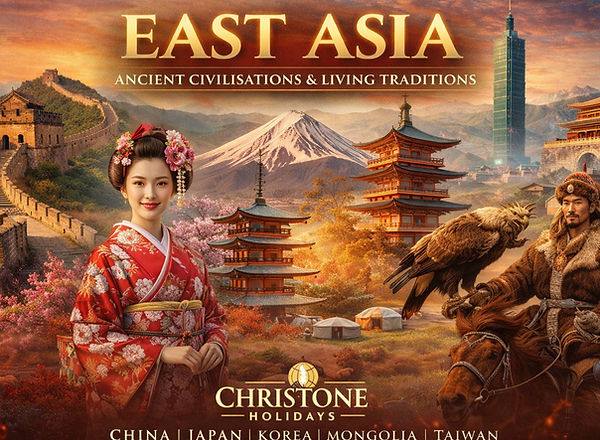
Journey through East Asia, where empires were built, philosophies were born, and timeless wonders continue to shape modern cultures. From the Great Wall to sacred temples and nomadic landscapes, East Asia is a region of profound history and spiritual depth.
Countries Covered
China | Japan | South Korea | North Korea | Mongolia | Taiwan
🇨🇳 CHINA – Land of Dynasties & Timeless Wonders
🌟 China & the 7 Wonders of the World
China is home to one of humanity’s greatest achievements — a monument that defines endurance, strategy, and imperial vision.

🏯 The Great Wall of China
One of the New 7 Wonders of the World
Stretching across mountains, deserts, and plains, the Great Wall of China stands as a powerful symbol of unity, protection, and dynastic strength. Built and rebuilt over centuries, it reflects the ambition of emperors and the resilience of a civilisation that shaped East Asia.
Why it is a Wonder:
-
World’s longest man-made structure
-
Built across multiple dynasties (7th century BC onwards)
-
Strategic, architectural, and cultural masterpiece
-
Visible legacy of imperial China’s vision and defence

🗓️ China Highlights – 3 Days Heritage Itinerary
(Great Wall Focused Cultural Journey)
Day 1: Beijing – Imperial Capital
-
Forbidden City – Heart of Ming & Qing dynasties
-
Tiananmen Square – Political & historical landmark
-
Temple of Heaven – Sacred imperial rituals site
-
Traditional Hutong walk – Old Beijing life & culture
Overnight: Beijing
Forbidden City
Once the exclusive domain of emperors for over 500 years, the Forbidden City stands as the largest imperial palace complex in the world. Its grand halls, courtyards, and ceremonial gates reflect the authority of the Ming and Qing dynasties and offer deep insight into China’s royal governance and architecture.

Tiananmen Square
One of the world’s largest public squares, Tiananmen Square represents the historical and political heart of China. Surrounded by monumental landmarks, it bridges imperial history with modern national identity.
Temple of Heaven
A sacred masterpiece of Ming architecture, the Temple of Heaven was where emperors performed rituals to pray for good harvests. Its perfect symmetry and cosmic symbolism reveal ancient Chinese beliefs in harmony between heaven and earth.
Hutong Cultural Walk
A guided walk through Beijing’s traditional Hutongs offers an intimate glimpse into old city life. Narrow lanes, courtyard homes, and local interactions preserve the living heritage of Beijing beyond its imperial walls.
Day 2: The Great Wall Experience
-
Great Wall of China (Mutianyu / Badaling section)
-
Cable car or guided wall walk experience
-
Watchtowers & panoramic mountain views
-
Ming Tombs (Sacred Way) – Imperial burial complex
Overnight: Beijing
Great Wall of China
The Great Wall of China is one of the greatest architectural achievements in human history and a proud symbol of China’s imperial strength. Stretching across mountains and valleys, the wall was built to protect ancient kingdoms and unify the empire, making it one of the New 7 Wonders of the World.
Watchtowers & Wall Walk
The watchtowers along the Great Wall once served as military observation points and communication posts. Walking along the wall offers breathtaking panoramic views and a deeper understanding of its strategic and defensive significance.

Ming Tombs (Sacred Way)
The Ming Tombs are the resting place of emperors from the Ming Dynasty. The Sacred Way, lined with stone guardian statues, reflects ancient Chinese beliefs about the afterlife and the divine authority of emperors.
Great Wall Cable Car Ride
The cable car journey offers a scenic ascent to the Great Wall, gliding over rugged mountains and ancient fortifications. This experience allows travellers to witness the vast scale of the wall from above while enjoying a comfortable and panoramic approach to one of the New 7 Wonders of the World.
Day 3: Beijing Culture & Departure
-
Summer Palace – Imperial gardens & lake views
-
Lama Temple – Tibetan Buddhist heritage
-
Silk or pearl workshop visit
-
Cultural tea ceremony
Tour Concludes
Summer Palace
The Summer Palace is a magnificent imperial retreat known for its landscaped gardens, lakes, and pavilions. Designed as a place of leisure for emperors, it represents the refined aesthetic and harmony of Chinese landscape architecture.
Summer Palace
The Summer Palace is a magnificent imperial retreat known for its landscaped gardens, lakes, and pavilions. Designed as a place of leisure for emperors, it represents the refined aesthetic and harmony of Chinese landscape architecture.

Traditional Tea Ceremony
A traditional Chinese tea ceremony introduces travellers to the cultural significance of tea in Chinese society. The experience reflects centuries-old customs emphasizing balance, hospitality, and mindfulness.
Traditional Tea Ceremony
A traditional Chinese tea ceremony introduces travellers to the cultural significance of tea in Chinese society. The experience reflects centuries-old customs emphasizing balance, hospitality, and mindfulness.
South Korea – Where Ancient Kingdoms Meet the Future
South Korea is a land of layered histories and forward-looking spirit. From royal palaces and Confucian academies to neon skylines and K‑culture, the country offers a seamless journey across time—deeply rooted traditions thriving alongside innovation.

Cultural & Historical Highlights
Gyeongbokgung Palace (Seoul) – Grand Joseon-era palace showcasing royal architecture and ceremonial traditions.
Bukchon Hanok Village – Preserved lanes of traditional hanok homes offering insight into historic Korean urban life.
Jongmyo Shrine (UNESCO) – Sacred royal ancestral shrine reflecting Confucian rituals and continuity.
Gyeongju Historic Areas (UNESCO) – Capital of the Silla Kingdom with tumuli tombs, temples, and ancient observatories.
Hahoe Folk Village (UNESCO) – Living village preserving Joseon-era customs, mask dances, and wooden architecture.


Faith, Philosophy & Identity
Bulguksa Temple (UNESCO) – Masterpiece of Buddhist architecture symbolizing harmony and enlightenment.
Seokguram Grotto (UNESCO) – Granite sanctuary with a serene Buddha statue overlooking the East Sea.
Confucian Academies (Seowon) – Centers of learning shaping Korean ethics, governance, and social values.
Natural Landscapes & Scenic Wonders
Jeju Island (UNESCO) – Volcanic landscapes, lava tubes, waterfalls, and coastal cliffs.
Seoraksan National Park – Dramatic granite peaks, temples, and seasonal foliage.
Suncheon Bay Wetland Reserve – Ecological haven with reed fields and migratory birds.


Contemporary Icons & Experiences
Seoul Skyline & Han River – A dynamic cityscape blending tradition and technology.
K‑Culture (K‑Pop, K‑Drama) – Global cultural wave shaping modern Korean identity.
DMZ (Demilitarized Zone) – A poignant symbol of history, division, and hope.
Traditional Markets & Korean Cuisine – From street food to royal court dishes, a living culinary heritage.
Why Travel South Korea with Christone Holidays
We curate journeys that honor South Korea’s heritage while embracing its modern rhythm—allowing travelers to experience palaces and pop culture, temples and technology, nature and nightlife with thoughtful balance.
🔗 Connect With Us – Travel with Christone Holidays
South Korea invites you to walk through dynasties, philosophies, and landscapes that shaped East Asia—while discovering a nation that defines the future.
👉 Explore South Korea & East Asia with Christone Holidays
🌐 https://www.christoneholidays.com 📧 info@christoneholidays.com
Official Tourism Authorities (For Reference & Authentic Insights)
Korea Tourism Organization – https://english.visitkorea.or.kr
North Korea – The Hermit Kingdom of History & Ideology
North Korea remains one of the world’s most enigmatic lands—where ancient Korean heritage, powerful ideology, and monumental symbolism coexist. Travel here is less about leisure and more about understanding history, identity, and a nation shaped by isolation, resilience, and state philosophy.
Natural Landscapes & Scenic Wonders
Jeju Island (UNESCO) – Volcanic landscapes, lava tubes, waterfalls, and coastal cliffs.
Seoraksan National Park – Dramatic granite peaks, temples, and seasonal foliage.
Suncheon Bay Wetland Reserve – Ecological haven with reed fields and migratory birds.
Ideology, Faith & National Identity
Juche Philosophy – The state ideology emphasizing self-reliance, independence, and national sovereignty.
Juche Tower – Iconic monument representing ideological foundations, overlooking the Taedong River.
Mansu Hill Grand Monument – Central symbolic site reflecting leadership, history, and national narrative.
Confucian & Buddhist Legacy – Ancient philosophies and faiths that predate modern ideology and shaped early Korean society.

Landscapes & Natural Grandeur
Mount Paektu (Baekdu) – Sacred Mountain – Mythical birthplace in Korean lore, with a crater lake and volcanic landscapes.
Myohyangsan Mountains – Scenic peaks, valleys, and historic temples symbolizing harmony between nature and belief.
East Sea Coastline – Rugged shores and quiet beaches along Korea’s eastern edge.
Travel Perspective with Christone Holidays
Journeys to North Korea are curated with sensitivity, compliance, and cultural respect—focused on observation, historical understanding, and contextual storytelling rather than conventional tourism.
Mongolia – Land of Eternal Blue Sky & Nomadic Heritage
Mongolia is a vast, soul-stirring land where open steppes, sacred mountains, and nomadic traditions define life. Rooted in ancient shamanistic beliefs and the legacy of the Mongol Empire, Mongolia offers travelers a rare encounter with untouched landscapes and a living heritage shaped by freedom, resilience, and harmony with nature.
Ideology, Faith & National Identity
Juche Philosophy – The state ideology emphasizing self-reliance, independence, and national sovereignty.
Juche Tower – Iconic monument representing ideological foundations, overlooking the Taedong River.
Mansu Hill Grand Monument – Central symbolic site reflecting leadership, history, and national narrative.
Confucian & Buddhist Legacy – Ancient philosophies and faiths that predate modern ideology and shaped early Korean society.


Faith, Belief & Nomadic Identity
Shamanism – Ancient spiritual practice rooted in nature worship, sky gods, and ancestral spirits.
Tibetan Buddhism – Introduced in the 16th century, shaping monasteries, rituals, and philosophical life.
Nomadic Ger (Yurt) Culture – A living symbol of mobility, community, and harmony with the land.
Natural Landscapes & Wilderness
Gobi Desert – Dramatic dunes, fossil fields, and stark beauty shaped by time.
Orkhon Valley Cultural Landscape (UNESCO) – Cradle of nomadic civilizations with rivers, grasslands, and sacred sites.
Altai Mountains – Snow-capped peaks and remote valleys shared with Central Asia.
Lake Khövsgöl – Crystal-clear alpine lake revered as Mongolia’s “Blue Pearl.”


Living Experiences
Naadam Festival – Traditional games of wrestling, archery, and horse racing celebrating nomadic pride.
Horseback Steppe Journeys – Travel the land as nomads have for centuries.
Eagle Hunting (Altai Region) – Ancient Kazakh tradition passed through generations.
Why Travel Mongolia with Christone Holidays
Our journeys through Mongolia are designed for travelers seeking silence, scale, and meaning—combining nomadic hospitality, sacred landscapes, and historical insight with responsible, immersive travel.


🔗 Connect With Us – Travel with Christone Holidays
Mongolia invites you to slow down, look outward to endless horizons, and inward to ancient wisdom carried by the land and its people.
👉 Explore Mongolia & East Asia with Christone Holidays
🌐 https://www.christoneholidays.com 📧 info@christoneholidays.com
Official Tourism Authorities (For Reference & Authentic Insights)
Visit Mongolia – https://visitmongolia.com
🇹🇼 Taiwan – Island of Living Traditions & Modern Spirit
Taiwan is an island where ancient Chinese traditions, indigenous cultures, spiritual landscapes, and cutting-edge modern life exist in harmony. From mist-covered mountains and sacred temples to vibrant night markets and futuristic cityscapes, Taiwan offers a journey that is deeply cultural, sensory, and meaningful—true to the philosophy of travel beyond sightseeing.
1. Cultural & Spiritual Heritage
Ancient temples, Confucian philosophy, Taoist rituals, and Buddhist monasteries form Taiwan’s spiritual backbone, reflecting centuries of belief and tradition.
2. Natural Landscapes & Sacred Geography
High mountain ranges, marble gorges, serene lakes, and lush forests make Taiwan one of Asia’s most ecologically diverse islands.
3. Living Traditions & Indigenous Roots
Home to multiple indigenous tribes, Taiwan preserves unique languages, crafts, rituals, and ancestral wisdom rarely found elsewhere in East Asia.
4. Contemporary Icons & Urban Life
Taipei’s skyline, innovative design, and night-market culture reveal how Taiwan blends heritage with modern creativity.


📍 Taipei – Tradition Rising Into the Future
Highlights
Taipei is where Taiwan’s ancient soul meets its modern heartbeat. Grand temples stand beside cutting-edge architecture, while night markets, museums, and sacred mountains shape everyday life. It is a city of belief, balance, and bold innovation.
Key Experiences
-
Longshan Temple – Living spiritual heritage
-
Chiang Kai-shek Memorial Hall – Modern history & national identity
-
Taipei 101 – Symbol of contemporary Taiwan
-
Night Markets – Culinary culture & street traditions
-
Elephant Mountain – Skyline & nature harmony
📍 Alishan – Sacred Mountains & Timeless Forests
Highlights
Alishan is a spiritual landscape of mist, ancient cypress forests, and sunrise rituals. It represents Taiwan’s sacred relationship with nature and slow, meaningful travel.
Key Experiences
-
Alishan Sunrise Viewing
-
Ancient Forest Railway
-
Sacred walking trails & mountain tea culture
-
Indigenous Tsou heritage


📍 Sun Moon Lake – Harmony of Water, Faith & Culture
Highlights
Sun Moon Lake is Taiwan’s most poetic destination, where still waters reflect mountains, temples, and indigenous life. It is a place of spiritual calm and cultural storytelling.
Key Experiences
-
Boat rides across the lake
-
Wenwu Temple – Lakeside spirituality
-
Cycling & walking paths
-
Thao indigenous cultural encounters
📍 Taroko Gorge – Nature’s Sacred Architecture
Highlights
Carved by time and water, Taroko Gorge is Taiwan’s natural cathedral—marble cliffs, emerald rivers, and spiritual trails that inspire awe and humility.
Key Experiences
-
Marble canyon walks
-
Eternal Spring Shrine
-
River valleys & suspension bridges
-
Scenic mountain highways


📍 Tainan – Taiwan’s Cultural & Spiritual Birthplace
Highlights
Tainan is Taiwan’s oldest city and spiritual heart. Former capital, temple capital, and culinary capital—this is where Taiwan’s history truly began.
Key Experiences
-
Ancient temples & shrines
-
Fort Zeelandia – Colonial heritage
-
Traditional street food culture
-
Classical architecture & rituals
🔗 Connect With Us – Travel with Christone Holidays
Taiwan is more than an island—it is a journey through living traditions, sacred landscapes, and meaningful human connections. At Christone Holidays, we curate Taiwan experiences that allow you to feel the rhythm of the land, understand its spiritual roots, and travel with purpose.
👉 Explore Taiwan & East Asia with Christone Holidays
🌐 https://www.christoneholidays.com
📧 info@christoneholidays.com
Official Tourism Authorities (For Reference & Authentic Insights)
🔗 Taiwan Tourism Administration – Ministry of Transportation and Communications
https://eng.taiwan.net.tw