
Anchored in Christ
Curators of Human Civilization’s Journey


Southern Europe Tours & Holidays | Italy, Spain, Greece & Balkans – Christone Holidays
Southern Europe – Civilizations, Coastlines & Cultural Crossroads
From Classical Empires to the Mediterranean & Balkan Heartlands
Welcome to Southern Europe, a region where millennia of history, breathtaking landscapes, and vibrant cultures converge under the warm Mediterranean sun. From the awe-inspiring Colosseum, one of the New7Wonders of the World, to the idyllic islands and charming coastal towns, this is a destination that promises unforgettable experiences.
Our journey through Southern Europe begins here, exploring the iconic nations of Italy, Vatican City, Portugal, Malta, Cyprus, and Greece. Prepare to be captivated by ancient ruins, dazzling blue waters, world-class cuisine, and the warmth of genuine hospitality.
Southern Europe is where ancient empires were born, faith shaped civilizations, and coastlines carried stories across centuries. From the artistic legacy of Italy and Vatican City, the vibrant traditions of Spain and Portugal, the mythological landscapes of Greece, the island heritage of Cyprus, to the layered histories of the Balkan region, this is a region best experienced slowly and meaningfully.
At Christone Holidays, we curate journeys that go beyond sightseeing—inviting you to walk through history, understand cultures deeply, and feel the rhythm of life across Southern Europe.
✨ Why Visit Southern Europe?
-
Birthplace of Western civilization & democracy
-
Roman, Byzantine, Ottoman & Christian heritage
-
Mediterranean & Adriatic coastlines
-
UNESCO World Heritage concentration
-
Island cultures & pilgrimage routes
-
Deep cultural, architectural & culinary diversity

🌍 Balkan Region (8 Countries)
Balkan Countries Covered:
-
🇭🇷 Croatia
-
🇸🇮 Slovenia
-
🇧🇦 Bosnia & Herzegovina
-
🇲🇪 Montenegro
-
🇷🇸 Serbia
-
🇦🇱 Albania
-
🇲🇰 North Macedonia
-
🇧🇬 Bulgaria
Southern Europe is not just visited—it is understood.
Christone Holidays designs journeys that connect history, culture, and the human spirit.
Vatican City Tours & Heritage Travel | Spiritual & Artistic Heart – Christone Holidays
Explore Vatican City with Christone Holidays—St. Peter’s Basilica, Vatican Museums, Sistine Chapel, and centuries of spiritual and artistic heritage.
The Rock of the Universal Church
Built directly above the tomb of St. Peter, St. Peter’s Basilica is not simply the largest church in the world — it is the geographical and spiritual centre of apostolic Christianity.
Here lies the fisherman of Galilee who became the shepherd of the universal Church.
The high altar stands exactly over his grave, preserving an unbroken line from the 1st century to the present day. What rises above is Renaissance grandeur; what rests below is the foundation of Christian authority.
In this single space converge:
-
the martyrdom of Peter
-
the continuity of the papacy
-
the visible structure of the global Church
Rome therefore is not only a historic city — it is the place where apostolic succession became a living institution, shaping theology, liturgy, art, architecture, and the civilizational identity of the Christian West.
To stand here is to stand at the point where faith moved from persecution to proclamation, from the catacombs to the heart of world history.
Civilizational Meaning
-
The birth of structured and unified Christianity
-
The seat of apostolic succession
-
The spiritual axis of the Western Christian world
1) The Confessio – The Exact Tomb Alignment
Beneath the papal altar lies the Confessio, the sacred space that allows pilgrims to look directly toward the tomb of St. Peter.
This vertical alignment — tomb → altar → dome → heaven — is one of the most powerful architectural theologies in the Christian world.
Apostolic faith is not symbolic here — it is spatial and historical.
2) The Pilgrim’s Descent
Before Christianity became imperial, it was underground.
The descent toward Peter’s tomb preserves the memory of the age of martyrdom and the Church of the catacombs.
Authority in Christianity is born from witness and sacrifice.
3) The Chair of Peter (Continuity of Office)
The basilica enshrines the Cathedra Petri, the sign that the mission given to Peter continues through history.
Not a monument to the past — but a living apostolic office.
4) The Dome as a Civilizational Statement
Michelangelo’s dome is not only architectural brilliance — it is the visual proclamation of a faith that moved from hidden gatherings to shaping world civilization.
👉 Explore The Apostolic Axis – Where the Apostles Rest
The Three Apostolic Tomb Churches of the Universal Church
St. Peter’s in Rome is one of the only three churches in the world built directly above the tombs of the apostles — the others being
the Cathedral of Santiago de Compostela Cathedral in Spain and
Vatican City – The Spiritual & Artistic Heart of Christianity
A Living Legacy of Faith, Art & Human Genius
Vatican City, the world’s smallest independent state, holds one of humanity’s greatest concentrations of spiritual, artistic, and historical wealth. Enclosed within Rome, it is the spiritual center of the Catholic Church and a global symbol of faith, art, and intellectual legacy.
With Christone Holidays, Vatican City is not just visited—it is understood. Our journeys reveal the stories behind masterpieces, sacred spaces, and centuries of devotion that shaped Western civilization.
🏛️ Key Highlights of Vatican City
⛪ St. Peter’s Basilica
-
One of the largest and most sacred churches in the world
-
Home to Michelangelo’s Pietà
-
Dome designed by Michelangelo, offering panoramic views of Rome
St. Peter’s Basilica marks the tomb of the Apostle Peter — the physical and spiritual foundation of the universal Church and the enduring centre of apostolic authority.


🕊️ St. Peter’s Square
-
Designed by Gian Lorenzo Bernini
-
Symbol of openness and unity
-
Center for Papal ceremonies and gatherings
🖼️ Vatican Museums
-
Among the most visited museums globally
-
Over 20,000 artworks spanning centuries
-
Galleries include the Raphael Rooms and Gallery of Maps
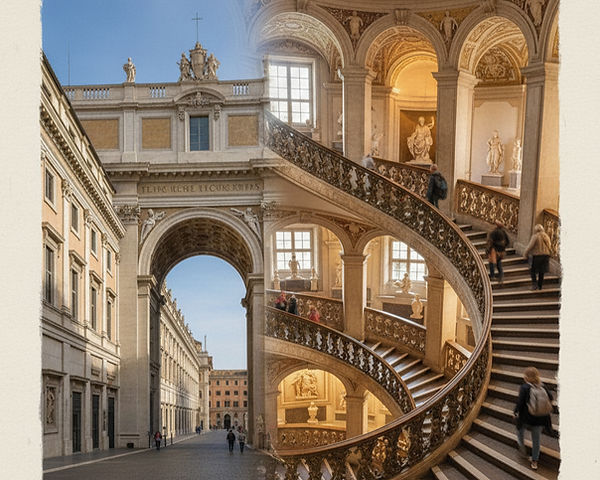

🎨 Sistine Chapel
-
World-renowned ceiling by Michelangelo
-
Site of the Papal Conclave
-
A masterpiece of Renaissance human achievement
Inside St. Peter’s Basilica: A Masterpiece of Renaissance and Baroque Art
-
Step into the heart of the Vatican to witness the breathtaking scale of the world's largest church. This view highlights Bernini’s towering bronze Baldacchino, standing directly beneath Michelangelo’s magnificent dome. As golden light filters through the high windows, the intricate marble floors and celestial mosaics create a timeless atmosphere of spiritual awe and architectural brilliance.

🌍 Why Visit Vatican City with Christone Holidays?
-
Expert-curated heritage & pilgrimage journeys
-
Deep cultural and theological context
-
Seamless integration with Rome & Italy tours
-
Ideal for heritage travelers, pilgrims & academic groups
🇮🇹 Rome & Vatican
7 Wonders Heritage Tour – Empire, Faith & Human Genius
Rome is home to one of the New 7 Wonders of the World—the Colosseum, a global symbol of human ambition, engineering, and empire. When combined with the spiritual and artistic legacy of Vatican City, this journey becomes a rare experience where one of the world’s greatest wonders meets the sacred heart of civilization.
With Christone Holidays, this is not just a city tour—it is a 7 Wonders–linked heritage journey, connecting ancient power, Renaissance brilliance, and living faith.
🌍 7 Wonders Connection
🏟️ The Colosseum – New 7 Wonders of the World
-
One of the New 7 Wonders (2007)
-
Largest amphitheatre ever built
-
Symbol of Roman engineering and imperial strength
-
A cornerstone experience of this itinerary
Standing before the Colosseum is standing before one of humanity’s greatest achievements.

From one of the world’s greatest wonders to the spiritual heart of Christianity,
Christone Holidays curates journeys where history, faith, and human achievement meet.
🗺️ Rome & Vatican – Curated Tour
🏛️ Day 1: Imperial Rome & the 7 Wonder
Highlights
-
Guided visit to the Colosseum (7 Wonder)
-
Roman Forum & Palatine Hill
-
Capitol Hill views and ancient city layout
Experience Focus:
Understanding how Rome shaped governance, architecture, and civilization.

🌆 Day 2: Historic Rome & Living Heritage
Highlights
-
Pantheon – architectural perfection
-
Piazza Navona & Baroque Rome
-
Trevi Fountain & Spanish Steps
Experience Focus:
Rome as a living city where ancient, medieval, and modern worlds coexist.
⛪ Day 3: Vatican City – Spiritual & Artistic Core
Highlights
-
Vatican Museums
-
Sistine Chapel (Michelangelo’s masterpiece)
-
St. Peter’s Basilica & St. Peter’s Square
Experience Focus:
Faith, Renaissance art, and the spiritual legacy that shaped Europe.
✨ Why This is a Signature Christone Holidays Tour
-
Features one of the New 7 Wonders of the World
-
Heritage-led, not rushed sightseeing
-
Expert-guided storytelling & context
-
Ideal for:
-
Cultural travelers
-
Pilgrimage groups
-
Architecture & history students
-
Luxury heritage seekers
-
🕰️ Tour Duration
3 Days / 2 Nights
(Extendable to Florence, Venice, or Southern Italy)
🤝 Connect With Us – Rome & Vatican Heritage Journey
✨ Christone Holidays
Christone Holidays curates immersive Rome & Vatican journeys that connect the 7 Wonders of the World, sacred heritage, and living history—guided by expertise, authenticity, and cultural respect.
🔗 Explore Rome & Vatican Tours with Christone Holidays
👉 https://www.christoneholidays.com
📧 Email: info@christoneholidays.com
🌍 Authorised Tourism & Heritage Sources
For official cultural, historical, and institutional information, you may also refer to the following recognised authorities:
-
Vatican City – The Holy See (Official)
🔗 https://www.vatican.va -
Vatican Museums (Official)
🔗 https://www.museivaticani.va -
Turismo Roma – Official Tourism of Rome
🔗 https://www.turismoroma.it
🇮🇹 ITALY
Italy Tours & Cultural Journeys | Art, Heritage & Landscapes – Christone Holidays
Italy – The Living Museum of Civilizations
Art, Architecture & Cultural Landscapes Beyond Rome
Italy is a country where civilizations layered upon one another—from Etruscan roots and Roman power to Renaissance brilliance and modern cultural life. Beyond Rome and Vatican City, Italy unfolds through art cities, historic towns, dramatic coastlines, and culinary traditions that continue to shape the world.
With Christone Holidays, Italy is explored as a cultural journey—rich in meaning, depth, and timeless beauty.


The Layers of the Italian Journey
-
The Etruscan & Pre-Roman Shadow: Moving beyond the Colosseum to the mysterious necropolises of Cerveteri or the tufo-cut towns like Civita di Bagnoregio, where the roots of Italian identity truly began.
-
The Renaissance Dialogue: Not just seeing the David, but understanding the civic pride of the Republics—exploring the hidden courtyards of Urbino or the geometric perfection of Pienza.
-
The Coastal Narrative: Viewing the Amalfi Coast or Cinque Terre not just as postcard views, but as historic maritime republics that once commanded the Mediterranean.
-
The Living Tradition (L'Italia d'Oggi): Connecting the ancient to the modern through the ritual of the passeggiata (evening stroll) and the regional integrity of the slow-food movement.
✨ Why Visit Italy?
-
Cradle of Roman & Renaissance civilization
-
World’s highest concentration of UNESCO sites
-
Masterpieces of art, architecture & design
-
Cultural diversity from north to south
-
Culinary heritage that shaped global cuisine
🗺️ Italy Beyond Rome & Vatican
-
Florence & Tuscany – Renaissance art & landscapes
-
Venice & Veneto – Lagoon culture & maritime heritage
-
Milan & Northern Italy – Design, fashion & modern Italy
-
Naples & Pompeii – Ancient cities & volcanic history
-
Amalfi Coast – Coastal beauty & heritage towns
-
Sicily – Crossroads of Mediterranean civilizations
🗺️ Italy Beyond Rome & Vatican
-
Florence & Tuscany – Renaissance art & landscapes
-
Venice & Veneto – Lagoon culture & maritime heritage
-
Milan & Northern Italy – Design, fashion & modern Italy
-
Naples & Pompeii – Ancient cities & volcanic history
-
Amalfi Coast – Coastal beauty & heritage towns
-
Sicily – Crossroads of Mediterranean civilizations
🟫Florence & Tuscany – Renaissance Art & Living Landscapes
🟫 Florence and Tuscany represent the intellectual and artistic awakening of Europe. This region gave birth to the Renaissance—shaping art, architecture, philosophy, and human thought—while its rolling hills, vineyards, and medieval towns preserve a way of life rooted in harmony between culture and land.
With Christone Holidays, Florence and Tuscany are explored as a living cultural landscape, not just a collection of monuments.
🟫 Highlights
-
Birthplace of the Renaissance
-
Masterpieces by Michelangelo, Leonardo & Botticelli
-
UNESCO-listed historic centres
-
Vineyards, olive groves & cypress-lined hills
-
Medieval towns and cultural countryside

🟫 Key Places Covered
Florence
-
Florence Cathedral (Duomo) & historic centre
-
Uffizi Gallery & Renaissance art legacy
-
Ponte Vecchio & Medici heritage
Tuscany Region
-
Pisa & its iconic Leaning Tower
-
Siena’s medieval cityscape
-
San Gimignano’s historic towers
-
Chianti vineyards & countryside
Florence with Christone Holidays

Renaissance Florence — where art, power, and human genius converged.
Florence Cathedral (Duomo) & Historic Centre
The Florence Cathedral stands as a symbol of Renaissance engineering and artistic ambition. Its historic centre reflects the intellectual, architectural, and civic ideals that transformed European thought.
Uffizi Gallery & Renaissance Art Legacy
The Uffizi Gallery houses one of the world’s greatest collections of Renaissance art, preserving masterpieces that defined humanism, perspective, and artistic expression.
Ponte Vecchio & Medici Heritage
Ponte Vecchio connects Florence’s commercial life with its ruling Medici legacy, standing as a living bridge between power, craftsmanship, and cultural continuity.
Tuscany Region with Christone Holidays
Pisa & the Leaning Tower
Pisa is renowned for its iconic Leaning Tower, a masterpiece of medieval engineering and a symbol of Italy’s architectural ingenuity.
Siena’s Medieval Cityscape
Siena preserves a remarkably intact medieval urban form, reflecting civic pride, Gothic architecture, and centuries-old traditions.
San Gimignano’s Historic Towers
San Gimignano’s skyline of stone towers represents medieval power, prosperity, and architectural rivalry frozen in time.
Chianti Vineyards & Countryside
The Chianti region embodies Tuscany’s rural heritage, where vineyards, olive groves, and historic estates shape a timeless cultural landscape.

Tuscany — where cities, countryside, and centuries coexist.
🟫Venice & Veneto – Lagoon Culture & Maritime Heritage
Venice and the Veneto region reflect a civilization shaped by water, trade, and maritime power. Built upon a lagoon, Venice rose as a global republic, connecting Europe with the East through commerce, diplomacy, and art. Beyond the city, Veneto preserves Renaissance towns, Palladian architecture, and cultural landscapes that sustained Venice’s influence.
With Christone Holidays, Venice & Veneto are explored as a maritime cultural legacy, not merely a scenic destination.

🟫 Highlights
-
One-of-a-kind lagoon city built on water
-
Maritime republic and global trading power
-
Byzantine, Gothic & Renaissance architecture
-
Art, music and craftsmanship traditions
-
Historic towns and villa landscapes of Veneto

🟫 Key Places Covered (Mini Grid)
Venice
-
St. Mark’s Basilica & Piazza San Marco
-
Doge’s Palace & Venetian Republic legacy
-
Grand Canal & historic palazzi
Veneto Region
-
Verona & Roman–medieval heritage
-
Vicenza & Palladian architecture
-
Padua & early university traditions
St. Mark’s Basilica & Piazza San Marco
The spiritual and ceremonial heart of Venice, reflecting Byzantine splendor, maritime wealth, and the city’s global connections.
Doge’s Palace & Venetian Republic Legacy
Seat of power of the Venetian Republic, symbolising centuries of maritime governance, diplomacy, and artistic patronage.
Grand Canal & Historic Palazzi
Venice’s main waterway, lined with palazzi that reveal the city’s mercantile prosperity and architectural elegance.
Venice with Christone Holidays
Veneto Region with Christone Holidays

Verona & Roman–Medieval Heritage
Verona preserves layers of Roman engineering and medieval urban life, reflecting the continuity of classical and civic traditions.
Vicenza & Palladian Architecture
Vicenza is defined by Andrea Palladio’s architectural vision, shaping Renaissance design principles that influenced Europe and the world.
Padua & Early University Traditions
Padua stands as a historic center of learning, home to one of Europe’s earliest universities and centuries of intellectual advancement.
🟫 Signature Experiences (Christone Holidays)
-
Lagoon heritage walks and canal journeys
-
Venetian art, architecture & civic history tours
-
Palladian villa explorations in Veneto
-
Music, craftsmanship & cultural workshops
-
Study tours for architecture & urban history

🟫✨ Signature Experiences – Venice & Veneto
Curated by Christone Holidays
You begin your journey walking along the quiet edges of the Venetian lagoon, where water replaces roads and history feels close enough to touch. A gentle canal journey reveals Venice as it has always been—reflected in water, shaped by trade, and softened by time.
As you move through the city, art, architecture, and civic life unfold together—from grand basilicas to hidden courtyards where the Venetian Republic once governed a global empire. Each space tells a story of power, creativity, and resilience.
Beyond Venice, the rhythm slows in the Veneto countryside. Here, Palladian villas rise gracefully among fields and hills, revealing Renaissance ideals of balance, proportion, and harmony between human design and nature.
The journey deepens through music, craftsmanship, and cultural workshops, where Venetian traditions—glass, sound, and skilled hands—continue to shape identity.
For students and scholars, study tours in architecture and urban history transform the region into an open classroom, where cities, buildings, and landscapes speak directly of innovation, planning, and cultural evolution.
With Christone Holidays, Venice & Veneto are not just visited—they are experienced, understood, and remembered.
🟫 Milan & Northern Italy – Design, Fashion & Modern Italy
Northern Italy reflects a different rhythm of the country—where innovation, craftsmanship, and modern life evolved alongside historic foundations. Milan stands at the heart of this transformation, shaping global fashion, design, and industry, while surrounding regions reveal lakes, alpine landscapes, and refined urban culture.
With Christone Holidays, Milan & Northern Italy are experienced as the meeting point of heritage and modern excellence.
🌟 Why Visit Milan & Northern Italy?
-
Global capital of fashion and design
-
Renaissance and modern architecture side by side
-
Italy’s economic and creative powerhouse
-
Alpine scenery and Italian lake landscapes
-
Cultural cities shaped by innovation and craftsmanship
🏙️ Key Places Covered
Milan
-
Milan Cathedral (Duomo) – Gothic masterpiece and city icon
-
Galleria Vittorio Emanuele II – Historic elegance and luxury
-
Santa Maria delle Grazie – Home of The Last Supper
Northern Italy Highlights
-
Lake Como – Refined lakeside heritage and landscapes
-
Turin – Royal legacy and industrial innovation
-
Bergamo – Medieval upper town and modern lower city
Milan with Christone Holidays

Santa Maria delle Grazie – Home of The Last Supper
A UNESCO World Heritage site, this historic convent houses Leonardo da Vinci’s The Last Supper, one of the most influential works in art history.
Milan Cathedral (Duomo) – Gothic Masterpiece
Milan’s iconic Duomo is a monumental expression of Gothic architecture, symbolising centuries of craftsmanship, faith, and civic pride.
Galleria Vittorio Emanuele II – Historic Elegance & Luxury
This grand 19th-century arcade reflects Milan’s tradition of style and sophistication, blending architecture, commerce, and social life.
Northern Italy with Christone Holidays

Lake Como – Refined Lakeside Heritage
Lake Como blends natural beauty with aristocratic villas and historic towns, long admired for its elegance, culture, and serene landscapes.
Turin – Royal Legacy & Industrial Innovation
Turin reflects Italy’s royal past and industrial spirit, where grand palaces coexist with pioneering automotive and design heritage.
Bergamo – Medieval Upper Town & Modern City
Bergamo’s fortified upper town preserves medieval charm, while its lower city represents modern life and cultural continuity.

🟫 Naples & Pompeii – Ancient Cities & Volcanic History
In southern Italy, history rises from volcanic soil. Naples thrives with energy, tradition, and layered civilizations, while nearby Pompeii offers a rare, preserved moment of ancient Roman life. Dominated by Mount Vesuvius, this region reveals how nature and humanity have shaped one another across millennia.
With Christone Holidays, Naples & Pompeii are explored as a powerful dialogue between civilization and natural forces.
🌟 Why Visit Naples & Pompeii?
-
One of Europe’s oldest continuously inhabited cities
-
Exceptionally preserved Roman ruins
-
UNESCO World Heritage archaeological sites
-
Dramatic volcanic landscapes
-
Deep-rooted Mediterranean culture and traditions
🏛️ Key Places Covered
Naples
-
Historic Centre of Naples – Living layers of ancient, medieval, and Baroque heritage
-
Naples National Archaeological Museum – Masterpieces from Pompeii and Herculaneum
-
Castel Nuovo & waterfront – Medieval power and maritime life
Pompeii & Vesuvius
-
Pompeii Archaeological Site – Frozen Roman city preserved by volcanic ash
-
Mount Vesuvius – The volcano that shaped history and landscape
Naples with Christone Holidays
Historic Centre of Naples – Layered Urban Heritage
A UNESCO-listed old town where Greek origins, Roman streets, medieval churches, and Baroque palaces coexist as a living city.
Naples National Archaeological Museum – Classical Masterpieces
One of the world’s most important archaeological museums, housing extraordinary artifacts from Pompeii, Herculaneum, and ancient Roman civilization.
Castel Nuovo & Waterfront – Medieval Power & Maritime Life
A historic royal fortress overlooking the sea, symbolising Naples’ medieval authority and long-standing maritime significance.

Pompeii & Vesuvius with Christone Holidays
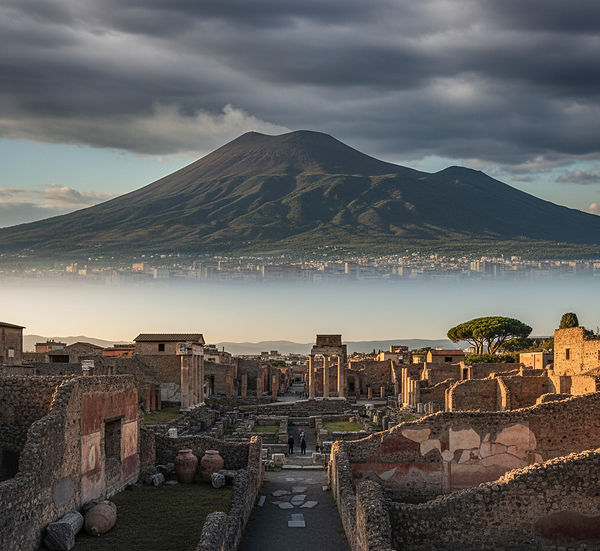
Pompeii Archaeological Site – Preserved Roman Life
An exceptionally preserved Roman city, offering rare insight into daily life, architecture, and urban planning frozen in time by volcanic ash.
Mount Vesuvius – Volcano That Shaped History
One of Europe’s most famous active volcanoes, whose eruptions transformed the landscape and permanently altered the course of ancient history.
Amalfi Coast – Coastal beauty & heritage towns
Along southern Italy’s dramatic coastline, the Amalfi Coast unfolds as a landscape shaped by sea, cliffs, and centuries of maritime culture. Colorful towns cling to steep hillsides, while historic ports reflect a past of trade, navigation, and coastal life.
With Christone Holidays, the Amalfi Coast is experienced as a journey through heritage towns set against Mediterranean beauty.
🌟 Why Visit the Amalfi Coast?
-
UNESCO World Heritage coastal landscape
-
Cliffside towns with deep maritime history
-
Mediterranean architecture and culture
-
Scenic coastal roads and sea views
-
Historic ports, churches, and town centers
🏛️ Key Places Covered
Amalfi
-
Amalfi Cathedral – Spiritual and architectural heart of the coast
-
Historic maritime town – Legacy of the Amalfi Maritime Republic
Positano
-
Cliffside townscape – Iconic coastal architecture
-
Mediterranean lifestyle – Art, fashion, and seaside culture
Ravello
-
Hilltop gardens & villas – Panoramic views and refined heritage
-
Music and cultural traditions – Historic artistic retreat
Amalfi Tour with Christone Holidays
Amalfi Cathedral – Spiritual & Architectural Heart
A striking medieval cathedral that reflects Amalfi’s religious importance and its historic connections to Mediterranean trade and culture.
Historic Maritime Town – Amalfi Republic Legacy
Once a powerful maritime republic, Amalfi preserves a legacy of seafaring innovation, trade networks, and coastal governance.

Positano Tour with Christone Holidays

Cliffside Townscape – Iconic Coastal Architecture
Positano’s cascading houses and narrow lanes create one of the Mediterranean’s most recognisable coastal landscapes.
Mediterranean Lifestyle – Art, Fashion & Seaside Culture
The town reflects a relaxed yet stylish coastal life, shaped by local craftsmanship, art, and a long tradition of seaside living.
Capri – Island Elegance & Natural Beauty with Christone Holidays
Capri – Island Elegance & Natural Beauty
Island Heritage & Mediterranean Glamour
Capri has long been admired for its dramatic cliffs, clear waters, and refined island culture, shaped by Roman history and artistic retreat traditions.
Blue Grotto (Grotta Azzurra)
A natural sea cave famous for its luminous blue light, reflecting Capri’s unique coastal geology.
Anacapri & Scenic Views
The quieter side of the island, offering elevated viewpoints, historic villas, and a slower Mediterranean rhythm.

Ravello Tour with Christone Holidays


Capri – Island Elegance & Natural Beauty
Island Heritage & Mediterranean Glamour
Capri has long been admired for its dramatic cliffs, clear waters, and refined island culture, shaped by Roman history and artistic retreat traditions.
Blue Grotto (Grotta Azzurra)
A natural sea cave famous for its luminous blue light, reflecting Capri’s unique coastal geology.
Anacapri & Scenic Views
The quieter side of the island, offering elevated viewpoints, historic villas, and a slower Mediterranean rhythm.
🟫 Sicily – Crossroads of Mediterranean Civilizations
Sicily stands at the meeting point of Europe, Africa, and the Middle East. Across centuries, Greeks, Romans, Arabs, Normans, and Spaniards shaped the island’s cities, temples, and traditions. This layered heritage, set against volcanic landscapes and coastal beauty, makes Sicily one of the Mediterranean’s most culturally rich regions.
With Christone Holidays, Sicily is explored as a living crossroads of civilizations.
🌟 Why Visit Sicily?
-
Ancient Greek and Roman archaeological sites
-
Arab-Norman architecture and UNESCO heritage cities
-
Active volcanoes and dramatic landscapes
-
Distinct island culture and traditions
-
Strategic crossroads of Mediterranean history
🏛️ Key Places Covered
Palermo
-
Arab–Norman architecture – Cultural fusion and royal heritage
-
Historic markets & old quarters – Living traditions
-
Valley of the Temples (Agrigento)
-
Ancient Greek temples – One of the best-preserved classical sites in the Mediterranean
-
Mount Etna
-
Europe’s most active volcano – Shaping Sicily’s landscape and history
-
Taormina
-
Ancient theatre & coastal views – Classical heritage above the Ionian Sea
Palermo
Arab–Norman Architecture – Cultural Fusion & Royal Heritage
Palermo reveals centuries of cultural exchange through its Arab–Norman palaces, cathedrals, and royal complexes shaped by Mediterranean powers.
Historic Markets & Old Quarters – Living Traditions
Traditional markets and historic districts preserve Sicily’s daily life, crafts, and culinary culture rooted in centuries-old urban rhythms.
Valley of the Temples (Agrigento)
Ancient Greek Temples – Classical Mediterranean Legacy
One of the world’s finest preserved Greek archaeological landscapes, showcasing monumental temples that reflect Sicily’s ancient Hellenic heritage.
Mount Etna
Europe’s Most Active Volcano – Shaping Land & History
A dominant natural force that has shaped Sicily’s geography, agriculture, and settlement patterns since antiquity.
Taormina
Ancient Theatre & Coastal Views – Classical Heritage Above the Sea
A historic hill town crowned by a Greek theatre, offering panoramic views where classical culture meets the Ionian coastline.

✨ Signature Experiences – Christone Holidays
Travelling through Sicily feels like crossing eras. Ancient temples stand beside medieval towns, while volcanic landscapes define daily life. Guided explorations connect archaeology, architecture, and cultural exchange, revealing how civilizations coexisted and influenced one another.
Local encounters, heritage walks, and study-oriented journeys transform Sicily into an immersive historical experience, where the Mediterranean story unfolds at every step.
🔗 Connect With Us
Travel with Christone Holidays
Discover Italy and Sicily through thoughtfully curated journeys that focus on heritage, culture, and meaningful travel experiences. From ancient cities to living traditions, our itineraries are designed to reveal the depth behind every destination.
👉 Explore Italy & Southern Europe with Christone Holidays
🌐 https://www.christoneholidays.com
🏛️ Official Tourism Authorities (For Reference & Authentic Insights)
For deeper understanding, historical context, and official travel information, you may also explore the following authorised tourism platforms:
-
Italy – Official National Tourism Board
🌐 https://www.italia.it -
Sicily – Official Tourism Authority
🌐 https://www.visitsicily.info
We connect curated journeys with authentic, official heritage sources.
“Walking in the Footsteps of Leonardo da Vinci”
🌍 Travel With Christone Holidays — The Leonardo da Vinci Experience
🧭 A Journey Designed for the Curious Traveller
At Christone Holidays, the story of Leonardo da Vinci is not presented as a timeline of achievements — it is experienced through landscapes, workshops, and living cities that shaped his imagination. Our journeys invite travellers to slow down, observe deeply, and rediscover the Renaissance through the eyes of a curious mind.
From the peaceful hills of Vinci to the vibrant plazas of Florence and the grand architectural courts of Milan, every stop becomes an exploration of creativity, innovation, and cultural transformation. We guide travellers beyond monuments into the environments where ideas were born — artisan studios, historic streets, cathedral squares, and Renaissance courtyards.

🌿 Vinci — Beginning With Observation
Your journey with Christone Holidays begins in the quiet Tuscan countryside, where Leonardo first developed his fascination with nature. Walking through olive groves and village pathways, travellers experience the simplicity and harmony that inspired a lifetime of invention.
Rather than rushing through locations, our approach encourages observation — watching light on stone walls, listening to the rhythm of rural Italy, and reconnecting with the curiosity that defined the Renaissance spirit.

🎨 Florence — Living the Renaissance Workshop
In Florence, Christone Holidays brings travellers into the heart of Renaissance creativity. Guided walks through historic squares reveal stories of artistic experimentation, intellectual exchange, and the cultural atmosphere that nurtured young Leonardo.
Visitors explore galleries and workshops not just as museums, but as living spaces of imagination. Standing beneath the Duomo or along the Arno River, travellers begin to understand how Florence itself functioned as an open-air studio where art, science, and philosophy intersected.


🏰 Milan — The Last Supper Heritage
The Visionary at Court and the Birth of a Masterpiece
Arriving in Milan, travellers step into a city that transformed Leonardo da Vinci from a gifted Renaissance artist into a visionary engineer, architect, and thinker. Unlike the artisan workshops of Florence, Milan introduced Leonardo to the intellectual environment of royal patronage under Ludovico Sforza — a world where art, science, military engineering, and architecture merged into a new form of creative expression.
The heart of this experience lies within the quiet refectory of Santa Maria delle Grazie, home to one of humanity’s most profound artistic achievements — The Last Supper. Entering this historic Dominican convent, visitors are immediately struck by the stillness of the space. The soft light filtering across the walls reveals a masterpiece not only of painting but of human psychology, perspective, and storytelling.
Leonardo’s Milan period represents a turning point in his life. Here, he explored large-scale engineering projects, designed fortifications, studied urban planning, and experimented with new artistic techniques. Walking through the surrounding Renaissance streets, travellers begin to understand Milan as a living laboratory of innovation — a city that encouraged bold ideas and intellectual risk.
Beyond the refectory, the journey continues into the courtyards of Sforza Castle, where Leonardo worked on architectural and engineering commissions. The fortress walls and elegant arcades speak to an era when artists were also inventors and scientists, shaping the cultural identity of entire cities. Standing within these historic spaces, travellers sense the energy of Renaissance Milan — a dynamic environment where creativity met power and imagination reshaped society.
Today, Milan offers visitors a unique opportunity to connect deeply with Leonardo’s mature years. Museums display sketches, mechanical studies, and models that reveal the breadth of his curiosity. Walking through the city, from historic piazzas to hidden cloisters, travellers encounter the legacy of a man who blurred the boundaries between art and science.
For Christone Holidays travellers, the Milan experience is not simply about viewing a famous painting — it is about understanding the environment that allowed Leonardo to dream on a grand scale. The journey encourages reflection on how cities influence creativity, how patronage fuels innovation, and how a single masterpiece can capture the emotional depth of an entire civilization.
Standing before The Last Supper, visitors experience more than an artwork; they witness a moment where human emotion, spiritual symbolism, and Renaissance intellect converge. Milan becomes not just a destination, but a transformative chapter in the larger story of Leonardo da Vinci — a place where imagination reached its fullest expression.
🏰 Milan — Innovation at the Royal Court
Arriving in Milan, the journey shifts toward Leonardo’s visionary phase. Christone Holidays leads travellers through the architectural spaces and historic courtyards where engineering, art, and science merged under Renaissance patronage.
Experiencing the refectory of Santa Maria delle Grazie, visitors encounter The Last Supper not only as a masterpiece but as a moment of artistic transformation. Through immersive storytelling, we reveal how Milan shaped Leonardo into a thinker who bridged disciplines and redefined creativity.

🌅 The Christone Holidays Philosophy — Travel as Discovery
Every Leonardo journey reflects our belief that travel is more meaningful when it becomes an exploration of human thought and cultural evolution. Rather than focusing solely on monuments, we emphasize the atmosphere of places — the light of Tuscany, the movement of Renaissance streets, the quiet reflection within historic spaces.
Through this approach, travellers do not simply learn about Leonardo da Vinci; they experience the Renaissance as a living journey that continues to inspire curiosity today.
🧭 Traveller Experience Highlights
-
Slow travel through Vinci’s rural landscapes
-
Renaissance walking journeys in Florence
-
Museum storytelling beyond traditional tours
-
Architectural exploration in Milan’s historic courts
-
Cultural reflection moments in cathedral squares
-
Artistic observation sessions inspired by Leonardo’s notebooks
The Journey Map of Leonardo
Cities That Shaped a Genius
Leonardo da Vinci’s life was not confined to a single city — it unfolded as a journey across the landscapes of Renaissance Italy. Each destination shaped a different dimension of his genius, from childhood curiosity to artistic mastery and visionary innovation. For travellers with Christone Holidays, this journey becomes a living route through Tuscany and Northern Italy, connecting villages, artistic capitals, and royal courts. The story begins in Vinci, a peaceful Tuscan village surrounded by olive groves and rolling hills. Here, Leonardo developed a deep fascination with nature — observing flowing water, plants, animals, and the movement of light across the countryside. Vinci is located approximately 45 km from Florence, making it the natural starting point for travellers seeking to understand the early environment that shaped his imagination. From Vinci, the journey continues to Florence, the intellectual and artistic heart of the Renaissance. Florence was more than a city — it was an open-air workshop filled with sculptors, architects, scientists, and philosophers. Within its cathedral squares and artisan studios, Leonardo trained under masters, studied anatomy and perspective, and absorbed the vibrant cultural energy that defined Renaissance thought. Walking through Piazza della Signoria or along the Arno River today, travellers experience the same atmosphere that nurtured his early creative breakthroughs. The route then extends northward to Milan, approximately 300 km from Florence, where Leonardo’s talents expanded dramatically under the patronage of the Sforza court. Milan offered him the opportunity to merge art with engineering, architecture, and scientific experimentation. Within the refectory of Santa Maria delle Grazie, he created The Last Supper, a masterpiece that transformed religious art into an exploration of human emotion and narrative depth. Exploring Milan’s Renaissance courtyards and historic districts allows travellers to witness the city where Leonardo’s ideas matured on a grand scale. Together, Vinci, Florence, and Milan form a continuous Renaissance pathway — a journey through rural beginnings, artistic discovery, and visionary achievement. For Christone Holidays travellers, this route is experienced not simply as historical movement but as an evolving cultural landscape, where each city reveals a new dimension of Leonardo’s mind and the era that shaped him.
📍 Travel Distance Reference (Include as Visual Map Notes)
-
Vinci → Florence: approx. 45 km (1 hour drive)
-
Florence → Milan: approx. 300 km (3–4 hours by train)
-
Vinci → Milan: approx. 270 km
-
Optional Extension: Milan → Rome (later influence period): approx. 570 km
🧭 Travel Experience After achieving fame in Milan, Leonardo da Vinci briefly entered the powerful maritime republic of Venice — a city unlike any other in Renaissance Europe. Built upon water, defended by complex canals, and shaped by trade, strategy, and engineering, Venice became a living laboratory for Leonardo’s scientific curiosity. Here, his focus shifted from painting to observation, innovation, and protection of the city itself. Facing potential military threats, Venetian leaders sought Leonardo’s expertise not as an artist, but as an engineer and strategist. Walking through Venice today, travellers can experience the same waterways and urban complexity that inspired his visionary thinking. Leonardo studied the movement of water through canals and lagoons, analysing currents, tides, and flood patterns — early foundations of hydraulic science. He also designed defensive systems intended to protect the fragile lagoon city from naval invasion, proposing movable barriers and underwater engineering concepts far ahead of his time. As visitors move through Venice’s narrow passages, grand canals, and fortified maritime zones, they step into a city that transformed Leonardo’s perspective from creative genius into scientific observer. His fascination with flow, movement, and mechanical systems deepened here, influencing later studies in anatomy, flight, and engineering. Today, travellers following Leonardo’s journey can explore Venice not only as a romantic destination but as a living Renaissance experiment — where art meets science, and imagination meets urban survival.
🔬 Venice — Scientific Observation Phase
Focus:
-
Hydraulics & military engineering
-
Study of water systems
-
Strategic city planning ideas
"Hidden genius” experience
💧 Venetian Lagoon Engineering & Defense Concepts
Leonardo examined Venice’s unique vulnerability as a water-based city. He proposed innovative engineering concepts to manipulate waterways as defensive tools — including diversion systems and submerged barriers. Travellers exploring the Venetian Lagoon, Arsenale naval complex, and historic docks can understand how Leonardo envisioned controlling water as both shield and weapon.


🏙️ Strategic Urban Planning of Renaissance Venice
Venice’s dense urban design inspired Leonardo’s thinking on structured cities — organised transport routes, layered infrastructure, and functional planning. Travellers can observe Renaissance urban intelligence through Venice’s layout: interconnected canals, strategic bridges, and controlled access points reflecting centuries of engineering evolution.
🌊 Study of Water Systems
Water fascinated Leonardo scientifically. In Venice, he analysed wave motion, currents, erosion, and tidal flow — studies that later influenced his scientific notebooks. Walking along the Grand Canal, lagoon viewpoints, and historic bridges allows visitors to experience the flowing environment that inspired his research into fluid dynamics.

🇮🇹 ROME — Late Renaissance Research Phase
Scientific Notebooks • Anatomical Studies • Mechanical Experiments • Medici Influence
Leonardo’s arrival in Rome marks one of the most introspective and intellectually powerful chapters of his life. No longer working for the grand courts of Milan, he entered a city shaped by knowledge, patronage, and quiet competition — a place where ideas moved behind palace walls and within private chambers rather than in public squares. For the cultural traveller, this is not the Rome of spectacle, but the Rome of thought. Under the patronage of the Medici, Leonardo was given space to study, observe, and experiment. His days were filled with writing, sketching, measuring, and analysing. Instead of large public commissions, he turned inward — producing pages of scientific notebooks that explored motion, light, geometry, water, mechanics, and the structure of the human body. These manuscripts were not simply preparatory studies for artworks; they were attempts to understand the universal laws that govern life and nature. Walking through Rome today, travellers encounter a layered Renaissance world — noble residences, scholarly environments, Vatican-era cultural zones, and tranquil courtyards — all echoing the atmosphere in which Leonardo worked. This is a Rome of hidden intelligence, where discovery happened in silence and genius unfolded away from public celebration. His anatomical investigations during this period were among the most advanced ever attempted. He studied muscles as systems of movement, the heart as a mechanical force, and the skeleton as an architectural framework. For modern travellers, this transforms Rome into a destination where art, science, and the human body are understood as one interconnected masterpiece. At the same time, Leonardo’s mechanical experiments continued to evolve. He designed devices, studied optics, explored hydraulic principles, and imagined automated systems. Rome became his workshop of ideas — a place where observation replaced performance and innovation replaced recognition. With Christone Holidays, this Roman chapter becomes a journey into the inner mind of Leonardo da Vinci. Travellers experience a different rhythm of the city — moving through scholarly quarters, Renaissance palaces, and contemplative spaces that reflect the life of a man searching not for fame, but for understanding. This is Leonardo’s Rome — quiet, intellectual, experimental, and profoundly human. A destination for those who travel not only to see history, but to think within it.
🎯 Key Focus Experiences for the Traveller
📜 Scientific Notebooks
Rome represents the period where Leonardo’s notebooks expanded into vast scientific encyclopedias — filled with mirror writing, diagrams, mathematical studies, and observations on physics and light. Travellers experience this intellectual atmosphere through Renaissance scholarly sites, Vatican-era cultural spaces, and historic libraries that preserve the spirit of discovery.
🫀 Anatomical Studies
His anatomical investigations in Rome were among the most advanced of the Renaissance. He studied the human body as a living machine — muscles as engines, the heart as a pump, the skeleton as structure. This transforms Rome into a destination for those interested in the intersection of art, medicine, and science.
⚙️ Mechanical Experiments
Leonardo developed models for machines, hydraulic systems, and optical devices. Rome becomes the stage where imagination turned into functional experimentation — a city of early laboratories rather than studios.
👑 Working Under Medici Influence
Under Medici patronage, Leonardo was part of a powerful intellectual network. Travellers experience this through Renaissance palaces, Vatican politics, and the cultural environment shaped by elite sponsorship of genius.

Rome — where Leonardo transformed from master artist into visionary scientific thinker - Renaissance Rome interior with Leonardo da Vinci studying detailed scientific notebooks filled with anatomical sketches, mechanical diagrams and geometric studies.

The anatomical research that changed the understanding of the human body forever - Renaissance anatomical study scene inspired by Leonardo da Vinci in Rome, detailed sketches of human muscles and skeletal structure on parchment

Under Medici patronage — Leonardo’s Rome became a laboratory of machines and ideas - Renaissance Rome workshop with early mechanical models, gears, hydraulic concepts and optical instruments inspired by Leonardo da Vinci
Rome — where Leonardo transformed from master artist into visionary scientific thinker - Renaissance Rome interior with Leonardo da Vinci studying detailed scientific notebooks filled with anatomical sketches, mechanical diagrams and geometric studies.
🇫🇷 AMBOISE — The Final Years of Leonardo da Vinci
Royal Patronage • The House of Clos Lucé • The Legacy of a Universal Genius
🧭 Travel Experience Leonardo’s journey ends not in Italy, but in the serene landscape of the Loire Valley, where he was invited by the young and visionary King Francis I of France to spend the final years of his life. This was not an exile — it was an honour. In France, Leonardo was received not merely as an artist, but as a philosopher, scientist, and living symbol of Renaissance knowledge. He resided at the elegant manor of Clos Lucé, just a short walk from the royal Château d'Amboise, connected by an underground passage that allowed the king to visit him frequently. For travellers, this proximity transforms the experience into something deeply personal — the daily meeting of power and genius. Unlike the intense working years of Florence, Milan, and Rome, Amboise represents reflection, transmission of knowledge, and legacy. Leonardo arrived carrying with him his most precious manuscripts and paintings, including the Mona Lisa. Here, he organised his studies, explained his visions to the French court, and designed grand architectural and hydraulic concepts for the future of the kingdom. Walking through Clos Lucé today is not a museum visit — it is an encounter with the final atmosphere of Leonardo’s mind. His studio, models of his machines, his garden of observation, and the surrounding countryside all preserve the quiet rhythm of his last years. The Loire landscape — gentle, luminous, and contemplative — mirrors the calm intellectual maturity of the master. Just a few minutes away lies Château d’Amboise, where Renaissance court life unfolded and where Leonardo was laid to rest in the Chapelle Saint-Hubert. For travellers, this becomes a deeply emotional moment — the completion of a journey that began in a small Tuscan village and concluded at the heart of the French royal world. With Christone Holidays, this final chapter is experienced not as an ending, but as a legacy trail — a journey into the place where Leonardo’s ideas were preserved, honoured, and passed into the future. This is not the city of his greatest work. This is the place where his life became timeless.
🎯 Key Traveller Experiences
👑 Royal Patronage of Francis I
Experience the relationship between the French king and the Renaissance master — a rare moment in history where political power bowed to human genius.
🏡 Clos Lucé — The Last Residence
Walk through Leonardo’s home, studio, gardens, and working spaces — the most intimate physical connection to his life anywhere in the world.
🕊️ The Tomb at Chapelle Saint-Hubert
A pilgrimage point for cultural travellers — the resting place of the universal genius.
📜 The Legacy Moment
France becomes the country that preserved Leonardo’s notebooks, ideas, and final vision — turning his personal journey into global heritage.

Clos Lucé — the peaceful home where Leonardo’s final ideas took shape

The royal residence that honoured Leonardo as the greatest mind of the Renaissance - The royal residence that honoured Leonardo as the greatest mind of the Renaissance

The final resting place of Leonardo da Vinci — a timeless moment in the traveller’s journey
Clos Lucé — the peaceful home where Leonardo’s final ideas took shape
🧭 ✅ COMPLETE LEONARDO TRAVEL ROUTE
🇮🇹 Vinci → Birthplace
🇮🇹 Florence → Artistic Formation
🇮🇹 Milan → Court & Masterpieces
🇮🇹 Venice → Scientific Observation
🇮🇹 Rome → Research & Experimentation
🇫🇷 Amboise → Final Years & Legacy ✔
🛬 ARRIVAL IN ITALY
Recommended Arrival Airport:
✈️ Leonardo da Vinci–Fiumicino Airport
-
International connectivity
-
Symbolic arrival in Leonardo’s homeland
-
Best for routing toward Tuscany
✈️ LEONARDO DA VINCI MASTER TRAIL
🇮🇹 Italy → 🇫🇷 France Cultural Route
(Art • Science • Legacy)
DAY 1 — Arrival in Rome → Transfer to Florence Arrival in Rome High-speed train to Florence (≈ 1 hr 30 min) Hotel check-in 🌿 Evening (Leisure Option) Florence historic centre orientation walk Sunset at Piazzale Michelangelo
DAY 2 — Florence: The Formation of Genius Leonardo Focus: Verrocchio’s workshop zone Early artistic training environment Renaissance guild culture Travel Experience: Walk through the streets where Leonardo evolved from apprentice to master.
DAY 3 — Vinci: Birthplace of Leonardo Distance: Florence → Vinci ≈ 44 km (1 hr) Experiences: Birth house Museo Leonardiano Tuscan landscape observation 🌿 Leisure Option Tuscan vineyard visit Countryside cycling Return to Florence.
DAY 4 — Florence → Milan 🚄 High-speed train Duration: ≈ 2 hrs Evening at leisure in Milan: Duomo square Navigli canals
DAY 6 — Milan → Venice 🚄 Train Duration: ≈ 2 hr 30 min Evening slow walk in Venice.
DAY 7 — Venice: Scientific Observation Phase Leonardo Focus: Lagoon & water systems Arsenale (naval innovation atmosphere) Urban planning intelligence 🌿 Leisure Option Gondola experience Murano & Burano excursion
DAY 8 — Venice → Rome 🚄 High-speed train Duration: ≈ 3 hr 45 min Evening at leisure.
DAY 9 — Rome: The Research Years Leonardo Focus: Medici intellectual environment Scientific study atmosphere Renaissance scholarly zones 🌿 Leisure Option Trastevere walk Roman cuisine trail
DAY 10 — Rome Leisure / Thematic Exploration Day Optional themes (guest choice): Ancient Rome Vatican Museums Baroque Rome Shopping & café culture
The Italian chapter closes. The French legacy begins — walk the final path of Leonardo from the Loire Valley to the Louvre, where the Mona Lisa awaits.

🇮🇹 Leonardo da Vinci — The Renaissance Journey of Genius
Masters of Civilization — Travel Experience Page
🇮🇹 ITALY ITINERARY — DAY BY DAY
Michelangelo Master Route — The Sculptor’s Path Through Italy
The Living Renaissance – A Day-Wise Immersive Itinerary
Curated by Christone Holidays
This journey is designed not as a checklist, but as a progressive artistic awakening — moving through the landscapes, cities, marble mountains, and sacred spaces that shaped Michelangelo.
✈️ Arrival Gateway – Florence
Arrival Airport: Florence Airport
Private transfer to a heritage hotel in the historic centre.
Evening Experience – The First Encounter
-
Slow walk to Piazza del Duomo
-
Renaissance introduction with visual storytelling
-
Welcome dinner overlooking the Cathedral
✨ Theme: Entering the cradle of genius
The first day in Florence is an encounter with the forces that shaped Michelangelo’s destiny.
From the political stage of Piazza della Signoria to the intimate Medici palace where talent was recognized and nurtured, from the spiritual gravity of San Lorenzo to the silent, overwhelming presence of David — this visual brings together the spaces where a young sculptor transformed into a master.
It is not a collection of monuments — it is the geography of awakening.
With Christone Holidays, this moment becomes your personal entry into the Renaissance — where every stone carries the memory of genius.

Florence: The Birth of a Master

DAY 1 – Florence: The Birth of a Master
Morning – The Medici World
-
Palazzo Medici Riccardi
→ Where young Michelangelo lived under Medici patronage -
San Lorenzo Basilica
→ Medici tombs & early architectural influence
Afternoon – The Sculptor Awakens
-
Timed entry to Accademia Gallery
→ David viewing in silence session -
Walk through Piazza della Signoria
→ Florence as an open-air political stage
Evening – Florence from Above
-
Sunset climb of Arnolfo Tower
Florence — The Mind of Michelangelo

DAY 2 – Florence: Art, Anatomy & Power
Morning – The Painter’s Florence
-
Uffizi Gallery
→ Understanding the artists who shaped his rivalry
Midday – The Spiritual Dimension
-
Santa Croce Basilica
→ Michelangelo’s tomb
→ Reflection moment
Afternoon – The Secret Florence
-
Laurentian Library
-
Casa Buonarroti
Evening – Oltrarno Atelier Experience
-
Private sculpting demonstration with local artisan
Day two reveals a different Florence — not the city that discovered Michelangelo, but the city that trained his mind.
Here, in sacred spaces and Medici commissions, he explored the human body, redefined architectural movement, and transformed marble into living thought.
Power, knowledge, and artistic freedom merged — and the Renaissance reached its intellectual peak.
For the traveller, this is not only about seeing masterpieces — it is about entering the workshops of ideas.
With Christone Holidays, this day becomes an immersion into the moment when art became science and science became art.
Carrara — Where Stone Became Genius
DAY 3 – Journey to Carrara: The Marble Mountains
Distance: 120 km | Travel Time: 2 hrs 15 min
The Source of David
Arrival at Carrara
-
4x4 quarry expedition into the white marble peaks
-
Story of how blocks were chosen
-
Touch the raw stone that built empires of art
Unique Experience
Hands-on marble workshop with a master craftsman.
Evening
Stay in a Tuscan countryside villa between mountains and sea.

Carrara is not a destination — it is the origin of form.
Here Michelangelo did not walk as a court artist, but as a seeker.
He climbed these mountains, lived among quarry workers, and chose marble not for its size — but for the life he believed was hidden inside it.
The silence of these white peaks explains David.
The light reflected on the stone explains the Pietà.
For the traveller, this is one of the most powerful moments of the entire journey —
because you are no longer looking at the finished masterpiece,
you are standing where the masterpiece began as a mountain.
With Christone Holidays, this becomes an encounter with the material of eternity.
Pisa & Lucca — The Mathematics of Beauty
DAY 4 – Pisa & Lucca (Journey of Form & Geometry)
Carrara → Pisa → Lucca → Florence
Stop 1 – Leaning Tower of Pisa
→ The mathematics of beauty
Stop 2 – Lucca
-
Renaissance walls walk
-
Piazza dell’Anfiteatro
Return to Florence for a relaxed evening.

This day is a meditation on proportion and perfection.
In Pisa, the luminous white marble complex of Piazza dei Miracoli reveals the mathematical rhythm that defined Renaissance thought — balance, alignment, and the dialogue between weight and grace.
In Lucca, the perfectly preserved Renaissance walls and the oval Piazza dell’Anfiteatro speak of geometry not as calculation, but as human experience shaped into space.
For Michelangelo, form was never accidental —
it was structured, measured, and alive.
For the traveller, this journey becomes the moment where you begin to see architecture, sculpture, and cities through the eyes of a master —
as compositions of harmony.
With Christone Holidays, this is not a detour — it is the key to understanding how the Renaissance thought in stone.
Rome — The Threshold of Immortality

DAY 5 – Florence to Rome: The Rise of the Genius
High-speed train: 1 hr 30 min
Arrival in Rome
Evening Orientation
-
Capitoline Hill
→ Michelangelo’s urban design vision -
Night view of the Roman Forum
Rome is not entered — it is encountered.
On this day, the traveller stands before the Pietà, the sculpture Michelangelo created in his early twenties — a work so perfect that it transformed his name into legend.
The vastness of St. Peter’s Basilica, the rising dome he would later complete, and the imperial geometry of Rome reveal a new scale of ambition — no longer the city-state brilliance of Florence, but the universal vision of the High Renaissance.
This is the threshold moment.
The artist becomes eternal.
The journey becomes spiritual.
With Christone Holidays, you do not simply visit the Pietà — you experience the silence, the light, and the space that changed the history of art.
Vatican City — The Vision of Heaven
DAY 6 – Rome: The Sculptor of the Eternal City
Morning – The Pietà Moment
Early entry to St. Peter's Basilica
→ Viewing of the Pietà in stillness
Midday – Power & Patronage
-
San Pietro in Vincoli
→ Moses sculpture
Afternoon – Michelangelo the Architect
-
Piazza del Campidoglio
-
Palazzo Farnese (external study)

This is not a visit — it is a revelation.
Standing beneath the Sistine Chapel ceiling, the traveller enters a space where time disappears. Every painted figure moves with energy, every colour carries emotion, and the famous moment of the Creation of Adam becomes a personal encounter.
Then the gaze shifts to The Last Judgment — powerful, human, and cosmic.
Above Rome, the great dome rises — Michelangelo’s final architectural vision — a symbol not only of faith, but of the limitless capacity of the human mind.
With Christone Holidays, this day is designed in silence and slow movement, allowing you to absorb what cannot be explained — only felt.
This is the moment where:
Art becomes prayer
Space becomes infinity
The journey becomes eternal
Rome — Where the Journey Becomes Memory

DAY 7 – Vatican City: The Cosmic Ceiling
Early Private Entry
Sistine Chapel
→ Guided decoding of the ceiling and Last Judgment
The Dome Experience
Climb St. Peter's Dome
→ Michelangelo’s final vision over Rome
Afternoon – Vatican Museums Deep Dive
Understanding his role in shaping papal imagery.
Evening – Farewell Renaissance Dinner
The final day in Rome is not about seeing more —
it is about understanding what you have experienced.
At Piazza del Campidoglio, Michelangelo reshaped the heart of ancient Rome into a Renaissance vision of harmony and power.
Inside San Pietro in Vincoli, the figure of Moses sits in eternal intensity — a sculpture that feels alive, as if thought itself has taken form in marble.
From Capitoline Hill, the view over the Roman Forum becomes a metaphor for the journey:
Ancient Rome
Renaissance Rome
Your Rome
All existing at the same time.
With Christone Holidays, this last day is intentionally slow — a luxury of time, space, and reflection — allowing the traveller to absorb the transformation from:
visitor → witness → participant in the story of civilization.
🌿 DAY 8 – Leisure & Personal Renaissance
Flexible options:
In Rome
-
Villa Borghese Gardens cycling
-
Culinary walk in Trastevere
-
OR Optional Extension
-
Naples & Pompeii
-
Amalfi Coast
-
Venice
🏆 NOW YOUR MICHELANGELO MASTER ROUTE IS A COMPLETE PREMIUM JOURNEY
FULL TRAVEL ARC
Day 1 – Florence: Birth of the Master
Day 2 – Florence: Art, Anatomy & Power
Day 3 – Carrara: Origin of Marble
Day 4 – Pisa & Lucca: Geometry of Form
Day 5 – Rome: The Pietà
Day 6 – Vatican: The Divine Vision
Day 7 – Rome: Legacy & Reflection
✨ WHO IS THIS JOURNEY FOR?
The Michelangelo Master Route is designed for:
🎨 Art & Architecture Lovers
Travellers who do not want to just see masterpieces — but to understand:
-
how marble becomes emotion
-
how space becomes power
-
how light becomes faith
🏛️ Cultural Intellectual Travellers
For those who seek:
-
the Renaissance as a lived experience
-
the connection between cities, patrons, and genius
-
the evolution of human thought through travel
⛪ Spiritual & Transformational Explorers
Because this journey moves through:
-
sacred silence
-
divine imagery
-
the human search for perfection
It becomes an inner pilgrimage — not a tour.
🎓 Educational & Academic Explorers
Perfect for:
-
art history students
-
design & architecture institutions
-
curated learning departures
💎 Luxury Slow Travellers
Those who value:
-
time over speed
-
depth over checklist tourism
-
private, meaningful access
❤️ THE TRANSFORMATION PROMISE
At the beginning, you admire Michelangelo.
At the end, you understand human potential.
With Christone Holidays, you don’t return with photographs.
You return with:
-
a new way of seeing
-
a new relationship with art
-
a personal connection to civilization
🔗 CONNECT WITH US – TRAVEL WITH CHRISTONE HOLIDAYS
Step into the world of Michelangelo through a journey designed with depth, elegance, and cultural intelligence. From the marble mountains of Carrara to the silent grandeur of the Sistine Chapel, this is more than an itinerary — it is a passage through the creative peak of human civilization.
👉 Explore Italy & Europe with Christone Holidays
🌐 https://www.christoneholidays.com
📩 info@christoneholidays.com
🌍 Official Tourism Authorities (For Reference & Authentic Insights)
Italy National Tourist Board:
https://www.italia.it/en
Turismo Roma:
https://www.turismoroma.it/en
Feel Florence:
https://www.feelflorence.it/en
Michelangelo is not a chapter in history —
he is a journey through the limitless power of the human spirit.
Travel it with Christone Holidays.
📜 🇮🇹 DANTE ALIGHIERI MASTER ROUTE
The Journey of the Soul — Florence → Ravenna
🧭 TRAVEL ARC
Florence → Verona (Exile & Protection) → Ravenna (Final Resting Place)
DAY 1 – Florence: Birth of the Poet & Medieval World
Core Experience
-
Dante’s Birthplace (Casa di Dante area)
-
Church of Santa Margherita dei Cerchi (Beatrice connection)
-
Baptistery of San Giovanni
-
Medieval streets of the Dante Quarter
Experience Narrative
This is not Renaissance Florence.
This is a city of towers, guilds, political factions, and spiritual intensity — the world that formed Dante’s vision of Heaven, Hell, and Purgatory.
You walk through the same narrow streets where:
-
the Italian language was born
-
poetry became philosophy
-
exile began
With Christone Holidays, this day is designed as a slow medieval immersion walk.
Florence, where Dante’s spiritual universe was born

Florence in Dante’s time was not the open Renaissance city we see today — it was a dense forest of stone towers, guild halls, and intensely spiritual streets. This is the world that shaped the imagination of the young poet.
The journey begins in the Dante Quarter, where narrow lanes still carry the atmosphere of the 13th century. Here, every step feels personal — not because the original buildings remain unchanged, but because the scale, the silence, and the rhythm of the streets still belong to Dante’s Florence.
At the Baptistery of San Giovanni, the traveller encounters the place Dante called “my beautiful San Giovanni.” This is where he was baptised — the moment that rooted his identity in Florence forever, even when the city later exiled him.
The visit to the Church of Santa Margherita dei Cerchi reveals the emotional dimension of his life — the silent presence of Beatrice, who would later become the guiding light of Paradiso.
With Christone Holidays, this day is experienced slowly and on foot, allowing the medieval city to unfold as a living text.
You are not looking at Florence — you are entering Dante’s memory.
Dante Alighieri – The Poet Who Mapped the Afterlife
A timeless artistic portrait of Dante Alighieri set against the spiritual and architectural essence of Florence. The image reflects his journey through Inferno, Purgatorio, and Paradiso, symbolizing the fusion of medieval theology, cosmic order, and human destiny. A visual tribute to the literary genius who transformed travel into a metaphysical pilgrimage.

Florence, the city that exiled its greatest poet

DAY 2 – Florence: Power, Exile & the Political City
Core Experience
-
Palazzo Vecchio (seat of medieval government)
-
Piazza della Signoria
-
Dante statue at Santa Croce
-
Arno riverside reflection walk
Experience Narrative
Dante was not only a poet — he was a political thinker.
This day reveals:
-
the conflict between Guelphs & Ghibellines
-
the reason for his exile
-
the pain that created the Divine Comedy
Florence becomes a story of:
ambition → loss → transformation.
The second day reveals a different Florence — not the city of poetry, but the city of politics, ambition, and division.
At Palazzo Vecchio and Piazza della Signoria, the traveller stands where Dante once participated in the governing life of the republic. He was not only a poet — he was a political thinker, a diplomat, and a public intellectual.
Here the story of the Guelphs and Ghibellines, and the internal conflicts that led to his exile, transforms the journey into a deeply human narrative. Florence is no longer just his birthplace — it becomes the city that both created and rejected him.
The walk continues toward Santa Croce, where a statue honours him in the city that never allowed his return. This is one of the most powerful emotional moments of the entire route — presence without belonging.
As evening falls along the Arno River, the experience becomes reflective.
Exile is no longer a historical fact — it becomes a universal human theme:
Leaving home
Searching for meaning
Transforming loss into creation
With Christone Holidays, this day is designed as a quiet inner journey — the moment where the traveller begins to understand why the Divine Comedy had to be written.
The City That Gave Dante Refuge
DAY 3 – Verona (OPTIONAL BUT POWERFUL)
The City That Gave Dante Refuge
Why Verona Matters
Verona gave Dante protection during exile.
Core Experience
-
Piazza dei Signori (Dante statue)
-
Scaligeri tombs
-
Medieval court atmosphere
This shows:
the poet not as a legend —
but as a wandering intellectual.

In exile, Dante moved from court to court, and Verona became one of the places where he found dignity and intellectual respect.
In Piazza dei Signori, beneath the statue of Dante, the mood changes. He is no longer the citizen of Florence — he is the wandering philosopher, the honoured guest, the thinker whose words are beginning to shape Europe.
The Scaligeri court represents something essential in the story of civilization:
the protection of knowledge during times of political instability.
This day gives the traveller a new perspective — genius is not only born in great cities; it survives through patronage, movement, and resilience.
Ravenna – Where Dante’s Journey Becomes Eternal

DAY 4 – Journey to Ravenna: The Path of Completion
Travel becomes symbolic.
Florence → (Verona) → Ravenna
A physical movement that mirrors:
Inferno → Purgatorio → Paradiso
Slow countryside landscapes — reflection built into the itinerary.
In exile, Dante moved from court to court, and Verona became one of the places where he found dignity and intellectual respect.
In Piazza dei Signori, beneath the statue of Dante, the mood changes. He is no longer the citizen of Florence — he is the wandering philosopher, the honoured guest, the thinker whose words are beginning to shape Europe.
The Scaligeri court represents something essential in the story of civilization:
the protection of knowledge during times of political instability.
This day gives the traveller a new perspective — genius is not only born in great cities; it survives through patronage, movement, and resilience.
Ravenna – Where Dante’s Journey Becomes Eternal
DAY 5 – Ravenna: The Eternal Resting Place
Core Experience
-
Dante’s Tomb
-
Basilica of San Francesco
-
Ravenna’s Byzantine mosaics
Ravenna represents Paradiso.
The mosaics are not decoration — they are Dante’s vision in light.

Ravenna is not grand like Florence — and that is its power.
At Dante’s Tomb, the journey reaches its most intimate moment.
This is not a monumental space — it is a quiet one. And in that silence, the traveller understands the scale of his achievement.
He never returned to Florence.
Yet his language, his vision, and his cosmology defined Italy.
The nearby Basilica of San Francesco and the glowing Byzantine mosaics of San Vitale and Galla Placidia feel like visual translations of Paradiso — light, gold, and the dissolution of material weight.
Here the journey ends not with spectacle, but with stillness.
With Christone Holidays, this final day is unhurried, contemplative, and deeply personal — allowing each traveller to experience their own meaning in the story.
Walk the path of Dante.
Begin in Florence with ambition.
Arrive in Ravenna with illumination.
🔗 Connect With Us – Travel with Christone Holidays
Step into the living world of Dante Alighieri’s Italy, where medieval streets, sacred mosaics, and the poetry of exile become a transformative travel experience. From the intellectual brilliance of Florence to the eternal silence of Ravenna, this journey is not just about history — it is about walking through the landscapes that shaped the Divine Comedy and, in turn, shaped human civilization.
👉 Explore Italy & Europe with Christone Holidays
🌐 https://www.christoneholidays.com
📧 info@christoneholidays.com
Official Tourism Authorities (For Reference & Authentic Insights)
-
Italy National Tourism Board: https://www.italia.it
-
Official Tourism Website of Florence: https://www.feelflorence.it
-
Ravenna Tourism: https://www.turismo.ra.it
Galileo Galilei Scientific Tuscany
Where Humanity Learned to Observe the Universe

3 Days | Pisa → Florence
🌟 DAY 1 — Pisa
The Birth of Experimental Science
📍 Arrival
Arrive at Pisa International Airport and transfer to the historic centre.
🏛️ Field of Miracles — The Turning Point in Human Thought
Visit:
-
Leaning Tower of Pisa
-
Pisa Cathedral
-
Pisa Baptistery
✨ Traveller Experience
Here your journey begins not with architecture — but with a question.
From the height of the Leaning Tower, the story of the falling bodies experiment is brought to life.
In the cathedral, the swinging lamp reveals the birth of pendulum theory — the foundation of modern time measurement.
You are standing inside the moment when observation replaced assumption.
🎓 Walk Through the Academic World of Galileo
-
University of Pisa
This is where:
-
he abandoned medicine
-
embraced mathematics
-
began challenging accepted truth
🏠 Birthplace of Galileo (Exterior Visit)
-
Galileo Galilei Birthplace
A quiet but powerful stop — the human beginning of a universal mind.
🌆 Evening — Slow Pisa
Arno river walk
Borgo Stretto cafés
Tuscan welcome dinner with storytelling:
“From Aristotle to Evidence”
🛏️ Overnight: Pisa
Galileo scientific beginnings in Pisa Leaning Tower and cathedral pendulum discovery

🌟 DAY 2 — Pisa → Florence
From Experiment to Discovery
🚄 Travel Through Tuscany
Distance: 85 km | ~1 hour
Vineyards, olive groves, golden hills — a symbolic journey into the Medici world.
🔭 Museo Galileo — The Intellectual Heart of the Journey
-
Museo Galileo
✨ Core Experience
Here travellers encounter:
-
Galileo’s original telescopes
-
Scientific instruments
-
Celestial globes
-
His handwritten manuscripts
This is the most powerful scientific museum experience in Italy for your Masters route.
Time slows down.
The universe becomes personal.
👑 The Medici Connection — Science & Power Walk
External visits:
-
Palazzo Vecchio
-
Pitti Palace
⛪ Santa Croce — From Condemnation to Immortality
-
Basilica of Santa Croce
Stand before his tomb.
A moment of silence where:
art
faith
science
history
exist together.
🌇 Evening — Florence at Leisure
Traveller choice:
-
Sunset at Piazzale Michelangelo
-
Renaissance café experience
-
Private heritage walk
🛏️ Overnight: Florence

🌟 DAY 3 — The Universe Experience
Seeing the Sky Through Galileo’s Eyes
🌞 Renaissance Florence — The City of Knowledge
Panoramic external experiences:
-
Florence Cathedral
-
Historic scientific and artistic quarters
Theme:
The transition from
artistic observation → cosmic observation
🌿 Afternoon — Personal Exploration / Cultural Depth
Traveller options:
🖼️ Cultural
Accademia / historic libraries
🍷 Slow Florence
Artisan workshops & culinary trail
🌄 Landscape Reflection
Half-day to Fiesole hills

🌌 Signature Christone Holidays Experience
Tuscan Night Sky Observation
Private countryside setting:
🔭 Telescope session
🌌 Galileo storytelling
🍷 Wine under the stars
This is the defining emotional moment of the journey.
You do not look at monuments.
You look at Jupiter’s moons — just as he did.
🛏️ Overnight: Florence
✈️ DAY 4 — Departure or Continue to Next Italy Master Route
Departure from:
Florence Airport
or
Continue Masters of Civilization Italy journey
🔗 Connect With Us – Travel with Christone Holidays
Walk through Italy not as a visitor, but as a witness to the minds that shaped human civilization.
From the universal genius of Leonardo, to the sculpted power of Michelangelo, from Dante’s poetic cosmos to Galileo’s living universe — this journey transforms Italy into a pathway of intellectual and cultural awakening.
With Christone Holidays, every master becomes a real, travelable experience — designed with historical depth, emotional storytelling, and seamless movement across the landscapes that inspired them.
👉 Explore Italy & Europe with Christone Holidays
🌐 https://www.christoneholidays.com
📧 info@christoneholidays.com
Official Tourism Authorities (For Reference & Authentic Insights)
🇮🇹 Italian National Tourist Board
🌐 https://www.italia.it/
Leonardo Fibonacci – Medieval Mathematics Route | Italy
Follow the footsteps of Leonardo Fibonacci, the brilliant mathematician from Pisa who introduced the Hindu–Arabic numeral system to medieval Europe through his famous work Liber Abaci. His ideas transformed trade, accounting, science, and mathematics across the continent.
This short educational route connects a few key Italian cities where medieval commerce and learning flourished, helping travellers experience the historical environment that shaped Fibonacci’s revolutionary thinking.
I'm a paragraph. Click here to add your own text and edit me. It's easy.
I'm a paragraph. Click here to add your own text and edit me. It's easy.


I'm a paragraph. Click here to add your own text and edit me. It's easy.
I'm a paragraph. Click here to add your own text and edit me. It's easy.
I'm a paragraph. Click here to add your own text and edit me. It's easy.
📍 Leonardo Fibonacci Travel Route (Italy)
1️⃣ Pisa – Birthplace of Fibonacci
Explore the city where Fibonacci grew up and where Mediterranean trade introduced him to advanced mathematics. Visit the iconic Leaning Tower of Pisa and the historic Piazza dei Miracoli.
⬇️
2️⃣ Florence – Renaissance Centre of Mathematics & Art
Florence later became a centre where mathematical ideas influenced art, architecture, and science during the Renaissance.
⬇️
3️⃣ Bologna – Medieval Academic Hub
Home to the historic University of Bologna, the oldest university in the Western world, where mathematics and commerce were studied and developed.
✨ Travel Insight:
This simple route from Pisa → Florence → Bologna allows travellers to explore the historical environment where mathematical thinking began shaping modern Europe.
Portugal Travel Guide | Atlantic Heritage & Timeless Journeys in Southern Europe
Portugal is where Atlantic winds, maritime history, and quiet elegance shape a deeply soulful travel experience. From the tiled streets of Lisbon and the scholarly calm of Coimbra to the vineyard-carved Douro Valley and the ocean-facing cliffs of the Algarve, Portugal reveals its stories slowly—through music, architecture, and everyday ritual. A nation of explorers and poets, Portugal offers travelers a refined blend of heritage, landscape, and living tradition, making it one of Southern Europe’s most rewarding destinations to experience with intention.


Why Visit Portugal
-
Deep Atlantic Heritage – A nation shaped by the sea, where maritime exploration, trade routes, and ocean-facing cities define culture and identity.
-
Authentic European Character – Historic neighbourhoods, preserved traditions, and everyday life that feels genuine rather than curated for tourism.
-
Ideal for Slow, Meaningful Travel – Walkable cities, scenic train journeys, riverside towns, and landscapes that reward observation over haste.
-
Compact Yet Diverse – From Lisbon and Porto to Coimbra, the Douro Valley, and the Algarve coast—all accessible without long-distance travel.
-
Timeless Architecture & Artistry – Azulejo tiles, Manueline monuments, medieval towns, and understated elegance across centuries of design.
-
Cultural Depth Without Crowds – A quieter, more contemplative alternative to Southern Europe’s busier destinations.
-
Warm, Unforced Hospitality – Welcoming people, relaxed social rhythms, and traditions that remain part of daily life.
-
Naturally Educational – History, geography, literature, music, and maritime science experienced organically through place.
Top Places to Visit in Portugal
Lisbon
Portugal’s capital unfolds across seven hills overlooking the Atlantic. Historic trams, tiled façades, riverside promenades, and layered neighbourhoods like Alfama and Belém reflect centuries of maritime ambition and cultural exchange. With Christone Holidays, Lisbon is experienced not just as a city, but as the starting point of Portugal’s global story.
Porto
Set along the Douro River, Porto blends architectural elegance with working riverfront life. From medieval lanes to iconic bridges and wine cellars, the city offers an authentic northern Portuguese character. Christone Holidays curates Porto as a destination of craftsmanship, tradition, and timeless urban beauty.
Douro Valley
A UNESCO-listed cultural landscape where terraced vineyards trace the curves of the river. Slow river cruises, scenic train routes, and wine estates define this region. With Christone Holidays, the Douro Valley becomes a lesson in patience, geography, and heritage shaped over centuries.
Coimbra
Home to one of Europe’s oldest universities, Coimbra represents Portugal’s intellectual heart. Its libraries, courtyards, and historic streets offer a deeply educational and cultural experience. Christone Holidays highlights Coimbra for travellers seeking scholarly heritage and quiet depth.
Algarve Coast
Golden cliffs, hidden coves, and Atlantic light define southern Portugal. Beyond beaches, Algarve reveals fishing villages, dramatic landscapes, and coastal traditions. Christone Holidays approaches Algarve as a balance of nature, culture, and restorative travel.
Sintra
Nestled in forested hills near Lisbon, Sintra is a landscape of palaces, mysticism, and romantic architecture. Once the retreat of royalty and poets, it remains one of Portugal’s most evocative settings. With Christone Holidays, Sintra is explored as a cultural and historical escape.
Évora
A living museum in the Alentejo region, Évora preserves Roman ruins, medieval walls, and whitewashed streets. Calm, contemplative, and deeply historic, it reflects Portugal’s inland heritage. Christone Holidays positions Évora as a destination for slow, meaningful exploration.
Lisbon – Places to Visit
🎭 Cultural Highlights
Alfama District
Lisbon’s oldest neighbourhood, where narrow lanes, azulejo-covered houses, and Fado music reflect the city’s Moorish and medieval past. With Christone Holidays, Alfama is explored as a living cultural archive rather than a tourist backdrop.
Belém Quarter
Home to Portugal’s Age of Discoveries legacy. Monuments like Jerónimos Monastery and Belém Tower reveal Lisbon’s maritime ambition and global connections—an essential cultural stop curated by Christone Holidays.
Bairro Alto & Chiado
Historic literary cafés, theatres, and creative spaces define Lisbon’s intellectual and artistic life. Christone Holidays highlights this area for understanding modern Portuguese culture and urban evolution.
Alfama District & Belém Quarter


Lisbon reveals itself through movement, light, and perspective—from the historic hills of Alfama overlooking the Tagus River to the Atlantic coastline, iconic landmarks like Belém Tower, and scenic coastal drives that connect city and sea. These places together reflect Portugal’s maritime heritage, cultural depth, and open landscapes, offering travellers a balanced experience of history, nature, and discovery. With Christone Holidays, Lisbon is explored as a living journey, where every viewpoint, shoreline, and road adds meaning to the travel experience rather than simply marking a destination.
🎭 Chiado & Bairro Alto – Lisbon
Cultural & Urban Life


🇵🇹 Porto – Northern Portugal
Porto Travel Guide | River Heritage, Wine Culture & Timeless Northern Portugal
Porto is a city shaped by the Douro River, craftsmanship, and centuries of trade. More reserved than Lisbon yet deeply expressive, Porto reveals its character through historic riverfront quarters, iron bridges, tiled churches, and wine lodges that connect the city to global commerce. As Northern Portugal’s cultural anchor, Porto offers a grounded, authentic European experience—best explored through observation, storytelling, and slow movement. With Christone Holidays, Porto becomes a journey through tradition, industry, and enduring identity.

Why Visit Porto
-
A City Shaped by the River
Porto’s identity flows with the Douro River. From riverfront quarters to wine cellars and bridges, the river defines trade, culture, and daily life—making Porto a place where geography and history are inseparable. -
Authentic Northern Portuguese Character
Less polished than capitals yet deeply expressive, Porto offers a raw, honest European experience where tradition remains intact and everyday life feels unperformed. -
World-Recognised Wine & Trade Heritage
The city’s port wine legacy tells a global story of commerce, craftsmanship, and cultural exchange—naturally educational and ideal for experiential travel with Christone Holidays. -
Timeless Architecture & Engineering
Medieval lanes, azulejo-covered churches, and iconic iron bridges reflect Porto’s layered architectural and industrial history. -
Perfect for Slow, Meaningful Exploration
Walkable neighbourhoods, river cruises, and scenic viewpoints encourage observation over urgency—aligning with Christone Holidays’ philosophy that the journey matters more than the destination. -
Cultural Depth Without Excess Tourism
Porto remains grounded and intimate, offering richness without the crowds common in Southern Europe’s larger cities. -
Naturally Educational & Cultural
From trade routes and maritime history to literature, engineering, and urban planning, Porto serves as a living classroom for curious travellers.
 |  |  |
|---|---|---|
 |
Top Places to Visit in Porto
-
Ribeira District
Porto’s historic riverfront and UNESCO-listed quarter, where colourful houses line the Douro River and daily life unfolds beside centuries-old trade routes. With Christone Holidays, Ribeira is experienced as the cultural heart of the city. -
Dom Luís I Bridge
An iconic iron bridge connecting Porto with Vila Nova de Gaia, offering panoramic views of the river and cityscape. A symbol of Porto’s engineering heritage and urban continuity, highlighted in Christone Holidays’ curated journeys. -
Livraria Lello
One of the world’s most beautiful bookstores, reflecting Porto’s literary and intellectual traditions. A must-visit for culture and learning-focused travellers exploring Porto with Christone Holidays. -
São Bento Railway Station
A historic station transformed into a public art gallery, with azulejo tiles depicting Portugal’s history. It perfectly represents Porto’s connection between travel, storytelling, and heritage. -
Vila Nova de Gaia Wine Cellars
Home to Porto’s famous port wine lodges, revealing the city’s global trade legacy and craftsmanship. With Christone Holidays, visits focus on heritage and context, not just tasting. -
Clérigos Tower & Church
A Baroque landmark offering one of the best city views, symbolising Porto’s architectural and religious history.
 |  |  |  |
|---|---|---|---|
 |
Douro Valley – Portugal’s Living River Landscape
The Douro Valley is a timeless landscape where the Douro River weaves through terraced vineyards and centuries-old quintas. This UNESCO World Heritage site is not just about wine; it’s a journey through history, craftsmanship, and the serene beauty of nature. With Christone Holidays, the Douro Valley becomes an immersive experience, where each vineyard and hillside tells a story of tradition and innovation.

Why Visit the Douro Valley
-
A Living River Landscape
The Douro Valley is shaped by the river itself, unfolding through terraced hills, winding roads, and timeless villages—best experienced as a journey rather than a single stop with Christone Holidays. -
UNESCO World Heritage Vineyards
Centuries-old vineyard terraces reveal how humans and nature have evolved together, offering deep cultural and educational value beyond wine tourism. -
Authentic Portuguese Countryside
Away from urban crowds, the Douro Valley preserves traditional life through family-run quintas, local produce, and slow rhythms that define inland Portugal. -
Scenic Travel Experiences
From river cruises to panoramic train routes and hillside drives, the Douro Valley offers some of Europe’s most visually rewarding travel corridors. -
Craftsmanship & Cultural Continuity
The valley is the source of Porto’s global wine legacy, connecting river trade, agriculture, and heritage into one continuous story curated by Christone Holidays. -
Meaningful Extension of Porto
Visiting the Douro Valley after Porto deepens understanding of northern Portugal, transforming a city visit into a complete regional experience.
Top Places to Visit in the Douro Valley
Peso da Régua
The historic heart of the Douro wine trade, where the river, rail, and vineyards converge. Peso da Régua offers insight into the region’s commercial and cultural evolution, making it a key stop on Douro Valley journeys curated by Christone Holidays.
Pinhão
One of the most scenic villages in the Douro Valley, known for its river views and iconic azulejo-tiled railway station. With Christone Holidays, Pinhão is experienced as a cultural pause along the river, blending landscape, history, and daily life.
Douro River Cruise Route
Following the Douro River by boat reveals the valley’s dramatic contours, terraced slopes, and secluded estates. This slow travel experience is central to Christone Holidays’ philosophy of meaningful journeys.
Traditional Quintas (Wine Estates)
Family-run quintas scattered across the valley showcase generations of agricultural craftsmanship. Christone Holidays focuses on heritage-driven visits that highlight tradition, landscape, and learning beyond tasting alone.
São João da Pesqueira
A historic hill town offering panoramic views of the Douro Valley’s vineyard landscapes. It provides cultural context and a deeper understanding of rural life in northern Portugal.
Douro Valley Scenic Routes
The winding roads and railways through the valley are attractions in themselves, offering some of Europe’s most visually rewarding travel corridors. With Christone Holidays, the journey becomes as memorable as the destination.


🇵🇹 Coimbra – Portugal’s Academic Heart
"Where Knowledge Shapes a Nation"
Coimbra is Portugal’s intellectual and academic capital, home to one of Europe’s oldest universities and centuries of scholarly tradition. Perched above the Mondego River, the city blends medieval streets, historic libraries, and living student culture into a timeless educational landscape. With Christone Holidays, Coimbra is explored not just as a city, but as a place where learning, heritage, and cultural continuity define the journey—making it ideal for educational and cultural travel experiences.


Top Places in Coimbra
-
University of Coimbra (Alta)
One of Europe’s oldest universities and the academic heart of Portugal, offering historic courtyards, scholarly traditions, and a deep educational legacy explored with Christone Holidays. -
Joanina Library
A Baroque masterpiece and one of the world’s most remarkable historic libraries, symbolising Coimbra’s centuries-old commitment to learning and knowledge. -
Sé Velha (Old Cathedral)
A Romanesque landmark reflecting Coimbra’s medieval past and its role in shaping early Portuguese history. -
Mondego River & Riverside Walks
The river provides balance to Coimbra’s hilltop academic life, offering scenic paths that connect daily life, history, and nature. -
Botanical Garden of Coimbra
Created for scientific study, this historic garden represents the city’s blend of education, research, and natural heritage. -
Santa Clara-a-Velha Monastery
A quiet monastic site across the river, adding religious and historical depth to Coimbra’s cultural landscape.
Why Visit Coimbra
-
Portugal’s Academic Capital
Home to one of Europe’s oldest universities, Coimbra represents centuries of learning, scholarship, and intellectual tradition, making it a cornerstone for educational travel with Christone Holidays. -
UNESCO World Heritage Legacy
The University of Coimbra – Alta and Sofia area preserves historic colleges, libraries, and courtyards that reflect Portugal’s academic and cultural evolution. -
Living Student Culture
Unlike museum cities, Coimbra remains alive with students, academic rituals, and traditions, offering an authentic insight into Portugal’s ongoing intellectual life. -
Cultural & Musical Traditions
Coimbra is the birthplace of Fado de Coimbra, a unique academic music tradition that adds emotional and cultural depth to the city’s scholarly atmosphere. -
Historic Urban Landscape
Medieval streets, riverside promenades, and hilltop views create a layered cityscape that connects learning, architecture, and daily life. -
Ideal Educational Stop Between Porto & Lisbon
Positioned naturally along Portugal’s main travel corridor, Coimbra serves as a meaningful cultural and academic pause within journeys curated by Christone Holidays.
🇵🇹 Algarve Coast – Portugal’s Atlantic Edge
Algarve Coast – Where Cliffs, Ocean & Light Shape the Journey
Stretching along Portugal’s southern edge, the Algarve Coast is a dramatic meeting of land and Atlantic Ocean. Golden cliffs, hidden coves, historic fishing towns, and scenic coastal roads define this region’s identity. Beyond beaches, the Algarve reveals maritime heritage, geological wonders, and lived coastal culture. With Christone Holidays, the Algarve Coast is explored as a layered journey—balancing nature, history, and movement along one of Europe’s most striking shorelines.
Why Visit Coimbra
-
Portugal’s Academic Capital
Home to one of Europe’s oldest universities, Coimbra represents centuries of learning, scholarship, and intellectual tradition, making it a cornerstone for educational travel with Christone Holidays. -
UNESCO World Heritage Legacy
The University of Coimbra – Alta and Sofia area preserves historic colleges, libraries, and courtyards that reflect Portugal’s academic and cultural evolution. -
Living Student Culture
Unlike museum cities, Coimbra remains alive with students, academic rituals, and traditions, offering an authentic insight into Portugal’s ongoing intellectual life. -
Cultural & Musical Traditions
Coimbra is the birthplace of Fado de Coimbra, a unique academic music tradition that adds emotional and cultural depth to the city’s scholarly atmosphere. -
Historic Urban Landscape
Medieval streets, riverside promenades, and hilltop views create a layered cityscape that connects learning, architecture, and daily life. -
Ideal Educational Stop Between Porto & Lisbon
Positioned naturally along Portugal’s main travel corridor, Coimbra serves as a meaningful cultural and academic pause within journeys curated by Christone Holidays.
Educational · Cultural · Adventure — One Complete Journey
Travel becomes truly meaningful when learning, culture, and exploration come together. With Christone Holidays, every destination is approached as a living classroom—where landscapes teach, traditions speak, and movement deepens understanding.
Educationally, journeys unfold through geography, history, architecture, and ecology. From ancient universities and maritime routes to protected natural parks and engineered landscapes, each place offers context-driven learning beyond textbooks.
Culturally, travellers engage with living heritage—historic towns, local communities, music, craftsmanship, and traditions that shape everyday life. Culture is not observed from a distance, but experienced through streets, stories, and shared spaces.
Adventurously, travel is powered by movement. Scenic drives, river journeys, coastal walks, hikes, and hands-on exploration transform destinations into experiences, reinforcing the belief that the journey itself carries the deepest meaning.
At Christone Holidays, these three elements are never separate. They flow together to create journeys that inspire curiosity, foster understanding, and leave lasting impressions—long after the destination is reached.

📍 Top Places to Visit on the Algarve Coast
-
Lagos
A historic port town combining dramatic cliffs, golden beaches, and maritime heritage. -
Praia da Marinha
One of Europe’s most iconic beaches, known for limestone arches and crystal-clear waters. -
Benagil Cave
A natural sea cave with a dramatic skylight, accessible by boat or kayak. -
Sagres & Cape St. Vincent
The rugged southwestern tip of Europe, steeped in exploration history and Atlantic views. -
Albufeira Old Town
A traditional coastal settlement offering whitewashed streets and seaside charm beyond resort areas. -
Ria Formosa Natural Park
A protected lagoon system showcasing the Algarve’s ecological diversity and birdlife.


🇵🇹 Sintra – Palaces, Landscape & Romantic Learning
Sintra – Where History, Nature & Imagination Converge
Nestled in the misty hills near Lisbon, Sintra is a place where royal ambition, natural landscapes, and artistic imagination come together. Palaces rise from forested slopes, gardens reflect Romantic-era ideals, and centuries of cultural influence shape the town’s identity. With Christone Holidays, Sintra is experienced as a layered journey—blending architectural learning, cultural heritage, and active exploration through one of Portugal’s most symbolic landscapes.
🌍 Why Visit Sintra
-
Architectural Learning Through Palaces
Sintra’s palaces reveal Romantic, Moorish, and royal European design traditions. -
Cultural Landscape of UNESCO Significance
The entire town reflects a rare blend of built heritage and natural setting. -
Nature-Integrated Exploration
Forest trails, gardens, and hilltop paths turn history into an active journey. -
Royal & Literary Heritage
Sintra inspired poets, artists, and monarchs, shaping Portugal’s cultural imagination. -
Experiential Learning Beyond Cities
With Christone Holidays, Sintra becomes a classroom where architecture, ecology, and history intersect.

📍 Top Places to Visit in Sintra (Box-Ready)
-
Pena Palace
A colourful Romantic palace symbolising imagination, art, and royal vision. -
Quinta da Regaleira
A symbolic estate of gardens, tunnels, and architecture linked to philosophy and myth. -
Moorish Castle (Castelo dos Mouros)
A hilltop fortress revealing medieval defence systems and panoramic learning. -
Sintra National Palace
Portugal’s best-preserved medieval royal palace, located in the town centre. -
Sintra-Cascais Natural Park
Protected landscapes connecting heritage with environmental education.
Educational · Cultural · Adventure
Sintra is a living classroom where Romantic architecture, royal history, and forested landscapes come together. Palaces, symbolic gardens, and ancient fortifications offer cultural and architectural learning, while hilltop paths and natural trails turn exploration into an active journey. With Christone Holidays, Sintra is experienced as education through movement, culture through place, and adventure through discovery.
🇵🇹 Évora – Layers of Civilisation in Southern Portugal
Sintra – Where History, Nature & Imagination Converge
Located in Portugal’s Alentejo region, Évora is a city shaped by centuries of layered civilisation. Roman temples, medieval walls, Renaissance churches, and academic institutions coexist within a compact historic centre. Unlike grand capitals, Évora reveals history at human scale—where learning happens through streets, stone, and continuity of life. With Christone Holidays, Évora is explored as an immersive cultural classroom blending heritage, education, and quiet exploration.
🌍 Why Visit Évora
-
Roman & Medieval Learning in One City
Évora preserves Roman temples, medieval walls, and Renaissance architecture within walkable distance. -
UNESCO World Heritage Urban Fabric
The city’s historic centre is a complete lesson in European urban continuity. -
Religious & Philosophical Heritage
Churches, chapels, and monasteries reflect centuries of belief, scholarship, and power. -
Slow Cultural Exploration
Évora encourages thoughtful travel—walking, observing, and understanding rather than rushing. -
Educational Depth Beyond Capitals
With Christone Holidays, Évora adds academic richness to southern Portugal itineraries.

📍 Top Places to Visit in Évora (Box-Ready)
-
Roman Temple of Évora
One of Portugal’s best-preserved Roman monuments, revealing ancient civic life. -
Évora Cathedral (Sé de Évora)
A grand medieval structure blending Romanesque and Gothic architecture. -
Chapel of Bones (Capela dos Ossos)
A symbolic space reflecting philosophy, mortality, and religious thought. -
University of Évora
A historic academic institution reinforcing the city’s educational identity. -
City Walls & Historic Streets
Medieval fortifications and lanes offering immersive urban exploration.
Educational · Cultural · Adventure
Sintra is a living classroom where Romantic architecture, royal history, and forested landscapes come together. Palaces, symbolic gardens, and ancient fortifications offer cultural and architectural learning, while hilltop paths and natural trails turn exploration into an active journey. With Christone Holidays, Sintra is experienced as education through movement, culture through place, and adventure through discovery.
🔗 Connect With Us – Travel with Christone Holidays
Portugal is a journey through layered history, academic heritage, cultural continuity, and Atlantic landscapes. From ancient Roman cities and medieval university towns to maritime exploration routes and living traditions, Portugal offers meaningful travel shaped by learning, culture, and discovery. With Christone Holidays, every route through Portugal becomes an immersive experience where education, culture, and adventure flow together.
👉 Explore Portugal & Europe with Christone Holidays
🌐 https://www.christoneholidays.com
📩 info@christoneholidays.com
Official Tourism Authorities (For Reference & Authentic Insights)
🇵🇹 Turismo de Portugal – Official Tourism Board
https://www.visitportugal.com
🇵🇹 MASTERS OF PORTUGAL
Where the Ocean Became a University
Portugal stands at the edge of Europe — but historically, it stood at the beginning of the modern world. From here, ships sailed not only toward unknown continents, but toward a new global consciousness.
Masters of Portugal – Where the Oceans Opened the World | Christone Holidays Educational Series

Christone Holidays
MASTERS OF PORTUGAL – The Atlantic Chapter
🌊 1. Prince Henry the Navigator
The Architect of the Age of Discovery
Though he rarely sailed himself, Prince Henry built the intellectual and navigational foundations that launched Portugal into global exploration.
📍 Sagres, Algarve
-
Established early navigation schools
-
Advanced cartography and ship design
-
Sponsored voyages along the West African coast
He transformed exploration from adventure into structured scientific pursuit.
🌍 2. Vasco da Gama
The Sea Route to India
In 1498, Vasco da Gama connected Europe to India by sea — altering global trade forever.
📍 Lisbon & Belém
-
Departed from the Tagus River
-
Established maritime trade dominance
-
Linked Europe directly with Asia
His voyage changed economics, geopolitics, and cultural exchange between continents.
🧭 3. Ferdinand Magellan
The First Circumnavigation
Though sailing under Spain, Magellan was Portuguese by birth.
📍 Sabrosa, Northern Portugal
-
Led the first expedition to circumnavigate the globe
-
Proved Earth’s vast interconnectedness
-
Transformed global geography
He turned the planet into a navigable whole.
✝ 4. Saint Anthony of Padua
The Scholar-Saint of Lisbon
Born in Lisbon, Saint Anthony became one of Christianity’s most beloved theologians and preachers.
📍 Lisbon (Alfama District)
-
Defender of doctrine
-
Teacher of scripture
-
Bridge between faith and intellect
Portugal’s global influence was not only maritime — it was spiritual.
🎭 5. Luís de Camões
The Poet of Empire
Author of Os Lusíadas, Camões immortalized Portuguese exploration in epic poetry.
📍 Lisbon
-
Celebrated Vasco da Gama’s voyage
-
Defined Portuguese national identity
-
United literature with maritime history
He gave Portugal its literary soul.
🌍 Why Portugal Matters in Civilization
Portugal transformed:
-
Navigation into science
-
Trade into global exchange
-
Exploration into global connection
-
Faith into missionary outreach
-
Poetry into national identity
It is a small country with a planetary impact.
Spain – Civilisations, Culture & Living Landscapes of Southern Europe
Spain Travel Guide | Southern Europe
Spain is a country shaped by layers of civilisation, artistic expression, and regional identity. Roman foundations, Islamic scholarship, Christian kingdoms, and modern European life coexist across its cities and landscapes. From historic university towns and architectural masterpieces to vibrant cultural traditions and diverse natural regions, Spain offers immersive learning through movement and place. With Christone Holidays, Spain is explored as a journey where education, culture, and adventure are inseparable—revealing the soul of Southern Europe through lived experience.
🧭 Why Visit Spain
-
Civilisations That Shaped Europe
Roman, Moorish, and Christian influences define Spain’s historical and cultural identity. -
Cultural Diversity Within One Nation
Distinct regions offer unique languages, traditions, and architectural styles. -
Art, Architecture & Academic Heritage
From cathedrals and palaces to universities and museums, learning is embedded everywhere. -
Journeys Through Landscapes
Scenic drives, historic routes, and countryside exploration add an adventurous dimension. -
Ideal for Educational & Experiential Travel
With Christone Holidays, Spain supports immersive learning journeys across disciplines.

🎓 What You Learn Here
Travellers gain insight into Iberian history, Islamic and European cultural exchange, architectural evolution, regional identities, and how geography influences culture across Spain.
🇪🇸 Spain – Regions & Key Places Covered
🌍 Southern Spain – Andalusia
Cultural & Civilisational Core
Places Covered:
-
Seville | Córdoba| Málaga | Ronda | Granada (Alhambra Palace)
Focus:
Islamic scholarship, Moorish architecture, flamenco culture, historic trade cities, cultural landscapes
🏙 Central Spain – Madrid & Castile
Political, Royal & Academic Heartland
Places Covered:
-
Madrid | Toledo | Segovia | Salamanca | Ávila
Focus:
Royal history, medieval cities, universities, museums, administrative evolution
🌊 Eastern Spain – Catalonia & Valencia Region
Innovation, Architecture & Mediterranean Identity
Places Covered:
-
Barcelona (Catalonia) | Tarragona | Valencia
Focus:
Modernist architecture, Roman heritage, Mediterranean trade routes, regional identity
🌿 Northern Spain – Green Spain
Pilgrimage, Landscape & Regional Cultures
Places Covered:
-
Santiago de Compostela (Galicia) | Bilbao (Basque Country) | San Sebastián | Oviedo
Focus:
Pilgrimage routes, Atlantic culture, distinct regional traditions, ecological landscapes
🏜 Western Spain – Extremadura
Roman Foundations & Frontier Landscapes
Places Covered:
-
Mérida | Cáceres | Trujillo | Royal Monastery of Santa María de Guadalupe
Focus:
Roman cities, medieval preservation, ancient infrastructure, low-impact heritage travel
🏝 Island Spain
Balearic Islands (Mediterranean)
Mediterranean culture, coastal ecology, historic ports
Places Covered:
-
Mallorca | Menorca | Ibiza
Focus:
Roman cities, medieval preservation, ancient infrastructure, low-impact heritage travel
Canary Islands (Atlantic)🏝 Island Spain
Volcanic landscapes, astronomy, Atlantic exploration, natural sciences
Places Covered:
-
Tenerife | Gran Canaria | Lanzarote
Focus:
Roman cities, medieval preservation, ancient infrastructure, low-impact heritage travel
🌍 Southern Spain (Andalusia)
Key cities: Seville, Granada, Córdoba, Málaga & Ronda
Identity: Moorish heritage, Islamic scholarship, flamenco culture, historic trade routes
Why it matters: Core to understanding Spain’s cultural foundations and European–Islamic exchange
Seville – The Living Soul of Andalusia
Seville is a city where Islamic heritage, Christian grandeur, and vibrant Andalusian culture converge. From Moorish palaces and Gothic cathedrals to flamenco rhythms and riverfront life, Seville reveals centuries of cultural exchange shaped by empire, exploration, and faith. With Christone Holidays, Seville becomes an immersive journey through history, architecture, and living tradition—where education, culture, and adventure flow naturally together.
📦 Educational · Cultural · Adventure
Seville presents a powerful blend of architectural learning, cultural immersion, and experiential exploration. Islamic palaces, Christian cathedrals, and historic quarters create deep educational insight, while vibrant streets, river walks, and flamenco traditions transform discovery into living adventure. With Christone Holidays, Seville unfolds as an open classroom of history, culture, and movement.


🧭 Why Visit Seville
-
Moorish & Christian Architectural Legacy
A rare fusion of Islamic artistry and European Gothic grandeur. -
Birthplace of Flamenco Culture
Experiencing music, dance, and Andalusian tradition at its source. -
Historic River of Exploration
The Guadalquivir shaped Spain’s Age of Discovery and global trade routes. -
Living Cultural Streetscapes
Seville’s old quarters preserve daily traditions within historic urban form. -
Ideal for Educational & Cultural Journeys
With Christone Holidays, Seville becomes a layered learning experience.
🌿 Soft Travel Themes
-
Islamic & Christian Cultural Exchange
-
Living Heritage Cities
-
Architecture & Urban Learning
-
River Civilisations & Exploration


📍 Top Places to Visit in Seville
-
Real Alcázar of Seville – Moorish palace, gardens & symbolic architecture
-
Seville Cathedral & La Giralda – Gothic masterpiece and former minaret
-
Plaza de España – Monumental Spanish Renaissance architecture
-
Santa Cruz Quarter – Jewish heritage and medieval street life
-
Guadalquivir Riverfront – Maritime heritage and scenic exploration
🎓 What You Learn Here
Travellers gain understanding of Islamic–Christian cultural exchange, medieval urban development, maritime exploration history, and Andalusian artistic traditions.
🇪🇸 Granada – Alhambra Palace & Nasrid Architecture
Andalusia · Southern Spain
Granada – The Legacy of Islamic Spain


Granada stands as one of Europe’s most extraordinary cultural landscapes, where Islamic civilisation, Nasrid artistry, and Andalusian heritage converge. Dominated by the magnificent Alhambra Palace, the city reflects centuries of scientific, architectural, and philosophical advancement. From hilltop fortresses and symbolic gardens to historic quarters and sacred spaces, Granada reveals a layered story of cultural dialogue and artistic brilliance. With Christone Holidays, Granada becomes a journey through architecture, history, and imagination—where education, culture, and adventure blend seamlessly.
Alhambra Palace – One of the 7 Medieval Wonders
Granada · Andalusia · Southern Spain
🏛 Why Alhambra Is One of the 7 Medieval Wonders
The Alhambra is not merely a palace — it is a civilisation carved in stone.
Built primarily during the 13th–15th centuries by the Nasrid Dynasty, the Alhambra represents the highest artistic, scientific, and architectural achievements of medieval Islamic Europe. Its complex of palaces, fortifications, gardens, and water systems reveals a world where mathematics, geometry, poetry, astronomy, engineering, and spirituality merged into physical form.
What makes the Alhambra extraordinary is its intellectual architecture — every arch, pattern, and courtyard follows precise mathematical ratios and symbolic cosmology. The palace functions simultaneously as royal residence, fortress, philosophical statement, and spiritual space.
For Christone Holidays’ 7 Medieval Wonders, the Alhambra stands as:
Europe’s greatest surviving monument of Islamic medieval civilisation.
🧭 Historical & Cultural Significance
Islamic Golden Age in Europe
The Alhambra emerged during the final centuries of Islamic rule in Iberia, when Granada became a centre of scientific knowledge, artistic brilliance, and intercultural exchange.
Mathematical & Scientific Architecture
-
Complex geometric patterns based on advanced algebra
-
Sophisticated hydraulic engineering systems
-
Gravity-fed water channels powering fountains and cooling systems
-
Acoustical architecture enhancing sound and prayer
Philosophical & Spiritual Symbolism
-
Gardens designed to reflect Quranic visions of paradise
-
Inscriptions of poetry, prayer, and royal philosophy
-
Symmetry representing cosmic balance
Cultural Bridge of Civilisations
The Alhambra stands at the intersection of Islamic, Jewish, and Christian cultures, embodying Europe's most refined example of medieval multicultural coexistence.
🎓 Educational Value (For Students & Cultural Travellers)
Travellers learn:
-
Islamic mathematics & geometry
-
Medieval water engineering
-
Astronomy and architectural alignment
-
Cultural philosophy
-
Artistic symbolism
-
Political history of medieval Europe
This makes Alhambra one of the most powerful outdoor classrooms in Europe.
Perfect 3-Day Itinerary – Alhambra & Granada
(Educational · Cultural · Experiential)
By Christone Holidays
Day 1 – Arrival & Historic Granada Morning / Afternoon Arrival in Granada Hotel check-in Guided walk through: Granada Cathedral Royal Chapel Historic old town Educational Focus: Christian–Islamic cultural transition, Renaissance architecture Evening Albaicín district walk Sunset view of Alhambra from Mirador de San Nicolás Experience: Understanding city formation + emotional connection to landscape
✈️ How to Visit the Alhambra – Travel Logistics
Nearest Airports
1️⃣ Granada Airport (GRX) – Best Option
-
Distance: 17 km (25 minutes drive)
-
Direct domestic & select European connections
2️⃣ Málaga International Airport (AGP) – Major Gateway
-
Distance: 130 km (1 hr 45 min scenic drive)
-
Best international connectivity
-
Ideal for combining Seville → Córdoba → Granada
✳️ Christone Holidays Recommendation:
Fly into Málaga, explore Andalusia, exit via Madrid or Barcelona
🚄 Train Connectivity
-
Madrid → Granada: ~3.5 hours (high-speed AVE)
-
Seville → Granada: ~2.5 hours
Day 2 – Alhambra Palace (Full Day Deep Exploration) Morning Alhambra Palace & Nasrid Palaces Court of the Lions Hall of the Ambassadors Palace complex Midday Generalife Gardens Water channels & hydraulic engineering walk Educational Focus: Geometry, mathematics, water engineering, palace symbolism Afternoon Alcazaba fortress Military architecture study City panorama observation Evening Cultural flamenco experience in Sacromonte Experience: Architecture + living tradition + emotional immersion
Day 3 – Cultural Landscape & Departure Morning Sacromonte cave district Romani cultural heritage Andalusian music & lifestyle Optional Educational Extension Sierra Nevada foothills Cultural landscape observation Departure Transfer to Málaga / Madrid / Barcelona
The Alhambra Palace stands as one of the world’s finest surviving examples of medieval civilisation — a centre of science, art, and philosophy, experienced in depth through Christone Holidays’
👉 7 Medieval Wonders Journey : 7-medieval-wonders
📍 Top Places to Visit in Granada
-
Alhambra Palace & Nasrid Palaces
Intricate palaces, courtyards, and halls showcasing Islamic architecture and geometry. -
Generalife Gardens
Royal gardens reflecting advanced hydraulic engineering and landscape design. -
Albaicín Quarter
Historic Moorish district with narrow lanes and panoramic viewpoints. -
Granada Cathedral & Royal Chapel
Christian Renaissance architecture symbolising cultural transition. -
Sacromonte
Cave dwellings, flamenco heritage, and hillside cultural life.

🧭 Why Visit Granada
-
Alhambra Palace – Europe’s Greatest Islamic Monument
A masterpiece of geometry, art, engineering, and symbolic architecture. -
Nasrid Artistic & Scientific Heritage
Reflecting advanced mathematics, astronomy, and water management systems. -
Living Cultural Quarters
The Albaicín and Sacromonte preserve Moorish and Andalusian traditions. -
Landscape & Urban Harmony
Hills, gardens, and city form merge architecture with nature. -
Exceptional Educational Value
With Christone Holidays, Granada becomes one of Europe’s most immersive learning destinations.

📦 Educational · Cultural · Adventure
Granada offers deep educational insight into Islamic architecture, mathematics, water engineering, and artistic expression through the Alhambra and Nasrid heritage. Cultural immersion unfolds across historic quarters, sacred spaces, and living traditions, while hilltop walks, garden explorations, and panoramic routes transform discovery into active adventure. With Christone Holidays, Granada becomes a living classroom of civilisation and creativity.
Visit Granada – Where Moorish Splendour Meets Living Spain
-
Granada is a city where history breathes through stone, water, poetry, and light. At its heart rises the legendary Alhambra Palace, the crowning jewel of Nasrid architecture and one of the most refined expressions of medieval Islamic civilisation in Europe.
-
For travellers seeking depth, meaning, and timeless beauty, Granada offers far more than monuments — it offers a living dialogue between cultures, where Moorish, Jewish, and Christian influences intertwine seamlessly across centuries.
-
A City Sculpted by Civilisations
-
Granada was the final stronghold of Muslim rule in Western Europe, and its legacy survives in the Alhambra’s poetic inscriptions, symmetrical courtyards, celestial geometry, and flowing water channels — symbols of paradise envisioned on earth. Wandering through its halls is to experience a civilisation where art, science, spirituality, and philosophy were inseparable.
-
Beyond the palace, the Albaicín quarter unfolds as a labyrinth of whitewashed streets, scented patios, and secret viewpoints, offering breathtaking sunsets over the Alhambra. Across the valley, Sacromonte’s cave dwellings and flamenco heritage reveal Granada’s vibrant gypsy soul.
Why Granada with Christone Holidays
At Christone Holidays, Granada is not simply visited — it is experienced as a living medieval masterpiece. Through our 7 Medieval Wonders journey, guests explore the Alhambra not as tourists, but as curious travellers uncovering stories, symbolism, and hidden architectural wisdom.
This is a journey into:
-
The philosophy of Islamic geometry
-
The science of water engineering
-
The poetry embedded in palace walls
-
The spiritual symbolism shaping Moorish design
Granada Is For You If You Seek
-
Profound cultural immersion
-
Architectural mastery
-
Historic storytelling
-
A slow, meaningful travel rhythm
-
Authentic European heritage beyond crowds
A Sensory Experience
Granada engages every sense:
-
Sight: Golden palaces, snow-capped Sierra Nevada peaks, glowing sunsets
-
Sound: Flamenco rhythms echoing from hillside caves
-
Taste: Andalusian tapas, Moorish spices, and Arabic teas
-
Touch: Cool marble courtyards and carved stucco walls
-
Emotion: A deep connection to layered history and human creativity
Córdoba – Where Civilisations Converge
Córdoba Travel Guide – The Living Legacy of Islamic, Christian & Jewish Spain
Once the intellectual capital of medieval Europe, Córdoba stands as a timeless symbol of coexistence, scholarship, and architectural brilliance. From the awe-inspiring Mezquita–Cathedral to the flower-filled patios and Roman bridges, Córdoba reveals a layered civilisation where Islamic science, Christian art, and Jewish philosophy flourished together. A journey through Córdoba is a walk through Europe’s golden age of knowledge, culture, and tolerance.


Why Visit Córdoba
Córdoba is not simply a destination — it is a civilisational milestone. Few cities on Earth embody intellectual, cultural, and spiritual harmony like Córdoba once did during its golden Islamic era.
Why Córdoba Belongs on Every Cultural Itinerary:
-
World’s Greatest Islamic Architecture – The breathtaking Mezquita–Cathedral, a UNESCO World Heritage Site.
-
Cradle of Medieval Science & Philosophy – Home of Averroes (Ibn Rushd) and Maimonides, giants of global thought.
-
Living Andalusian Traditions – Flamenco, patios, ceramics, gastronomy.
-
Roman + Moorish Fusion – Ancient bridges, palaces, and caliphal city ruins.
-
Deep Spiritual Atmosphere – Where three faiths once coexisted in harmony.
Top Places to Visit in Córdoba
Key Highlights
-
Mezquita–Cathedral of Córdoba
-
Jewish Quarter (La Judería)
-
Alcázar of the Christian Monarchs
-
Roman Bridge & Calahorra Tower
-
Medina Azahara (Caliphal City Ruins)
-
Patios of Córdoba
-
Calleja de las Flores
-
Palacio de Viana


Educational · Cultural · Adventure
Educational
-
Islamic Golden Age learning at Medina Azahara
-
Philosophy & science heritage of Averroes & Maimonides
-
Deep architectural studies inside the Mezquita
Cultural
-
Andalusian flamenco traditions
-
UNESCO-listed Patios Festival
-
Jewish, Islamic & Christian heritage walks
Adventure
-
Riverside cycling along the Guadalquivir
-
Old town walking trails
-
Night heritage walks through historic quarters
Málaga – The Mediterranean Gateway of Andalusia
Málaga Travel Guide – Art, Heritage, Beaches & Andalusian Life
Málaga Travel Guide – Art, Heritage, Beaches & Andalusian Life
Blending ancient Moorish fortresses, golden Mediterranean beaches, world-class museums, and vibrant Andalusian street life, Málaga stands as southern Spain’s cultural and coastal crown jewel. Birthplace of Pablo Picasso, guardian of Roman and Islamic legacies, and gateway to the famed Costa del Sol, Málaga offers travellers a rare fusion of art, history, leisure, and adventure.
With Christone Holidays, Málaga transforms into an immersive journey through civilisation, creativity, and coastal beauty — where every street whispers history and every horizon glows with Mediterranean charm.

Why Visit Málaga
Málaga is not just a beach destination — it is a civilisational gateway where Phoenicians, Romans, Moors, and modern Europe converge along one radiant coastline.
Why Málaga Belongs on Every Southern Europe Itinerary
-
Moorish Heritage & Fortresses – Alcazaba & Gibralfaro Castle
-
Roman Civilisation Legacy – Roman Theatre & ancient ruins
-
Birthplace of Pablo Picasso – One of the world’s greatest artists
-
Mediterranean Beaches & Harbour Life – Costa del Sol elegance
-
Gateway to Andalusia’s White Villages & Mountains
-
Perfect Blend of Culture + Leisure + Adventure


Top Places to Visit in Málaga
Key Highlights
-
Alcazaba of Málaga
-
Gibralfaro Castle
-
Roman Theatre
-
Málaga Cathedral (La Manquita)
-
Picasso Museum & Birthplace
-
Muelle Uno Harbour
-
La Malagueta Beach
-
Caminito del Rey (Day Excursion)
-
White Villages of Andalusia (Ronda, Mijas – excursions)
Educational · Cultural · Adventure
Educational
-
Roman archaeology at the Roman Theatre
-
Islamic architecture & urban planning at the Alcazaba
-
Art & creative legacy at Picasso Museum & Birthplace
Cultural
-
Andalusian gastronomy & tapas trails
-
Flamenco traditions & local festivals
-
Old town walking heritage routes
Adventure
-
Caminito del Rey cliff walk (world-famous adventure trail)
-
Coastal kayaking & paddleboarding
-
Mountain hikes & scenic drives through Andalusia

Picasso Museum Málaga
Picasso Museum Málaga – Immersive Artistic Journey
Step inside the birthplace of genius, where historic Andalusian architecture meets modern artistic brilliance. The Picasso Museum Málaga offers a deeply emotional journey through creativity, heritage, and visual storytelling — a cultural highlight curated by Christone Holidays.

Picasso Birthplace Museum + Málaga Art Walk + Contemporary Art Trail
An Immersive Educational & Cultural Circuit by Christone Holidays
Málaga Art Heritage Circuit – From Picasso to Contemporary Spain
This curated art and culture circuit by Christone Holidays journeys through Málaga’s artistic soul, tracing the evolution of creativity from Pablo Picasso’s birthplace to cutting-edge contemporary galleries. Blending education, history, architecture, urban life, and living creativity, this immersive trail transforms Málaga into an open-air classroom and cultural laboratory, perfect for educational tours, student groups, art lovers, and experiential travellers.
Circuit Flow
1️⃣ Picasso Birthplace Museum (Casa Natal de Picasso)
-
Discover the childhood home of Pablo Picasso, where early influences shaped his genius.
-
Explore family life, sketches, photographs, and intimate personal artefacts.
-
Understand the cultural environment of late 19th-century Andalusia.
Experience Focus:
🎓 Art education · 🏛️ Cultural immersion · 🧠 Creative inspiration
2️⃣ Málaga Old Town Art Walk (Historic Urban Art Journey)
A guided heritage walk connecting:
-
Plaza de la Merced
-
Calle Larios
-
Málaga Cathedral surroundings
-
Soho Arts District
Highlights:
-
Street murals & public installations
-
Artisan workshops
-
Urban galleries
-
Living Andalusian culture
Experience Focus:
🎨 Living art · 🏙️ Urban culture · 📸 Creative exploration
3️⃣ Contemporary Art Trail (Centre Pompidou Málaga + CAC Málaga)
-
Centre Pompidou Málaga (El Cubo) – International contemporary exhibitions
-
CAC Málaga (Contemporary Art Centre) – Spain’s modern art innovation hub
Experience Focus:
🖼️ Modern creativity · 🌍 Global art dialogue · 🎓 Educational enrichment


Centre Pompidou Málaga & CAC Málaga – Spain’s Living Contemporary Art Dialogue
Where global creativity meets Andalusian light, offering travellers an immersive journey into modern artistic expression curated by Christone Holidays.
Christone Holidays – Signature Cultural Journeys of Spain & Europe
| We don’t sell destinations. We curate civilisations.
🎓 Andalusian Civilisation Trail
Tracing the Golden Age of Knowledge, Faith & Coexistence
Circuit Overview
A profound cultural and educational journey through Islamic, Christian, and Jewish Andalusia, exploring the heart of medieval European civilisation.
Key Destinations
-
Córdoba – Mezquita, Medina Azahara, Jewish Quarter
-
Seville – Alcázar, Cathedral, Archivo de Indias
-
Granada – Alhambra Palace & Nasrid architecture
-
Málaga – Alcazaba, Roman Theatre, Picasso Legacy
-
Ronda – Moorish bridges & dramatic landscapes
Core Themes
Islamic science · Andalusian art · medieval philosophy · architecture · coexistence
Perfect For
Educational tours · cultural scholars · heritage travellers · history enthusiasts
Experience Highlights
-
Guided heritage interpretation
-
Architecture & art workshops
-
Islamic civilisation learning modules
-
Medieval philosophy storytelling

Andalusian Civilisation Trail – A Journey Through Europe’s Golden Age
Travel across southern Spain where Islamic science, Christian kingdoms, and Jewish philosophy shaped one of the greatest cultural civilisations in history — curated in depth by Christone Holidays.
🎨 Spanish Art & Architecture Master Route
A Curated Journey Through Spain’s Creative Genius – By Christone Holidays
Spanish Art & Architecture Master Route – From Roman Foundations to Modern Masterpieces
Spain is a living museum — a civilisation sculpted through Roman engineering, Islamic geometry, Gothic grandeur, Renaissance precision, Baroque drama, and Modernist rebellion. The Spanish Art & Architecture Master Route by Christone Holidays journeys through 2,000 years of creative evolution, connecting monumental palaces, sacred cathedrals, visionary museums, and avant-garde urban forms into one seamless cultural narrative.
This is not sightseeing.
This is travelling through the mind of a civilisation.
Route Philosophy – Christone Holidays Signature
At Christone Holidays, we believe art and architecture are the most powerful storytellers of history. This master route is designed as:
🎓 An open university of civilisation
🎨 A gallery without walls
🏛️ A pilgrimage through human creativity
Route Philosophy – Christone Holidays Signature
At Christone Holidays, we believe art and architecture are the most powerful storytellers of history. This master route is designed as:
🎓 An open university of civilisation
🎨 A gallery without walls
🏛️ A pilgrimage through human creativity
Route Flow – Cultural Geography of Spain
Andalusia – Islamic Geometry & Sacred Space
-
Alhambra Palace – Granada
-
Mezquita–Cathedral – Córdoba
-
Alcázar – Seville
-
Alcazaba – Málaga
Madrid – The Art Capital of Europe
-
Prado Museum – Velázquez, Goya, El Greco
-
Reina Sofía – Picasso’s Guernica
-
Thyssen-Bornemisza – European Masters
Barcelona – Modernist Revolution
-
Sagrada Família – Gaudí
-
Park Güell – Catalan symbolism
-
Casa Batlló & Casa Milà
Valencia – Gothic to Futuristic
-
Silk Exchange (Lonja de la Seda)
-
City of Arts & Sciences
Toledo – Gothic & Mudéjar Fusion
-
Toledo Cathedral
-
Synagogue of El Tránsito
-
Alcázar Fortress
Who This Route Is Perfect For
-
International educational tours
-
Architecture & design students
-
Cultural luxury travellers
-
Art historians & enthusiasts
-
Experiential slow-travel explorers

Educational · Cultural · Creative Learning Outcomes
Educational
-
Evolution of European architectural styles
-
Islamic mathematics in geometry
-
Renaissance proportion & sacred design
-
Modernist symbolism & structural innovation
Cultural
-
Spanish religious & royal art traditions
-
Regional artistic identities
-
Urban heritage & conservation
Creative
-
Museum sketching workshops
-
Architectural photography walks
-
Visual storytelling sessions
🏰 Medieval Spain Wonders Journey
A Civilisational Pilgrimage Through Europe’s Golden Age – By Christone Holidays
Medieval Spain Wonders Journey – Kingdoms, Faith, Knowledge & Stone
Spain’s medieval era shaped Europe’s intellectual, architectural, and spiritual foundations. From Islamic golden-age palaces to Gothic cathedrals, fortified citadels, royal courts, and pilgrimage roads, Spain preserves one of the world’s richest medieval landscapes.
The Medieval Spain Wonders Journey by Christone Holidays unfolds this extraordinary civilisation through its greatest surviving monuments, offering travellers a deeply immersive experience into faith, power, science, art, and cultural coexistence.
This is not history tourism.
This is walking through civilisation itself.

Christone Holidays Philosophy
At Christone Holidays, we design journeys where stone speaks, silence teaches, and heritage transforms perception. This route is crafted to awaken:
🏰 Wonder
📜 Wisdom
🌍 Cultural consciousness
Route Highlights – Spain’s Greatest Medieval Treasures
Granada – Alhambra Palace & Nasrid Architecture
The crown jewel of Islamic civilisation in Europe — geometry, poetry, gardens, science, and divine symmetry.
Córdoba – Mezquita–Cathedral & Medina Azahara
The intellectual capital of medieval Europe, home of philosophers, astronomers, and surgeons.
Seville – Real Alcázar & Gothic Cathedral
Royal power, Moorish artistry, and the world’s largest Gothic cathedral.
Toledo – City of Three Cultures
A living medieval city where Jewish, Christian, and Islamic traditions merged.
Ávila – The Best-Preserved Medieval Walls in Europe
A complete fortified city frozen in time.
Segovia – Roman Aqueduct & Fairytale Alcázar
Engineering genius and royal fantasy.
Santiago de Compostela – Final Pilgrimage Destination
One of Christianity’s most sacred medieval journeys.

Why This Journey Is Unique
-
Combines Islamic, Christian & Jewish medieval heritage
-
Explores science, philosophy, faith, power & art
-
Blends monumental grandeur with emotional storytelling
-
Designed for educational, cultural & transformational travel
Perfect For
-
7 Medieval Wonders Journey by Christone Holidays
-
International educational tours
-
University heritage studies
-
Cultural luxury travellers
-
History & architecture enthusiasts
Educational · Cultural · Experiential Outcomes
Educational
-
Medieval science & philosophy
-
Sacred geometry & architecture
-
Religious coexistence models
-
Fortress engineering & defence
Cultural
-
Andalusian lifestyle
-
Medieval royal traditions
-
Pilgrimage culture
-
Living heritage preservation
Experiential
-
Palace & citadel explorations
-
Old city walking immersions
-
Cathedral organ & choral acoustics
-
Pilgrimage trail segments
🚶 Urban Cultural Walks of Europe
A Pan-European Experiential Journey by Christone Holidays
Urban Cultural Walks of Europe – Cities Read Through Footsteps
Europe’s greatest stories are not found in monuments alone — they live in laneways, courtyards, cafés, riverbanks, market squares, and hidden neighbourhoods. The Urban Cultural Walks of Europe by Christone Holidays is a deeply immersive slow-travel journey that transforms historic cities into living classrooms of civilisation, art, memory, and modern life.
This route is designed for travellers who seek meaning over motion, insight over itinerary, and culture over consumption.
This is not sightseeing.
This is feeling a city breathe.
Christone Holidays Travel Philosophy
At Christone Holidays, we believe:
The journey is more meaningful than the destination.
Urban walking routes allow travellers to:
-
Observe daily life
-
Engage with locals
-
Absorb layered histories
-
Experience cities as living organisms
This trail embodies conscious, slow, immersive travel — the very soul of Christone Holidays.
Route Geography – Pan-European Cultural Walks
🇪🇸 Spain
-
Barcelona – Gothic Quarter, El Born, Gaudí Walk
-
Madrid – Literary Quarter, Royal Walk, Art Axis
-
Seville – Santa Cruz, Flamenco Alleys
-
Córdoba – Jewish Quarter, Patios Trail
-
Granada – Albaicín & Sacromonte Walk
🇮🇹 Italy
-
Rome – Ancient Rome Walk, Trastevere Walk
-
Florence – Renaissance Art Walk
-
Venice – Hidden Alleys & Lagoon Walk
🇵🇹 Portugal
-
Lisbon – Alfama, Tram Route Walk
-
Porto – Ribeira Riverfront Walk
-
Coimbra – University Heritage Walk
🇨🇭 Switzerland
-
Lucerne – Old Town & Lake Walk
-
Zurich – Medieval Quarter & River Walk
-
Bern – UNESCO Heritage Walk

Perfect For
-
International educational tours
-
Cultural immersion travellers
-
Experiential luxury explorers
-
Solo & slow travel lovers
-
Heritage photography enthusiasts
🇫🇷 France
-
Paris – Montmartre, Latin Quarter, Seine River Walk
-
Lyon – Old Town Traboules, Gastronomy Walk
-
Avignon – Papal City Heritage Walk
Why This Route Is Unique
-
Focus on human-scale exploration
-
Emphasis on local stories, not just landmarks
-
Deep connection to culture, food, music & art
-
Perfect for educational, experiential & luxury slow travel
Educational · Cultural · Experiential Outcomes
🎓 Educational
-
Urban anthropology
-
European civilisation evolution
-
Architecture & town planning
-
Cultural geography
🎭 Cultural
-
Street music & local arts
-
Café culture
-
Food traditions
-
Local markets & crafts
🚶 Experiential
-
Guided storytelling walks
-
Photography & sketching trails
-
Food & wine tasting walks
-
Night heritage walks

Ronda – The Dramatic Soul of Andalusia
Perched dramatically above a deep mountain gorge, Ronda stands as Andalusia’s most breathtaking white city, where nature, history, and human courage merge into one unforgettable landscape. As the birthplace of modern bullfighting, guardian of ancient Moorish bridges, and keeper of Spain’s most dramatic urban setting, Ronda adds a powerful emotional climax to Christone Holidays’ Andalusian journey — where civilisation meets raw natural beauty.
The journey is more meaningful than the destination.
Ronda – The Dramatic Soul of Andalusia
Ronda Travel Guide – Andalusia’s White City Above the Clouds
Ronda | White Villages of Andalusia, Southern Spain
Perched spectacularly above the deep El Tajo Gorge, Ronda stands as one of Spain’s most dramatic and emotionally powerful cities. Suspended between sky and stone, this ancient white city blends Moorish legacy, Roman engineering, Andalusian traditions, and raw natural grandeur.
Birthplace of modern bullfighting, home to Spain’s most breathtaking bridge, and gateway to the Andalusian mountain landscapes, Ronda is where civilisation meets untamed beauty. With Christone Holidays, Ronda becomes more than a destination — it becomes a moment of awe, reflection, and profound connection.

Why Visit Ronda
Ronda is not just beautiful — it is emotionally unforgettable. Few places in Europe offer such a powerful fusion of nature, heritage, and human courage.
Why Ronda Belongs on Every Southern Europe Itinerary
-
One of Spain’s most dramatic landscapes
-
Home to Puente Nuevo – Spain’s most iconic bridge
-
Birthplace of modern bullfighting tradition
-
Preserves Moorish, Roman & Andalusian heritage
-
Gateway to white villages & mountain adventure
-
Perfect blend of culture, emotion & scenic wonder

Christone Holidays
Top Places to Visit in Ronda
Key Highlights
-
Puente Nuevo (New Bridge)
-
El Tajo Gorge
-
Plaza de Toros (World’s Oldest Bullring)
-
Arab Baths
-
Mondragón Palace
-
Old Town (La Ciudad)
-
Alameda del Tajo Gardens
-
Ronda Viewpoints & Cliff Walks

Christone Holidays

Christone Holidays
Educational · Cultural ·Adventure
Educational
-
Roman & Moorish urban planning
-
Andalusian history & frontier architecture
-
Traditional Spanish bullfighting heritage
Cultural
-
Andalusian white village lifestyle
-
Historic palaces & old quarters
-
Flamenco & regional traditions
Adventure
-
Gorge-edge cliff walks
-
Scenic mountain drives
-
Countryside hiking & viewpoints
🔗 Connect With Us – Travel with Christone Holidays
Southern Europe is where civilisations rose, art flourished, empires shaped history, and cultures blended into timeless beauty. From the dramatic cliffs of Ronda and the intellectual brilliance of Andalusia, to the artistic revolutions of Spain’s cities and the soulful streets of Portugal, every journey is crafted to awaken curiosity, reflection, and cultural connection. With Christone Holidays, travel becomes a journey of meaning, memory, and transformation.
👉 Explore Europe with Christone Holidays
🌐 https://www.christoneholidays.com
📧 info@christoneholidays.com
Official Tourism Authorities (For Reference & Authentic Insights)
-
🇪🇸 Spain Tourism – https://www.spain.info
-
🇵🇹 Portugal Tourism – https://www.visitportugal.com
-
🇫🇷 France Tourism – https://www.france.fr
-
🇨🇭 Switzerland Tourism – https://www.myswitzerland.com

Picasso Art Journey – From Birth to Immortality | Christone Holidays

Picasso in Spain – Birth of Genius & Foundations of a Master
Before Pablo Picasso became a revolutionary force in modern art, before Cubism reshaped the world’s visual language, there was Spain — the cradle of his genius.
Born in Málaga in 1881, Picasso’s earliest memories were shaped by Andalusian light, Mediterranean rhythm, and Spain’s deeply layered artistic heritage. From the emotional intensity of flamenco culture to the intellectual discipline of classical academies, Spain gave Picasso his emotional vocabulary, his technical mastery, and his fearless creative foundation.
Through Málaga, Barcelona, and Madrid, we trace the origins of a prodigy — a young boy whose talent surpassed convention, whose curiosity defied structure, and whose imagination carried him beyond centuries of artistic tradition.
With Christone Holidays’ cultural journeys, travellers walk through Picasso’s formative landscapes, exploring the cities, studios, and institutions that nurtured one of humanity’s greatest artistic minds.
This is not merely a journey through geography — it is a journey through the birth of genius itself.

Why Spain Matters in Picasso’s Life
Spain was not simply Picasso’s birthplace — it was his emotional and intellectual homeland.
Here, he absorbed:
-
Andalusian colour traditions
-
Mediterranean light and form
-
Classical academic discipline
-
Emotional expression rooted in Spanish culture
-
The social realism and spiritual depth of Iberian art
These influences remained embedded in his work throughout his life, even as he later revolutionised global art movements.
Spain gave Picasso:
His soul, his discipline, and his artistic courage.
Picasso’s Spanish Journey – Timeline of Formation
Málaga – Birth & First Inspiration
Picasso was born in Málaga, where Mediterranean light, coastal atmosphere, and his father’s artistic mentorship awakened his creative instincts. His earliest sketches reflected remarkable emotional awareness and observational depth.
Barcelona – Awakening of Genius
In Barcelona, Picasso found artistic freedom. The city’s bohemian spirit, avant-garde cafés, and progressive thinkers shaped his identity. It was here that his individuality, experimentation, and rebellion against convention truly emerged.
Madrid – Classical Mastery
At the Royal Academy of San Fernando, Picasso absorbed Spain’s classical traditions, mastering anatomy, composition, and realism — foundations that later allowed him to break every artistic rule with authority.
Why Spain Matters in Picasso’s Life
Spain was not simply Picasso’s birthplace — it was his emotional and intellectual homeland.
Here, he absorbed:
-
Andalusian colour traditions
-
Mediterranean light and form
-
Classical academic discipline
-
Emotional expression rooted in Spanish culture
-
The social realism and spiritual depth of Iberian art
These influences remained embedded in his work throughout his life, even as he later revolutionised global art movements.
Spain gave Picasso:
His soul, his discipline, and his artistic courage.
Key Cities & Cultural Experiences
🎨 Málaga – Birthplace & Early Vision
Picasso Birthplace Museum · Málaga Art Walk · Andalusian Cultural Immersion
Málaga is where Pablo Picasso’s extraordinary journey began, and with Christone Holidays, this birthplace becomes more than a location — it becomes a living classroom of artistic awakening.
🏛️ Picasso Birthplace Museum (Museo Casa Natal Picasso)
Set within Picasso’s childhood home at Plaza de la Merced, the museum reveals the human roots behind the artistic genius. Original sketches, early paintings, family photographs, and personal artefacts offer intimate insights into his formative years. Christone Holidays curates immersive visits that go beyond observation — guiding travellers into Picasso’s emotional landscape, creative impulses, and the cultural influences that shaped his earliest vision.

🚶 Málaga Art Walk
This guided cultural trail unfolds through Málaga’s historic streets, tracing Picasso’s early environment and artistic influences. From traditional Andalusian architecture to hidden galleries, sculpture-lined plazas, and creative studios, the walk captures Málaga’s transformation into one of Europe’s most dynamic contemporary art capitals. With Christone Holidays, the art walk becomes a story-driven exploration of time, place, and inspiration.
🌿 Andalusian Cultural Immersion
Málaga offers a sensory immersion into Andalusian identity — flamenco rhythms, Moorish heritage, sunlit courtyards, Mediterranean flavours, and timeless traditions. Christone Holidays weaves these elements into curated cultural encounters, allowing travellers to experience not only what Picasso saw, but what he felt. This is travel designed to awaken perception, emotion, and artistic curiosity.
✨ Together, these experiences form the foundation of Christone Holidays’ Spanish Art & Cultural Master Route, connecting Málaga seamlessly with Barcelona, Madrid, and Paris — a journey through the soul of European creativity.

🎭 Barcelona – Creative Awakening
Museu Picasso · El Raval & Gothic Quarter · Els Quatre Gats – Bohemian Heritage
Barcelona is where Pablo Picasso’s raw talent transformed into artistic rebellion. With Christone Holidays, this city becomes a living canvas of intellectual ferment, youthful daring, and creative liberation.
🏛️ Museu Picasso
Home to one of the world’s most profound collections of Picasso’s early works, the Museu Picasso reveals his rapid artistic evolution, from classical discipline to expressive freedom. Through intimate sketches, formative paintings, and experimental compositions, visitors witness the birth of a revolutionary vision. Christone Holidays curates immersive explorations that connect art with historical context, emotional depth, and philosophical inquiry.
🚶 El Raval & Gothic Quarter
These atmospheric districts formed the heartbeat of Barcelona’s bohemian life. Narrow medieval streets, hidden courtyards, ancient workshops, and shadowed taverns shaped Picasso’s visual language and emotional intensity. Guided by Christone Holidays, travellers walk the same paths that inspired his early modernist transformation, uncovering stories of artistic struggle, rebellion, and discovery.
☕ Els Quatre Gats – Bohemian Heritage Café
More than a café, Els Quatre Gats was the intellectual nerve centre of Catalan modernism. Here, Picasso exhibited his early works, debated philosophy, and forged lifelong artistic alliances. Christone Holidays brings this era alive through story-driven encounters, recreating the vibrant energy that fueled Barcelona’s creative revolution.
✨ Together, these experiences shape Christone Holidays’ Barcelona Creative Awakening Circuit — a journey into the moment when genius found its voice, bridging seamlessly toward Madrid’s academic refinement and Paris’s modernist explosion.

🎨 Madrid – Academic Excellence
Prado Museum · Reina Sofía Museum · Royal Academy Legacy
Madrid represents the intellectual and technical foundation of Pablo Picasso’s artistic mastery. With Christone Holidays, the Spanish capital becomes a living academy of classical discipline, artistic heritage, and creative evolution — where genius was refined before it was unleashed upon the world.
🏛️ Prado Museum
One of the world’s greatest art museums, the Prado introduced Picasso to the monumental works of Velázquez, Goya, El Greco, and Titian. These masters shaped his understanding of composition, anatomy, light, and emotional depth. Christone Holidays curates immersive museum explorations that reveal how classical Spanish artistry laid the structural backbone for Picasso’s later revolution.
🖼️ Reina Sofía Museum
Home to Picasso’s legendary Guernica, the Reina Sofía stands as both a guardian of modern Spanish art and a symbol of cultural conscience. Here, travellers trace Picasso’s artistic evolution while engaging deeply with themes of human suffering, political expression, and moral responsibility — central to his lifelong philosophy.
🎓 Royal Academy of Fine Arts of San Fernando
At Spain’s most prestigious art institution, Picasso mastered academic drawing, perspective, and form. Though he later rejected convention, this rigorous training gave him the technical authority to dismantle artistic rules with confidence and originality. Christone Holidays brings this academic heritage alive through story-driven narratives and contextual interpretation.
✨ Together, these experiences form Christone Holidays’ Madrid Academic Excellence Circuit — bridging classical mastery with creative rebellion, and guiding travellers seamlessly toward Paris, where Picasso would redefine the language of modern art.
Picasso’s artistic evolution from Spain to France.
Genius Born → Mastery → Emotion → Revolution → Conscience → Immortality
| A visual biography of Picasso in six masterpieces
 |  |  |  |
|---|---|---|---|
 |  |
🇪🇸 → 🇫🇷 From Spain to France – The Journey of Transformation
Spain gave Picasso his roots, discipline, and emotional foundation — but it was in France that his genius exploded into revolution. Carrying the soul of Andalusia and the academic mastery of Madrid, Picasso crossed the Pyrenees into Paris, entering a world of avant-garde thought, radical experimentation, and artistic freedom.
In the studios of Montmartre and Montparnasse, surrounded by poets, philosophers, and visionaries, Picasso shattered classical traditions, gave birth to Cubism, and redefined the language of modern art. France became the stage where his Spanish spirit transformed into global artistic immortality.
👉 Continue the Journey:
Picasso in France – Revolution, Modernism & the Rise of Immortality
🇪🇸 Central Spain – Madrid & Castile
Political, Royal & Academic Heartland
Madrid | Toledo | Segovia | Salamanca | Ávila
In the geographical and spiritual centre of Spain lies a land where royal power, intellectual awakening, and medieval faith shaped the destiny of a nation. Central Spain is not merely a region to visit—it is the stage upon which the Spanish identity was formed. From imperial courts and fortified cities to Europe’s oldest universities, every stone here speaks of authority, learning, and timeless tradition.
Madrid – The Royal, Political & Cultural Capital of Spain
Madrid – The Living Court of Art, Power & People

At the heart of the Iberian Peninsula, Madrid is not only the political capital of Spain but the ceremonial centre of its royal legacy and artistic consciousness. Here, grand boulevards lead to palace courtyards, world-defining masterpieces coexist with vibrant public life, and every square reflects the evolution of a modern European nation.
Madrid is a city where monarchy, democracy, intellect, and creativity meet—forming a destination that is both historically monumental and emotionally alive.
For the cultural traveller, Madrid is not about sightseeing alone; it is about understanding how art, governance, and society shape a civilisation.
Why Visit Madrid
-
👑 Experience the seat of the Spanish Royal Family at the magnificent Royal Palace of Madrid
-
🎨 Encounter some of the greatest masterpieces of European art in the legendary Prado Museum
-
🌳 Walk through the intellectual and recreational heart of the city at El Retiro Park
-
🏛 Understand Spain’s political evolution at Puerta del Sol
-
✨ Witness the living cultural energy of Plaza Mayor
Madrid allows travellers to experience how art becomes national identity and public spaces become cultural classrooms.

A visual journey into Madrid as the heart of Spanish civilisation, where royal heritage, sacred architecture, world-class art, historic plazas, and green cultural spaces merge into one timeless experience. This image expresses Madrid not merely as a destination, but as a living classroom of power, creativity, and human expression.
Places to Visit in Madrid
👑 Royal & Political Heritage
-
Royal Palace of Madrid – One of Europe’s most magnificent palaces; a symbol of continuity and ceremonial power
-
Plaza de la Villa – Medieval administrative centre of the city
🎨 The Golden Triangle of Art
-
Prado Museum – Velázquez, Goya, El Greco
-
Reina Sofía Museum – Home of Picasso’s Guernica
-
Thyssen-Bornemisza Museum – A complete journey through European painting
🌿 Cultural Landscapes
-
El Retiro Park – Where nature, leisure, and royal history meet
-
Gran Vía – The architectural and theatrical heartbeat of modern Madrid
-
⛪ Spiritual & Historical Madrid
-
Almudena Cathedral – A rare dialogue between neoclassical, neo-gothic, and modern styles


Prado Museum – The intellectual and artistic heart of Spain- A journey into the Spanish Golden Age, where art becomes a historical document and every gallery teaches the evolution of European thought and royal patronage.

Reina Sofía – Where modern art becomes a voice of history- A powerful encounter with modern art as a social and political narrative, placing Madrid at the centre of global cultural dialogue.

El Retiro – Madrid’s cultural landscape of leisure and reflection ( A royal garden transformed into a public cultural space where nature, art, and human experience coexist.)
Prado Museum – The intellectual and artistic heart of Spain- A journey into the Spanish Golden Age, where art becomes a historical document and every gallery teaches the evolution of European thought and royal patronage.
Educational & Cultural Significance
🎓 Political & Historical Learning
Madrid offers students and cultural travellers direct insight into:
-
The evolution of the Spanish monarchy
-
The transition to modern democracy
-
Urban planning as a reflection of national power
🖼 Art as Civilisation
Inside the Prado, learners encounter:
-
The visual philosophy of the Spanish Golden Age
-
The political symbolism in royal portraiture
-
Goya’s works as a commentary on war, society, and human nature
🌍 Language & Contemporary Culture
Madrid is one of the world’s most important centres for:
-
Spanish language immersion
-
Performing arts and literature
-
European cultural exchange
Christone Holidays – Experiential Travel Insight
In Madrid, travellers don’t just visit museums—they:
-
Read history through paintings
-
Understand governance through architecture
-
Experience culture through public life
It is a destination where every step becomes an educational journey into the making of modern Europe.
Perfect For
✔ Educational tours
✔ Art & architecture students
✔ Political history programmes
✔ Cultural immersion journeys
✔ Premium experiential travellers
🏰 Toledo – The City of Three Cultures & Imperial Legacy
Toledo – Where Faiths, Kingdoms & Knowledge Shaped Spain
Perched above the Tagus River, Toledo is a living museum of medieval Spain and one of Europe’s most powerful symbols of cultural coexistence. Once the imperial capital, the city preserves a rare civilisational dialogue where Christian, Islamic, and Jewish traditions flourished together and transformed philosophy, architecture, science, and art.
Walking through Toledo is not a visit—it is an immersion into the intellectual and spiritual foundation of Spain.
A timeless vision of Toledo rising above the Tagus, where cathedral, fortress, and medieval streets narrate the story of coexistence, imperial power, and the intellectual rebirth of Europe. This image introduces the city not as a destination, but as a civilisational encounter.

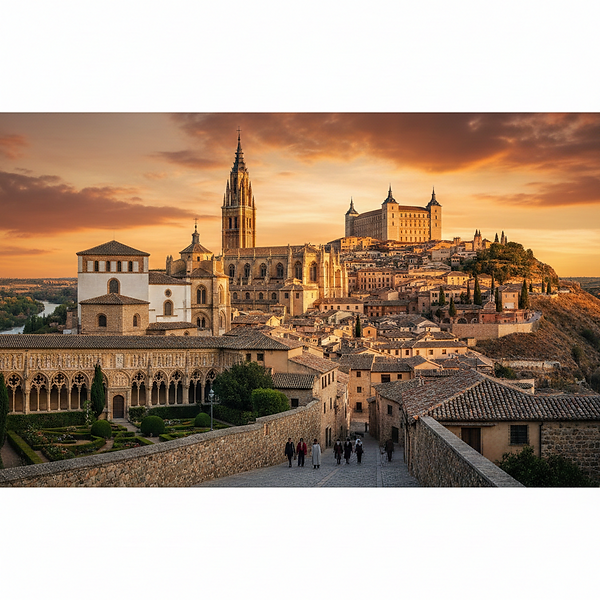
Why Visit Toledo – Civilisation of Three Cultures in One Frame
A visual narrative of Toledo as the meeting point of faiths, knowledge, and power—where cathedral, synagogue, monastery, and fortress stand together as symbols of coexistence and the intellectual awakening that shaped Europe.
Why Visit Toledo
-
✝️ Experience one of Europe’s greatest Gothic cathedrals
-
🕌 Discover the architectural legacy of Al-Andalus
-
✡️ Walk through the historic Jewish Quarter and Sephardic heritage
-
🎨 Encounter the world of El Greco
-
🏛 Understand Toledo as the former imperial capital of Spain
📍 Places to Visit in Toledo
 |  |  |
|---|---|---|
 |  | 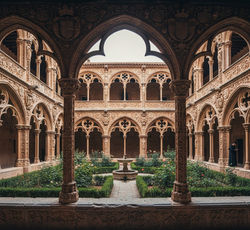 |
This is civilisation experienced through space, faith, and knowledge.
🎓 Educational & Cultural Significance
Toledo offers direct academic insight into:
-
The Translation Movement that reintroduced classical knowledge to Europe
-
The coexistence of Abrahamic faiths in urban form
-
Medieval political power and imperial administration
-
The art of El Greco as a spiritual and cultural transformation
It is one of Europe’s most important living classrooms of interfaith civilisation.
✨ Christone Holidays Experiential Insight
In Toledo, travellers do not move between monuments —
they walk through:
-
A Christian cathedral
-
A Jewish synagogue
-
An Islamic architectural legacy
within minutes.
🏰 Segovia – The Roman Legacy & Castilian Crown
Where Roman Engineering Meets Royal Imagination
Rising above the Castilian plateau, Segovia is a masterpiece of continuity where Roman precision, medieval strength, and royal fantasy exist in a single skyline. Its streets narrate the story of empire, faith, and monarchy, making it one of the most visually and intellectually complete heritage cities in Spain.
Segovia is not simply preserved — it is a living timeline of European civilisation in stone.

Why Visit Segovia
-
🏛 Stand beneath the 2,000-year-old Aqueduct of Segovia
-
👑 Enter the fairytale world of the Alcazar of Segovia
-
⛪ Experience the late Gothic grandeur of Segovia Cathedral
-
🌄 Walk through a perfectly preserved medieval urban landscape
-
📚 Understand the transition from Roman Hispania to the Kingdom of Castile
Christone Perspective:
Segovia is where travellers see the evolution of power — from Rome to royalty.
A visual timeline of civilisation where Roman engineering, medieval faith, and royal power rise together above the Castilian landscape.
-
Visiting Segovia is stepping into a complete timeline of Spanish history where Roman brilliance, medieval strength, and royal vision coexist in a single skyline. Beneath the mighty Aqueduct of Segovia, travellers witness the technological genius of the ancient world; inside the storybook towers of the Alcazar of Segovia, they encounter the rise of the Castilian crown; and in the luminous Segovia Cathedral, they experience the spiritual and artistic culmination of late Gothic Spain.
-
Segovia is not only visually magnificent — it is one of the clearest places in Europe to understand how empire, monarchy, faith, and daily life shaped a civilisation.

 | 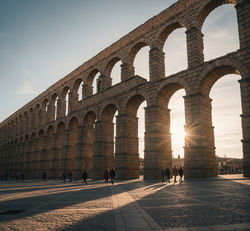 |
|---|---|
 |  |
📍 Places to Visit in Segovia
-
Aqueduct of Segovia – A 2,000-year-old engineering masterpiece and the enduring symbol of Roman Hispania
-
Alcazar of Segovia – The royal fortress that inspired generations of European castles
-
Segovia Cathedral – The final great Gothic cathedral of Spain, known as the “Lady of Cathedrals”
-
Plaza Mayor Segovia – The historic civic and cultural heart of the city
-
Jewish Quarter of Segovia – A reminder of the city’s multicultural intellectual past
-
Medieval Streets of Segovia – A walk through the living fabric of Castilian heritage
🎓 Educational & Cultural Significance
Segovia is a living academic experience in:
-
Roman hydraulic engineering
-
Medieval urban planning
-
Royal court architecture
-
The formation of Castile
➡️ Ideal for architecture • history • engineering • political evolution studies
✨ Christone Holidays Experiential Insight
In Segovia, travellers:
-
Stand under Rome
-
Walk through medieval Castile
-
Enter a royal palace
within a single visual axis.
This is civilisation understood through structure and space.
🎓 Salamanca – The Academic Soul of Spain
Salamanca – Where Knowledge Became a Global Language
Golden in stone and eternal in spirit, Salamanca stands as one of Europe’s greatest centres of learning. Home to the historic University of Salamanca, the city shaped theology, law, science, literature, and the very structure of the Spanish language that later travelled across continents.
Every square, cloister, and lecture hall reflects a moment when human thought moved from medieval tradition to Renaissance inquiry. Salamanca is not just an academic destination — it is the birthplace of intellectual transformation in the Spanish world.
🎓 Why Visit Salamanca
Visiting Salamanca is entering the intellectual heart of Spain, where the University of Salamanca helped define international law, humanism, and the structure of the Spanish language. Its golden plazas, scholarly courtyards, and soaring cathedrals create a rare atmosphere where academic life and historic beauty exist in perfect harmony.
It is one of Europe’s most complete destinations for understanding the evolution of knowledge from medieval theology to Renaissance humanism.
A timeless academic landscape where architecture, language, and intellectual tradition come together to tell the story of Spain’s contribution to global knowledge.


📍 Places to Visit in Salamanca
-
University of Salamanca – One of the oldest universities in the world and the intellectual engine of Spain
-
Plaza Mayor Salamanca – The grand civic and cultural living room of the city
-
Salamanca Cathedral – A monumental fusion of Gothic and Baroque architecture
-
Old Cathedral of Salamanca – A rare preserved Romanesque sacred space
-
Casa de las Conchas – A symbol of noble power and Renaissance artistry
-
Pontifical University of Salamanca – A centre of theological and philosophical learning
Christone Holidays – The intellectual travel experience: journey, knowledge, cultural depth, and visual storytelling.
 |  |  | 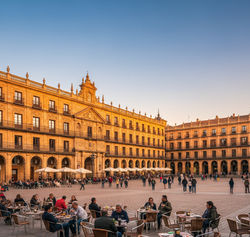 |
|---|---|---|---|
 |  |  |  |
🎓 Educational & Cultural Significance
Salamanca offers direct academic engagement with:
-
The birth of international law and the School of Salamanca
-
The standardisation of the Spanish language
-
Renaissance humanism in Spain
-
The relationship between church and university
➡️ A true living classroom of global intellectual history
✨ Christone Holidays Experiential Insight
In Salamanca, travellers do not just see monuments —
they walk through lecture halls that shaped continents and languages.
This is where knowledge becomes a travel experience.
🏰 Ávila – The Walled City of Mysticism
Ávila – The Fortress of Faith and Interior Journey
Encircled by the most perfectly preserved medieval walls in Europe, Ávila is not only a military stronghold but a spiritual landscape. Here, stone becomes silence and silence becomes contemplation. The city is inseparable from the life and writings of Teresa of Ávila, whose reform of monastic life and profound mystical theology transformed Christian spirituality. Walking through Ávila is an inward journey — from fortress gates to the “Interior Castle” of the human soul.
Medieval Walls & the Birth of Christian Mysticism
🎓 Educational & Cultural Significance
Ávila represents:
-
The Counter-Reformation spiritual renewal
-
The theology of the Interior Life
-
The fusion of architecture and asceticism
-
The global influence of Carmelite reform
It is essential for:
-
Theology & religious studies
-
Medieval history
-
Christian spirituality
-
Spanish Golden Age studies


A visual narrative of Ávila presenting its medieval fortifications, Carmelite spirituality, Romanesque heritage, and panoramic Castilian landscape as a journey of inner and outer discovery.
✨ Why Visit Ávila
-
To walk along the best-preserved medieval city walls in Europe
-
To experience the birthplace of Christian mystical theology
-
To understand the spiritual dimension of the Spanish Golden Age
-
To explore a city where military architecture and contemplation coexist
-
To follow the life journey of St. Teresa of Ávila
Encircled by golden medieval walls rising from the vast Castilian plain, Ávila invites the traveller into a rare union of fortress strength and interior silence. This is the city of Teresa of Ávila, where the journey is not only through ancient streets and Romanesque churches, but inward — toward the “Interior Castle” of the human soul. Walking along the ramparts, watching the stone glow at sunset, and entering spaces shaped by prayer and reform, Ávila becomes an experience of contemplation, resilience, and living faith — a destination where history transforms into a deeply personal and intellectual pilgrimage.
📍 Places to Visit in Ávila
🏰 Walls of Ávila
A complete Romanesque–Gothic defensive circuit that defines the identity of the city.
⛪ Ávila Cathedral
The first Gothic cathedral in Spain — built as part of the city walls.
🌹 Convent of Saint Teresa
Built over the house where Teresa was born — the heart of the mystical route.
✨ Basilica of San Vicente
A masterpiece of Romanesque symbolism and martyrdom narrative.
🌄 Mirador de los Cuatro Postes
The iconic panoramic view of the walled city — the image of eternal Castile.

Gallery image presenting the principal monuments of Ávila, uniting military architecture, Romanesque art, and Carmelite spirituality in one cultural landscape.


🏛️ Alcalá de Henares – The Birthplace of the Spanish Language
Alcalá de Henares – City of Cervantes & the Language of an Empire
Located in the historic heartland of Castile, Alcalá de Henares is one of Europe’s first purpose-built university cities and the birthplace of Miguel de Cervantes. Here, the Spanish language was shaped into a global cultural force, and Renaissance humanism found its architectural and academic expression. Its scholarly courtyards, cloistered colleges, and lively plazas create a living academic landscape where literature, faith, and knowledge converge — making Alcalá not just a destination, but the intellectual origin of Hispanic civilisation.
Alcalá de Henares: Renaissance University & the Soul of Spanish Literature
🎓 Educational & Cultural Significance
Alcalá represents:
-
The standardisation of the Spanish language
-
The spread of Renaissance humanism
-
The university model carried to Latin America
-
The literary birth of the modern Western novel
This makes it essential for:
-
Literature & linguistics
-
Educational travel programs
-
Renaissance studies
-
Hispanic cultural identity journeys


✨ Why Visit Alcalá de Henares
-
Birthplace of Miguel de Cervantes, the father of the modern novel
-
One of the world’s first planned university cities
-
Cradle of the Spanish language as a global cultural identity
-
A complete Renaissance academic urban model
-
Authentic literary and educational travel experience near Madrid
Places to Visit in Alcalá de Henares – Where Language Became a Civilization
From the university that shaped global education to the house where Don Quixote was imagined, Alcalá is a complete Renaissance academic landscape — a city where literature, faith, and humanist thought still define the streets.
Masters of Civilization – The Intellectual Journey Through Central Spain
Walk in the Footsteps of Genius: A Travel Encounter with the Minds of Castile

In Central Spain, the traveller does not merely move between historic cities — the journey becomes an encounter with the thinkers, artists, mystics, and rulers who shaped the Spanish language, global ethics, imperial vision, and the inner life of humanity. From royal courts and great museums to university lecture halls and monastic cells, these are not distant historical figures but living presences experienced in the very places where their ideas were born. This is a route where travel transforms into knowledge and heritage becomes personal discovery.
🧭 The Travel Route of the Masters
Madrid → Alcalá de Henares → Salamanca → Ávila → Madrid
n the cities of Central Spain, every street becomes a classroom and every monument a living manuscript. Here you walk in the footsteps of Miguel de Cervantes, whose imagination redefined the modern novel; stand before the spiritual intensity of Teresa of Ávila and John of the Cross, who transformed faith into poetic philosophy; encounter the golden vision of El Greco, who gave Toledo its eternal light; and feel the intellectual pulse of the great university world shaped by Francisco de Vitoria. In royal Madrid, the artistic revolution of Diego Velázquez and Francisco Goya reveals the evolution of European thought through paint and power. This journey is not simply about places—it is an immersion into the minds that shaped literature, mysticism, law, art, and human consciousness, allowing the traveller to experience Central Spain as a moving dialogue between genius, heritage, and the living present.

A visual narrative of the great minds of Central Spain, experienced through their cities, universities, museums, and spiritual landscapes as a continuous intellectual travel route.
👣 The Masters You Encounter on This Journey
In Central Spain, the story of civilisation unfolds through the lives of visionaries whose ideas reshaped literature, mysticism, law, and art.
🎨 Diego Velázquez — Madrid
The Language of Power in Art
Inside the Prado, the traveller stands before Las Meninas, where perception, monarchy, and the role of the artist are redefined. Madrid becomes the stage on which painting transforms into political and philosophical thought.
Diego Velázquez (1599–1660) – The court painter of Madrid whose Las Meninas changed the language of art, elevating Spanish painting to global prominence and redefining realism and perspective.
🎨 Francisco Goya — Madrid
The Birth of the Modern Mind
From royal portraits to the haunting Black Paintings, the visitor witnesses the shift from classical order to modern consciousness — one of the most profound transitions in European civilisation.
Francisco Goya (1746–1828) – The bridge between classical and modern art, his works in Madrid reveal the power of artistic freedom, political commentary, and the birth of modern visual consciousness.
👑 Philip II of Spain — Madrid
The Vision of a Global Empire
In the royal landscape of Spain’s capital, the idea of a world-administering monarchy takes form — making Madrid the political heart of the first global empire.
Philip II of Spain( 1527 – 1598) was the most powerful monarch of the Spanish Golden Age and ruler of one of the first truly global empires.Without Philip II, Madrid would not be the royal and political heart of Spain. Travellers experience his legacy at El Escorial, the Royal collections, and the historic court culture that shaped the city’s identity.
✍️ Miguel de Cervantes — Alcalá de Henares
The Voice of the Spanish Language
In his birthplace and university city, the traveller encounters the world that produced Don Quixote, the work that gave Spanish its universal literary identity and created the modern novel.
Miguel de Cervantes (1547–1616) – Born in Alcalá de Henares, he created Don Quixote, the first modern novel, redefining storytelling and human psychology. Walking through his birthplace, travellers encounter the literary foundation of the Spanish language and the imagination that influenced world literature.
🎓 Francisco de Vitoria — Salamanca
The Birthplace of International Law
Within the historic university, the traveller enters the lecture halls where the foundations of human rights, global justice, and moral theology were first articulated.
Francisco de Vitoria (c.1483–1546) – The great mind of the University of Salamanca, he laid the foundations of international law and human rights, shaping the ethical framework of the modern world.
⛪ Teresa of Ávila — Ávila
The Interior Journey of the Soul
In the silence of the walled city, her writings on the “Interior Castle” transform the destination into a deeply personal spiritual and philosophical experience.
Teresa of Ávila (1515–1582) – Born in Ávila, she reformed monastic life and authored spiritual classics that transformed Christian mysticism into an inner journey of the soul. Her convents make Ávila a global centre of contemplative thought.
John of the Cross (1542–1591)
– A companion of Teresa of Ávila and one of the greatest mystical poets of Christianity, he authored The Dark Night of the Soul, a timeless guide to spiritual purification and union with the Divine. His life and reform movement are deeply rooted in the sacred landscapes of Castile, where travellers encounter monasteries, silent chapels, and living traditions that transform Central Spain into a journey through inner contemplation and mystical philosophy.
El Greco (1541–1614) –
Though born in Crete, he found his artistic destiny in Toledo, where his dramatic light and elongated forms revolutionised European painting. His works make the city a living gallery of spiritual expression.
This journey through Central Spain is not a passage through monuments, but through ideas that shaped the modern world — a rare travel experience where every city becomes a classroom, every masterpiece a text, and every step a movement through living civilization.
Masters of Civilization – Encounter the Minds of Central Spain
Travel through Central Spain becomes a direct meeting with the artists, mystics, scholars, and rulers who shaped the modern world — experienced in the museums, universities, royal landscapes, and sacred cities where their ideas were born.


Salvador Dalí – Surrealist Art Travel Route | Spain

Step into the imaginative world of Salvador Dalí, one of the most influential figures of the Surrealism movement. Born in Figueres, Dalí transformed art through dreamlike imagery, symbolism, and extraordinary creativity.
This short cultural route in Catalonia connects the key places that shaped Dalí’s life and artistic vision, offering travellers an immersive journey into the landscapes that inspired his surreal masterpieces.


📍 Salvador Dalí Travel Route (Spain)
1️⃣ Figueres – Birthplace of Dalí
Visit the iconic Dalí Theatre-Museum, designed by Dalí himself. The museum houses many of his most famous surrealist works and reflects his imaginative universe.
⬇️
2️⃣ Cadaqués – Artistic Inspiration
This beautiful Mediterranean village inspired many of Dalí’s early works and became a meeting place for artists and intellectuals.
⬇️
3️⃣ Portlligat – Dalí’s Residence & Studio
Explore the unique Salvador Dalí House-Museum, where Dalí lived and created many of his famous surrealist paintings.
✨ Travel Insight
This Figueres → Cadaqués → Portlligat journey forms the Surrealist Triangle of Catalonia, allowing travellers to experience the landscapes, homes, and artistic spaces that shaped Dalí’s extraordinary imagination.
Antoni Gaudí – Barcelona Architectural Heritage Route | Spain
Discover the visionary world of Antoni Gaudí, the master architect who transformed Barcelona into one of the most unique architectural cities in the world. His extraordinary works blend nature, geometry, faith, and imagination, shaping the identity of modern Barcelona.
This short cultural route allows travellers to explore Gaudí’s most iconic architectural masterpieces, offering a remarkable journey through the artistic heritage of Catalonia.

📍 Antoni Gaudí Travel Route (Barcelona)
1️⃣ Sagrada Família – Gaudí’s Masterpiece
The monumental basilica and Gaudí’s most famous work, combining faith, geometry, and natural symbolism.
⬇️
2️⃣ Park Güell – Artistic Landscape Park
A colourful architectural park where Gaudí blended nature, sculpture, and imaginative design.
⬇️
3️⃣ Casa Batlló – Surreal Residential Architecture
A remarkable building inspired by marine forms, vibrant colours, and organic shapes.
⬇️
4️⃣ Casa Milà – La Pedrera
One of Gaudí’s most innovative residential buildings, famous for its wave-like stone façade and sculptural rooftop chimneys.
✨ Travel Insight
This route across Barcelona showcases the architectural genius of Gaudí and reveals how art, nature, and spirituality shaped one of the most extraordinary urban landscapes in the world.
Antoni Gaudí – Barcelona Architectural Heritage Route | Spain
Discover the architectural genius of Antoni Gaudí in Barcelona. His extraordinary works blend nature, geometry, faith, and imagination, shaping one of the most unique city landscapes in the world.
This short route introduces travellers to the key masterpieces of Gaudí in Barcelona and connects to the Eastern Spain cultural journey, where his architectural legacy is explored in greater depth.
📍 Barcelona Architectural Route
1️⃣ Sagrada Família
⬇️
2️⃣ Park Güell
⬇️
3️⃣ Casa Batlló
⬇️
4️⃣ Casa Milà
⬇️⬇️⬇️
Eastern Spain – Barcelona Cultural Heritage
Antoni Gaudí
(Continue to the next section for the complete story, architectural philosophy, and detailed exploration of Gaudí’s masterpieces in Barcelona.)
Eastern Spain – Catalonia & Valencia Region
Where Sacred Geometry, Mediterranean Light & Futuristic Vision Meet
Eastern Spain is a living canvas where Gothic memory, Modernist imagination, Mediterranean radiance, and contemporary innovation coexist. From the visionary skyline of Barcelona to the scientific poetry of Valencia, this region is not merely visited — it is experienced as a transformation of space, light, and identity.
Here, architecture grows like nature, art dissolves into dream, and the sea becomes a source of eternal inspiration.
Travel Route Through Eastern Spain
Barcelona → Montserrat → Girona → Costa Brava → Tarragona → Valencia
A civilizational journey from sacred geometry to the architecture of the future.

A cinematic visual journey through Eastern Spain, blending Barcelona’s Modernist masterpieces with Valencia’s futuristic architectural vision, symbolizing the region’s fusion of faith, art, science, and Mediterranean radiance.
Antoni Gaudí – Masterpieces of Barcelona Architecture | Spain
Barcelona – The City of Living Architecture
Barcelona – The City Where Architecture Lives and Breathes
In Barcelona, the history of Europe is not confined to monuments — it unfolds as a continuous, living experience. From the remnants of the Roman colony of Barcino to the vertical spirituality of the Gothic Quarter and the visionary forms of Catalan Modernisme, the city reveals how human imagination can reshape space, light, and faith.
Barcelona is the only place where architecture behaves like nature. The soaring towers of the Sagrada Família rise like a stone forest, the flowing façade of Casa Batlló echoes the movement of the sea, and the symbolic landscape of Park Güell transforms urban planning into a spiritual and artistic vision. Here, geometry becomes devotion and color becomes emotion.
Yet Barcelona is not only the city of Gaudí. Within the narrow streets of the Gothic Quarter, medieval power, royal courts, and early Christian memory still shape the atmosphere. In its cultural institutions, the youthful energy of Picasso and the cosmic language of Miró mark the birth of modern art. Along the waterfront, the Mediterranean opens the city to the world, reminding the traveller that Barcelona has always been a meeting point of civilizations, trade, and ideas.
To experience Barcelona is to walk through a timeline where Roman order, Gothic faith, artistic revolution, and contemporary creativity exist together in perfect harmony. It is not simply a destination — it is the awakening of a new way of seeing cities, where life, art, and spirituality merge into a single living form.
Barcelona → The Birth of Vision
Barcelona
Role in the journey:
Gateway to Catalan identity, Modernisme, and the artistic revolution.
Experiential theme:
Faith → Architecture → Art → Mediterranean life
This is where the traveller understands:
-
Sacred geometry
-
Gothic power
-
Modern artistic freedom
➡ From here the story moves back in time.

⬛ WHY VISIT BARCELONA ⬛
-
Experience the world’s most extraordinary unfinished basilica – Sagrada Família
-
Walk through 2,000 years of continuous urban history
-
Witness the complete vision of Catalan Modernisme
-
Discover the city where Picasso became Picasso
-
Feel Mediterranean light transform space, color, and emotion
-
Live the rhythm of Europe’s most creative cultural capital

A symbolic merged composition showcasing the spiritual light of Sagrada Família, Gaudí’s flowing architecture, the medieval Gothic Quarter, and the Mediterranean Sea — expressing the cultural, artistic, and historical reasons to visit Barcelona.
⬛ PLACES TO VISIT IN BARCELONA ⬛
Sacred & Gothic Barcelona
-
Barcelona Cathedral – The spiritual heart of medieval Catalonia
-
Plaça del Rei – Royal power and imperial memory
-
Gothic Quarter – Where the Roman city still breathes

A merged view of Barcelona Cathedral, Plaça del Rei, and the atmospheric Gothic Quarter, capturing the spiritual, royal, and Roman foundations of the city in one timeless medieval scene.
✨ Sacred & Gothic Barcelona – Tourist Experience Description
Step into the Gothic Quarter, and the modern city disappears into a labyrinth of stone where Barcelona was born. This is the place where Roman walls, medieval streets, and royal history exist within a few walking minutes, making it one of the most immersive historic walks in Europe.
At its heart rises the majestic Barcelona Cathedral, a masterpiece of Catalan Gothic architecture. As sunlight filters through its stained glass and the cloister’s peaceful courtyard echoes with silence, visitors experience not just a monument but a living spiritual center that has shaped the city for centuries.
Just steps away lies Plaça del Rei, the royal square where medieval kings held court and where the great events of Catalonia’s history unfolded. Standing here, surrounded by towering stone walls and arched galleries, feels like entering a perfectly preserved medieval stage.
For travellers, this area is more than a collection of historic sites — it is a walkable timeline. Street musicians under ancient arches, hidden artisan shops, quiet candle-lit chapels, and small cafés set within centuries-old buildings create an atmosphere that is both authentic and unforgettable.
This is the Barcelona of legends, where every step reveals a new layer of the past and where the city’s Roman, medieval, and spiritual identity can be experienced in a single, continuous journey.
Sacred & Gothic Barcelona
-
Barcelona Cathedral – The spiritual heart of medieval Catalonia
-
Plaça del Rei – Royal power and imperial memory
-
Gothic Quarter – Where the Roman city still breathes
🧭 Gaudí’s Visionary Universe – Traveller’s Route Briefing
Your journey through the imagination of Antoni Gaudí is not just a sequence of monuments — it is a walk through a new philosophy of space where nature, faith, and geometry become architecture.
📍 Route Flow (Logical & Walkable Experience)
Start – Park Güell
Begin on the hill where Gaudí shaped landscape into symbolism. From the panoramic terrace, the entire city of Barcelona unfolds — setting the vision for what you are about to experience.
⬇ Descend toward the city center (vehicle transfer or scenic drive)
Second – Casa Batlló
Here architecture becomes myth. The flowing façade, bone-like balconies, and marine colors feel like a living organism rising from the avenue of Passeig de Gràcia.
⬇ 5-minute walking route along Passeig de Gràcia
Final – La Pedrera
The journey culminates inside a complete sculptural building where there are no straight lines — only movement, light, and organic form.
The rooftop chimneys create one of the most surreal architectural landscapes in the world.

A symbolic composition of Park Güell, Casa Batlló, and La Pedrera representing Gaudí’s transformation of nature, mythology, and geometry into living architecture in Barcelona.
🌟 Tourist Experience Description Exploring Gaudí’s masterpieces is one of the most unforgettable cultural walks in Europe. From the hilltop dreamscape of Park Güell to the elegant boulevard of Passeig de Gràcia, travellers move through spaces where buildings breathe, walls curve like waves, and rooftops resemble surreal sculptures. This route is compact, beautifully connected, and ideal for a slow, immersive experience — with cafés, boutiques, and architectural details accompanying every step. By the time visitors reach La Pedrera’s rooftop at sunset, Barcelona is no longer just a city — it has become a living work of art.
🏛️ Medieval & Roman Barcelona – Places to Visit
1. Gothic Quarter – Where the City Was Born
-
Barcelona Cathedral (Cathedral of the Holy Cross & Saint Eulalia) – Spiritual and architectural heart of medieval Barcelona
-
Plaça Sant Jaume – Historic political centre since Roman times
-
Pont del Bisbe (Bishop’s Bridge) – Iconic neo-Gothic passage
-
Jewish Quarter (El Call) – One of Europe’s best-preserved medieval Jewish districts
-
Plaça Reial – Arcaded square linking medieval and later urban life
-
Roman Temple of Augustus – Hidden remains of ancient Barcino

A unified visual of Barcelona’s Gothic Quarter where Roman foundations, medieval streets, and royal power converge — revealing the birthplace of the city as a living civilizational landscape for the cultural traveler.

Plaça del Rei – Royal & Imperial Barcelona
-
Palau Reial Major (Royal Palace) – Residence of the Counts of Barcelona & the Catholic Monarch
-
Saló del Tinell – Ceremonial medieval hall tied to the age of exploration
-
Chapel of Santa Àgata – Royal Gothic chapel
-
Mirador del Rei Martí (King Martin’s Watchtower) – Symbol of royal authority
-
MUHBA – Barcelona History Museum (underground Roman city ruins) – Walk through Roman Barcino streets
Roman Walls – The First Urban Identity
-
Roman Walls on Avinguda de la Catedral – Most visible and monumental stretch
-
Roman Towers (near Plaça Nova) – Defensive gateways of ancient Barcino
-
Casa de l’Ardiaca – Medieval house integrated into the Roman wall
-
Fragments along Carrer del Sots-Tinent Navarro & Plaça Ramon Berenguer – Layered Roman–medieval evolution
🧭 Traveller’s Route Flow
Start → Plaça Nova (Roman Gate & Towers)
➡ Walk into Barcelona Cathedral
➡ Explore Gothic Quarter streets & El Call
➡ Continue to Plaça Sant Jaume
➡ Reach Plaça del Rei complex & MUHBA underground Roman city
➡ End at Plaça Ramon Berenguer – Roman Walls viewpoint
✨ Experiential Meaning of the Route
Roman Order → Medieval Power → Living Historic City
This is not a museum visit — it is a continuous urban story still functioning today.

A powerful visual of Barcelona’s Roman walls — the original military and urban structure that gave birth to the medieval city, revealing the first identity of Barcelona for the heritage traveler.
🎨 Artistic Barcelona

Museu Picasso – The Birthplace of Modern Artistic Revolution

1. Museu Picasso – The Birthplace of Modern Artistic Revolution
Places Covered:
• Museu Picasso (Main Palace Complex)
• Carrer de Montcada Historic Courtyard
• Gothic Civil Palaces Housing the Museum
Experience:
Walk through a sequence of medieval palaces that quietly narrate the transformation of a young prodigy into Pablo Picasso — where classical discipline dissolves into modern artistic freedom.
Fundació Joan Miró – A Cosmic Language of Symbols
Fundació Joan Miró – A Cosmic Language of Symbols
Places Covered:
• Fundació Joan Miró Museum Building
• Sculpture Terrace
• Panoramic Viewpoints of Montjuïc
• Mediterranean Light Courtyards
Experience:
Enter a dialogue between architecture, sky, and the symbolic universe of Joan Miró — where art becomes a cosmic language above the city.
A radiant unified view of the Fundació Joan Miró where modern architecture, open sky, symbolic forms, and Mediterranean light create a cosmic artistic experience above Barcelona.

Palau de la Música Catalana – The Temple of Catalan Cultural Identity

Palau de la Música Catalana – The Temple of Catalan Cultural Identity
Places Covered:
• Grand Concert Hall
• Stained Glass Skylight Dome
• Stage of the Muses
• Modernisme Façade & Balconies
Experience:
Stand inside a living monument of Catalan Modernisme where music, sculpture, light, and national identity merge into one overwhelming cultural experience.
A magnificent unified vision of the Palau de la Música Catalana where light, sculpture, and music create the living cultural soul of Catalonia for the heritage traveler.
🌊 Maritime Barcelona – Gateway to the Mediterranean
Palau de la Música Catalana – The Temple of Catalan Cultural Identity
Port Vell – The Historic Harbor
Places Covered:
• Marina Port Vell
• Rambla de Mar
• Columbus Monument Waterfront Axis
Experience:
Stand at the point where Barcelona opened itself to the world — the maritime bridge between Europe, Africa, and the New World.
A majestic sunset view of Port Vell where the marina, Rambla de Mar, and Columbus Monument align to reveal Barcelona’s maritime identity as a bridge between cultures and continents.

Barceloneta – The Living Sea Quarter

Barceloneta – The Living Sea Quarter
Places Covered:
• Barceloneta Beach
• Passeig Marítim
• Historic Fishermen’s Quarter
Experience:
From medieval fishing community to modern urban beach — the Mediterranean rhythm of Barcelona.
A vibrant sun-filled view of Barceloneta showcasing the golden beach, sparkling sea, historic quarter, and lively promenade — the joyful coastal soul of Barcelona.
Columbus Monument – The Age of Discovery
Columbus Monument – The Age of Discovery
Experience:
The symbolic moment where the voyages of Christopher Columbus were presented to the Spanish Crown — marking Barcelona’s link to global exploration.
Christopher Columbus and Spain marks one of the most decisive turning points in world history. Although Italian by birth, Columbus sailed under the patronage of the Catholic Monarchs — Ferdinand II of Aragon and Isabella I of Castile — who agreed to finance his westward voyage in 1492. His return to Spain and the royal court, traditionally associated with Barcelona, transformed the kingdom into the leading global maritime power of the Age of Discovery. From this moment, Spain moved beyond the Mediterranean to establish vast connections with the Americas, opening new trade routes, cultural exchanges, and an era of exploration that reshaped the political, economic, and spiritual map of the world. The Columbus Monument in Barcelona symbolically commemorates this encounter between a visionary navigator and the Spanish crown that launched a global empire.

A radiant daylight view of the Columbus Monument where La Rambla meets the sea, marking Barcelona’s symbolic connection to the Age of Discovery and the opening of the world’s maritime routes.
🧭 Traveller’s Route Flow
La Rambla → Port Vell → Barceloneta → Mediterranean sunset
⛰ Montjuïc – Power, Memory & Global Barcelona

A grand panoramic vision of Montjuïc where military history, Catalan art, Olympic transformation, and monumental urban planning together narrate the modern evolution of Barcelona.
🏛 Places to Visit
1. Montjuïc Castle – Military & Strategic Barcelona
The fortress that guarded the city and the sea.
2. National Art Museum of Catalonia (MNAC) – The Visual Soul of Catalonia
Romanesque → Gothic → Modern Catalan identity.
3. Olympic Ring – The Modern Global City
The transformation of Barcelona through the 1992 Olympics.
4. Magic Fountain Axis – Monumental Barcelona
A grand urban theatrical space of light, water, and architecture.
⛪ Sagrada Família – The Architecture of the New Creation
Rising above Barcelona like a vision from another world, the Basílica de la Sagrada Família is not merely a church — it is a theological cosmos in stone. Conceived by Antoni Gaudí as a living act of faith, the structure unites nature, geometry, light, and scripture into a single architectural organism. Still under construction after more than a century, it represents humanity’s continuous offering to the divine — a cathedral not of the past, but of the future.
Here, columns grow like trees, light becomes revelation, and the Gospel is written in sculpture across monumental façades. This is the moment in Barcelona’s journey where architecture becomes prayer.

A majestic sunlit view of the Sagrada Família revealing the world’s most extraordinary fusion of faith, geometry, nature, and architecture.

An immersive vision of Gaudí’s interior where structure, nature, and divine light become one.
🏛 Sagrada Família – Places to Experience
1. Nativity Façade – The Birth of Light
Places Covered:
• Nativity Portals
• Tree of Life Sculpture Axis
• Eastern Morning Light Perspective
Experience:
The most intricate and emotional façade — a celebration of creation, hope, and divine joy. Every surface is alive with flora, fauna, angels, and sacred narrative.
2. Passion Façade – The Geometry of Sacrifice
Places Covered:
• Passion Portico
• Sculptural Stations of the Cross
• Hyperbolic Structural Lines
Experience:
A stark and powerful contrast — where Christ’s suffering is expressed through mathematical precision and dramatic shadow.
3. The Forest of Columns – Interior Nave
Places Covered:
• Tree-like branching columns
• Central nave vault
• Stained-glass light spectrum
Experience:
You do not enter a hall — you enter a sacred forest. Light pours through colored glass like divine energy, changing throughout the day.
4. The High Altar & Baldachin – The Sacred Core
Places Covered:
• Altar of the Eucharist
• Suspended Canopy with Vines & Wheat
• Christ Crucifix in Vertical Axis
Experience:
The spiritual heart of the basilica — where heaven and earth meet in vertical ascent.
5. The Towers – The Ascent Toward the Divine
Places Covered:
• Evangelists’ Towers
• Tower of the Virgin Mary
• Panoramic View of Barcelona
Experience:
A symbolic climb from the human city to the celestial vision.
🧭 Traveller’s Route Flow – Sagrada Família
Nativity Façade (Creation & Joy) → Interior Forest of Light → High Altar → Passion Façade (Sacrifice & Redemption) → Tower Ascent (Union with the Divine)
A complete spiritual journey through:
Life → Faith → Transformation → Eternity
⛪ Sagrada Família – The Architecture of the New Creation


🎭 Barcelona – Entertainment & Lifestyle for Travellers

Where Mediterranean Joy Meets Living Culture
Barcelona is not only a city of monuments — it is a city that lives outdoors, celebrates its nights, walks by the sea, and turns every moment into an experience. Between the golden beaches and the historic quarters, travellers encounter a lifestyle shaped by creativity, cuisine, music, design, and the rhythm of the Mediterranean.
From the vibrant pedestrian life of La Rambla to the artistic energy of El Born, the city invites visitors to slow down and participate rather than simply observe.
🎭 A City That Performs Every Day
Barcelona’s streets are open-air stages — living with:
-
Flamenco performances in intimate historic venues
-
Human towers (Castellers) rising in festive squares
-
Seasonal cultural festivals that transform entire neighbourhoods
Even an evening walk becomes a sensory journey through light, music, and architecture.
🍽️ The Mediterranean Table – A Social Ritual
Dining in Barcelona is not just about food — it is about time, conversation, and atmosphere.
Travellers experience:
-
Tapas culture in traditional taverns
-
Seaside dining along Barceloneta Beach
-
Gourmet markets like La Boqueria, where colours, aromas, and flavours reflect the richness of Catalonia
Every meal becomes a cultural immersion.

🌙 The Mediterranean Nightlife
As the sun sets, Barcelona transforms into one of Europe’s great night cities.
From:
-
Rooftop terraces with views of the illuminated skyline
-
Live music lounges and jazz bars
-
Elegant beachside promenades
to the magic of the Magic Fountain of Montjuïc, where water, light, and music create a shared moment of wonder.
🛍️ Style, Design & Creative Living
Barcelona is a global capital of design and fashion.
Travellers can explore:
-
Luxury avenues like Passeig de Gràcia
-
Independent artisan boutiques in the Gothic Quarter
-
Contemporary galleries and concept stores
The city’s shopping culture reflects its artistic soul — bold, refined, and deeply local.
🚶♂️ A City Meant to Be Lived, Not Rushed
What makes Barcelona unforgettable is its rhythm:
-
Morning coffee in a historic square
-
Afternoon by the sea
-
Sunset from a panoramic terrace
-
Midnight conversations in a lively plaza
This is not sightseeing — this is participation in a way of life.

🍷 Culinary Barcelona – A Gastronomic Capital
Cooking Experience for Student Groups
✧ Culinary Barcelona – A Gastronomic Capital
Barcelona is not just a city to visit — it is a city to taste.
Here, food is a living cultural language shaped by the Mediterranean, by centuries of trade, and by the creativity of modern Catalonia.
For travellers and student groups, the culinary experience becomes participatory, educational, and deeply social.
In professional cooking spaces and traditional kitchens, guests step into the rhythm of local life:
-
Learning the art of paella and fideuà
-
Preparing classic tapas and pintxos
-
Understanding the importance of olive oil, fresh seafood, seasonal vegetables, and aromatic spices
-
Discovering the balance between tradition and avant-garde gastronomy

These sessions are not just about recipes — they are about:
🍅 teamwork
🍷 cultural exchange
🔥 hands-on heritage learning
Shared tables at the end of the experience transform strangers into a community, reflecting the true spirit of the Mediterranean.
Barcelona’s culinary identity is also elevated by its world-leading food scene — from historic markets to contemporary Michelin-star creativity — making the city one of the great gastronomic capitals of Europe.
For Christone Holidays travellers, this becomes:
a journey from the market → to the kitchen → to the shared table.

🇪🇸 Tarragona – The Roman Capital of Hispania
Set on the golden Mediterranean coast, Tarragona is one of the most powerful Roman landscapes outside Italy. Once known as Tarraco, it was the administrative and cultural capital of Roman Hispania — a city of emperors, amphitheatres, forums, circuses, and aqueducts.
Here, travellers do not just see ruins — they walk through a complete Roman urban vision overlooking the sea.
Tarragona is calm, monumental, and deeply educational — a perfect civilizational contrast to the creative energy of Barcelona.
⬛ WHY VISIT TARRAGONA
🏛️ One of the best-preserved Roman cities in the world
🌊 Unique monuments overlooking the Mediterranean
📚 A living classroom for Roman history & archaeology
🚶 Walkable UNESCO archaeological landscape
🌿 Slower, authentic Catalan atmosphere


⬛ PLACES TO VISIT IN TARRAGONA
🏛️ Roman Amphitheatre – Empire by the Sea
Gladiatorial arena dramatically facing the Mediterranean, later transformed into a Christian sacred space.
🏇 Roman Circus – The Chariot Racing Arena
Underground vaulted corridors and race structures — among the best preserved in Europe.
🏛️ Provincial Forum – The Seat of Imperial Power
The administrative and ceremonial heart of Roman Hispania.
🏰 Roman Walls – The First Identity of Tarraco
The oldest and most powerful defensive structure of the city.
⛪ Tarragona Cathedral & Medieval Quarter
A Gothic-Christian layer built above the Roman capital — symbol of civilizational continuity.
🌉 Les Ferreres Aqueduct (Pont del Diable) – Roman Engineering in the Landscape
A monumental water system set in nature, showing the technological genius of Rome.
🌊 Balcony of the Mediterranean – The Eternal Viewpoint
The scenic edge where the Roman world meets the sea.
🏺 National Archaeological Museum of Tarragona
A complete interpretation centre for understanding the life of Roman Hispania.
Tarragona Roman amphitheatre circus cathedral aqueduct and Mediterranean viewpoint merged view
⬛ CULTURAL & EDUCATIONAL – TARRAGONA
🏛️ Tarraco – The Administrative Capital of Roman Hispania
Understand how Rome governed an entire peninsula from this powerful provincial centre.
📜 Urban Planning of the Roman Empire
Forum, circus, amphitheatre, walls, and aqueduct — a complete model of Roman city design.
🏺 Archaeology in an Open-Air Museum
Walk through real excavation zones and visible historical layers instead of enclosed galleries.
⛪ Transition from Pagan Rome to Christian Hispania
The transformation of the amphitheatre into a Christian sacred space reveals a major civilizational shift.
📖 Epigraphy, Mosaics & Roman Daily Life
Inscriptions, sculptures, and artefacts that explain governance, trade, religion, and social structure.


⬛ ENTERTAINMENT & EXPERIENCE – TARRAGONA
🎭 Tarraco Viva – The Roman Festival
Live gladiator battles, legion parades, ancient rituals, and historical reenactments that transform the city into a living Roman capital.
🌊 Mediterranean Evenings on the Historic Coast
Sunset walks from the amphitheatre to the sea with golden light over the ruins.
🍷 Dining in Medieval Squares
Authentic Catalan cuisine in stone-paved plazas surrounded by 2,000 years of history.
🚶 Walk Along the Roman Walls
A peaceful heritage promenade above the modern city.
🏖️ Golden Beaches Beside Ancient Monuments
Rare experience where classical history and coastal relaxation exist together.
🎶 Open-Air Cultural Performances
Concerts and local celebrations inside historic settings.
🇪🇸 Valencia – The City of Trade, Silk & Future Architecture
On the fertile Mediterranean coast, where river, sea, and trade routes meet, Valencia rises as one of the most complete civilizational landscapes in Spain.
Valencia is a city of contrasts and continuity:
🏛️ Roman foundation
🕌 Islamic urban wisdom
⛪ Christian mercantile power
🌍 Golden Age of Silk trade
🚀 Europe’s most futuristic cultural complex
It is here that travellers witness the transformation of a historic trading port into a global centre of art, science, and innovation.
⬛ WHY VISIT VALENCIA
🏛️ Home of the UNESCO Silk Exchange
🥘 Birthplace of authentic paella
🌉 A complete Roman → Islamic → Christian urban evolution
🚀 The most futuristic architectural complex in Europe
🌴 Mediterranean gardens and slow-travel atmosphere

⬛ PLACES TO VISIT IN VALENCIA
🏛️ La Lonja de la Seda – The Silk Exchange of the Golden Age
A masterpiece of mercantile Gothic and a symbol of Valencia’s global trade power.
⛪ Valencia Cathedral & El Miguelete Tower – The Sacred Heart of the City
A layered monument of Roman, Islamic, and Christian history.
🥬 Central Market – The Living Mediterranean Food Culture
One of Europe’s oldest and most beautiful food markets.
🌉 Turia Gardens – The River Turned Cultural Landscape
A green artery flowing through the city — perfect for slow travel.
🚀 City of Arts and Sciences – The Architecture of the Future
City of Arts and Sciences
A vision of science, culture, and human imagination.
🏖️ Malvarrosa Beach – The Mediterranean Horizon
Historic seaside promenade and leisure culture.

A cinematic visual of Valencia’s silk heritage, futuristic architecture, Mediterranean cuisine and green urban lifestyle.


🎓 VALENCIA – CULTURAL & EDUCATIONAL
The Living Classroom of Mediterranean Civilisation
Valencia is one of the most powerful educational destinations in Spain because learning here happens through experience — in markets, monuments, science museums, food traditions, and urban design. It is a city where Roman foundations, Islamic knowledge systems, Gothic commerce, and modern innovation form a continuous cultural narrative.
🏛 Heritage & Academic Value
-
La Lonja de la Seda – Understanding global trade, economics, and the Silk Route network
-
Valencia Cathedral – Study of layered architecture (Romanesque → Gothic → Baroque) and the Holy Grail tradition
-
Historic Old Town – Urban evolution from Roman colony to medieval commercial power
-
Valencian language & identity – Regional culture and linguistic heritage
🔬 Science, Innovation & Future Learning
-
City of Arts and Sciences –
-
Interactive physics & space exhibitions
-
Marine biodiversity at Oceanogràfic
-
Immersive digital learning environments
-
-
A model for STEAM-based educational travel
🌿 Sustainability & Urban Planning
-
Turia Gardens – One of Europe’s greatest examples of transforming a natural disaster into a green urban ecosystem
-
Cycling culture & public spaces – case study in sustainable city planning
🍽 Intangible Cultural Heritage
-
Paella tradition in Albufera – agriculture, ecology, and food anthropology
-
Central Market – Mediterranean diet, local economy, and social food systems

Academic and experiential learning across Valencia’s historic monuments, science museums and culinary traditions.
👨🎓 Ideal for Student Groups
✔ Architecture & art history
✔ Trade & economic history
✔ Environmental studies
✔ Culinary education
✔ Marine science
✔ Cultural immersion programmes

🎭 VALENCIA – ENTERTAINMENT & EXPERIENCE
The Mediterranean Lifestyle City
Valencia is not fast — it is rhythmic.
Entertainment here is social, outdoor, and deeply connected to local life.

The social rhythm of Valencia through food, festivals, beach life and night illumination.
🌇 The Everyday Experience
-
Cycling the Turia Gardens from the old city to the sea
-
Sunset walks at Malvarrosa Beach
-
Street performances in Plaza de la Virgen
-
Rooftop views of illuminated historic monuments
🍷 Gastronomy & Nightlife
-
Tapas culture in El Carmen
-
Seafront restaurants with paella and fresh seafood
-
Wine bars and open-air terraces
-
Night views of the City of Arts and Sciences
🎆 Signature Cultural Events
-
Las Fallas Festival –
Art, philosophy, satire, fire, and community participation -
Open-air concerts & seasonal fairs
-
Maritime celebrations along the coast
🛍 Lifestyle & Creative City
-
Boutiques and artisan ceramics
-
Contemporary design stores
-
Fashion blended with tradition
-
Café culture that encourages slow travel
🚶♂️ For Travellers
✔ Safe and walkable night environment
✔ Social city for group travel
✔ Beach + culture in one day
✔ Photography & creative experiences
👑 MASTERS OF EASTERN SPAIN
The Visionaries of Form, Light, Colour & the Mediterranean Mind
🏛 1. Antoni Gaudí
Period: 1852–1926
Region: Barcelona – The Spiritual Architect of Catalonia
Major Works:
-
Sagrada Família
-
Park Güell
-
Casa Batlló
-
La Pedrera
Experiential Sites:
Barcelona living architecture trail
Description:
Gaudí transformed architecture into theology, geometry, and nature in motion. His buildings are not structures — they are living organisms of light.
Value to Humanity:
He redefined the relationship between nature, faith, mathematics, and space.
Student Value:
Architecture • biomimicry • structural engineering • sacred geometry


🎨 2. Pablo Picasso
Period: 1881–1973
Eastern Spain Connection: Artistic formation in Barcelona
Major Works (Barcelona Phase):
-
Blue Period foundations
-
Academic training masterpieces
Museum:
🏛 Museu Picasso – Barcelona
Description:
Barcelona created Picasso before Paris made him famous. Here we see the birth of modern visual language.
Value to Humanity:
He changed the way reality can be represented.
Student Value:
Modern art evolution • creative identity • breaking classical systems
🌌 3. Joan Miró
Period: 1893–1983
Region: Barcelona & Montjuïc
Major Works:
-
The Harlequin’s Carnival
-
Blue Series
-
Constellations
Museum:
🏛 Fundació Joan Miró – Barcelona
Description:
Miró created a cosmic language of symbols — where art becomes universal, playful, and philosophical.
Value to Humanity:
He made abstraction emotionally and culturally accessible.
Student Value:
Symbolism • colour psychology • visual language


🏛 4. Lluís Domènech i Montaner
Period: 1850–1923
Region: Barcelona & Tarragona
Major Works:
-
Palau de la Música Catalana
-
Hospital de Sant Pau
Description:
He united architecture, music, sculpture, and decorative arts into a total cultural experience.
Value to Humanity:
Architecture as a collective art form.
Student Value:
Urban design • applied arts • cultural identity through space
🌊 5. Joaquín Sorolla
Period: 1863–1923
Region: Valencia – Painter of Mediterranean Light
Major Works:
-
Walk on the Beach
-
Boys on the Shore
-
Valencian Fishermen
Experiential Value in Valencia:
The Mediterranean coastline he painted still exists as a living classroom of light.
Description:
Sorolla captured moving light — turning everyday life into timeless beauty.
Value to Humanity:
He preserved Mediterranean life through luminous realism.
Student Value:
Light study • plein-air painting • cultural anthropology through art


🏗 6. Santiago Calatrava
Period: 1951–Present
Region: Valencia – Architecture of the Future
Major Work:
-
City of Arts and Sciences
Description:
Calatrava merges engineering, anatomy, movement, and architecture into futuristic forms.
Value to Humanity:
He represents the transition from historic Europe to the knowledge civilisation.
Student Value:
STEAM education • structural innovation • future cities
🇪🇸 NORTHERN SPAIN – GREEN SPAIN
The Atlantic Civilisation of Pilgrimage, Kingdoms & Prehistoric Memory
Northern Spain is a world apart from the Mediterranean and imperial heartlands. Here the Atlantic shapes the land, the climate paints it green, and history survives in monasteries, prehistoric caves, medieval pilgrimage routes, and proud cultural regions.
This is the birthplace of Christian Spain, the keeper of Europe’s greatest pilgrimage destination, and the home of some of the oldest human artistic expressions on earth.
For the traveller, Green Spain is a journey through:
-
sacred paths
-
mountain kingdoms
-
living traditions
-
coastal civilizations
It is not about speed — it is about depth, silence, and transformation.
Northern Spain – Where the Ocean, Mountains and Faith Meet
🗺 REGIONS COVERED
🌿 Galicia
The spiritual finish line of the Camino de Santiago and a land of Celtic-Atlantic culture.
⛰ Asturias
The first Christian stronghold and the mountain sanctuary of early Spain.
🌊 Cantabria
Home to the earliest human art in Western Europe and medieval coastal towns.
🏞 Basque Country
A unique cultural universe where ancient identity meets modern architecture.

A visual journey through pilgrimage routes, prehistoric caves, mountains and ocean in Northern Spain
Santiago de Compostela – The End of the Camino & The City of the Apostle
At the end of the great Camino de Santiago stands Santiago de Compostela — a city where every stone carries the footsteps of centuries. Rising from the mist of Galicia, its cathedral is not only an architectural masterpiece but the symbolic goal of Europe’s greatest spiritual journey.
For over a thousand years, pilgrims have walked across mountains, plains, and villages to reach this sacred square. The arrival here is not just geographical — it is deeply personal and transformative.
Santiago is a living medieval city of granite streets, monastic silence, sacred music, and university life — where faith, culture, and movement meet.
Built above the resting place of St. James the Great, this cathedral transforms faith into a journey and pilgrimage into a civilization.
One of the only three churches in the world raised over an apostolic tomb — Santiago stands with Rome and Chennai as a living line of Authority, Pilgrimage, and Mission across continents.
The Tomb of St. James the Great — the pilgrim pillar of the universal Church, united with St. Peter’s Basilica in Rome and Santhome Basilica in India, the three churches built above the resting places of the apostles.
✝️ SANTIAGO DE COMPOSTELA – THE PILGRIM’S FINAL LIGHT
The Spiritual Heart of the Camino de Santiago
At the end of the great Camino de Santiago stands Santiago de Compostela — a city where every stone carries the footsteps of centuries. Rising from the mist of Galicia, its cathedral is not only an architectural masterpiece but the symbolic goal of Europe’s greatest spiritual journey.
For over a thousand years, pilgrims have walked across mountains, plains, and villages to reach this sacred square. The arrival here is not just geographical — it is deeply personal and transformative.
Santiago is a living medieval city of granite streets, monastic silence, sacred music, and university life — where faith, culture, and movement meet.


⭐ WHY VISIT SANTIAGO DE COMPOSTELA
-
Final destination of the Camino de Santiago
-
One of the most important Christian pilgrimage cities in the world
-
A complete and living medieval urban landscape
-
Deep spiritual and emotional travel experience
-
UNESCO World Heritage city
-
Unique Galician culture, music, and gastronomy
📍 PLACES TO VISIT – SANTIAGO DE COMPOSTELA
⛪ Santiago de Compostela Cathedral – The Tomb That Shaped Europe
The final destination of the Camino de Santiago and one of the most important Christian pilgrimage sites in the world. Built over the believed tomb of St. James the Apostle, the cathedral transformed Santiago into a meeting point of cultures, ideas, art, and faith during the medieval period.
Its Romanesque core, Gothic chapels, and Baroque façade narrate the evolution of European architecture.
Why it matters: It created the first pan-European spiritual route, shaping identity, education, and cultural exchange across the continent.
Traveller experience: Attend the Pilgrim’s Mass, witness the Botafumeiro, and embrace the emotional moment of arrival at the Obradoiro square.
🏛 Praza do Obradoiro – The Square of Human Fulfilment
This monumental plaza is more than an architectural space — it is the symbolic end of a life-changing journey. Surrounded by the Cathedral, the Royal Hospital (today Parador), the Archbishop’s Palace, and the University, it represents the union of faith, power, knowledge, and hospitality.
Why it matters: One of Europe’s greatest urban ensembles, reflecting the medieval vision of a sacred city.
Traveller experience: Watch pilgrims arriving, sit on the stone pavement at sunset, and feel the collective emotion of centuries.
🏰 Monastery of San Martiño Pinario – The Intellectual Power of Monastic Spain
The second-largest monastery in Spain and a major Benedictine center of learning, music, manuscript production, and theology. Its monumental Baroque architecture reflects the wealth and influence of Santiago during its golden age.
Why it matters: A key educational and cultural institution that preserved knowledge during medieval times.
Traveller experience: Explore the grand cloisters, choir stalls, and sacred art collections in a peaceful atmosphere.
⛪ Monastery of San Paio de Antealtares – The First Guardians of the Apostle
This monastery is directly linked to the early discovery of the tomb of St. James. The Benedictine community established here protected the sacred site and helped organize the first pilgrim traditions.
Why it matters: It represents the birth of Santiago as a pilgrimage city.
Traveller experience: Visit its museum to see medieval liturgical objects and experience a quieter, more intimate sacred space.
🌿 Parque da Alameda – The Pilgrim’s Reflection Point
The most beautiful panoramic viewpoint of the historic city, traditionally the first place from which pilgrims saw the cathedral towers.
Why it matters: A symbolic space of contemplation — the moment between the journey and its completion.
Traveller experience: Sunset walk with the full skyline of Santiago framed by nature.
🥾 Camino de Santiago – The Road That Created a Civilization
More than a route, the Camino is a cultural network that connected all of Europe through monasteries, universities, hospitals, bridges, and towns. It encouraged the circulation of Romanesque art, music, philosophy, and scientific knowledge.
Why it matters: Often called the first European cultural corridor.
Traveller experience: Walk the final kilometers into the city to understand the true meaning of Santiago.

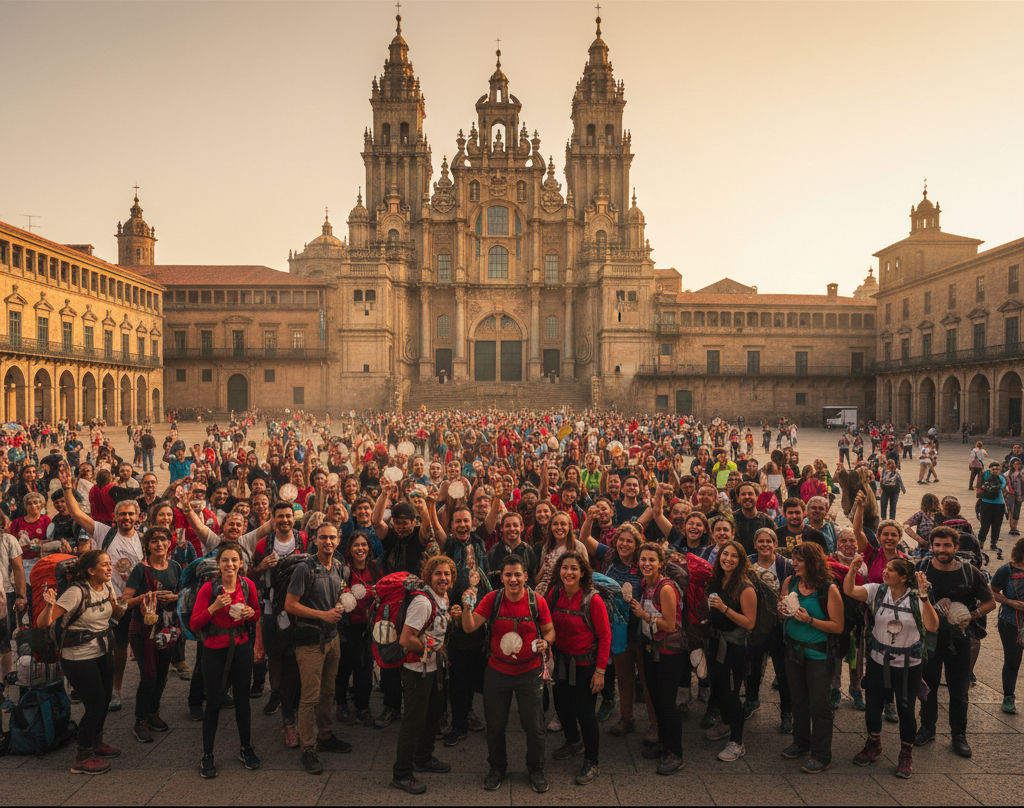


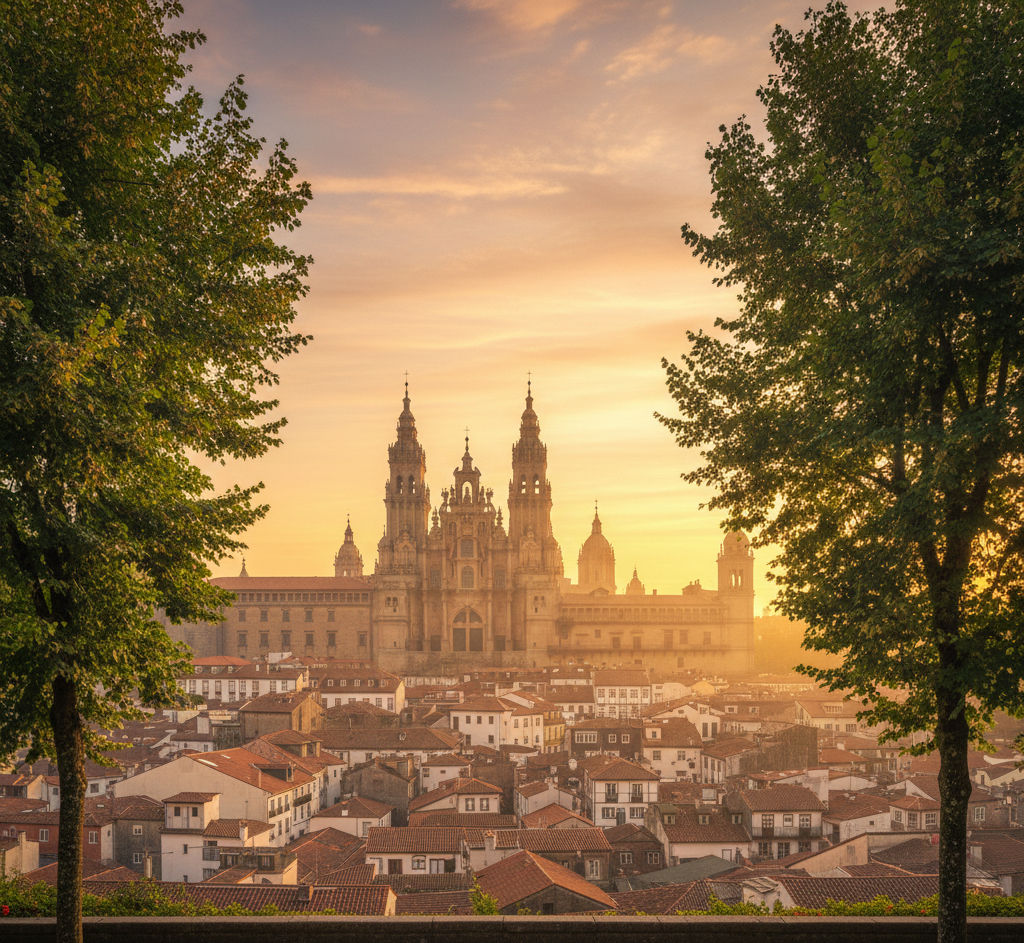


🎓 CULTURAL & EDUCATIONAL – SANTIAGO DE COMPOSTELA
Santiago is not only the end of a pilgrimage — it is one of the great knowledge capitals of medieval and modern Europe, where theology, art, music, philosophy, and hospitality systems developed around the Camino.
🏛 University of Santiago de Compostela – 500 Years of Living Knowledge
Founded in the 15th century, this is one of Spain’s oldest and most prestigious universities. Its historic buildings are integrated into the old town, making the entire city a learning environment.
Academic significance:
-
Theology & religious studies
-
Medieval history
-
Spanish & Galician language and literature
-
Medicine and scientific research
Student experience: Study in Renaissance lecture halls, walk the same streets as centuries of scholars, and experience a true university city.
⛪ Cathedral as a Medieval Knowledge System
Santiago de Compostela Cathedral functioned as:
-
A theological school
-
A music center (Codex Calixtinus tradition)
-
A keeper of manuscripts and sacred art
Educational value:
-
Romanesque & Baroque architecture studies
-
Liturgical traditions
-
Pilgrimage as a social and economic network
-
Symbolism & sacred geometry
For students, it is a living textbook of medieval Europe.
🥾 Camino de Santiago – The First European Cultural Network
The Camino created:
-
Hospitals
-
Bridges
-
Monasteries
-
Schools
-
Urban development models
Fields of study:
-
Anthropology & sociology of travel
-
Cultural exchange systems
-
Heritage tourism management
-
Psychology of transformation
This makes Santiago a case study in early globalization.
🎼 Living Musical & Liturgical Traditions
Sacred music continues to be performed in historic spaces.
Learning opportunities:
-
Gregorian chant
-
Organ music
-
Liturgical performance studies
-
Acoustics of Romanesque architecture
Students experience music in its original sacred context, not in a concert hall.
🏺 Museums & Archival Heritage
The city offers access to:
-
Medieval manuscripts
-
Pilgrim artifacts
-
Religious iconography
-
Archaeological remains
Perfect for:
-
Art history
-
Museum studies
-
Conservation & restoration programs

Students at the University of Santiago, medieval manuscripts, Camino studies and sacred music in a cultural learning environment

A living academic environment where medieval tradition and modern global education meet in the heart of Santiago.

Hands-on academic engagement with the material heritage of the Camino and medieval Europe.
Students at the University of Santiago, medieval manuscripts, Camino studies and sacred music in a cultural learning environment
🎭 ENTERTAINMENT & EXPERIENCE – SANTIAGO DE COMPOSTELA
Not nightlife in the commercial sense — Santiago offers living cultural experiences shaped by pilgrimage, Galician tradition, university life, and sacred celebration.
This section must feel like joy after the journey.
🎉 Praza do Obradoiro – The Celebration of Arrival
Praza do Obradoiro becomes an open-air stage where pilgrims:
-
complete their journey
-
celebrate with music
-
sit, rest, and reflect
Traveller experience:
A deeply human moment — hugs, tears, group photos, spontaneous cultural exchange.
🍷 Galician Gastronomy – The Pilgrim’s Feast
Santiago is one of the great culinary capitals of northern Spain.
Must-experience:
-
Octopus “à feira”
-
Tarta de Santiago
-
Galician empanadas
-
Local cheeses
-
Albariño wines
Traditional taverns in the granite streets offer slow, social dining — the true Mediterranean-Atlantic lifestyle.

🌙 The University Night Atmosphere
Thanks to the
University of Santiago de Compostela
the city has:
-
youthful energy
-
cultural cafés
-
bookshops
-
late evening conversations in historic squares
Not loud tourism — but intellectual nightlife.
🎶 Traditional Galician Music & Street Life
Evenings bring:
-
Bagpipe (gaita) performances
-
Folk dance
-
Small live music gatherings
The historic streets turn into a cultural meeting point for the world.
🌿 Alameda & Old Town Night Walks
Parque da Alameda and the illuminated historic streets offer:
-
safe walking routes
-
storytelling guides
-
silent cathedral views under moonlight
A perfect post-dinner contemplative experience.
Bilbao – The Industrial City Reborn Through Art

Once a powerful iron and shipbuilding center, Bilbao today stands as one of the greatest urban transformation stories in the world.
On the banks of the Nervión River, medieval heritage, Basque identity, and cutting-edge architecture coexist — making the city a global case study in culture-led regeneration.
Bilbao is where:
-
industry became art
-
tradition meets avant-garde design
-
a regional capital turned into an international cultural icon
At the heart of this transformation is the
Guggenheim Museum Bilbao — a building that reshaped not only a city, but modern tourism itself.
📍 WHY VISIT BILBAO
🎨 The Guggenheim Effect
A global symbol of how art can redefine an entire city.
🏛 Medieval Old Town (Casco Viejo)
Seven original streets preserving Basque mercantile history.
🌉 A City of Bridges & Urban Design
Each bridge tells the story of Bilbao’s evolution.
🍽 One of Spain’s Great Gastronomic Capitals
Birthplace of the pintxos culture.
🌄 Green Landscapes Meeting Urban Culture
Mountains, river, and sea within minutes.

📦 PLACES TO VISIT – BILBAO

🏛 Azkuna Zentroa – Industrial Space Reimagined
A former wine warehouse transformed into a multidisciplinary cultural complex.
Why it matters:
-
Adaptive reuse in architecture
-
Model for sustainable cultural development
-
A living social hub
Traveller experience:
Art exhibitions, design spaces, cafés, and one of the most unique interior architectural environments in Spain.
🚠 Mount Artxanda Funicular – Understanding the Geography of Transformation
This historic funicular takes visitors to the panoramic viewpoint above the city.
Why it matters:
-
Reveals the full urban regeneration model
-
Shows the relationship between industry, river, and green hills
Traveller experience:
The best place to see Bilbao as a complete cultural landscape.
🌉 Zubizuri Bridge – The Bridge to the New Bilbao
A modern architectural statement symbolizing the city’s transition into the future.
Why it matters:
-
Study in modern engineering & design
-
Urban connectivity and walkability
-
Dialogue between tradition and innovation
Traveller experience:
Cross at sunset when the white structure reflects in the river.
🏛 Guggenheim Museum Bilbao – The Building That Changed Cities
More than a museum, this titanium structure by Frank Gehry is a global symbol of culture-led urban transformation.
Why it matters:
-
A case study for architecture & urban planning students
-
One of the most influential buildings of the 21st century
-
Home to world-class contemporary art
Traveller experience:
Walk along the river, see how the structure changes with light, and experience modern art in a space that feels alive.
⛪ Santiago Cathedral Bilbao – The Medieval Heart of the City
Located in the old town, this cathedral marks Bilbao’s place on the Northern Camino de Santiago.
Why it matters:
-
Spiritual center of historic Bilbao
-
Gothic architecture with pilgrim heritage
-
Connection between faith and commerce in medieval cities
Traveller experience:
Enter from the lively streets of Casco Viejo into a space of silence and stone.
🏘 Casco Viejo – The Seven Streets of Memory
The original nucleus of the city, where Bilbao was born as a merchant port.
Why it matters:
-
Medieval urban planning
-
Traditional Basque commercial culture
-
Social life through plazas and arcades
Traveller experience:
Pintxos tasting, local shops, historic balconies, and vibrant street life.
🎓 CULTURAL & EDUCATIONAL – BILBAO
Bilbao is one of the most important real-world study models of the 21st century, where students can understand how a declining industrial city reinvented itself through culture, design, and regional identity.
🏛 Guggenheim Museum Bilbao – Museum Management & The Guggenheim Effect
A mandatory case study for:
-
Museum studies
-
Cultural economics
-
Tourism development
-
Branding & destination marketing
Academic importance:
-
How one institution reshaped a global city
-
Public–private cultural investment model
-
Architecture as an economic catalyst
Student experience:
Analyze visitor flow, curatorial strategy, exhibition design, and urban integration.
🏗 Urban Regeneration as a Living Laboratory
Bilbao offers a full-scale model for:
-
Post-industrial city renewal
-
Waterfront redevelopment
-
Sustainable transport systems
-
Public space design
Key observation points:
-
Zubizuri Bridge
-
Azkuna Zentroa
-
Abandoibarra riverfront district
For students of:
Architecture, urban planning, geography, sustainability, economics.
🏺 Basque Identity – Language, Culture & Autonomy
Bilbao is the gateway to understanding one of Europe’s oldest living cultures.
Learning dimensions:
-
The Basque language (Euskara)
-
Regional governance models
-
Cultural preservation in a globalized world
-
Anthropology of identity
This makes the city essential for:
-
Political science
-
Sociology
-
Cultural studies
🎨 Contemporary Art as Social Dialogue
Bilbao’s art spaces teach:
-
Art as public experience
-
Exhibition design
-
Community engagement through culture
-
The relationship between space and creativity
From large-scale installations to experimental galleries, the city functions as a living contemporary art campus.

⛪ Santiago Cathedral Bilbao – Bilbao on the Northern Camino
A study in:
-
Medieval trade and pilgrimage networks
-
Gothic architecture
-
Urban faith and commerce
Students connect Bilbao to the wider Camino de Santiago knowledge system.

🌍 EDUCATIONAL VALUE FOR STUDENT GROUPS
Ideal for:
🎓 Architecture & urban planning
🎓 Museum & heritage management
🎓 Economics & tourism studies
🎓 Basque language & cultural identity programs
🎓 Contemporary art & design schools
✨ TRANSFORMATIONAL LEARNING
In Bilbao students do not just study theory —
they walk inside one of the world’s most successful cultural regeneration models.
🎭 ENTERTAINMENT & EXPERIENCE – BILBAO
1️⃣ Guggenheim Museum Night Illumination & Riverfront Walk
Witness the transformation of the titanium curves of the Guggenheim Museum Bilbao as they reflect in the Nervión River under evening light.
A slow walk along the promenade reveals how contemporary architecture reshaped an industrial city into a global cultural icon.
Experience Value:
Architecture, urban regeneration, and night photography.
2️⃣ Bilbao Old Town (Casco Viejo) Pintxos Trail
In the medieval heart of the city, move from tavern to tavern tasting traditional pintxos, each a miniature expression of Basque culinary artistry.
The atmosphere is vibrant, authentic, and deeply local.
Experience Value:
Gastronomy, social culture, and living heritage.
3️⃣ Traditional Basque Music & Folk Performance
Live performances of trikitixa (Basque accordion), txalaparta percussion, and folk dance bring the ancient identity of the Basque people into the present.
Experience Value:
Intangible cultural heritage and ethnographic learning.

4️⃣ San Mamés Stadium – Athletic Bilbao Match Experience
Feel the emotional intensity of Basque identity through football at San Mamés Stadium, one of Europe’s most atmospheric stadiums.
Experience Value:
Sports culture, regional pride, and community spirit.
5️⃣ Artxanda Funicular Sunset View
Ride the historic funicular to Mount Artxanda for a panoramic golden-hour view over Bilbao — where mountains, river, and avant-garde architecture merge.
Experience Value:
Landscape photography and urban geography.
6️⃣ Nervión River Cruise – The Transformation Journey
A slow cruise narrates Bilbao’s evolution from shipbuilding powerhouse to design capital.
Experience Value:
Industrial history, urban planning, and cultural renewal.
✨ Why This Matters for the Traveller
Bilbao is not just a destination — it is a case study in how culture, architecture, gastronomy, and identity can revive a city.
For students, creators, and cultural travellers, it offers a living classroom on:
-
Urban transformation
-
Regional identity
-
Contemporary art movements
-
Culinary heritage
🌍 Key Experiences Around Bilbao
Beyond the City – Coast, Memory & Vineyards of the Basque Country
Bilbao is the cultural heart, but its surroundings reveal the soul of the Basque landscape — sacred islets, historic towns, symbols of peace, and one of Spain’s most refined wine regions. These journeys transform a city visit into a complete civilizational travel experience.
🏝️ 1️⃣ San Juan de Gaztelugatxe – The Dragonstone of the Atlantic
Why it matters:
A dramatic islet connected by a winding stone bridge and 241 pilgrimage steps, this hermitage is one of the most powerful spiritual and visual landscapes in Spain.
Experience:
• Walk the historic pilgrimage path
• Ring the church bell for good fortune
• Atlantic cliffs, crashing waves & cinematic views
• Filming location for Game of Thrones
Value for travellers & students:
Faith, geography, and myth united in one physical journey.
🍇 4️⃣ Rioja Alavesa – Wine, Landscape & Medieval Villages
Why it matters:
Where architecture, agriculture, and culture meet in one of Europe’s most prestigious wine regions.
Experience:
• Vineyard landscapes beneath the Sierra Cantabria
• Wine tastings in avant-garde and historic bodegas
• The walled medieval town of Laguardia
• Wine culture as a social ritual
Educational value:
Sustainable agriculture, design, economy, gastronomy, and geography.
⚓ 2️⃣ Getxo – Aristocratic Seaside & the Bizkaia Bridge
Why it matters:
The elegant coastal town that tells the story of Bilbao’s industrial golden age and maritime power.
Experience:
• Walk the promenade from Las Arenas to the Old Port
• Cross the Vizcaya Bridge (UNESCO World Heritage)
• Belle Époque mansions of Basque industrial families
• Atlantic sunset over the cliffs
Educational value:
Industrialization, engineering heritage, and urban social history.
🕊️ 3️⃣ Gernika – The Town of Peace & Basque Identity
Why it matters:
The spiritual and political heart of the Basque people and the site that inspired Guernica by Pablo Picasso.
Experience:
• The Gernika Peace Museum
• The historic Tree of Gernika – symbol of Basque freedom
• Assembly House (parliamentary tradition)
• Civil War memory and reconciliation
Value for students:
Politics, art, conflict studies, peace education, and identity.

A visual journey connecting the pilgrimage island of Gaztelugatxe, the maritime elegance of Getxo, the historic memory of Gernika, and the vineyard landscapes of Rioja Alavesa.
👑 MASTERS OF NORTHERN SPAIN
Minds that Shaped Faith, Art, Literature & Modern Thought
Northern Spain is not only a landscape of pilgrimage and nature — it is a cradle of spiritual transformation, avant-garde art, poetry, and philosophy.
These masters give the region its civilizational depth, making it essential for students, scholars, and cultural travellers.

A civilizational tribute to the figures who transformed Northern Spain into a global centre of pilgrimage, sculptural philosophy and musical identity.
✝️ 1️⃣ St. James the Greater
Period: 1st century AD
Sacred Presence:
Santiago de Compostela Cathedral
Civilizational Role:
The apostolic figure whose tomb created the Camino de Santiago, the greatest cultural and spiritual route in Europe.
Major Legacy:
• Birth of the pilgrimage tradition
• Cultural unity of medieval Europe
• Compostela as a global sacred destination
Value to Humanity:
A journey as transformation — travel as inner change.
Student Value:
Theology • Anthropology • Medieval studies • Cultural routes • Intercultural dialogue

St. James the Greater depicted as the pilgrim apostle before Santiago Cathedral, symbolizing the birth of the Camino de Santiago and the spiritual unity of Europe.
2️⃣ Eduardo Chillida – The Philosopher of Space
Eduardo Chillida
Period: 1924–2002
Key Site:
Chillida-Leku Museum
Civilizational Role:
He transformed sculpture into a dialogue between matter, void, and landscape.
Major Works:
• Peine del Viento (San Sebastián)
• Basque sculptural spatial philosophy
• Integration of art and nature
Value to Humanity:
Space as a spiritual and philosophical experience.
Student Value:
Architecture • Fine arts • Landscape studies • Material philosophy • Public space design

Eduardo Chillida portrayed with his iconic Peine del Viento, expressing the dialogue between sculpture, landscape and the forces of nature that defines the Basque artistic philosophy.

Sebastián Iradier portrayed in a classical musical setting with his Basque cultural capital, symbolizing the journey of local tradition into one of the most universal melodies ever composed.
👑 MASTERS OF NORTHERN SPAIN
✝️ St. James the Greater – The Pilgrimage that united Europe
🪨 Eduardo Chillida – Sculpting space, wind and matter
🎼 Sebastián Iradier – From Basque melody to global song
🎼 3️⃣ Sebastián Iradier – The Global Voice of Basque Music
Sebastián Iradier
Period: 1809–1865
Cultural Origin: Basque Country
Civilizational Role:
Composer of La Paloma — one of the most performed songs in human history.
Major Legacy:
• Basque melody → global musical language
• Spanish music beyond borders
Value to Humanity:
Music as a universal connector of cultures.
Student Value:
Musicology • Cultural migration • Ethnomusicology • Globalization of art
🚶 The journey (Camino) → St. James
🪨 The relationship between man & landscape → Chillida
🎼 Cultural identity becoming global → Iradier
Northern Spain becomes:
A living university of experience, not a courtly centre.
Western Spain – Extremadura:
Land of Rome, Conquistadors & Marian Devotion
Western Spain, centred in Extremadura, is a land of vast landscapes and timeless cities where:
🏛️ Rome built its capital in Hispania
🏰 medieval power shaped conquistadors
⛪ Marian devotion guided monarchs
🌍 the vision of the New World was born
It is one of Spain’s most authentic historical regions — a destination of living archaeology, perfectly preserved urban heritage and profound spiritual tradition.
🧭 DESTINATIONS
✔ Mérida – Roman capital
✔ Cáceres – Medieval & Renaissance stone city
✔ Trujillo – Birthplace of conquistadors
✔ Royal Monastery of Santa María de Guadalupe – Spiritual centre
Western Spain – Extremadura: Land of Rome, Conquistadors and Marian Devotion

A cinematic panoramic image blending Mérida’s Roman theatre, the medieval skyline of Cáceres, Trujillo’s conquistador heritage and the Royal Monastery of Guadalupe — introducing the civilizational landscape of Western Spain.
⭐ WHY VISIT WESTERN SPAIN
🏛️ Walk through the most complete Roman city in Spain – Mérida
🏰 Explore Europe’s best-preserved medieval stone town – Cáceres
🌍 Stand in the birthplace of the conquistadors who reshaped world history – Trujillo
⛪ Experience one of Spain’s greatest Marian pilgrimage centres – Royal Monastery of Santa María de Guadalupe
🌅 Discover vast landscapes, authentic towns and timeless silence untouched by mass tourism
🎓 A living classroom for:
Roman architecture • medieval urbanism • Age of Discovery history • sacred art & devotion
🧭 WHAT MAKES THIS REGION UNIQUE FOR TRAVELLERS
Unlike other Spanish regions, Western Spain offers:
✔ Monumental heritage without crowds
✔ Entire historic cities preserved as they were
✔ Direct connection to global exploration history
✔ Deep spiritual travel experiences
✔ Slow, immersive cultural tourism
It is Spain for the true heritage traveller.
📍 MAIN DESTINATIONS OF WESTERN SPAIN
1️⃣ Mérida – Roman Capital of Hispania
2️⃣ Cáceres – Medieval Stone City
3️⃣ Trujillo – Birthplace of Conquistadors
4️⃣ Royal Monastery of Santa María de Guadalupe – Spiritual Heart
🏛️ DESTINATION OVERVIEW
1️⃣ Mérida – The Roman Capital of Hispania
The greatest open-air Roman museum in Spain, where theatres, temples, bridges and mosaics still define the urban landscape. A foundational city for understanding how Rome shaped the Iberian Peninsula.
2️⃣ Cáceres – The Medieval Stone City
A perfectly preserved walled city where Islamic, Gothic and Renaissance architecture coexist. Walking here is entering the world that produced the conquistadors.
3️⃣ Trujillo – Birthplace of the Conquistadors
A monumental square dominated by the statue of Francisco Pizarro, symbolising the moment when local ambition turned into global exploration and reshaped the Americas.
4️⃣ Royal Monastery of Santa María de Guadalupe – Spiritual Heart of Western Spain
A sacred pilgrimage centre linked to the Catholic Monarchs and the spiritual imagination of the Age of Discovery.
🏛️ MAIN DESTINATION – MÉRIDA
The Roman Capital of Hispania
Mérida – Where Rome Lives in Spain

The monumental Roman Theatre of Mérida at sunset, one of the best-preserved classical theatres in the world and the symbol of Roman Spain.
⭐ WHY VISIT MÉRIDA
🏛️ The most complete Roman archaeological city in Spain
🎭 One of the world’s finest surviving Roman theatres
🏟️ Amphitheatre that reveals gladiator culture
🌉 A Roman bridge still in daily use
🏺 Spain’s greatest collection of Roman mosaics & sculpture
🎓 A living classroom for classical civilization

A panoramic visual composition presenting the principal monuments that make Mérida the archaeological capital of Roman Hispania.
📍 PLACES TO VISIT – MÉRIDA
🏛️ Roman Theatre of Mérida
Still used for performances today, it represents the cultural and political power of imperial Rome.
🏟️ Amphitheatre of Mérida
The arena of gladiators and public spectacles — a direct insight into Roman social life.
🏛️ Temple of Diana
A perfectly preserved imperial temple integrated into the modern city.
🌉 Roman Bridge of Mérida
One of the longest Roman bridges in the ancient world.
🏺 National Museum of Roman Art
Spain’s most important museum for understanding daily life in Roman Hispania.
⛪ Basilica of Santa Eulalia
A key site in the transition from pagan Rome to Christian Spain.

A panoramic merged composition of Mérida’s principal monuments showing the full historical evolution from the Roman capital of Lusitania to one of the earliest Christian centres in Spain.
🎓 CULTURAL & EDUCATIONAL – MÉRIDA
🎓 Roman urban planning in a complete city model
🏛️ Study of public architecture – theatre, bridge, forum, temple
🏺 Epigraphy, mosaics & sculpture for archaeology students
⛪ Early Christian architecture in Hispania
🎭 International Classical Theatre Festival – living heritage learning
Ideal for:
Architecture
History
Classical studies
Archaeological field tours

A merged visual composition presenting Mérida as Spain’s most important educational destination for Roman history, archaeology and early Christian heritage.
🎭 ENTERTAINMENT & EXPERIENCE – MÉRIDA
🎭 International Classical Theatre Festival inside the
Roman Theatre of Mérida
– where ancient drama returns to its original space.
🌙 Illuminated Night Walk through the Archaeological Ensemble
– temples, bridges and forums transformed into a timeless open-air museum.
🍷 Extremadura Gastronomic Evenings in historic squares
– Iberian ham, local wines and traditional cuisine in a Roman setting.
🎶 Open-air concerts & cultural performances
held among imperial monuments.
🚶 Slow heritage walking routes
connecting the
Temple of Diana,
Roman Bridge of Mérida
and the riverside promenade.
A destination where ancient space becomes modern experience.

A night-time merged composition showing performances, gastronomy and illuminated monuments that transform Mérida into Spain’s most immersive Roman cultural experience.
🏰 CÁCERES
The Medieval Stone City of Conquest & Silence
Cáceres – Where Medieval Spain Still Breathes
Cáceres is one of the most perfectly preserved medieval cities in the world — a complete urban landscape where Islamic fortifications, Gothic towers and Renaissance palaces coexist in extraordinary harmony.
Here, the streets that formed the noble families of the Age of Discovery remain unchanged, making the city a vital link between:
🕌 Al-Andalus
✝️ Christian Reconquest
🌍 the global expansion of Spain
With no modern intrusions inside its walls, Cáceres is not a reconstructed heritage site — it is an authentic living medieval city and a UNESCO World Heritage treasure.
The fortified skyline of Cáceres at golden hour, revealing one of Europe’s most complete and authentic medieval urban landscapes.
⭐ WHY VISIT CÁCERES
🏰 Walk through a completely preserved medieval walled city
🗺️ Discover the birthplace of conquistador families
🎬 One of Europe’s most important historical film locations
🏛️ Noble palaces of the Spanish Golden Age
🌙 Magical night atmosphere in stone streets
🎓 A living classroom for medieval history & architecture

A merged visual composition capturing the preserved medieval atmosphere of Cáceres through its towers, squares and historic streets.
📍 PLACES TO VISIT – CÁCERES
🏰 Cáceres Old Town
A complete medieval urban fabric with no modern visual interruptions.
🗼 Bujaco Tower
Symbol of the city’s Islamic past and Christian reconquest.
⛪ Concatedral de Santa María
A Gothic–Renaissance sacred space tied to noble patronage.
🏛️ Palace of the Golfines de Abajo
Residence of the Catholic Monarchs during their stay in the city.
🏙️ Plaza Mayor of Cáceres
The great transitional space between the medieval and modern worlds.

A panoramic composition of Cáceres Old Town bringing together its fortified towers, the Bujaco Tower, the Co-cathedral of Santa María, the Plaza Mayor and the noble Renaissance palaces — expressing one of the most perfectly preserved medieval urban landscapes in Europe.
🎓 CULTURAL & EDUCATIONAL – CÁCERES
🎓 Medieval urban planning & fortified cities
🕌 Islamic → Christian architectural transition
👑 Power of noble families in Spain
🌍 Social origins of the conquistadors
🎬 Heritage conservation & cinema studies
Ideal for:
History
Architecture
Urban heritage
Cultural study tours

A merged academic composition presenting Cáceres as an open laboratory for the study of medieval urban planning, Islamic and Christian architecture, noble power structures and heritage conservation.
🎭 ENTERTAINMENT & EXPERIENCE – CÁCERES
🌙 Night tours through illuminated medieval streets
🍷 Fine dining in historic palaces
🎶 Cultural festivals in ancient squares
🎬 Film location experiences (Game of Thrones atmosphere)
📸 One of Spain’s most photogenic historic cities

A cinematic night composition showing illuminated towers, fine dining in historic squares and cultural performances that transform Cáceres into one of Spain’s most atmospheric heritage destinations.
🌍 TRUJILLO
🏰 The Cradle of the Conquistadors & Spain’s Global Turning Point
Trujillo – The Hilltop Where the Medieval World Opened to the Americas
Trujillo stands as a turning point in world history. From this granite stronghold emerged the conquistador families who carried the Spanish language, urban culture and Christianity into the New World.
Its urban form narrates a complete historical transition:
🛡️ Moorish fortress
⛪ Reconquest city
🏛️ Renaissance palaces built with American wealth
🌍 A global imagination born in a small Iberian town
At the centre rises the equestrian statue of
Francisco Pizarro,
linking Trujillo directly to the creation of transatlantic history.
This is not only a heritage destination —
it is the birthplace of Spain’s global age.

A cinematic view of Trujillo’s castle and Plaza Mayor, symbolising the town that connected medieval Spain to the Americas.

⭐ WHY VISIT TRUJILLO
🏰 One of Spain’s most powerful medieval hill towns
🌍 Birthplace of the conquistadors
🏛️ Renaissance palaces built from New World wealth
📖 A complete narrative of Spain’s global transformation
🌄 Monumental Plaza Mayor – among the most beautiful in Spain
🎓 Essential destination for world history & cultural studies
📍 PLACES TO VISIT – TRUJILLO
🏛️ Plaza Mayor of Trujillo
A vast Renaissance square surrounded by palaces that express the wealth and power of the conquistador families.
🗿 Equestrian Statue of Francisco Pizarro
Symbol of the town’s connection to the conquest of Peru and the creation of Spain’s global empire.
🏰 Trujillo Castle
A Moorish fortress offering panoramic views over the lands that shaped the conquistadors.
⛪ Church of Santa María la Mayor
A spiritual and civic centre filled with noble chapels and Renaissance art.
🏛️ Palace of the Conquest
Built by the Pizarro family, its façade narrates the story of Spain’s expansion into the Americas.
🎓 CULTURAL & EDUCATIONAL – CÁCERES

🎓 CULTURAL & EDUCATIONAL – TRUJILLO
🌍 The Age of Discovery & globalisation studies
👑 Social origins of the conquistadors
🏛️ Renaissance urban power & noble patronage
⛪ Evangelisation and cultural transfer to the Americas
📜 Heraldry, lineage and family history
Ideal for:
History
Global studies
Architecture
Cultural anthropology
Educational travel programs

A scholarly composition presenting Trujillo as a key destination for global history, Renaissance power and the Age of Discovery.
🎭 ENTERTAINMENT & EXPERIENCE – TRUJILLO

🌙 Night atmosphere in the monumental Plaza Mayor
🍷 Dining inside historic palaces
🎶 Cultural festivals and historical reenactments
📸 One of Spain’s most cinematic heritage towns
🦅 Birdwatching landscapes surrounding the hill town
🌍 GUADALUPE
⛪ Royal Monastery of Santa María de Guadalupe – Spiritual Heart of Western Spain
Guadalupe – The Monastery That Blessed the New World
The Royal Monastery of Santa María de Guadalupe is one of the most powerful spiritual centres in Spanish history — a sanctuary where faith, monarchy and global exploration were united.
Here the Catholic Monarchs prayed, and here Christopher Columbus gave thanks after his first voyage to the Americas.
More than a monastery, Guadalupe represents:
⛪ the spiritual preparation for the Age of Discovery
👑 the royal vision of a unified Spain
🌍 the religious imagination carried to the New World
It became the model for countless dedications to Our Lady of Guadalupe across the Hispanic world.

A monumental view of the Royal Monastery of Guadalupe, the sacred centre where monarchy, pilgrimage and the New World were spiritually united.
⭐ WHY VISIT GUADALUPE
⛪ One of Spain’s greatest pilgrimage destinations
👑 Monastery of the Catholic Monarchs
🌍 Directly linked to Columbus and the New World
🎨 A fusion of Gothic, Mudéjar and Renaissance art
📜 Birthplace of the Guadalupe devotion of the Hispanic world
🎓 Essential for religious, historical & cultural study tours

A spiritual composition expressing pilgrimage, royal patronage and artistic beauty at the Monastery of Guadalupe.
📍 PLACES TO VISIT – GUADALUPE
⛪ Basilica of Our Lady of Guadalupe
Home to the revered Black Madonna and the spiritual heart of the monastery.
🏛️ Mudéjar Cloister
A masterpiece of Islamic–Christian artistic fusion.
🎨 Sacristy of Guadalupe
Decorated with monumental works by Francisco de Zurbarán.
💧 Pilgrims’ Fountain
Symbol of purification and arrival.
👑 Royal Quarters
Residence of the Catholic Monarchs during their visits.

A complete visual composition of the monastery’s most important sacred, artistic and royal spaces.
🎓 CULTURAL & EDUCATIONAL – GUADALUPE
⛪ Marian devotion & pilgrimage studies
👑 Religion and royal power in Spain
🌍 Spiritual dimension of the Age of Discovery
🎨 Zurbarán and monastic art
📜 Monasteries as centres of knowledge and science

An academic vision of Guadalupe as a key destination for religious, artistic and historical studies.
🎭 ENTERTAINMENT & EXPERIENCE – GUADALUPE

Night-time illuminated monastery
🎶 Sacred music concerts
🍷 Traditional Extremaduran gastronomy in historic streets
🕯 Pilgrimage atmosphere and devotional processions
📸 One of Spain’s most photogenic sacred complexes
A night-time heritage experience blending devotion, music and traditional life around the sacred monastery.
🌿 KEY EXPERIENCES AROUND GUADALUPE
🌄 Villuercas Mountains – Sacred Landscape & Nature
A dramatic geological sanctuary surrounding Guadalupe, the Villuercas ranges create a contemplative natural setting that has shaped the spirituality of the monastery for centuries. Recognised as a UNESCO Global Geopark, this landscape offers panoramic viewpoints, fossil-rich terrain and silent forests — ideal for reflection, nature study and slow travel experiences.

🚶 Pilgrimage Routes to Guadalupe – Paths of Faith
Historic pilgrimage trails from across Spain converge on Guadalupe, recreating the spiritual journeys once undertaken by kings, explorers and ordinary believers. Walking these routes today offers not only a religious experience but also a cultural immersion into the medieval movement of people, devotion and ideas.
Mérida was founded in 25 BC as Emerita Augusta, one of the most important cities of the Roman Empire in the Iberian Peninsula.
As the capital of Lusitania, it became a centre for:
🏛️ imperial administration
🎭 theatre and public life
🏟️ spectacles and gladiatorial games
🌉 engineering and infrastructure
⛪ early Christianity in Hispania
Today, the entire city functions as a living Roman archaeological landscape, where ancient monuments are not isolated ruins but part of the modern urban fabric.
It is one of the most valuable destinations in Europe for:
Roman history
Classical architecture
Archaeology
Educational travel
and a UNESCO World Heritage Site.


👑 MASTERS OF WESTERN SPAIN
🌍 Extremadura and the Making of the First Global Age
Western Spain — especially Extremadura — produced the individuals who transformed a medieval kingdom into a transatlantic civilisation. From these landscapes came the explorers who connected Europe, the Americas and the Pacific, reshaping world geography, economy, religion and cultural exchange.

🗡️ Hernán Cortés
📍 Birthplace: Medellín (Extremadura)
📅 Period: 1485 – 1547
🌍 Historic Role
Leader of the expedition that brought the Aztec world into contact with Europe.
🏆 Major Achievement
Conquest of Tenochtitlan and incorporation of Mexico into the Spanish world.
🌟 Value to Humanity
Created one of the first truly global cultural exchanges between Europe and Mesoamerica — transforming language, religion, agriculture, urbanism and trade.
🎓 Student Value
Globalisation studies
Colonial encounters
Cultural transformation
Political power & strategy


🗡️ Francisco Pizarro
📍 Birthplace: Trujillo (Extremadura)
📅 Period: c.1478 – 1541
🌍 Historic Role
Leader of the expedition that connected the Inca world to Europe.
🏆 Major Achievement
Foundation of Lima and integration of the Andean region into global history.
🌟 Value to Humanity
Opened the Pacific axis of global exchange and created the first durable link between Europe and South America.
🎓 Student Value
World systems & economy
Empire studies
Urban foundations in the Americas
🌊 Francisco de Orellana
📍 Birthplace: Trujillo (Extremadura)
📅 Period: 1511 – 1546
🌍 Historic Role
First European to navigate the entire Amazon River.
🏆 Major Achievement
Revealed the geography of the largest river system on Earth.
🌟 Value to Humanity
Expanded the known map of the planet and transformed scientific understanding of South America.
🎓 Student Value
Historical geography
Exploration & environment
Cartography

⛪ Pedro de Valdivia
📍 Birthplace: Villanueva de la Serena (Extremadura)
📅 Period: 1497 – 1553
🌍 Historic Role
Founder of Santiago de Chile.
🏆 Major Achievement
Creation of one of the most important Spanish cities in the Pacific world.
🌟 Value to Humanity
Extended the cultural and urban network of the Hispanic world to the southern cone.
🎓 Student Value
Urban planning in the Americas
Frontier societies
Transoceanic expansion

🤝 Connect With Us
At Christone Holidays, we invite you to discover the vibrant spirit of Spain—where historic cities, artistic heritage, Mediterranean coastlines, and lively cultural traditions create unforgettable travel experiences. Whether you are planning a cultural journey through historic cities, a Mediterranean coastal escape, or an educational exploration of Spanish heritage, our team is ready to help design the perfect itinerary.
🌍 Visit Us Online
Explore our curated travel experiences and destination journeys:
https://www.christoneholidays.com/
📧 Mail Us
For travel inquiries, customized tour planning, and partnerships:
info@christoneholidays.com
📞 Call / WhatsApp Us
Connect with our travel team directly:
+91 9539949900
🇪🇸 Official Spain Tourism Information
For official travel guidance and destination insights, visit:
https://www.spain.info
✨ Discover Spain with Christone Holidays — where culture, art, history, and Mediterranean life come together to create unforgettable journeys.
🇬🇷 Greece
Where Civilization Meets the Sea
Greece is not merely a holiday destination. It is the birthplace of philosophy, democracy, theatre, science, and Western thought — wrapped in turquoise waters and sunlit islands.
For Christone Holidays, Greece is where travellers do not just visit ruins — they walk inside the foundations of modern civilization.

A cinematic panoramic hero image of Greece at golden hour showcasing the Acropolis of Athens with the Parthenon, the white-and-blue architecture of Santorini overlooking the Aegean Sea, and the dramatic cliff monasteries of Meteora. The composition symbolises Greece as the cradle of civilization blended with Mediterranean beauty, designed for the Christone Holidays international tourism section.
🌍 Why Visit Greece?
-
Birthplace of democracy in Athens
-
Home of the Olympic Games in Ancient Olympia
-
Mythological landscapes tied to Zeus and Athena
-
Iconic island sunsets in Santorini
-
Medieval-Christian heritage in Thessaloniki
-
Ancient wonders like the Acropolis of Athens
Greece offers history, philosophy, spirituality, and Mediterranean leisure — in one journey.

Why Visit Greece?
Discover the Cradle of Civilization with Christone Holidays
Greece is where mythology meets Mediterranean beauty, where democracy was born, and where islands glow under golden sunsets. With Christone Holidays, Greece becomes more than a vacation — it becomes a journey through civilization, culture, and coastal elegance.
🇬🇷 Athens – The Birthplace of Democracy
Visit Athens to experience the intellectual heart of Western civilization. As the historic capital of Greece, Athens blends ancient philosophy, classical architecture, vibrant street life, and modern Mediterranean culture. Travelers explore timeless heritage while enjoying rooftop dining, artisan markets, and panoramic city views.
Athens is perfect for history lovers, cultural explorers, educational tours, and first-time visitors seeking a powerful introduction to Greece.
Ideal for: Civilization seekers, students, architecture enthusiasts, cultural travelers.
🏛 Ancient Olympia – The Spirit of the Olympic Games
Ancient Olympia invites travelers to walk through the birthplace of the Olympic Games. Surrounded by peaceful landscapes and olive groves, this historic site represents athletic excellence, discipline, and global unity.
Visitors experience the legacy of sport, ancient competition traditions, and the philosophy of harmony between body and mind — a timeless Greek ideal.
Ideal for: Sports enthusiasts, heritage travelers, educational groups.
🌆 Thessaloniki – Byzantine Heritage & Coastal Energy
Thessaloniki combines rich Byzantine history with vibrant urban culture. As Greece’s cultural capital of the north, it offers seaside promenades, lively cafés, historic churches, and a dynamic food scene.
It provides a different dimension of Greece — youthful, artistic, and historically layered.
Ideal for: Cultural explorers, food lovers, slow travelers.
🌊 Santorini – Icon of the Aegean
Santorini represents the romantic and scenic side of Greece. Famous for its whitewashed architecture, blue domes, caldera views, and legendary sunsets, the island offers luxury, relaxation, and unforgettable photography moments.
It balances natural volcanic beauty with high-end Mediterranean hospitality.
Ideal for: Honeymooners, luxury travelers, sunset seekers.
🏺 Delphi – The Sacred Sanctuary of Prophecy
Delphi offers dramatic mountain scenery combined with deep spiritual heritage. Once considered the center of the ancient world, it attracts travelers seeking mystery, mythology, and breathtaking landscapes.
It is a place where history, legend, and natural beauty merge into a reflective cultural experience.
Ideal for: Spiritual explorers, photographers, mythology enthusiasts.
🌄 Meteora – Monasteries in the Sky
Meteora is one of Greece’s most visually stunning destinations. Towering rock pillars crowned with Byzantine monasteries create a surreal landscape unmatched anywhere in Europe.
Visitors experience peaceful spirituality, dramatic scenery, and UNESCO heritage significance in one extraordinary setting.
Ideal for: Nature lovers, cultural travelers, contemplative journeys.

Cinematic sunset image of Athens highlighting the Acropolis and Parthenon above the vibrant modern city, representing Greece’s ancient civilization and contemporary Mediterranean charm.

Scenic image of Ancient Olympia featuring historic temple ruins and peaceful Greek countryside, symbolizing the origins of the Olympic Games and classical athletic heritage.

Golden hour image of Thessaloniki’s historic waterfront and White Tower, showcasing the city’s blend of Byzantine history, seaside beauty, and vibrant Greek culture.
Cinematic sunset image of Athens highlighting the Acropolis and Parthenon above the vibrant modern city, representing Greece’s ancient civilization and contemporary Mediterranean charm.
🏛 Must-Visit Places in Greece
📍 Athens – The Intellectual Capital
-
Parthenon – Symbol of classical architecture
-
Acropolis Museum – Preservation of ancient heritage
-
Ancient Agora of Athens – Birthplace of public debate
Athens is an open-air university.
Athens – The Intellectual Capital
Athens stands as the intellectual foundation of Western civilization. It is here that architecture achieved perfection, public debate shaped democracy, and heritage preservation connects past and present. The city is not simply historical — it is structurally influential.
🏛 Parthenon
Symbol of Classical Architecture
The Parthenon represents the peak of classical Greek design, mathematical precision, and architectural harmony. Rising above Athens, it symbolizes balance, proportion, and civic pride.
Visitors admire not just an ancient monument, but a structure that influenced government buildings, museums, and civic architecture across Europe and the Americas. It remains one of the most studied and admired architectural achievements in world history.
Why it matters for travellers:
A masterclass in symmetry, engineering brilliance, and cultural identity.
🏺 Acropolis Museum
Preservation of Ancient Heritage
The Acropolis Museum bridges antiquity and modern design. Housing priceless sculptures, friezes, and artifacts, it offers context to the architectural marvels above.
Its glass floors and contemporary layout create an immersive educational experience, allowing visitors to understand how ancient craftsmanship continues to shape art, conservation, and archaeology today.
Why it matters for travellers:
A seamless blend of ancient heritage and modern museum innovation.
🗣 Ancient Agora of Athens
Birthplace of Public Debate
The Ancient Agora was the civic heart of classical Athens — where citizens gathered to debate laws, philosophy, and the future of their society.
Walking through the Agora connects travelers directly to the origins of democratic dialogue. It represents the transformation of conversation into governance — a concept that reshaped global political systems.
Why it matters for travellers:
The physical origin of democracy and structured public discourse.

Cinematic merged panorama of Athens showcasing the Parthenon on the Acropolis, the historic Ancient Agora symbolizing democratic foundations, and the modern Acropolis Museum representing preservation of Greek heritage. The image highlights Athens as the intellectual capital of Greece.
🌊 Santorini – The Island of Light
-
Caldera cliff views
-
Whitewashed Cycladic architecture
-
Romantic Mediterranean atmosphere

Cinematic sunset image of Santorini showcasing whitewashed Cycladic architecture and blue-domed churches perched on volcanic caldera cliffs above the Aegean Sea. The image captures the island’s romantic Mediterranean atmosphere and iconic Greek beauty.
🌊 Santorini
Santorini – The Island of Light
Santorini is Greece’s most iconic island, where dramatic volcanic landscapes meet elegant Mediterranean beauty. Perched along breathtaking caldera cliffs, the island offers panoramic views of the deep blue Aegean Sea — especially magical at sunset when the sky glows in shades of gold, pink, and crimson.
The whitewashed Cycladic architecture, crowned with blue-domed churches and cascading terraces, creates one of the most photographed skylines in the world. Narrow stone pathways wind through charming villages, boutique hotels, and cliffside cafés overlooking the sea.
Beyond its visual beauty, Santorini offers a romantic Mediterranean atmosphere — refined yet relaxed. From candlelit dinners overlooking the caldera to luxury cave-style suites carved into volcanic rock, the island blends natural drama with sophisticated comfort.
Why Visit Santorini?
For unforgettable sunsets, volcanic island scenery, elegant coastal stays, and a timeless Aegean experience curated by Christone Holidays.
🏺 Delphi
Delphi – The Navel of the Ancient World
Set dramatically against the slopes of Mount Parnassus, Delphi was once believed to be the center of the ancient world. It was here that the Temple of Apollo stood as a sacred oracle site, where leaders and citizens sought divine guidance before making important decisions.
The mountain sanctuary blends mythology, spirituality, and breathtaking landscape. The Temple of Apollo symbolizes wisdom and prophecy, while the surrounding ruins reflect Delphi’s immense religious and political influence in classical Greece.
Today, Delphi offers travelers a powerful combination of archaeological depth and panoramic valley views — a destination of reflection, mystery, and historical significance.
Why Visit Delphi?
To experience ancient prophecy, dramatic mountain scenery, and one of Greece’s most spiritually significant heritage sites.
🏛 Ancient Olympia
Ancient Olympia – Birthplace of the Olympics
Ancient Olympia is where athletic excellence became a global tradition. Surrounded by olive groves and peaceful countryside, the site includes the historic stadium where the first Olympic Games were held.
The Temple of Zeus once housed one of the Seven Wonders of the Ancient World — a monumental statue symbolizing divine authority and competitive honor. Olympia represents not only sport, but discipline, unity, and harmony between body and mind.
For modern travelers, Ancient Olympia offers a profound connection to the origins of global athletic culture.
Why Visit Ancient Olympia?
To stand in the birthplace of the Olympic Games and experience the enduring spirit of athletic achievement.
🌄 Meteora
Meteora – Monasteries in the Sky
Meteora is one of Greece’s most awe-inspiring landscapes. Towering rock pillars rise dramatically from the plains, crowned by centuries-old Byzantine monasteries that seem suspended between earth and sky.
This UNESCO-listed monastic complex represents deep spiritual devotion and architectural courage. Built atop nearly inaccessible cliffs, the monasteries reflect resilience, faith, and harmony with nature.
Meteora offers travelers a rare blend of dramatic geological formations and profound Byzantine spiritual heritage — peaceful yet visually extraordinary.
Why Visit Meteora?
To witness one of Europe’s most spectacular landscapes where faith and nature unite.
🎭 Cultural Experiences
-
Greek folk music & dance
-
Mediterranean cuisine & olive traditions
-
Easter celebrations in Orthodox churches
-
Sunset rituals over the Aegean
-
Theatre experiences inspired by classical drama

Cinematic merged image showcasing Greece’s vibrant cultural experiences: traditional folk music and dance, Mediterranean cuisine and olive traditions, Orthodox Easter candlelight celebrations, sunset rituals over the Aegean Sea, and classical theatre performances inspired by ancient drama. The image represents Greece’s living heritage and immersive travel experiences curated by Christone Holidays.
🎓 Educational Value for Travellers
Greece is foundational for students of:
-
Philosophy (Socrates, Plato, Aristotle – detailed later in Masters section)
-
Democracy & political science
-
Architecture & classical design
-
Mathematics & early science
-
Theatre & literature
Every monument in Greece is a living classroom.

Cinematic educational travel image showcasing Greece as the foundation of philosophy, democracy, architecture, mathematics, and theatre. Featuring the Acropolis, classical design elements, amphitheatre performance, and students exploring ancient ruins, the image represents Greece as a living classroom for global learners with Christone Holidays.
🎉 Entertainment & Leisure
-
Island hopping in the Aegean Sea
-
Beach relaxation in Mykonos
-
Sailing experiences
-
Luxury coastal resorts
-
Vibrant nightlife districts
Greece balances intellectual depth with Mediterranean joy.

Cinematic merged image showcasing Greece’s entertainment and leisure experiences including island hopping in the Aegean Sea, beach relaxation in Mykonos, luxury sailing adventures, coastal resorts, and vibrant nightlife districts. The image reflects how Greece balances intellectual heritage with Mediterranean joy through curated travel experiences by Christone Holidays.
The Socratic Path – Athens & the Birth of Critical Thought
Arriving at Athens International Airport, travellers begin their intellectual pilgrimage in the city where questioning reshaped civilization. In Athens, the footsteps of Socrates echo through the Ancient Agora of Athens, where dialogue and debate formed the moral backbone of Western thought.
This route explores the traditional Prison of Socrates, the Acropolis, and the civic spaces where democracy evolved. Evenings blend philosophy with leisure — sunset reflections at Areopagus Hill, coastal relaxation along the Athens Riviera, and classical theatre-inspired performances.
This is not merely a city stay — it is a journey into the courage of questioning.

🇬🇷 Socrates Intellectual Route
“The Journey of Questioning” – Athens Based
Arrival Airport: Athens International Airport
Day 1 – Arrival in Athens
-
Airport transfer to central Athens
-
Evening orientation walk in Plaka
-
Sunset view from Areopagus Hill
-
Welcome dinner with Greek philosophical storytelling session
-
Day 2 – The World of Socrates
-
Guided tour of the Ancient Agora of Athens
-
Site traditionally identified as the Prison of Socrates
-
Discussion session: “The Examined Life”
-
Afternoon leisure: café culture & Athenian street exploration
-
Evening classical theatre-inspired performance
-
Day 3 – Democracy & Reflection
-
Visit to the Acropolis & Parthenon
-
Workshop on ancient democracy
-
Afternoon leisure at Athens Riviera
✦ Ideal Duration: 3 Days
✦ Focus: Philosophy + Civic Thought + Urban Leisure

The Platonic Academy Journey – Origins of Structured Education
Beginning in Athens, this route centers around Plato's Academy, where Plato established the world’s first institutional model of higher learning.
Travellers explore the Academy site, Aristotle’s Lyceum, and the National Archaeological Museum before enjoying refined Athenian districts and a sunset cruise in the Saronic Gulf.
This journey traces the moment when philosophy moved from dialogue to organized education — the foundation of universities worldwide.

🇬🇷 Plato Academic Route
“Birth of Higher Education” – Athens Extended
Arrival Airport: Athens International Airport
Day 1 – Arrival & Classical Introduction
-
Hotel check-in
-
Evening lecture-style welcome dinner
Day 2 – Plato’s Academy
-
Visit to Plato's Academy
-
Seminar: “Origins of Structured Learning”
-
National Archaeological Museum exploration
-
Afternoon leisure in Kolonaki district
Day 3 – Intellectual Athens
-
Visit to Aristotle’s Lyceum site
-
Dialogue session under olive trees
-
Evening sunset cruise in the Saronic Gulf
✦ Ideal Duration: 3–4 Days
✦ Focus: Education + Structured Philosophy + Elegant Leisure

🇬🇷 Aristotle Scientific Route
“Logic, Nature & Observation” – Northern Greece
The Aristotelian Scientific Expedition – Nature, Logic & Discovery
Arriving at Thessaloniki Airport, travellers journey to Stageira, birthplace of Aristotle.
The route includes Aristotle Park overlooking the Aegean, the foothills of Mount Olympus, and the vibrant waterfront of Thessaloniki. Nature walks, scientific reflection sessions, and coastal leisure experiences bring logic and observation to life.
Here, philosophy becomes science — and landscape becomes laboratory.


🇬🇷 Aristotle Scientific Route
“Logic, Nature & Observation” – Northern Greece
Arrival Airport: Thessaloniki Airport
Day 1 – Arrival in Thessaloniki
-
Coastal promenade walk
-
Byzantine heritage exploration
-
Seafood dinner by the Aegean
-
Day 2 – Stageira (Birthplace of Aristotle)
-
Transfer to Stageira
-
Visit Aristotle Park (interactive scientific exhibits)
-
Nature observation workshop overlooking the sea
-
Leisure stop in Olympiada beach
Day 3 – Mount Olympus Region
-
Visit foothills of Mount Olympus
-
Discussion: Classification & Natural Science
-
Relaxed countryside lunch
✦ Ideal Duration: 3 Days
✦ Focus: Science + Nature + Coastal Relaxation
Masters of Greece – Alexander Route
Landing in Thessaloniki, travellers explore the Macedonian heartland of Alexander the Great.
The journey includes Pella, the royal tombs at Vergina, and wine regions of Northern Greece.
This itinerary reveals how a student of Aristotle transformed philosophy into global influence — carrying Greek culture across continents. Evenings include vineyard leisure and refined Macedonian cuisine.
It is a journey of ambition, empire, and cultural diffusion.

🇬🇷 Alexander the Great Legacy Route
“Expansion of Civilization” – Macedonia
Arrival Airport: Thessaloniki Airport
Day 1 – Arrival & Macedonian Orientation
-
Thessaloniki city highlights
-
White Tower & waterfront leisure
-
Day 2 – Pella
-
Visit to Pella
-
Archaeological Museum
-
Storytelling session on Alexander the Great
-
Vineyard visit in Naoussa (Hellenistic legacy + wine culture)
-
Day 3 – Vergina
-
Royal tombs at Vergina
-
Leisure countryside exploration
-
Macedonian culinary evening
✦ Ideal Duration: 3–4 Days
✦ Focus: Empire + Cultural Diffusion + Wine & Heritage
🇬🇷 Hippocrates – The Ethics of Healing | Kos
On the island of Kos, travellers explore the Asklepion and the legendary plane tree associated with Hippocrates. Here, medicine shifted from superstition to observation and ethical responsibility. The Hippocratic Oath, still echoed in modern medical practice, finds its origins in this serene Aegean setting. Kos completes the intellectual arc — from questioning truth to healing humanity.

🇬🇷 Hippocrates Medical Heritage Route
“The Ethics of Healing” – Kos Island
Arrival Airport: Kos International Airport
Day 1 – Arrival in Kos
-
Beachfront relaxation
-
Sunset by the marina
-
Day 2 – Asklepion of Kos
-
Visit to Asklepion of Kos
-
Reflection under the plane tree of Hippocrates
-
Workshop: “Birth of Medical Ethics”
-
Afternoon spa & wellness experience
Day 3 – Sailing & Aegean Healing
-
Private sailing experience
-
Island hopping to nearby islets
-
Mediterranean wellness dining
✦ Ideal Duration: 3 Days
✦ Focus: Medicine + Wellness + Aegean Leisure
🤝 Connect With Us
At Christone Holidays, we believe that exploring Greece is more than a holiday — it is a journey through civilization, culture, and Mediterranean beauty. Whether you are planning an educational tour, a cultural exploration, or a relaxing island escape, our travel specialists are ready to assist you in creating the perfect Greek experience.
🌍 Visit Us Online
Explore our curated travel experiences and destination journeys:
https://www.christoneholidays.com/
📧 Mail Us
For travel inquiries, customized tour planning, and partnerships:
info@christoneholidays.com
📞 Call / WhatsApp Us
Connect with our travel team directly:
+91 9539949900
🇬🇷 Official Greece Tourism Information
For official travel resources and destination insights, visit:
https://www.visitgreece.gr
✨ Discover Greece with Christone Holidays — where history, islands, and Mediterranean culture come together to create unforgettable journeys.
🇨🇾 Cyprus
Cyprus – The Crossroads of Civilizations in the Mediterranean
Situated at the meeting point of Europe, Asia, and the Middle East, Cyprus is a remarkable island where ancient civilizations, mythological legends, and vibrant Mediterranean culture converge. Over thousands of years, Greeks, Romans, Byzantines, Crusaders, Ottomans, and the British have each left their imprint on the island, creating a layered cultural landscape that fascinates travellers.
From the mythological birthplace of Aphrodite rising from the sea, to UNESCO-listed archaeological sites such as Paphos Archaeological Park, Cyprus invites visitors to explore a journey through history while enjoying its golden beaches, charming villages, and Mediterranean hospitality.
Travellers discover Byzantine monasteries hidden in the Troodos Mountains, Roman mosaics that tell stories of ancient gods, lively coastal cities, and traditional Cypriot cuisine rooted in olive oil, wine, and centuries-old culinary traditions.
Cyprus is both a cultural crossroads and a Mediterranean paradise, offering a harmonious blend of history, leisure, mythology, and modern island life.

🌍 Why Visit Cyprus
Set at the cultural crossroads of the Mediterranean, Cyprus offers travellers a rare blend of mythology, ancient history, vibrant coastal life, and scenic mountain landscapes. The island has been shaped by centuries of civilizations—from the Greeks and Romans to the Byzantines and Venetians—creating a destination where every city, village, and archaeological site reveals another layer of heritage.
Visitors can explore the legendary birthplace of Aphrodite near Paphos, walk through the remarkable Roman mosaics and archaeological remains of Paphos Archaeological Park, or experience the cultural traditions of the historic capital Nicosia. Along the southern coast, Limassol blends modern Mediterranean lifestyle with ancient ruins and charming old quarters.
Nature lovers will find serenity in the Troodos Mountains, where pine forests, Byzantine monasteries, and traditional villages preserve centuries-old traditions. Meanwhile, sunseekers are drawn to the turquoise waters and golden beaches of Ayia Napa, known for its lively coastal atmosphere.
Cyprus offers an exceptional balance of ancient mythology, archaeological discovery, mountain culture, Mediterranean cuisine, and relaxing island leisure, making it one of the most diverse destinations in the eastern Mediterranean.
✨ With Christone Holidays, exploring Cyprus becomes more than a holiday — it becomes a journey through civilizations, legends, and timeless Mediterranean beauty.

Merged panoramic travel image representing Cyprus as a Mediterranean crossroads of history and culture, showcasing Aphrodite’s Rock, Paphos archaeological heritage, Troodos mountain villages, and scenic coastal landscapes. Perfect for illustrating the diverse experiences travellers can enjoy across the island with Christone Holidays.
🏛 Places to Visit in Cyprus
Cyprus offers a remarkable diversity of destinations where ancient history, mountain culture, and Mediterranean coastal life blend seamlessly. From historic capitals and archaeological treasures to scenic mountains and vibrant seaside resorts, each region of Cyprus presents a unique travel experience for visitors exploring the island with Christone Holidays.
🇨🇾 Nicosia – The Historic Divided Capital
Nicosia is the historic and political heart of Cyprus and one of the few divided capitals in the world. The city preserves layers of Greek, Byzantine, Venetian, and Ottoman history within its impressive Venetian walls. Travellers can explore charming old quarters, historic churches and mosques, traditional markets, and museums that narrate the island’s complex cultural story. Walking through the narrow streets of the old city offers a fascinating glimpse into Cyprus’s multicultural heritage.
🇨🇾 Paphos – Mythology and Ancient Kingdoms
Located on the southwestern coast of Cyprus, Paphos is one of the island’s most celebrated heritage destinations. Known in Greek mythology as the birthplace of Aphrodite, the goddess of love, Paphos is home to remarkable archaeological treasures including Roman villas decorated with intricate mosaics, ancient theatres, and historic coastal fortresses. The harbor promenade and Mediterranean scenery add a relaxed charm to this UNESCO-listed cultural landscape.
🇨🇾 Limassol – The Cosmopolitan Coastal City
Limassol is a vibrant Mediterranean city that beautifully blends history with modern lifestyle. The city features a charming old town, medieval castle, lively marina, and long stretches of sandy beaches. Visitors can explore nearby ancient ruins such as the city-kingdom of Kourion, enjoy wine traditions from the surrounding countryside, and experience a dynamic cultural scene filled with festivals, dining, and seaside leisure.
🇨🇾 Troodos Mountains – The Cultural Heart of Cyprus
Rising above the island’s coastal plains, the Troodos Mountains offer a refreshing escape into Cyprus’s natural and cultural heritage. The region is known for its pine forests, traditional stone villages, and remarkable Byzantine churches decorated with centuries-old frescoes. Visitors experience authentic Cypriot life here, enjoying mountain landscapes, local crafts, traditional cuisine, and peaceful monasteries hidden among the hills.
🇨🇾 Ayia Napa – Beaches and Mediterranean Energy
Ayia Napa is famous for its stunning turquoise waters and some of the most beautiful beaches in the Mediterranean. Once a quiet fishing village, it has evolved into a lively seaside destination known for beach relaxation, water sports, coastal cliffs, and vibrant nightlife. The nearby Cape Greco National Park offers spectacular sea caves and scenic coastal trails perfect for exploration.
🇨🇾 Kyrenia – The Jewel of the Northern Coast
Kyrenia, located along the northern coast of Cyprus, is renowned for its picturesque harbor and dramatic mountain backdrop. The historic Kyrenia Castle guards a charming marina filled with colorful boats and waterfront cafés. The region offers beautiful beaches, historic monasteries such as Bellapais Abbey, and stunning views of the Mediterranean Sea, making it one of the most scenic areas on the island.

Merged travel image showcasing the most important destinations in Cyprus including Nicosia, Paphos, Limassol, Troodos Mountains, Ayia Napa, and Kyrenia, highlighting the island’s blend of history, culture, mountains, and Mediterranean beaches.
🎭 Cultural Experiences in Cyprus
Cyprus offers travellers a rich cultural landscape shaped by centuries of Mediterranean traditions, ancient civilizations, and vibrant island life. Visitors can experience authentic Cypriot culture through music, cuisine, religious festivals, traditional villages, and artistic heritage that reflect the island’s deep historical roots.
🎶 Traditional Cypriot Music & Folk Dance
Cypriot culture is expressed beautifully through its lively folk music and traditional dances performed during festivals, village celebrations, and cultural gatherings. Instruments such as the violin, lute, and tambourine accompany energetic circle dances that reflect the island’s Greek and Mediterranean influences.
🍽 Mediterranean Cuisine & Village Food Traditions
Cypriot cuisine is a celebration of Mediterranean flavors built around olive oil, fresh herbs, grilled meats, seafood, and locally grown vegetables. Visitors can enjoy traditional meze feasts, halloumi cheese, village bread, and regional wines while discovering culinary traditions passed down through generations.
⛪ Orthodox Religious Festivals
Religion plays an important role in Cypriot cultural life. Orthodox Christian celebrations, especially Easter, bring villages and towns together through candlelit processions, church gatherings, traditional music, and festive meals that showcase the island’s strong spiritual heritage.
🏺 Village Craft Traditions & Local Markets
Traditional crafts remain an important part of Cyprus’s cultural identity. Travellers visiting mountain villages and historic towns can discover handmade lace, pottery, wood carvings, woven textiles, and artisan markets that preserve centuries-old craftsmanship.
🌅 Mediterranean Sunset Gatherings
Across coastal towns and island villages, sunset is a cherished daily ritual. Locals and travellers gather along seaside promenades, harbor cafés, and scenic viewpoints to watch the Mediterranean sky transform into warm shades of gold and crimson.
These cultural experiences allow travellers to connect with the living traditions of Cyprus while enjoying the island’s relaxed Mediterranean rhythm with Christone Holidays.

Merged cultural image representing authentic Cypriot traditions including folk music and dance, Mediterranean cuisine, Orthodox Easter celebrations, village crafts, and sunset gatherings along the Mediterranean coast.
📚 Educational Value – Cyprus
┌──────────────────────────────────────────────┐
🎓 A Living Classroom of Mediterranean Civilizations
Cyprus offers exceptional educational value for students, researchers, and culturally curious travelers. Positioned at the crossroads of Europe, Asia, and the Middle East, the island presents a remarkable timeline of civilizations including ancient Greek, Roman, Byzantine, Crusader, Venetian, and Ottoman influences.
Students exploring Cyprus can observe how geography shaped trade, diplomacy, religion, and cultural exchange across the Mediterranean world. Archaeological sites, medieval castles, Byzantine monasteries, and coastal cities together form an open-air museum where history, art, architecture, and political history intersect.
Educational journeys in Cyprus often focus on archaeology, classical history, religious heritage, maritime trade routes, and Mediterranean cultural studies. Universities and international study groups frequently visit the island to examine how multiple civilizations interacted and evolved within one strategic location.
For international educational tours, Cyprus becomes a dynamic learning destination where students move beyond textbooks to experience real historical landscapes, ancient cities, and cultural traditions that continue to shape modern Mediterranean identity.
Ideal for: Educational tours, archaeology students, history enthusiasts, cultural researchers, and Mediterranean studies programs.
└──────────────────────────────────────────────┘
┌──────────────────────────────────────────────┐
🗺️ Educational Tour Route Map – Cyprus Civilization Journey
A thoughtfully designed educational route across Cyprus allows students and travelers to experience the island’s layered civilizations, archaeological heritage, and cultural landscapes through a structured learning journey.
📍 Nicosia – The Divided Capital & Cultural Crossroads
Begin in Nicosia, the last divided capital in Europe. Students explore Venetian walls, historic quarters, museums, and the Green Line that tells the modern geopolitical story of Cyprus.
🏛️ Paphos – Mythology & Ancient Kingdoms
Travel to Paphos, a UNESCO World Heritage region rich with Roman mosaics, ancient theatres, and mythology linked to Aphrodite. It is one of the most important archaeological landscapes in the Mediterranean.
🌊 Limassol – Medieval & Maritime Heritage
Continue to Limassol, where medieval castles, old ports, and trade history illustrate Cyprus’ importance in Mediterranean commerce and crusader history.
⛰️ Troodos Mountains – Byzantine Art & Monastic Culture
Journey into the Troodos Mountains, home to painted Byzantine churches, monasteries, and traditional villages that preserve centuries of Orthodox Christian heritage.
🏖️ Ayia Napa – Coastal Geography & Tourism Development
Visit Ayia Napa to observe how natural coastlines, marine ecosystems, and tourism infrastructure interact in modern Mediterranean economies.
🏰 Kyrenia – Crusader Castles & Northern Heritage
Conclude in Kyrenia, famous for its historic harbour and medieval castle, offering insight into Crusader, Byzantine, and Ottoman influences.
Educational Focus:
Archaeology • Classical History • Mediterranean Trade Routes • Byzantine Art • Religious Heritage • Cultural Geography • Modern Political History
Ideal for: International educational tours, history students, archaeology programs, and cultural heritage studies.
└──────────────────────────────────────────────┘

A cinematic educational travel map of Cyprus highlighting the major cultural and historical destinations visited during a learning journey across the island. The route connects Nicosia, Paphos, Limassol, the Troodos Mountains, Ayia Napa, and Kyrenia, illustrating Cyprus’ rich blend of archaeology, Byzantine heritage, Mediterranean culture, and coastal geography. Designed for international educational tours by Christone Holidays.
Educational Tour Route Map – Cyprus Civilization Journey
A learning journey across Cyprus connecting archaeology, history, culture, and Mediterranean geography.
Cyprus educational route - Christone Holidays’ civilization-journey


🎉 Entertainment & Leisure
Cyprus offers a perfect balance between relaxation, culture, and vibrant Mediterranean lifestyle. From golden beaches and sailing adventures to lively coastal nightlife and luxury resorts, the island invites travelers to experience both tranquility and excitement.
🏝 Beach Escapes & Mediterranean Sunshine
Cyprus is famous for its crystal-clear waters and scenic coastlines. Visitors can relax on golden beaches, swim in turquoise seas, and enjoy beachside cafés that capture the laid-back rhythm of Mediterranean life.
Ideal for: Beach lovers, couples, family holidays, and luxury travelers.
⛵ Sailing & Coastal Adventures
The Mediterranean waters surrounding Cyprus provide excellent opportunities for sailing, yacht cruises, and coastal exploration. Travelers can discover hidden coves, sea caves, and picturesque harbors while enjoying breathtaking sea views.
Ideal for: Adventure travelers, sailing enthusiasts, and island explorers.
🌅 Sunset Experiences by the Sea
Cyprus is known for its beautiful coastal sunsets where the sky glows over the Mediterranean horizon. Seaside promenades, harbor restaurants, and cliffside viewpoints create unforgettable evening moments for travelers.
Ideal for: Romantic getaways, photographers, and sunset seekers.
🎶 Nightlife & Coastal Entertainment
Cities like Limassol and Ayia Napa are known for their vibrant nightlife scenes. From elegant seaside lounges and beach clubs to live music venues and festivals, Cyprus offers lively entertainment after sunset.
Ideal for: Young travelers, social explorers, and nightlife enthusiasts.
🌿 Luxury Resorts & Wellness Retreats
Cyprus also offers serene luxury resorts and spa retreats where visitors can unwind surrounded by sea views and Mediterranean landscapes. Wellness experiences combine relaxation with Cypriot hospitality.
Ideal for: Luxury travelers, honeymooners, and wellness seekers.
With Christone Holidays, Cyprus becomes more than a beach destination — it becomes a Mediterranean lifestyle experience where culture, leisure, and natural beauty meet.

A cinematic illustration showing Cyprus leisure experiences including beach relaxation, sailing adventures, coastal nightlife, and luxury Mediterranean resorts.
🤝 Connect With Us
At Christone Holidays, we are passionate about creating meaningful travel experiences that connect culture, history, and Mediterranean beauty. Whether you are planning a relaxing island escape, an educational tour, or a cultural journey across Cyprus, our team is here to help you design the perfect itinerary.
🌍 Visit Us Online
Explore our travel experiences and international destinations:
https://www.christoneholidays.com/
📧 Mail Us
For travel inquiries, customized tour plans, and partnerships:
christoneholidays.com
📞 Call / WhatsApp Us
Speak directly with our travel specialists:
+91 9539949900
🏝 Official Cyprus Tourism Information
For additional destination guidance and official tourism resources, visit:
https://www.visitcyprus.com
✨ Let Cyprus inspire your next Mediterranean journey with Christone Holiday
🏛 Masters of Cyprus
– Historical Figures Connected to the Island
Cyprus has been shaped by remarkable figures whose influence spans mythology, philosophy, religion, and ancient kingship. Positioned at the crossroads of civilizations, the island has inspired legendary personalities and historical leaders who contributed to Mediterranean culture, political history, and spiritual traditions.


A merged historical illustration highlighting influential figures connected to Cyprus including the philosopher Zeno of Citium, King Evagoras of Salamis, Saint Barnabas, Saint Epiphanius, and the mythological goddess Aphrodite, representing the island’s intellectual and spiritual heritage.
┌──────────────────────────────────────────────┐
👑 Evagoras I – The Visionary King of Salamis
Evagoras I was one of the most influential rulers of ancient Cyprus. As king of Salamis, he promoted Greek culture, political reform, and intellectual development across the island during the 4th century BCE. His leadership strengthened Cyprus’ connections with the wider Greek world and helped establish Salamis as an important center of culture and power.
🗡 Zeno of Citium – Founder of Stoic Philosophy
Born in the ancient city of Citium (modern Larnaca), Zeno became the founder of Stoicism, one of the most influential philosophical schools of the ancient world. His teachings emphasized self-control, virtue, and harmony with nature—ideas that shaped Roman philosophy and later Western intellectual traditions.
⛪ Barnabas the Apostle – Apostle of Cyprus
Saint Barnabas is revered as one of the earliest Christian missionaries who played a crucial role in spreading Christianity throughout the Mediterranean. Born in Cyprus, he helped establish the island as one of the earliest centers of Christian faith and spiritual heritage.
🌟 Aphrodite – Mythological Birthplace of Beauty
According to Greek mythology, Aphrodite—the goddess of love and beauty—emerged from the sea near Cyprus. This legendary connection has made the island synonymous with romance, mythology, and divine beauty, attracting travelers fascinated by ancient legends and Mediterranean folklore.
📜 Saint Epiphanius of Salamis – Defender of Early Christian Doctrine
Saint Epiphanius was a prominent theologian and bishop in Salamis during the 4th century CE. His writings and leadership played a major role in shaping early Christian doctrine and preserving theological traditions across the Byzantine world.
✨ Together, these masters represent the intellectual, spiritual, and mythological heritage of Cyprus—transforming the island into a living landscape of philosophy, faith, and legend that continues to inspire travelers exploring Mediterranean civilization with Christone Holidays.
└──────────────────────────────────────────────┘
┌──────────────────────────────────────────────┐
🗺 Masters of Cyprus Route Map – A Journey Through Legends, Philosophy & Faith
Travelers exploring Cyprus can follow a unique cultural route that connects the island’s most influential masters—philosophers, kings, apostles, and legendary figures. This journey brings together the intellectual, spiritual, and mythological heritage of Cyprus into a single meaningful travel experience.
📍 Larnaca – Birthplace of Stoic Philosophy
The journey begins in Larnaca, the ancient city of Citium, birthplace of Zeno of Citium. Travelers explore the archaeological remains of ancient Citium and learn about the origins of Stoic philosophy that later influenced Roman and Western thought.
📍 Salamis – Kingdom of Evagoras
Continue to the ancient city of Salamis, once ruled by Evagoras I. The ruins of temples, theatres, and ancient streets reveal how Salamis became one of the most powerful cultural centers of ancient Cyprus.
📍 Famagusta – Early Christian Heritage
Near Salamis lies the region associated with Barnabas the Apostle, one of the earliest Christian leaders. Visitors explore religious sites connected to his legacy and the spread of Christianity across the Mediterranean.
📍 Salamis & Eastern Cyprus – Byzantine Spiritual Leadership
The journey continues through historical religious centers connected to Saint Epiphanius of Salamis, whose theological works influenced early Christian doctrine during the Byzantine era.
📍 Paphos – Mythological Birthplace of Aphrodite
The route concludes in Paphos, where mythology tells of the birth of Aphrodite emerging from the sea. Visitors explore coastal landscapes, ancient temples, and archaeological sites that celebrate Cyprus’s deep connection to classical mythology.
✨ This Masters of Cyprus route transforms the island into a living journey of ideas and legends—connecting philosophy, kingship, faith, and mythology across one remarkable Mediterranean landscape.
Educational Focus:
Philosophy • Ancient Kingdoms • Early Christianity • Byzantine Theology • Greek Mythology
Ideal for:
Cultural travelers, history enthusiasts, educational tours, and explorers interested in the intellectual heritage of the Mediterranean.
└──────────────────────────────────────────────┘


A cinematic travel route map across Cyprus connecting key historical locations associated with Zeno of Citium, Evagoras of Salamis, Saint Barnabas, Saint Epiphanius, and the mythological birthplace of Aphrodite, presenting a cultural and educational journey across the island.