
TRAVEL BEYOND DESTINATIONS
Curators of Human Civilization’s Journey


Discover Andaman & Nicobar islands with curated tour packages. Enjoy beaches, water sports & unforgettable island experiences with Christone Holidays.
Explore Andaman & Nicobar tour packages—pristine beaches, marine adventures & island escapes. Plan your perfect holiday with Christone Holidays.
Your Island Knowledge Partner
Andaman Islands – India's Tropical Paradise
Where Emerald Rainforests Meet the Endless Blue Ocean
The Andaman Islands are among India's most spectacular island destinations, where turquoise waters, powder-soft beaches, vibrant coral reefs, tropical rainforests, and fascinating history come together to create an unforgettable journey. From the historic streets of Port Blair to the world-renowned Radhanagar Beach on Swaraj Dweep, every island offers a unique blend of natural beauty, marine adventure, and cultural heritage.
Whether you're dreaming of a romantic honeymoon, a family holiday, an adventure-filled escape, or an educational expedition exploring marine ecosystems and island biodiversity, the Andaman Islands promise experiences that go far beyond a traditional beach vacation. Discover pristine coastlines, snorkel above thriving coral gardens, witness India's only active volcano from the sea, and immerse yourself in one of the country's most remarkable tropical landscapes.
At Christone Holidays, we curate thoughtfully designed island journeys that combine authentic local experiences, comfortable travel, and meaningful exploration. Our customized itineraries are crafted for families, couples, student groups, educational institutions, and corporate travelers, ensuring every journey reflects your interests and travel aspirations.Explore India's Tropical Paradise with Christone Holidays—where every island tells a story and every journey becomes a lifelong memory.
Andaman Islands – India's Tropical Paradise | Christone Holidays
Experience the beauty of the Andaman Islands through pristine beaches, vibrant coral reefs, marine adventures, historic landmarks, and unforgettable island journeys with Christone Holidays.

Discover the breathtaking Andaman Islands, India's tropical paradise, through this cinematic hero image by Christone Holidays. Featuring crystal-clear turquoise waters, white-sand beaches, lush tropical forests, vibrant coral reefs, scuba diving adventures, Ross Island's colonial heritage, the historic Cellular Jail, Port Blair's waterfront, and picturesque island landscapes, this visual captures the diverse experiences awaiting travelers. Perfect for family holidays, honeymoon escapes, educational tours, marine exploration, island hopping, and customized travel experiences across the Andaman archipelago.
Why the Andaman Islands Are Unlike Any Other Destination in India
Far beyond the Indian mainland, scattered across the sparkling waters of the Bay of Bengal, lies an archipelago that feels like a world of its own. The Andaman Islands are not just another beach destination—they are a remarkable blend of tropical rainforests, thriving coral ecosystems, volcanic landscapes, rich maritime history, and extraordinary biodiversity. Every journey across these islands reveals a different chapter of nature, history, and exploration, making the Andaman Islands one of India's most distinctive travel experiences.
Unlike many coastal destinations, the Andaman Islands are home to over 570 islands, islets, and rocky outcrops, of which only a small number are open to visitors. Each accessible island offers its own unique character. Port Blair welcomes travelers with its fascinating colonial history and vibrant waterfront. Swaraj Dweep enchants visitors with world-renowned beaches and crystal-clear waters, while Shaheed Dweep offers peaceful shores and spectacular coral gardens. Nature lovers can explore the mangrove forests and limestone caves of Baratang Island, while adventure seekers can witness India's only active volcano on Barren Island through specially operated boat expeditions.
One of the greatest treasures of the Andaman Islands lies beneath the surface of the sea. Warm tropical waters nurture some of India's richest coral reef ecosystems, supporting colorful reef fish, sea turtles, rays, reef sharks, and countless marine species. Whether snorkeling, scuba diving, sea walking, or simply enjoying a glass-bottom boat ride, visitors experience an underwater world that rivals many renowned international island destinations.
The islands also preserve a fascinating historical legacy. The iconic Cellular Jail in Port Blair stands as a powerful reminder of India's freedom struggle, while the ruins of Ross Island reflect the remnants of the British colonial era, where nature has gradually reclaimed abandoned buildings. These historical landmarks transform the Andaman Islands into a destination where natural beauty and national heritage coexist.
For students, researchers, and educational institutions, the Andaman Islands offer an exceptional outdoor classroom. The islands provide opportunities to study marine biology, coral reef ecology, mangrove ecosystems, coastal geology, volcanology, biodiversity conservation, and sustainable tourism. Every excursion becomes an immersive learning experience, connecting classroom concepts with the living environment.
Adventure enthusiasts will discover endless opportunities across the islands—from scuba diving and snorkeling to kayaking through mangrove creeks, island hopping, deep-sea fishing, birdwatching, trekking, and exploring secluded beaches. Families, honeymooners, photographers, and nature lovers all find experiences tailored to their interests, making the Andaman Islands a destination that appeals to travelers of every generation.
The Andaman Islands are also a shining example of responsible tourism. Large protected marine areas, carefully managed national parks, and ongoing conservation initiatives help preserve the islands' fragile ecosystems for future generations. Visitors are encouraged to travel responsibly, respecting both the natural environment and the cultural heritage that make these islands so extraordinary.
At Christone Holidays, we believe that visiting the Andaman Islands is more than simply taking a holiday—it's an opportunity to experience India's tropical frontier through meaningful exploration, authentic local experiences, and carefully crafted journeys. Whether you're planning a relaxing island escape, a family vacation, a honeymoon, or an educational expedition, the Andaman Islands promise memories that extend far beyond their breathtaking beaches.
Explore the Andaman Islands
A Journey Across India's Tropical Archipelago
The Andaman Islands are more than a single destination—they are a collection of extraordinary islands, each offering its own landscapes, experiences, and stories. From the vibrant capital of Port Blair to the award-winning beaches of Swaraj Dweep, the peaceful shores of Shaheed Dweep, the coral-rich waters of North Bay, and the mangrove wilderness of Baratang, every island reveals a different side of India's tropical paradise.
Whether you are seeking adventure beneath the waves, relaxing on world-class beaches, exploring colonial history, discovering rare ecosystems, or embarking on an educational journey, the Andaman Islands offer unforgettable experiences for every traveler.
Below is your gateway to the most remarkable destinations across the Andaman archipelago.
Explore the Islands of the Andaman Archipelago
Island Best Known For Recommended Stay
Port Blair History, museums, Cellular Jail, gateway to the islands 2 Nights
Swaraj Dweep Radhanagar Beach, Elephant Beach, scuba diving 2–3 Nights
Shaheed Dweep Natural Bridge, coral reefs, peaceful beaches 1–2 Nights
North Bay Island Sea Walk, snorkeling, glass-bottom boats Half Day
Ross Island (Netaji Subhas Chandra Bose Island) British colonial ruins and heritage Half Day
Baratang Island Mangrove forests, limestone caves, mud volcano Full Day
Chidiya TapuSunset views, birdwatching, coastal trekking Half Day
Diglipur Ross & Smith Twin Islands, Kalipur Beach, Saddle Peak National Park, eco-tourism 2 Nights
Barren Island India's only active volcano (viewed by boat)
What Makes Every Island Special?
Unlike many tropical destinations where every beach feels similar, the Andaman Islands present a remarkable diversity of landscapes and experiences within a single archipelago.
-
Port Blair introduces visitors to the islands' history, culture, museums, and waterfront life.
-
Swaraj Dweep is internationally celebrated for its powder-white beaches, turquoise waters, and exceptional scuba diving.
-
Shaheed Dweep offers a slower pace with secluded beaches, coral reefs, and breathtaking natural rock formations.
-
North Bay Island is a favorite for first-time marine adventures, including snorkeling, sea walking, and glass-bottom boat rides.
-
Ross Island blends history and nature, where colonial-era ruins are gradually reclaimed by ancient trees.
-
Baratang Island showcases a completely different ecosystem with dense mangrove forests, limestone caves, and unique geological formations.
-
Diglipur and Ross & Smith Islands reveal the quieter, untouched northern Andamans, where the famous natural sandbar creates one of India's most spectacular coastal landscapes.
-
Barren Island stands apart as India's only active volcano, offering a rare opportunity to witness volcanic landscapes from the sea.
Discover the Andaman Through Different Experiences
Every traveler experiences the islands differently. Explore the Andaman Islands through the experiences that matter most to you:
🏖 For Beach Lovers
-
Radhanagar Beach
-
Bharatpur Beach
-
Laxmanpur Beach
🌊 For Marine Adventures
-
Scuba Diving
-
Snorkeling
-
Sea Walk
-
Glass-Bottom Boat Rides
🌿 For Nature Enthusiasts
-
Mangrove Boat Safaris
-
Limestone Caves
-
Tropical Rainforests
-
Birdwatching
🏛 For History Lovers
-
Cellular Jail
-
Ross Island
-
World War II Heritage
📸 For Photographers
-
Tropical Landscapes
-
Coral Reefs
-
Sunsets
-
Twin Islands
-
Historic Ruins
🎓 For Educational Tours
-
Marine Biology
-
Coral Reef Ecology
-
Mangrove Ecosystems
-
Coastal Geology
-
Island Biodiversity
-
Sustainable Tourism
Continue Your Journey
In the following sections, we'll explore each destination in detail, helping you discover the best places to visit, top experiences, travel tips, and unique stories that make every island unforgettable. Whether you're planning a relaxing island holiday, an adventurous expedition, or an educational learning journey, Christone Holidays will guide you through the very best of the Andaman Islands.
Port Blair – The Historic Gateway to the Andaman Islands
Where Every Journey to the Andaman Islands Begins
Nestled along the southeastern coast of South Andaman Island, Port Blair is more than just the capital city of the Andaman and Nicobar Islands—it's the vibrant heart of the archipelago and the starting point for nearly every island adventure. Welcoming visitors from across India and around the world, Port Blair combines rich history, tropical landscapes, cultural diversity, and modern tourism infrastructure, making it the perfect introduction to India's island paradise.
As the primary gateway to the Andaman Islands, Port Blair is connected to mainland India through regular flights from Chennai, Kolkata, Bengaluru, Delhi, Hyderabad, and other major cities. Its well-developed harbor also serves as the departure point for ferries connecting travelers to Swaraj Dweep, Shaheed Dweep, North Bay Island, and several other destinations across the archipelago.
Whether you're planning a family vacation, honeymoon, educational tour, adventure holiday, or photography expedition, Port Blair provides the ideal balance between comfort, discovery, and authentic island experiences.
Port Blair – Gateway to the Andaman Islands | Christone Holiday
Port Blair welcomes travelers with rich history, scenic waterfronts, tropical landscapes, and ferry connections across the Andaman Islands.


A City Where History Lives On
Few destinations in India carry the emotional and historical significance of Port Blair. The city stands as a living reminder of India's struggle for independence, preserving stories of courage, sacrifice, and resilience.
The most iconic landmark is the Cellular Jail, often known as Kala Pani. Built during British colonial rule, this historic prison once housed many of India's freedom fighters. Today, it serves as a National Memorial, where visitors can explore its preserved galleries, museum exhibits, and the moving Light and Sound Show that narrates the story of India's freedom movement.
A short boat ride from the city leads to Netaji Subhas Chandra Bose Island (formerly Ross Island), once the administrative headquarters of the British in the Andaman Islands. Here, elegant colonial buildings, churches, officers' quarters, and government structures now stand peacefully beneath the roots of giant banyan trees, creating one of the most atmospheric heritage sites in India.
Together, these landmarks offer visitors an opportunity to understand the historical importance of the islands while appreciating how nature has reclaimed much of the colonial landscape.
Cellular Jail National Memorial | Port Blair
One of India's most important freedom monuments, preserving the legacy of countless freedom fighters.

Netaji Subhas Chandra Bose Island (Ross Island)
Nature slowly embraces the historic colonial buildings of Ross Island, creating one of India's most unique heritage landscapes.

Nature, Beaches, and Coastal Beauty
Although Port Blair is primarily known for its historical significance, it also offers beautiful coastal landscapes and relaxing waterfront experiences.
Corbyn's Cove Beach, located just a short drive from the city center, is one of the most popular beaches in Port Blair. Fringed by coconut palms and overlooking calm blue waters, it is ideal for leisurely walks, photography, and enjoying spectacular sunrises.
For those seeking breathtaking sunset views, Chidiya Tapu, located on the southern tip of South Andaman Island, offers lush forests, coastal cliffs, and excellent opportunities for birdwatching. The drive itself passes through picturesque villages and tropical landscapes, making it a memorable excursion.
Nature lovers can also explore nearby mangrove ecosystems, coastal viewpoints, and marine habitats that showcase the incredible biodiversity of the Andaman Islands.
Corbyn's Cove Beach | Port Blair
A peaceful tropical beach just minutes from Port Blair, ideal for relaxation and coastal photography.

Chidiya Tapu Sunset | Andaman Islands
Chidiya Tapu is renowned for breathtaking sunsets, birdwatching, and scenic coastal landscapes.

Museums That Tell the Story of the Islands
Port Blair is home to several museums that provide fascinating insights into the natural and cultural heritage of the Andaman and Nicobar Islands.
The Samudrika Naval Marine Museum introduces visitors to the islands' marine ecosystems, coral reefs, shells, and diverse underwater life. It is an excellent destination for families, students, and anyone interested in marine conservation.
The Anthropological Museum presents the history and cultural traditions of the indigenous communities of the Andaman and Nicobar Islands through carefully curated exhibits, photographs, and artifacts. It offers valuable educational perspectives while encouraging respectful understanding of the region's unique cultural heritage.
The Fisheries Museum highlights the extraordinary marine biodiversity of the islands, displaying a variety of fish species, corals, and other marine organisms found in the surrounding waters.
These museums make Port Blair an ideal destination for educational tours, enriching every journey with knowledge and context.
Samudrika Naval Marine Museum | Port Blair
An educational journey through the marine ecosystems, coral reefs, and biodiversity of the Andaman Islands.

Anthropological Museum | Port Blair | Andaman Islands
The Anthropological Museum in Port Blair offers fascinating insights into the history, traditions, and cultural heritage of the indigenous communities of the Andaman and Nicobar Islands.

Fisheries Museum | Port Blair | Andaman Islands
The Fisheries Museum introduces visitors to the extraordinary marine life of the Andaman Islands through engaging exhibits featuring coral reefs, tropical fish, shells, and coastal ecosystems.

A Paradise for Educational Travel
For schools, colleges, and universities, Port Blair serves as an exceptional outdoor classroom where learning extends far beyond textbooks.
Students can explore:
-
India's freedom movement through the Cellular Jail.
-
Marine biodiversity at the Samudrika Naval Marine Museum.
-
Coral reef ecosystems and coastal ecology.
-
Mangrove conservation.
-
Island geography and volcanic origins.
-
Sustainable tourism and environmental conservation.
-
Maritime history and naval heritage.
These experiences support learning across history, geography, biology, environmental science, marine ecology, and tourism studies, making Port Blair one of India's most rewarding educational travel destinations.
Protect Our Islands. Preserve Our Future.
Every responsible journey helps safeguard India's coral reefs, marine life, tropical forests, and island communities for generations to come.
Travel Beyond Destinations • Christone Holidays
Port Blair Educational Travel | Learning Beyond the Classroom | Christone Holidays
Port Blair transforms learning into a real-world experience through India's freedom history, marine biodiversity, coral reef ecosystems, mangrove conservation, island geography, and sustainable tourism—making it one of India's finest destinations for educational travel with Christone Holidays.

This educational hero image showcases Port Blair in the Andaman Islands as an exceptional destination for experiential learning and educational travel. Featuring the historic Cellular Jail, marine museums, vibrant coral reefs, underwater ecosystems, mangrove forests, coastal biodiversity, and guided student learning experiences, the image highlights how education extends beyond the classroom. Ideal for schools, colleges, universities, marine biology programs, history tours, geography field studies, environmental science, tourism education, and sustainable travel initiatives, this visual reflects Christone Holidays' commitment to meaningful educational journeys.
Aberdeen Bazaar | Port Blair Shopping
Experience authentic island shopping with handcrafted souvenirs, pearls, spices, and local products.

Port Blair Waterfront at Night
As night falls, Port Blair transforms into a peaceful waterfront city illuminated by harbour lights.


Port Blair Ferry Harbour | Christone Holidays
Begin Your Island-Hopping Adventure.
Port Blair Harbour connects travelers to the stunning islands across the Andaman archipelago.
Travel Beyond Destinations • Christone Holidays
Transition from Port Blair
Gateway to Island Adventures
After immersing yourself in the rich history, vibrant culture, and coastal beauty of Port Blair, it's time to set sail into the heart of the Andaman Islands. From Phoenix Bay Jetty and Haddo Wharf, ferries and high-speed catamarans depart daily, connecting travelers to the archipelago's most spectacular islands. Each voyage across the turquoise waters of the Bay of Bengal reveals new landscapes, unforgettable experiences, and a deeper appreciation of India's tropical paradise.
For most travelers, the island journey begins with Swaraj Dweep (formerly Havelock Island), followed by the tranquil beauty of Shaheed Dweep (formerly Neil Island). Returning to Port Blair opens the door to exciting day excursions, including the vibrant coral reefs of North Bay Island, the historic charm of Netaji Subhas Chandra Bose Island (Ross Island), and the fascinating mangrove ecosystems of Baratang Island. Adventurous explorers can continue north toward Diglipur and the spectacular Ross & Smith Twin Islands, or venture into the open sea to witness Barren Island, India's only active volcano.
Every island tells a different story, and together they create one unforgettable Andaman journey.
Every crossing is more than a ferry ride—it's the beginning of another chapter. From Port Blair, journey across the turquoise waters of the Andaman Archipelago to discover the world-famous beaches of Swaraj Dweep, the tranquil beauty of Shaheed Dweep, vibrant coral reefs, thrilling scuba diving, and unforgettable island experiences with Christone Holidays.
Setting sail from Port Blair, our group begins an unforgettable island-hopping adventure across the Andaman Archipelago. From scenic ferry journeys and crystal-clear waters to vibrant coral reefs and world-class scuba diving, every island reveals a new experience waiting to be explored.

Andaman & Nicobar Islands
– India’s Emerald Archipelago of History, Coral Seas & Untouched Nature

Where turquoise oceans, colonial history, and tropical wilderness create one of India’s most extraordinary island journeys.
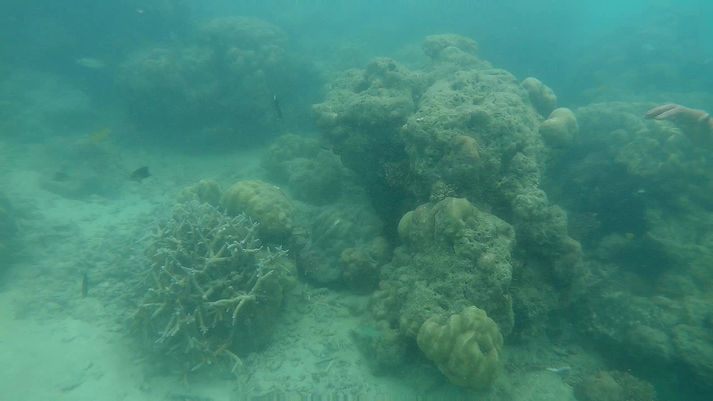
A journey through Coral Reefs Island
Andaman and Nicobar Islands is home to over 560 species of corals, whose sheer colour and diversity leave one mesmerised. Corals are tiny organisms that secrete massive calcarious skeletons and collectively deposit calcium carbonate to form large colonies. Coral reefs cover about 2,000 sq km of the area of the Andaman and Nicobar Island that is almost six per cent of the total area. The fringing reefs on the eastern side and the barrier reefs on the western sides make for a beautiful sight. In a typical reef, one will find corals, clams, sponges, snails, anemones, crabs, starfish, worms, shrimps, lobsters etc. You can also spot various species of fish like damselfish, groupers, surgeonfish, butterflyfish etc.
The Andaman tropical evergreen rain forests, beautiful silver sandy beaches, serpentine mangrove-lines creeks, marine life abounding in rare species of plants, animals, corals, etc., provide a memorable experience to the tourists. There is tremendous scope for enjoying nature in the beach resorts, water sports and adventure water sports, adventure tourism like trekking, Island camping, Nature trail, Scuba Diving, etc.


 |  |  |  |
|---|---|---|---|
 |  |  |  |
 |  |  |  |
 |  |  |  |
 |

Embark on a Journey of a Lifetime with
Christone "Holidays"
Experience The Indian Islands
Coral Walk Through – A Natural Wonder of Shaheed Dweep (Neil Island)
Experience one of nature's most fascinating coastal phenomena.
As the tide rises, the entire coral reef landscape is gradually submerged beneath the sea. Hours later, when the tide recedes, the reef emerges once again, revealing a spectacular natural world waiting to be explored.
Join a guided coral reef walk and witness intricate coral formations, colourful marine life, tidal pools, and remarkable patterns sculpted by nature over thousands of years. Every visit offers a different perspective, shaped by the rhythm of the ocean.
Discover the breathtaking artistry of nature—where every coral formation is a masterpiece created by the sea.

Have you ever explored a living coral reef at low tide—without disturbing its fragile ecosystem? Experience the magic of a guided coral walk at Shaheed Dweep (Neil Island), where every step reveals the hidden wonders of the Andaman's vibrant marine world.
An Extraordinary Coral Reef Walk at Shaheed Dweep (Neil Island)


Christone Holidays
"Come and witness nature's living masterpiece—an extraordinary work of art shaped not by human hands, but by the Creator and the timeless rhythm of the sea."

Please ask us the coral day plan


🏝 Swaraj Dweep (Havelock Island)
Where the Andaman Islands Reveal Their Most Beautiful Beaches
After exploring the history and heritage of Port Blair, the journey across the turquoise waters of the Bay of Bengal leads to Swaraj Dweep (formerly Havelock Island)—the crown jewel of the Andaman Islands. Widely celebrated for its powder-soft white sand beaches, crystal-clear turquoise waters, thriving coral reefs, and lush tropical forests, Swaraj Dweep is one of India's most iconic island destinations.
Accessible by high-speed ferry from Port Blair, the island welcomes visitors into a world where nature takes center stage. Every shoreline, forest trail, and coral garden reflects the untouched beauty of the Andaman archipelago, making Swaraj Dweep an ideal destination for families, honeymooners, adventure enthusiasts, photographers, and educational groups alike.
Whether you're watching the sunset over the world-famous Radhanagar Beach, snorkeling above colorful coral reefs at Elephant Beach, kayaking through calm mangrove-lined waters, or simply relaxing beneath swaying coconut palms, every moment on Swaraj Dweep feels like stepping into a tropical paradise.
For travelers seeking adventure, the island is home to some of India's finest scuba diving and snorkeling sites, offering encounters with vibrant coral reefs, reef fish, sea turtles, rays, and countless marine species. For those looking for peace and relaxation, its secluded beaches and luxury beachfront resorts provide the perfect island escape.
At Christone Holidays, we believe Swaraj Dweep is much more than a beach destination. It is a place where nature, conservation, adventure, and meaningful travel come together, creating experiences that inspire both exploration and appreciation for one of India's most extraordinary island ecosystems.
Why Visit Swaraj Dweep?
Unlike many tropical destinations, Swaraj Dweep offers a remarkable combination of natural beauty, marine biodiversity, and unforgettable experiences.
Visitors come here to experience:
🏖 One of Asia's most celebrated beaches
🌊 Crystal-clear turquoise lagoons
🤿 World-class scuba diving and snorkeling
🐠 Vibrant coral reef ecosystems
🌅 Spectacular tropical sunsets
🚣 Sea kayaking through calm coastal waters
📸 Exceptional landscape and underwater photography
🌴 Luxury beachfront resorts and eco-retreats
🎓 Marine biology and environmental learning experiences
🌿 Responsible island tourism and conservation
Havelock Island
The Havelock Island is a pristine natural paradise with white beaches, clear blue waters, lush forests, rich coral reefs and multi-coloured aquatic life.

At a Glance
Destination Swaraj Dweep (Formerly Havelock Island)
Best Known For Radhanagar Beach, Elephant Beach, Scuba Diving
Ferry Time from Port Blair Approximately 90 minutes (high-speed ferry, varies by operator)
Recommended Stay 2–3 Nights
Ideal For Families, Honeymooners, Adventure Travelers, Educational Tours, Nature Lovers
Signature Experiences Beach relaxation, Scuba Diving, Snorkeling, Sea Kayaking, Sunset Photography
A Tropical Paradise Surrounded by Coral Reefs
Located around 70 kilometres northeast of Port Blair, Swaraj Dweep is one of the most visited islands in the Andaman archipelago. Dense tropical forests meet pristine beaches, while shallow coral reefs protect the island's coastline, creating calm lagoons rich in marine life.
These reefs support an extraordinary underwater ecosystem where colorful reef fish, clownfish, butterflyfish, parrotfish, sea turtles, reef rays, and countless marine organisms thrive in crystal-clear waters. The island's commitment to conservation helps preserve these fragile habitats, ensuring that visitors can continue to experience one of India's richest marine environments.
For photographers, sunrise and sunset transform the island into a canvas of vibrant colors, while beneath the surface, coral gardens offer equally breathtaking scenes for underwater exploration.

Swaraj Dweep (Havelock Island) – Aerial Panorama | Andaman Islands | Christone Holidays
Journey with Christone Holidays
"From the historic shores of Port Blair to the breathtaking beaches of Swaraj Dweep, every ferry crossing marks the beginning of a new chapter. Here, the rhythm of the waves, the colours of the coral reefs, and the serenity of tropical forests invite you to slow down, explore deeply, and experience the Andaman Islands beyond the ordinary."
🏝️ Experience the magic of Swaraj Dweep (Havelock Island)! Explore vibrant coral reefs, snorkel through crystal-clear waters, discover incredible marine life, and end your day with unforgettable sunsets over the Andaman Islands—all with Christone Holidays.

Swaraj Dweep (Havelock Island) – Coral Reefs, Snorkeling & Tropical Sunsets | Christone Holidays
Dive into the vibrant coral reefs of Swaraj Dweep (Havelock Island), where crystal-clear waters, colorful marine life, unforgettable snorkeling adventures, and breathtaking tropical sunsets come together to create one of the Andaman Islands' most extraordinary experiences.
Radhanagar Beach – Where Every Sunset Becomes a Memory
Widely regarded as one of the most beautiful beaches in Asia, Radhanagar Beach (Beach No. 7) is the crown jewel of Swaraj Dweep (formerly Havelock Island). With its powdery white sands, crystal-clear turquoise waters, towering tropical forests, and breathtaking sunsets, the beach offers an experience that remains etched in the hearts of travelers long after they leave the Andaman Islands.
Unlike many commercial beach destinations, Radhanagar Beach has retained its natural charm. There are no towering buildings or crowded promenades—just a pristine coastline where the rhythm of the waves, the shade of ancient tropical trees, and the vast expanse of the Bay of Bengal create an atmosphere of peace and serenity.
Whether you're taking a leisurely stroll along the shoreline, enjoying a refreshing swim in the calm waters, photographing the changing colours of the sky, or simply listening to the gentle sound of the waves, every moment here invites you to slow down and reconnect with nature.
As evening approaches, the beach transforms into a spectacular natural amphitheatre. The setting sun paints the sky in brilliant shades of gold, orange, crimson, and violet, creating one of India's most celebrated sunset experiences. It is this magical combination of untouched beauty and unforgettable sunsets that has made Radhanagar Beach an iconic symbol of the Andaman Islands.
For photographers, nature lovers, families, honeymooners, and educational groups alike, Radhanagar Beach is more than a destination—it is a living example of why preserving fragile coastal ecosystems is so important for future generations.
Why Visit Radhanagar Beach?
Visitors from around the world come to experience:
-
🏖️ One of Asia's most celebrated white-sand beaches
-
🌅 Spectacular sunsets over the Bay of Bengal
-
🌊 Calm, crystal-clear waters ideal for swimming
-
🌴 Lush tropical rainforest meeting the shoreline
-
📸 Incredible landscape and sunset photography
-
🌿 Clean, well-preserved natural surroundings
-
🚶 Peaceful beach walks and moments of relaxation
-
🎓 A living classroom for coastal ecology and sustainable tourism
Educational Perspective
Radhanagar Beach is more than a scenic destination—it offers valuable opportunities to understand coastal ecosystems, beach geomorphology, marine biodiversity, and the importance of responsible tourism. Students can observe how tropical forests protect shorelines, how tides shape sandy beaches, and why conserving these fragile environments is essential for the future of island communities.
Christone Holidays Recommends
Arrive at least an hour before sunset. Take time to walk barefoot along the soft white sands, enjoy the tranquil surroundings, and watch as the sun slowly disappears beyond the horizon. The changing colours of the sky and sea create an unforgettable finale to the day—one that perfectly reflects the timeless beauty of the Andaman Islands.
"Some beaches are visited. Radhanagar Beach is remembered."
— Christone Holidays
Radhanagar Beach, Swaraj Dweep (Havelock Island) – Where Every Sunset Becomes a Memory | Christone Holidays

Experience the timeless beauty of Radhanagar Beach on Swaraj Dweep (formerly Havelock Island), where pristine white sands, crystal-clear waters, tropical forests, and unforgettable sunsets create one of the Andaman Islands' most cherished travel experiences.
🌅 Where Every Sunset Becomes a Memory. Discover the world-famous Radhanagar Beach on Swaraj Dweep (Havelock Island)—a spectacular blend of pristine white sands, crystal-clear waters, lush tropical forests, and unforgettable sunsets with Christone Holidays.
"The ocean has its own classroom—Elephant Beach is where every dive begins a new lesson."
— Christone Holidays
Elephant Beach – Discover the Underwater World of Swaraj Dweep
While Radhanagar Beach is celebrated for its breathtaking sunsets and tranquil shoreline, Elephant Beach reveals an entirely different side of Swaraj Dweep (formerly Havelock Island)—a vibrant underwater world teeming with life, colour, and adventure.
Accessible by a short boat ride or a scenic forest trail, Elephant Beach is one of the Andaman Islands' most popular destinations for snorkeling, scuba diving, sea walking, and marine exploration. Here, crystal-clear waters provide exceptional visibility, allowing visitors to witness flourishing coral gardens, colourful reef fish, sea anemones, giant clams, and an extraordinary diversity of tropical marine life.
Whether you're taking your first snorkeling lesson or are an experienced diver, Elephant Beach offers unforgettable encounters with one of India's richest coral reef ecosystems. Beneath the gentle waves lies a living world that continues to inspire marine biologists, underwater photographers, conservationists, and nature lovers from around the globe.
For adventure enthusiasts, Elephant Beach offers the perfect blend of excitement and natural beauty. For families, it provides safe and enjoyable opportunities to discover marine life. For educational groups, it becomes a fascinating outdoor classroom where students can observe coral reef ecology, biodiversity, and the importance of marine conservation through firsthand experiences.
Every visit to Elephant Beach is a reminder that the greatest wonders of the Andaman Islands are found not only along its shores but also beneath the surface of the sea.
Why Visit Elephant Beach?
Elephant Beach is one of the Andaman Islands' premier destinations for marine adventures and underwater exploration.
Visitors come here to experience:
-
🤿 Snorkeling over vibrant coral reefs
-
🌊 Crystal-clear waters with excellent underwater visibility
-
🪸 Diverse coral reef ecosystems
-
🐠 Colourful tropical fish and marine biodiversity
-
🚶 Sea Walk experiences (subject to operator availability and conditions)
-
📸 Underwater photography and videography
-
🚤 Scenic boat rides through turquoise lagoons
-
🌴 Relaxation on a beautiful tropical beach
-
🎓 Marine ecology and environmental learning opportunities
Educational Perspective
Elephant Beach offers exceptional opportunities for experiential learning across multiple disciplines:
-
Marine Biology
-
Coral Reef Ecology
-
Ocean Biodiversity
-
Coastal Ecosystems
-
Climate Change Awareness
-
Sustainable Tourism
-
Marine Conservation
-
Environmental Science
For schools, colleges, and universities, Elephant Beach transforms the ocean into a living laboratory, where students can observe the interconnected relationships between coral reefs, fish populations, water quality, and coastal conservation.
Elephant Beach, Swaraj Dweep (Havelock Island) – The Underwater World of the Andaman Islands | Christone Holidays

Explore the underwater wonders of Elephant Beach, where vibrant coral reefs, colourful marine life, snorkeling, Sea Walk adventures, crystal-clear waters, and pristine tropical beaches come together to create one of the Andaman Islands' most unforgettable experiences.
A Living Coral Wonderland
The shallow waters surrounding Elephant Beach are home to one of the most accessible coral reef ecosystems in the Andaman Islands. These reefs provide shelter to countless marine species, creating an underwater habitat filled with movement, colour, and life.
Visitors may observe butterflyfish, parrotfish, angelfish, clownfish, sea cucumbers, giant clams, and many other reef inhabitants while exploring the lagoon. Every snorkeling session offers a new opportunity to appreciate the delicate balance of this remarkable marine environment.
Because coral reefs are living ecosystems, responsible tourism plays a vital role in protecting them. Visitors are encouraged to admire these natural wonders without touching or disturbing the corals, helping preserve them for future generations.
Adventure Meets Conservation
Elephant Beach is more than an adventure destination—it is a place where excitement and environmental responsibility go hand in hand.
Through responsible snorkeling, guided marine activities, and eco-conscious travel practices, visitors gain a deeper appreciation of the fragile ecosystems that support life beneath the sea. Every responsible traveler contributes to the protection of one of India's most valuable marine treasures.
Christone Holidays Recommends
Explore with curiosity. Discover with respect. Protect with purpose.
Every snorkeling adventure at Elephant Beach is an opportunity to witness one of nature's greatest masterpieces while helping preserve it through responsible tourism.
"The ocean has its own classroom—Elephant Beach is where every dive begins a new lesson."
— Christone Holidays
"Some beaches inspire adventure. Kalapathar inspires peace."
— Christone Holidays
Kalapathar Beach – Where the First Light Meets the Sea
Unlike the vibrant marine adventures of Elephant Beach or the world-famous sunsets of Radhanagar Beach, Kalapathar Beach offers a quieter, more intimate experience. Nestled along the eastern coast of Swaraj Dweep (formerly Havelock Island), this picturesque shoreline is known for its crystal-clear waters, smooth black volcanic rocks, swaying coconut palms, and breathtaking sunrise views.
Named after the striking black rock formations ("Kala Pathar" meaning black rocks), the beach creates a dramatic contrast between the white sand, turquoise sea, and lush tropical forest. It is one of the most peaceful locations on the island, making it a favourite among photographers, nature lovers, couples, and travelers seeking a moment of tranquillity.
Unlike busier beaches, Kalapathar invites visitors to slow down and appreciate the simple beauty of the Andaman Islands. Gentle waves lap the shoreline, seabirds glide overhead, and the morning light transforms the coastline into a canvas of gold and blue.
Whether you're enjoying an early morning walk, capturing the perfect sunrise, or simply relaxing beneath the shade of coconut trees, Kalapathar Beach offers an unforgettable connection with nature.
Why Visit Kalapathar Beach?
Visitors come here to experience:
-
🌅 Spectacular sunrise over the Bay of Bengal
-
🪨 Unique black volcanic rock formations
-
🏝 Peaceful white-sand beach
-
🌴 Coconut-lined tropical coastline
-
📸 Exceptional landscape photography
-
🚶 Quiet beach walks
-
🌊 Crystal-clear turquoise waters
-
🌿 A serene natural environment away from the crowds
Educational Perspective
Kalapathar Beach provides an excellent setting to observe:
-
Coastal erosion and deposition
-
Rocky shoreline formations
-
Beach ecology
-
Tropical coastal vegetation
-
Sustainable coastal management
-
Island geography
For students and nature enthusiasts, it offers a peaceful environment to understand how waves, tides, weather, and geology shape tropical coastlines over time.
Nature's Peaceful Masterpiece
Kalapathar Beach is a reminder that some of the most memorable travel experiences come not from adventure, but from stillness. The interplay of light, sea, rocks, and tropical greenery creates an ever-changing landscape that is both calming and inspiring.
As the first rays of sunlight illuminate the coastline, photographers and early risers are rewarded with one of the Andaman Islands' most beautiful morning scenes.
Christone Holidays Recommends
Wake before dawn and arrive just before sunrise. Experience the island as it slowly awakens, with gentle waves, fresh sea breeze, and the first golden light reflecting across the turquoise waters. It is one of the most peaceful moments you can enjoy on Swaraj Dweep.
🌴 Shaheed Dweep (Formerly Neil Island)
A Different Side of the Andaman Islands
If Swaraj Dweep is the island of adventure, Shaheed Dweep is the island of discovery. Here, the greatest experiences are often found in the quiet moments—a sunrise over Sitapur Beach, a guided walk across exposed coral reefs at low tide, or watching the ocean reshape the shoreline with each passing tide.
Where Nature Slows Down and the Ocean Tells a Different Story
Unlike the vibrant energy and adventure of Swaraj Dweep (formerly Havelock Island), Shaheed Dweep (formerly Neil Island) welcomes visitors into a world of tranquillity, untouched landscapes, and timeless island charm. Just a short ferry journey away, this peaceful island offers a slower pace of life where pristine beaches, natural rock formations, lush greenery, and crystal-clear lagoons create one of the most relaxing destinations in the Andaman Islands.
Often described as the "Vegetable Bowl of the Andaman Islands" due to its fertile agricultural land, Shaheed Dweep presents a unique blend of coastal beauty and rural island life. Here, visitors can cycle through quiet village roads, meet local farming communities, explore secluded beaches, and witness remarkable natural wonders shaped by the rhythm of the tides.
One of the island's most iconic attractions is the Natural Bridge, a magnificent limestone rock arch sculpted by the sea over thousands of years. During low tide, guided walks reveal fascinating coral formations, colourful tidal pools, and marine life that transform the coastline into a living outdoor classroom.
The island is also home to some of the Andaman Islands' most beautiful beaches, including Bharatpur Beach, famous for its shallow turquoise waters and water activities, Laxmanpur Beach, renowned for spectacular sunsets and dramatic coastal scenery, and Sitapur Beach, where the first rays of sunrise illuminate the eastern shoreline.
Whether you're seeking peaceful beaches, coral reef exploration, photography, nature walks, or educational experiences, Shaheed Dweep offers a completely different perspective on island life—one that encourages you to slow down, observe, and appreciate the delicate balance between land, sea, and community.
With Christone Holidays, every visit to Shaheed Dweep becomes more than a sightseeing tour; it becomes a journey into one of the Andaman Islands' most authentic and naturally beautiful destinations.
Why Visit Shaheed Dweep?
Visitors come here to experience:
-
🌉 The iconic Natural Bridge
-
🪸 Guided coral reef walks during low tide
-
🌊 Crystal-clear lagoons and shallow turquoise waters
-
🏖 Bharatpur Beach
-
🌅 Laxmanpur Beach sunsets
-
🌄 Sitapur Beach sunrise
-
🚴 Cycling through peaceful island villages
-
🌿 Tropical island landscapes and agriculture
-
📸 Coastal photography
-
🎓 Marine ecology and environmental learning
Bharatpur Beach (Marine Activities)
↓
Natural Bridge (Guided Coral Reef Walk)
↓
Laxmanpur Beach (Sunset)
↓
Sitapur Beach (Sunrise)
↓
Village Life & Agriculture
↓
Educational Travel
Why Visit Shaheed Dweep (Neil Island)? Complete Island Experience | Christone Holidays

Discover the diverse beauty of Shaheed Dweep (formerly Neil Island), where the iconic Natural Bridge, guided coral reef walks, crystal-clear lagoons, Bharatpur Beach, Laxmanpur Beach sunsets, Sitapur Beach sunrises, tropical village life, snorkeling, glass-bottom boat rides, speedboat adventures, and marine ecology come together to create one unforgettable island experience.
"Not every journey begins on land. At Bharatpur Beach, it begins beneath the crystal-clear waters of the Andaman Sea."
— Christone Holidays
🏖 Bharatpur Beach – Where the Lagoon Comes Alive
As the ferry approaches Shaheed Dweep (formerly Neil Island), the first glimpse of Bharatpur Beach reveals calm turquoise lagoons, powder-soft white sand, and crystal-clear waters that shimmer under the tropical sun. Unlike the deeper waters surrounding Elephant Beach on Swaraj Dweep, Bharatpur Beach is known for its shallow lagoon, making it one of the safest and most enjoyable destinations for families, first-time snorkelers, and marine enthusiasts.
Protected by vibrant coral reefs, the lagoon remains calm for much of the year, creating ideal conditions for exploring the colourful underwater world of the Andaman Islands. Whether you're gliding across the water in a glass-bottom boat, speeding over the lagoon on a thrilling speedboat ride, snorkeling among tropical reef fish, or simply relaxing along the shoreline, Bharatpur Beach offers an unforgettable blend of adventure and tranquillity.
The crystal-clear waters reveal a fascinating marine ecosystem where colourful corals, reef fish, sea cucumbers, giant clams, and other marine creatures thrive in their natural habitat. Even visitors who prefer to stay dry can witness the beauty beneath the surface through glass-bottom boat rides, making the underwater world accessible to every traveller.
With its gentle waters, scenic surroundings, and family-friendly atmosphere, Bharatpur Beach is often the first stop for visitors arriving on Shaheed Dweep—and the perfect introduction to the island's marine wonders.
Why Visit Bharatpur Beach?
Visitors come here to experience:
-
🛥 Glass-bottom boat rides over vibrant coral reefs
-
🤿 Snorkeling in crystal-clear lagoons
-
🚤 Exciting speedboat rides across turquoise waters
-
🐠 Colourful tropical fish and marine biodiversity
-
🪸 Shallow coral gardens perfect for beginners
-
🏖 Soft white-sand beach with calm waters
-
👨👩👧👦 Safe swimming for families and children
-
📸 Stunning coastal and underwater photography
-
🎓 Marine ecology and coral reef education
Educational Perspective
For students and educational groups, Bharatpur Beach serves as a natural marine classroom where learning comes alive through observation and exploration. Visitors can discover:
-
Coral reef ecosystems
-
Tropical marine biodiversity
-
Coastal lagoons
-
Sustainable marine tourism
-
Coral conservation
-
Responsible ocean exploration
It is an ideal location to understand how healthy coral reefs support marine life and protect island coastlines, reinforcing the importance of conservation for future generations.
A Window into the Underwater World
Bharatpur Beach offers one of the easiest ways to experience the Andaman Islands' extraordinary marine life. Without venturing far from the shore, visitors can observe healthy coral reefs, schools of tropical fish, and diverse marine organisms living beneath the clear waters.
Glass-bottom boat rides provide an ideal introduction for families, children, and those who prefer not to snorkel, while snorkeling allows adventurous visitors to experience the reef ecosystem from just above the corals. Every activity encourages a deeper appreciation for the fragile marine habitats that make the Andaman Islands so unique.
Neil Island
A tiny and beautiful gem


Bharatpur Beach, Shaheed Dweep (Neil Island) – Glass-Bottom Boat, Snorkeling & Marine Adventures | Christone Holidays

Experience the vibrant marine world of Bharatpur Beach on Shaheed Dweep (formerly Neil Island), where crystal-clear lagoons, colourful coral reefs, glass-bottom boat rides, snorkeling adventures, speedboat rides, and family-friendly beaches create unforgettable island memories.
"The true spirit of Shaheed Dweep isn't found only along its shores—it lives in its villages, its fertile fields, and the warm smiles of its people."
— Christone Holidays
🌿 Village Life & Agriculture – Discover the Heart of Shaheed Dweep
Beyond its pristine beaches and vibrant coral reefs, Shaheed Dweep (formerly Neil Island) offers visitors something equally rewarding—a glimpse into the simple, sustainable lifestyle of one of the Andaman Islands' most peaceful communities. As you leave the coastline behind, quiet village roads wind through coconut groves, banana plantations, paddy fields, and fertile farmlands, revealing a side of the island that many travelers rarely experience.
Unlike the bustling pace of larger tourist destinations, life on Shaheed Dweep moves in harmony with nature. The island's small villages are home to warm and welcoming communities whose livelihoods are closely connected to agriculture, fishing, and responsible tourism. Cycling or driving through these rural landscapes provides an opportunity to appreciate the island's authentic character and the deep connection between its people and the land.
The Vegetable Bowl of the Andaman Islands
Shaheed Dweep is affectionately known as the "Vegetable Bowl of the Andaman Islands." Thanks to its fertile soil, favourable climate, and abundant rainfall, the island produces a wide variety of fresh vegetables and fruits that supply not only local communities but also neighbouring islands, including Port Blair.
Visitors will often see thriving farms cultivating:
-
🥬 Leafy vegetables
-
🍅 Tomatoes
-
🥒 Cucumbers
-
🫑 Chillies
-
🍆 Brinjals (Eggplants)
-
🥥 Coconut plantations
-
🍌 Banana groves
-
🌾 Seasonal crops and tropical fruits
This agricultural heritage plays a vital role in supporting the Andaman Islands' food security while demonstrating how island communities have adapted to their unique environment.
Experience the Island at a Gentle Pace
One of the best ways to explore Shaheed Dweep is by cycling or taking a leisurely drive through its scenic countryside. Along the way, you'll pass charming village homes, roadside farms, small local markets, and palm-lined roads that offer a refreshing contrast to the island's coastal attractions.
Every turn reveals another peaceful landscape, making the journey itself as memorable as the destinations.
Sustainable Living in Harmony with Nature
The communities of Shaheed Dweep reflect a lifestyle built on balance and sustainability. Agriculture, fishing, and tourism coexist with a shared appreciation for the island's natural resources. Visitors are encouraged to respect local traditions, reduce waste, and help preserve the fragile ecosystems that support both people and wildlife.
This harmony between community and environment is one of the reasons Shaheed Dweep remains one of the Andaman Islands' most authentic and environmentally conscious destinations.
Educational Perspective
For schools, colleges, and universities, Shaheed Dweep provides valuable learning opportunities in:
-
Sustainable island agriculture
-
Tropical farming practices
-
Rural livelihoods
-
Community-based tourism
-
Environmental sustainability
-
Food security on islands
-
Climate adaptation in coastal communities
-
Human–environment relationships
Students gain firsthand insights into how island communities balance agriculture, conservation, and tourism while protecting their natural heritage.
Village Life & Agriculture in Shaheed Dweep (Neil Island) – The Vegetable Bowl of the Andaman Islands | Christone Holidays

This cinematic merged image highlights the authentic rural charm of Shaheed Dweep (formerly Neil Island) in the Andaman Islands. Featuring peaceful village roads lined with coconut palms, cyclists exploring the countryside, vibrant vegetable farms, banana plantations, local farmers harvesting fresh produce, traditional island homes, and a distant turquoise coastline, the image celebrates the island's reputation as the Vegetable Bowl of the Andaman Islands. It showcases sustainable agriculture, community-based tourism, eco-friendly travel, and the harmonious relationship between people and nature, making it ideal for promoting experiential tourism, educational travel, rural exploration, and responsible island holidays with Christone Holidays.
Christone Holidays Recommends
Take time to venture beyond the beaches. Explore the island's peaceful villages, interact respectfully with local communities, and experience the slower rhythm of island life. These authentic encounters often become the most memorable part of the journey.
"When the tide retreats, nature unveils one of its greatest masterpieces."
— Christone Holidays
🌉 Natural Bridge – Nature's Living Sculpture
Leaving behind the peaceful villages and fertile farmlands of Shaheed Dweep (formerly Neil Island), the journey leads to one of the island's most extraordinary natural landmarks—the Natural Bridge, also affectionately known by many visitors as the Howrah Bridge.
Carved over thousands of years by the relentless forces of waves, tides, and coastal erosion, this magnificent limestone arch stands as a testament to nature's artistry. As the sea gradually sculpted the coastal rock formations, it created a remarkable natural bridge that today ranks among the most photographed attractions in the Andaman Islands.
Unlike many geological landmarks, the Natural Bridge is constantly changing. Every tide reshapes the surrounding shoreline, revealing hidden coral formations, tidal pools, marine organisms, and intricate rock patterns that make each visit unique. It is a place where geology, marine ecology, and coastal life come together in perfect harmony.
Experience the Coral Walk Through
One of the most fascinating ways to explore the Natural Bridge is during low tide, when the receding sea reveals a vast intertidal landscape that is normally hidden beneath the water.
Accompanied by experienced local guides, visitors can carefully walk across naturally exposed coral flats, tidal pools, and rocky formations while learning about the remarkable ecosystem that thrives between land and sea.
This unique Coral Walk Through is unlike a traditional beach walk. Every step reveals nature's intricate design—from fossil-like coral formations and colourful marine organisms to tiny crabs, sea cucumbers, starfish, sea anemones, and other fascinating creatures that inhabit this fragile environment.
It is a rare opportunity to witness the living artwork created by the ocean over countless generations.
A Landscape Shaped by the Tides
The magic of the Natural Bridge lies in its ever-changing character.
During high tide, much of the surrounding reef disappears beneath the sea, leaving only the towering limestone arch rising above the waves.
As the tide recedes, the coastline transforms into a vast natural gallery where coral formations, shallow pools, and rocky pathways emerge once again. This daily rhythm reminds visitors that the island itself is constantly being shaped by the forces of nature.
Every visit offers a different perspective, making timing an essential part of the experience.
Why Visit the Natural Bridge?
Visitors come here to experience:
-
🌉 The iconic limestone Natural Bridge (Howrah Bridge)
-
🪸 Guided Coral Walk Through during low tide
-
🌊 Fascinating intertidal ecosystems
-
🐚 Colourful tidal pools and marine life
-
⭐ Starfish, sea cucumbers, sea anemones, and reef organisms
-
📸 One of the Andaman Islands' most photogenic coastal landscapes
-
🌿 Coastal geology and natural erosion processes
-
🎓 Experiential learning in marine ecology and environmental science
A Living Outdoor Classroom
For schools, colleges, and universities, the Natural Bridge offers one of the most engaging educational experiences in the Andaman Islands.
Students can observe:
-
Coastal erosion and weathering
-
Limestone formations
-
Coral reef ecosystems
-
Intertidal biodiversity
-
Marine adaptation to changing tides
-
Island geology
-
Coastal conservation
-
Sustainable tourism practices
Rather than learning from diagrams alone, students witness these natural processes unfolding before their eyes, making the experience both memorable and meaningful.
Travel Responsibly
The coral flats surrounding the Natural Bridge are living ecosystems that support countless marine species.
Visitors are encouraged to:
-
Follow designated walking paths.
-
Avoid stepping on living corals.
-
Observe marine life without disturbing it.
-
Leave no litter behind.
-
Respect local guides and conservation guidelines.
Protecting these fragile habitats ensures that future generations can continue to experience this extraordinary natural wonder.
Natural Bridge (Howrah Bridge), Shaheed Dweep (Neil Island) – Guided Coral Walk Experience | Christone Holidays

This cinematic hero image showcases the iconic Natural Bridge (Howrah Bridge) on Shaheed Dweep (formerly Neil Island) in the Andaman Islands. Formed as part of a continuous limestone coastal cliff, the naturally carved rock arch is revealed alongside expansive coral flats and tidal pools during low tide. Visitors enjoy a guided Coral Walk Through, observing starfish, sea cucumbers, sea anemones, coral formations, and other intertidal marine life while learning about coastal geology, erosion, marine ecology, and conservation. The image highlights one of the Andaman Islands' most unique geological landmarks and supports experiential, educational, and responsible tourism with Christone Holidays.
Christone Holidays Recommends
Plan your visit around low tide to experience the Coral Walk Through at its best. Walking across the exposed reef with a knowledgeable local guide offers a deeper understanding of the island's geology, marine biodiversity, and the remarkable forces that continue to shape the Andaman coastline.
"As the sun sinks beyond the horizon, Laxmanpur Beach reminds us that every ending is simply nature preparing for another beautiful beginning."
— Christone Holidays
🌅 Laxmanpur Beach – Where the Sun Paints the Andaman Sky
As the day unfolds on Shaheed Dweep (formerly Neil Island), the journey leads to one of the island's most captivating coastal landscapes—Laxmanpur Beach. Renowned for its breathtaking sunsets, expansive white-sand shoreline, and dramatic rocky coastline, this peaceful beach offers a completely different atmosphere from the lively lagoons of Bharatpur Beach.
Stretching along the island's western coast, Laxmanpur Beach invites visitors to slow down and immerse themselves in the timeless rhythm of the sea. At low tide, the shoreline expands to reveal fascinating coral fragments, weathered rock formations, and shallow pools that reflect the changing colours of the evening sky.
As sunset approaches, the horizon transforms into a masterpiece of gold, amber, crimson, and violet. The gentle sound of waves, the cool sea breeze, and the vast open horizon create one of the Andaman Islands' most memorable evening experiences.
Whether you're enjoying a quiet walk along the beach, photographing the dramatic coastal scenery, or simply watching the sun disappear beyond the Bay of Bengal, Laxmanpur Beach offers a sense of peace that lingers long after the day has ended.
Why Visit Laxmanpur Beach?
Visitors come here to experience:
-
🌅 Spectacular sunset views over the Bay of Bengal
-
🏖 Long stretches of pristine white-sand shoreline
-
🪨 Dramatic coastal rock formations
-
🌊 Peaceful beach walks and ocean views
-
📸 Landscape and sunset photography
-
🌴 Tranquil atmosphere away from busy tourist areas
-
🌿 Coastal ecosystems shaped by tides
-
🎓 Learning about shoreline dynamics and coastal conservation
Educational Perspective
Laxmanpur Beach provides opportunities to explore:
-
Coastal geomorphology
-
Tidal processes
-
Rocky shoreline ecosystems
-
Beach ecology
-
Climate and weather patterns
-
Sustainable coastal tourism
For educational groups, the beach becomes a natural setting to observe how tides, waves, and weather continue to shape island coastlines over time.
Sunset Beyond the Horizon
Laxmanpur Beach is often described as one of the finest sunset viewpoints in the Andaman Islands. As daylight fades, the sky reflects across the calm waters, creating ever-changing colours that make every evening unique. It's a place where visitors naturally pause, take in the scenery, and appreciate the quiet beauty of island life.

"Every sunrise at Sitapur Beach is a reminder that every journey brings a new beginning."
— Christone Holidays
🌄 Sitapur Beach – Where the Andaman Islands Welcome the First Light of Day
Nestled on the eastern tip of Shaheed Dweep (formerly Neil Island), Sitapur Beach is one of the first places in the Andaman Islands to greet the rising sun. As dawn breaks over the Bay of Bengal, the sky gradually transforms from deep blue to shades of pink, orange, and gold, bathing the rugged coastline in warm morning light.
Unlike the calm lagoon of Bharatpur Beach or the sunset vistas of Laxmanpur Beach, Sitapur Beach offers a more dramatic landscape. Rocky cliffs, natural coastal formations, lush tropical vegetation, and the open sea combine to create a spectacular setting where nature begins each new day in quiet grandeur.
The early morning hours are filled with the gentle sounds of waves, seabirds, and the refreshing sea breeze. It is a place for reflection, photography, and peaceful moments before the island awakens.
Why Visit Sitapur Beach?
Visitors come here to experience:
-
🌅 One of the Andaman Islands' finest sunrise viewpoints
-
🌊 Panoramic views of the Bay of Bengal
-
🪨 Dramatic rocky coastline and natural formations
-
🌴 Unspoiled tropical surroundings
-
🚶 Peaceful morning walks along the shoreline
-
📸 Spectacular sunrise and landscape photography
-
🌿 A tranquil escape immersed in nature
-
🎓 Learning about coastal landforms and eastern island geography
Educational Perspective
Sitapur Beach is an excellent location for observing:
-
Coastal landforms and cliff formations
-
Wave action and erosion
-
Eastern coastal geography
-
Weather and sunrise orientation
-
Tropical coastal ecosystems
-
Responsible coastal conservation
For educational groups, it provides a practical setting to understand how geography, climate, and natural forces shape island environments.
A Sunrise Worth Waking Up For
Every sunrise at Sitapur Beach is unique. As the first rays of sunlight touch the sea, the changing colours illuminate the cliffs, rocky shoreline, and surrounding greenery, creating an unforgettable natural spectacle.
For photographers and nature enthusiasts, these fleeting moments offer some of the most rewarding views in the Andaman Islands. For others, it's simply a chance to begin the day surrounded by peace, beauty, and the rhythm of the ocean.

Sitapur Beach, Shaheed Dweep (Neil Island) – Where the Andaman Islands Welcome the First Light of Day | Christone Holidays
Christone Holidays Recommends
Arrive before sunrise and take a few moments to simply watch the horizon. As daylight slowly unfolds across the Bay of Bengal, you'll experience one of the most peaceful and inspiring moments that Shaheed Dweep has to offer.
🌊 Journey Continues…
Leaving behind the tranquil shores of Shaheed Dweep, the ferry returns to Port Blair, where a new chapter of the Andaman expedition begins.
From here, the journey expands beyond the well-known islands to discover:
-
🪸 North Bay Island – Coral reefs, sea walking, snorkeling, and glass-bottom boat adventures.
-
🏛 Netaji Subhas Chandra Bose Island (Ross Island) – Historic British-era ruins reclaimed by nature.
-
🌿 Baratang Island – Mangrove creeks, limestone caves, mud volcanoes, and unique geological landscapes.
-
🌳 Rangat & Mayabunder – Mangrove ecosystems, quiet beaches, and eco-tourism.
-
🏝 Diglipur & Ross–Smith Islands – The famous natural sandbar, Saddle Peak National Park, and remote island experiences.
-
🌋 Barren Island – India's only active volcano, rising dramatically from the Andaman Sea.


🚢 Returning to Port Blair
🌊 Across the Andaman Sea — Returning to Port Blair
As the catamaran glides across the turquoise waters of the Andaman Sea, the peaceful landscapes of Shaheed Dweep slowly fade into the horizon. Behind lie quiet villages, coral reefs, dramatic coastlines, and unforgettable sunrises; ahead awaits Port Blair, the vibrant gateway to another chapter of exploration.
The return journey is more than a ferry ride—it's a chance to reflect on the experiences gathered across the islands. Through panoramic windows, endless shades of blue stretch to the horizon, occasionally interrupted by small forested islands, seabirds soaring overhead, and the gentle rhythm of the sea.
Within a few hours, the skyline of Port Blair reappears, welcoming travelers back before they continue towards new adventures. From here, the journey expands beyond the popular islands to discover underwater worlds, colonial heritage, mangrove forests, limestone caves, remote tropical landscapes, and even India's only active volcano.
Every voyage across these waters reminds us that the Andaman Islands are not a single destination but an extraordinary archipelago where every island tells a different story.
✨ The Next Chapter Begins
Leaving Port Blair once again, our journey now heads towards one of the Andaman Islands' most exciting marine destinations—
🪸 North Bay Island
Where the Underwater World Comes Alive
North Bay Island Aerial View – Coral Reefs, Lighthouse & Marine Adventures | Christone Holidays
Experience North Bay Island from above, where turquoise lagoons, vibrant coral reefs, tropical forests, the iconic lighthouse, and crystal-clear waters create one of the Andaman Islands' most spectacular marine destinations.

This cinematic aerial hero image showcases North Bay Island, one of the Andaman Islands' premier marine adventure destinations. Captured from a breathtaking drone perspective, the image highlights vibrant coral reefs beneath crystal-clear turquoise waters, lush tropical forests, the iconic North Bay Lighthouse, boats arriving at the island jetty, and the pristine coastline surrounded by the Bay of Bengal. Famous for snorkeling, scuba diving, sea walking, glass-bottom boat rides, and marine biodiversity, North Bay Island offers unforgettable experiences for adventure seekers, families, photographers, and educational travelers. This hero image represents the gateway to the underwater world of the Andaman Islands with Christone Holidays.
Beyond the Shoreline Lies Another World
"Dive Into a World Beneath the Waves"
🪸 Discover North Bay Island – India's Gateway to the Underwater World
Just a short boat ride from Port Blair, North Bay Island invites visitors into one of the most vibrant marine ecosystems in the Andaman Islands. Surrounded by crystal-clear turquoise waters and flourishing coral reefs, the island is renowned as one of India's finest destinations for underwater adventures, offering unforgettable experiences for beginners and experienced explorers alike.
As boats approach the island, colourful coral gardens become visible beneath the transparent waters, while the iconic North Bay Lighthouse, famously featured on the reverse side of India's ₹20 banknote, rises above the tropical forest. This unique combination of natural beauty, marine biodiversity, and iconic landmarks makes North Bay Island one of the most visited destinations in the archipelago.
Whether you're discovering coral reefs through a glass-bottom boat, walking on the seabed with a Sea Walk helmet, snorkeling among tropical fish, or scuba diving into the underwater world, North Bay Island offers an extraordinary opportunity to experience the wonders of the Andaman Sea.
Why Visit North Bay Island?
Visitors come here to experience:
-
🪸 Vibrant coral reef ecosystems
-
🤿 Scuba diving for beginners and certified divers
-
🥽 Snorkeling in crystal-clear waters
-
🚶 Sea Walk – Walk on the ocean floor
-
🚤 Glass-bottom boat rides
-
🐠 Colourful tropical reef fish
-
🪼 Rich marine biodiversity
-
📸 Underwater photography and videography
-
🌴 Tropical island landscapes
-
🗼 The iconic North Bay Lighthouse
A Marine Paradise Beneath the Surface
While the island's tropical scenery is breathtaking, its greatest treasure lies beneath the sea. North Bay's shallow coral reefs provide an ideal environment for observing an extraordinary variety of marine life in calm, clear waters.
Visitors may encounter:
-
🐠 Butterflyfish
-
🐟 Angelfish
-
🐡 Pufferfish
-
🦀 Reef crabs
-
⭐ Starfish
-
🪸 Hard and soft corals
-
🌿 Seagrass meadows
-
🐚 Giant clams
-
🪼 Sea anemones
Every dive and snorkeling session reveals a colourful underwater landscape that makes North Bay one of the Andaman Islands' most rewarding marine destinations.
📖 Did You Know?
Many Indians have carried the North Bay Lighthouse in their wallets for years—without realizing they've also been carrying a piece of the Andaman Islands.
The lighthouse featured on the reverse of the ₹20 Indian banknote stands proudly on North Bay Island, just a short boat ride from Port Blair. Visiting this landmark transforms a familiar image from everyday life into a real-world experience, creating a memorable connection between geography, history, maritime heritage, and India's currency.
For students, it's a powerful reminder that learning extends far beyond the classroom—sometimes even into the currency we use every day.
The Lighthouse Everyone Recognises
Standing proudly above the island is the North Bay Lighthouse, one of the Andaman Islands' most recognisable landmarks. Many Indians have unknowingly seen this lighthouse for years—it appears on the reverse side of the ₹20 Indian banknote.
Surrounded by lush tropical forests and overlooking the turquoise waters below, the lighthouse has become a symbol of North Bay Island and one of the most photographed landmarks in the archipelago.
North Bay Lighthouse on the ₹20 Indian Banknote – Educational Travel to the Andaman Islands | Christone Holidays
The iconic North Bay Lighthouse in the Andaman Islands is featured on the reverse side of India's ₹20 banknote, making it a unique destination where geography, maritime heritage, and Indian currency come together. An inspiring educational stop for students and travelers alike.

This educational infographic highlights the famous North Bay Lighthouse on North Bay Island, Andaman Islands, which appears on the reverse side of India's ₹20 banknote. By comparing the actual lighthouse with its depiction on the currency, the image offers an engaging way to connect geography, maritime navigation, Indian heritage, and currency design. It is particularly valuable for educational tours, helping students understand the relationship between real-world landmarks and national symbols while exploring the Andaman Islands through experiential learning with Christone Holidays.
Christone Holidays Recommends
Begin your North Bay adventure with a glass-bottom boat ride to appreciate the coral reefs from above. Then, if you're comfortable in the water, continue with snorkeling, Sea Walk, or scuba diving for a closer encounter with the island's remarkable marine life. Experiencing the reef in this progression allows visitors of all ages to appreciate the underwater world at their own pace.
"North Bay Island reminds us that some of the world's greatest wonders are hidden beneath the surface."
— Christone Holidays
🌊 Experience the Underwater World of North Bay Island
The true magic of North Bay Island begins beneath the surface. Crystal-clear waters reveal a thriving marine ecosystem where colourful coral reefs, tropical fish, sea anemones, giant clams, and countless underwater species create one of India's most spectacular natural aquariums.
Whether you're taking your first glimpse through a glass-bottom boat or diving deep into the coral gardens, every activity offers a new perspective on the remarkable underwater world of the Andaman Sea.
Each experience is designed not only to inspire adventure but also to foster a deeper appreciation for marine conservation and the delicate ecosystems that make North Bay Island so extraordinary.
🤿 Scuba Diving – Explore a World Beneath the Waves
For those seeking the ultimate marine adventure, scuba diving offers an unforgettable opportunity to descend into the colourful coral gardens surrounding North Bay Island. Guided by certified instructors, both beginners and experienced divers can safely explore vibrant reefs teeming with marine life.
As sunlight filters through the crystal-clear water, schools of tropical fish weave through coral formations while giant clams, sea fans, and anemones create an underwater landscape unlike anywhere else in India.
Highlights
-
Beginner-friendly discovery dives
-
Certified diving programs
-
Vibrant coral reef ecosystems
-
Rich marine biodiversity
-
Underwater photography opportunities
-
Professional dive instructors
"Every dive reveals a world few people ever get to experience."
— Christone Holidays
🥽 Snorkeling – Float Above Living Coral Gardens
Snorkeling is one of the easiest and most rewarding ways to discover North Bay's underwater beauty. With calm waters and excellent visibility, visitors can observe colourful reef fish and healthy coral formations just beneath the surface.
Even first-time snorkelers can enjoy this immersive experience while learning about one of India's richest marine ecosystems.
Highlights
-
Crystal-clear waters
-
Colourful tropical fish
-
Shallow coral reefs
-
Suitable for beginners
-
Family-friendly adventure
-
Marine photography
🚶 Sea Walk – Walk on the Ocean Floor
North Bay Island offers one of the Andaman Islands' most unique experiences—Sea Walk.
Wearing a specially designed helmet supplied with continuous air from the surface, visitors can walk comfortably along the seabed without requiring swimming skills or scuba certification. Surrounded by colourful fish and coral formations, this remarkable activity allows participants to experience the underwater world from an entirely different perspective.
For many travellers, Sea Walk becomes the highlight of their Andaman journey because it makes the ocean accessible to everyone.
Perfect For
-
Non-swimmers
-
Families
-
Senior travellers
-
Educational groups
-
First-time underwater explorers
🚤 Glass-Bottom Boat Ride – Discover the Reef Without Getting Wet
Not everyone wishes to enter the water, yet everyone deserves to experience North Bay's incredible coral reefs.
Glass-bottom boat rides provide a comfortable and fascinating way to observe the vibrant underwater world while remaining above the surface. Through specially designed viewing panels, visitors can admire coral formations, tropical fish, giant clams, and other marine life in their natural habitat.
This experience is especially popular with families, young children, senior travellers, and educational groups.
Ideal For
-
Families with children
-
Senior citizens
-
School educational tours
-
Non-swimmers
-
Nature lovers
-
Marine interpretation
🐠 A Living Classroom Beneath the Sea
North Bay Island is more than an adventure destination—it's one of India's finest outdoor classrooms for marine education.
Students and curious travellers can observe:
-
🪸 Coral reef ecosystems
-
🐠 Marine biodiversity
-
🌿 Seagrass habitats
-
🦪 Giant clams and molluscs
-
⭐ Starfish and echinoderms
-
🪼 Sea anemones
-
🌊 Coastal ecosystems
-
🌍 Ocean conservation in practice
These experiences support learning across biology, environmental science, geography, marine ecology, climate studies, and sustainable tourism.
North Bay Island Marine Adventures – Sea Walk, Scuba Diving, Snorkeling & Glass-Bottom Boat | Christone Holidays
Discover North Bay Island, where crystal-clear waters reveal vibrant coral reefs, tropical marine life, Sea Walk adventures, scuba diving, snorkeling, and glass-bottom boat rides. A complete underwater experience awaits in the heart of the Andaman Islands with Christone Holidays.

This cinematic merged hero image showcases the complete marine adventure experience at North Bay Island, one of the Andaman Islands' most celebrated underwater destinations. Above the surface, a glass-bottom boat carries families and educational groups across turquoise waters while the iconic North Bay Lighthouse overlooks the island. Beneath the sea, visitors enjoy Sea Walk, scuba diving, and snorkeling among vibrant coral gardens, colourful tropical fish, giant clams, sea anemones, and healthy reef ecosystems. The image highlights North Bay as a premier destination for marine tourism, experiential learning, underwater photography, family adventures, and responsible exploration with Christone Holidays.
🌊 One Island. Four Extraordinary Marine Experiences.
Discover vibrant coral reefs through Sea Walk, Scuba Diving, Snorkeling, and Glass-Bottom Boat Rides, while learning about one of India's richest marine ecosystems. North Bay Island is where adventure, education, and conservation come together.
🌍 Protect Our Reefs, Protect Our Future
Coral reefs are among Earth's most valuable ecosystems, supporting marine biodiversity, protecting coastlines, and sustaining island communities. They are also among the most fragile.
At Christone Holidays, we encourage every visitor to explore responsibly by following local guidelines, avoiding contact with corals, never feeding marine life, and choosing eco-friendly activities that help preserve these underwater treasures for future generations.
"Healthy Reefs. Healthy Oceans. Healthy Future."
— Christone Holidays
📍 The Journey Continues
As the boat leaves North Bay Island, the colourful coral reefs gradually disappear beneath the shimmering waters, giving way to another remarkable chapter of the Andaman story.
Just across the sea lies an island where history, architecture, and nature have become inseparable.
Next Destination
🏛 Netaji Subhas Chandra Bose Island (Ross Island)
Where History Lives Among Ancient Ruins Reclaimed by Nature.
📍 Not to Be Confused: Ross Island & Ross & Smith Twin Islands
The Andaman Islands are home to two destinations with similar names, but they offer completely different experiences.
Netaji Subhas Chandra Bose Island (formerly Ross Island) is located just a short boat ride from Port Blair. Once the administrative headquarters of the British in the Andaman Islands, it is now renowned for its colonial-era ruins, historic landmarks, Japanese World War II remnants, and magnificent banyan trees that have gradually embraced the abandoned buildings.
Ross & Smith Twin Islands, on the other hand, are located in the northern Andaman Islands near Diglipur. These pristine tropical islands are famous for their spectacular natural white-sand sandbar that connects the two islands during low tide, creating one of India's most extraordinary coastal landscapes.
Although they share part of their names, they are entirely different destinations separated by both geography and experience. Throughout this journey, we will first explore Netaji Subhas Chandra Bose Island (formerly Ross Island) before continuing north to discover the breathtaking Ross & Smith Twin Islands later in our Andaman expedition.
🏛 Netaji Subhas Chandra Bose Island (Formerly Ross Island)
Where History Lives Among Ancient Ruins Reclaimed by Nature
Just a short boat ride from Port Blair, Netaji Subhas Chandra Bose Island (formerly Ross Island) offers a journey unlike any other in the Andaman Islands. Once the administrative headquarters of the British in the Andaman and Nicobar Islands, the island has transformed into one of India's most fascinating heritage destinations, where history and nature exist side by side.
As visitors arrive, quiet pathways wind through magnificent banyan trees whose sprawling roots have slowly embraced churches, officers' quarters, bakeries, hospitals, and colonial buildings abandoned decades ago. What was once a thriving British settlement has become an open-air museum, where every stone, archway, and weathered wall tells a story of resilience, change, and the unstoppable power of nature.
The island's peaceful atmosphere is enhanced by freely roaming deer, peacocks, and tropical birds, creating a remarkable contrast between historic architecture and flourishing island ecosystems. Every walk through the ruins reveals another chapter of the Andaman Islands' rich past.
Today, Netaji Subhas Chandra Bose Island stands not only as a symbol of colonial history but also as a reminder that nature ultimately reclaims even the grandest human creations.
Why Visit Netaji Subhas Chandra Bose Island?
Visitors come here to experience:
-
🏛 Historic British colonial ruins
-
🌳 Giant banyan trees embracing heritage buildings
-
⛪ The remains of the historic church
-
🏠 Chief Commissioner's residence
-
🍞 Colonial bakery and administrative buildings
-
🪖 Japanese World War II bunkers and installations
-
🦚 Free-roaming deer and peacocks
-
📸 Heritage and nature photography
-
🚶 Scenic walking trails through history
-
🎓 One of India's finest outdoor classrooms for history and heritage
A Living Museum in the Bay of Bengal
Unlike a traditional museum, Netaji Subhas Chandra Bose Island invites visitors to walk through history itself. Every pathway leads to structures that once formed the heart of British administration in the Andaman Islands.
Over time, tropical forests and centuries-old banyan trees have woven themselves around these buildings, creating an extraordinary landscape where architecture and nature are inseparable. This rare coexistence has made the island one of the most photographed and studied heritage sites in the Andaman archipelago.
Netaji Subhas Chandra Bose Island (Formerly Ross Island) – Heritage, History & Nature | Christone Holidays

Explore Netaji Subhas Chandra Bose Island (formerly Ross Island), where British colonial heritage, Japanese wartime history, majestic banyan trees, tropical wildlife, and the natural beauty of the Andaman Islands come together in one extraordinary destination.
Why is it called Netaji Subhas Chandra Bose Island?
The island was originally known as Ross Island, named after British marine surveyor Captain Daniel Ross during British rule.
On 30 December 1943, Subhas Chandra Bose visited the Andaman Islands after Japan handed nominal control of the islands to the Provisional Government of Free India. During this historic visit, Netaji hoisted the Indian national flag in Port Blair and declared the islands liberated from British rule under the Azad Hind Government. This was one of the earliest symbolic assertions of Indian independence on Indian soil during the freedom movement.
To commemorate his historic association with the islands, the Government of India officially renamed Ross Island as Netaji Subhas Chandra Bose Island on 30 December 2018, marking the 75th anniversary of his 1943 visit.
Subhas Chandra Bose Subhas Chandra Bose, popularly known as Netaji, was a leading figure in India's struggle for independence from British rule. He became one of the most influential nationalist leaders of the twentieth century through his advocacy of direct action, his leadership within the Indian independence movement, and his command of the Indian National Army (INA) during World War II. Career and Political Rise Bose was born in Cuttack, Odisha, on January 23, 1897. After studying in India and at Cambridge in England, he passed the Indian Civil Service examination but resigned before entering government service, choosing instead to join the nationalist movement. He rose rapidly within the Indian National Congress, becoming one of its most prominent younger leaders and serving as Congress president in 1938 and 1939. Differences with Gandhi Although Bose shared the goal of Indian independence with Mahatma Gandhi, he disagreed with Gandhi's strategy of nonviolent resistance. Bose favored a more militant approach and advocated rapid industrialization and stronger central planning. These differences eventually led to his resignation from the Congress presidency and the creation of the All India Forward Bloc. Indian National Army and World War II After escaping British surveillance in 1941, Bose traveled through Afghanistan and Europe before reaching East Asia. There he reorganized and led the Indian National Army, composed largely of Indian prisoners of war and expatriate volunteers. With Japanese support, he established the Provisional Government of Azad Hind and launched military operations toward India through Burma (now Myanmar). The campaign ultimately failed as Japanese forces were defeated during the later stages of World War II. Legacy and Controversy Bose remains one of the most admired figures of the Indian freedom struggle and is remembered for his determination, leadership, and famous call: "Give me blood, and I will give you freedom." At the same time, his wartime alliances with Nazi Germany and Imperial Japan continue to generate historical debate. Supporters emphasize his commitment to ending colonial rule, while critics point to the ethical and political implications of cooperation with Axis powers. Death and Historical Significance Most official investigations have concluded that Bose died from burn injuries following an aircraft crash in Taipei on August 18, 1945. However, the circumstances surrounding his death have remained the subject of public debate and numerous inquiries. Regardless of those controversies, Bose is widely regarded as one of the most significant leaders of the Indian independence movement, and his birth anniversary is commemorated in India as Parakram Diwas ("Day of Valor").
Provisional Government of Free India The Provisional Government of Free India, also known as the Azad Hind Government, was a political organization established in 1943 during the Second World War with the goal of ending British rule in India through armed struggle. It became closely associated with Subhas Chandra Bose and remains a significant, though historically debated, part of the broader Indian independence movement. Formation and purpose The government was proclaimed on 21 October 1943 in Singapore after Bose assumed leadership of the movement. It presented itself as the legitimate government of an independent India, sought diplomatic recognition abroad, and worked alongside the Indian National Army to pursue independence by military means. Its strategy differed sharply from the predominantly nonviolent approach led by Mahatma Gandhi and the Indian National Congress. International recognition and administration Several Axis-aligned states, including Japan, recognized the Azad Hind Government. Japan transferred nominal control of the Andaman and Nicobar Islands to the government, although Japanese military authorities retained substantial practical control over the islands during the war. The government's ability to administer territory or exercise sovereignty remained limited by wartime realities. Military campaign and legacy The Indian National Army fought alongside Japanese forces in campaigns on the India–Burma frontier, including the battles associated with the 1944 offensive toward Imphal and Kohima. Following Japan's defeat in 1945, the Azad Hind Government ceased to function. Although its military objectives were not achieved, the subsequent INA trials generated widespread public attention in India and influenced perceptions of the independence movement and the final years of British colonial rule. Historical significance The Provisional Government of Free India occupies a distinctive place in modern South Asian history. Supporters view it as a bold assertion of Indian sovereignty and a symbol of anti-colonial resistance, while historians also examine its dependence on Axis powers and the ethical and strategic implications of that alliance. As a result, the Azad Hind Government is remembered both for its symbolic contribution to the struggle for independence and for the enduring historical debate surrounding its methods and wartime partnerships.
💡 Educational insight
This is a wonderful opportunity to connect multiple subjects for students:
-
📖 Indian Freedom Movement
-
🌏 World War II in Southeast Asia
-
🏛️ Colonial history of the Andaman Islands
-
🇮🇳 Netaji Subhas Chandra Bose and the Azad Hind Government
-
🗺️ Place names and how they reflect historical memory
That kind of contextual storytelling aligns perfectly with Christone Holidays' approach to educational travel, turning a place name into a meaningful lesson in history.
🌿 Arriving on Netaji Subhas Chandra Bose Island
The journey begins with a short ferry ride across the calm waters from Port Blair. As the island comes into view, dense tropical forests rise above the shoreline, while the silhouettes of colonial buildings emerge from beneath towering banyan trees.
Stepping ashore, visitors immediately notice something extraordinary. Unlike most heritage sites, the ruins here are not separated from nature—they have become part of it.
Massive banyan roots twist around old churches, officers' quarters, bakeries, and stone archways, slowly embracing the abandoned structures that once formed the administrative heart of the Andaman Islands. Sunlight filters through the dense canopy, creating a peaceful atmosphere where history, architecture, and nature exist in remarkable harmony.
As you walk along shaded pathways, the calls of tropical birds replace the sounds of a bustling colonial settlement. Deer graze quietly beside historic buildings, while peacocks wander freely among the ruins, making every corner of the island feel like an open-air museum shaped by time itself.
Every pathway invites visitors to pause, observe, and reflect—not only on the island's colonial past but also on nature's quiet ability to reclaim what humanity leaves behind.

🏛 The Administrative Capital of British Andaman
Long before Port Blair developed into the capital we know today, this small island served as the administrative headquarters of the British in the Andaman Islands.
From the mid-19th century, the island became home to the Chief Commissioner and senior colonial officials. Elegant residences, government offices, churches, hospitals, bakeries, printing presses, water treatment systems, and recreational facilities were established here, transforming the island into what many later described as the "Paris of the East."
Despite its relatively small size, the island represented the centre of British administration in the archipelago, overseeing governance, logistics, and the nearby penal settlement.
Today, the remaining ruins stand as silent witnesses to this remarkable chapter of history.
Chief Commissioner's Residence – Netaji Subhas Chandra Bose Island (Formerly Ross Island) | Christone Holidays

Discovery Stop 1: Explore the historic Chief Commissioner's Residence, once the administrative heart of British rule in the Andaman Islands. Today, its grand colonial ruins, surrounded by tropical forests, offer visitors a fascinating journey through history, architecture, and heritage.
🏛 Netaji Subhas Chandra Bose Island
-
Discovery Stop 1 – Chief Commissioner's Residence
-
Discovery Stop 2 – Historic Church
-
Discovery Stop 3 – Colonial Bakery
-
Discovery Stop 4 – Water Distillation Plant
-
Discovery Stop 5 – Power House
-
Discovery Stop 6 – Japanese Bunkers
-
Discovery Stop 7 – Nature Reclaims History
-
Discovery Stop 8 – Wildlife Among the Ruins
🏛 Discovery Stop 2 ⛪ The Historic Church A Sanctuary Where Faith, History, and Nature Meet Long before the island fell silent, the Historic Church stood at the heart of the British settlement, serving as a place of worship for officers, administrators, and their families. Its elegant colonial architecture reflected the aspirations of a thriving community that once called this island home. Today, the church stands without its roof, yet its weathered stone walls, graceful arches, and intricate façade continue to inspire visitors from around the world. Over the decades, towering banyan trees have gently embraced the structure, weaving their roots through windows, walls, and foundations, transforming it into one of the Andaman Islands' most iconic heritage landmarks. Walking through the church ruins, visitors experience something unique—a place where history has not been restored, but respectfully preserved in partnership with nature. Every beam of sunlight filtering through the open sky reminds us that while civilizations may change, their stories continue to live on. Why Visit the Historic Church? Visitors come here to discover: ⛪ One of the finest surviving examples of colonial church architecture in the Andaman Islands. 🌳 Banyan trees naturally embracing the historic structure. 📸 Exceptional heritage and architectural photography opportunities. 🏛 A peaceful setting for reflection on the island's colonial past. 🌿 A remarkable example of nature reclaiming human-made architecture. 🎓 A living classroom for history, architecture, ecology, and conservation. 🌿 Did You Know? Unlike many historic buildings that undergo extensive restoration, the church on Netaji Subhas Chandra Bose Island has been carefully preserved in its natural state. Rather than removing the banyan roots, conservation efforts have allowed nature and history to coexist, creating one of the most photographed heritage scenes in the Andaman Islands. This remarkable balance has made the church an internationally recognized example of how cultural heritage and natural ecosystems can thrive together. 🎓 Educational Insight The Historic Church offers valuable learning opportunities across multiple disciplines: History – British colonial settlement in the Andaman Islands. Architecture – Design of 19th-century colonial religious buildings. Environmental Science – How tropical ecosystems interact with abandoned structures. Conservation – Preserving heritage while respecting natural processes. Photography – Light, texture, composition, and architectural storytelling.
🍞 Discovery Stop 3 The Colonial Bakery Where Every Morning Began with the Aroma of Fresh Bread Hidden among the ruins stands one of the island's most fascinating reminders of everyday colonial life—the Colonial Bakery. Long before electricity and modern conveniences became common, this bakery produced fresh bread and baked goods for British officers, administrators, and residents living on the island. Today, only fragments of the original structure remain, yet they tell a compelling story of how a small island settlement functioned with remarkable self-sufficiency. More than a bakery, it represents the routines, comforts, and daily life of a community that once flourished here. Visitors come here to discover: 🍞 Daily life during the British administration. 🏛 Historic colonial food production. 🔥 Traditional baking methods. 📖 Stories of the island's former residents. 🎓 An engaging lesson in social history.
💧 Discovery Stop 4 The Water Distillation Plant Engineering Fresh Water on a Remote Island Fresh water has always been one of the greatest challenges for island communities. To overcome this, the British established a Water Distillation Plant, producing fresh water from seawater to support the growing settlement. Although the machinery no longer operates, the remains of this engineering achievement demonstrate how innovation and planning enabled life on an isolated tropical island. It remains one of the most educational landmarks for students interested in engineering, environmental science, and sustainable resource management. Visitors come here to discover: 💧 Early freshwater production. ⚙ Colonial engineering solutions. 🌊 Water management on remote islands. 🌿 Sustainable living lessons. 🎓 STEM learning in a real-world setting.
⚡ Discovery Stop 5 The Power House Powering an Island Before the Modern Age Behind the quiet ruins lies the story of one of the Andaman Islands' earliest power generation facilities. The Power House supplied electricity to administrative buildings, residences, and essential services, helping transform the island into a well-organized colonial headquarters. Today, its remains illustrate the technological ambitions of the time and provide insight into how infrastructure supported daily life in one of the most remote British settlements in the Indian Ocean. Visitors come here to discover: ⚡ Early electricity generation. 🏛 Colonial infrastructure. ⚙ Industrial heritage. 🌍 The evolution of island technology. 🎓 Engineering and innovation through history.
Discovery Stop 6 Japanese Occupation & World War II When Global History Reached the Andaman Islands During the Second World War, the island witnessed a dramatic chapter in its history when Japanese forces occupied the Andaman Islands between 1942 and 1945. Defensive positions, observation points, and military structures transformed this once peaceful administrative centre into a strategically important location. Today, these remnants provide a deeper understanding of the island's role during one of the most significant global conflicts of the twentieth century. Visitors come here to discover: 🪖 World War II history. 🏰 Historic military structures. 🌏 The strategic importance of the Andaman Islands. 📖 Stories of resilience and change. 🎓 Military history and global events.
🌳 Discovery Stop 7 Nature Reclaims History When the Forest Became the Architect Perhaps the island's most extraordinary feature is not a building, but the way nature has embraced history. Towering banyan trees have slowly wrapped their roots around abandoned churches, residences, offices, and walls, creating living sculptures that blur the line between architecture and the natural world. Rather than competing with history, the forest has become its guardian, preserving the ruins in a way that is both powerful and deeply symbolic. Visitors come here to discover: 🌳 Giant banyan trees. 🏛 Nature preserving heritage. 🌿 Tropical ecology. 📸 One of the Andaman Islands' most photographed landscapes. 🎓 Conservation and environmental awareness.
🦚 Discovery Stop 8 Wildlife Among the Ruins A Peaceful Sanctuary Where Nature Thrives As human activity faded, wildlife quietly reclaimed the island. Today, graceful deer wander through open lawns, colourful peacocks display their feathers beside historic pathways, and tropical birds fill the forest canopy with their songs. The island has become a peaceful sanctuary where visitors can appreciate the harmonious relationship between heritage, biodiversity, and conservation. Visitors come here to discover: 🦌 Free-roaming deer. 🦚 Indian peacocks. 🐦 Tropical birdlife. 🌿 Native island ecosystems. 📸 Wildlife and heritage photography. 🎓 Biodiversity and conservation education.
🚤 Leaving the Island Behind
As the ferry departs Netaji Subhas Chandra Bose Island, its weathered ruins gradually disappear behind a canopy of tropical trees. Yet the stories of colonial ambition, India's freedom movement, wartime history, and nature's quiet resilience remain etched in memory.
Back in Port Blair, a new expedition begins—this time toward the northern Andaman Islands, where mangrove forests, limestone caves, remote beaches, and one of India's most extraordinary natural wonders await.
Then start a new chapter
🌴 The Northern Andaman Expedition
A journey beyond Port Blair into the untouched wilderness of North Andaman.
Here, you can introduce the route:
Port Blair → Baratang → Rangat → Mayabunder → Diglipur → Ross & Smith Twin Islands
🌿 The Northern Andaman Expedition
Beyond Port Blair Lies Another Andaman
The Andaman Islands are far more than their famous beaches and historic landmarks. Beyond Port Blair, a remarkable overland journey unfolds through dense tropical rainforests, winding mangrove creeks, quiet coastal villages, and untouched island landscapes that reveal a different side of the archipelago.
Travelling north along the Andaman Trunk Road (ATR), visitors gradually leave the bustling capital behind. The road passes through lush evergreen forests, crosses tidal creeks by vehicle ferries, and connects some of the most ecologically significant destinations in the islands.
Unlike the ferry-based island-hopping experiences around Port Blair, this expedition is a road journey of discovery, where every stop introduces a new ecosystem, culture, and geological wonder.
Ahead lies a sequence of extraordinary destinations—from mysterious limestone caves and mangrove forests to peaceful coastal towns, remote beaches, tropical wilderness, and finally one of India's most spectacular natural phenomena: the Ross & Smith Twin Islands.
🗺 Expedition Route
Port Blair
⬇️
Baratang Island – Mangrove Creeks • Limestone Caves • Mud Volcanoes
⬇️
Rangat – Mangrove Boardwalks • Beaches • Eco-Tourism
⬇️
Mayabunder – Coastal Heritage • Island Villages • Hidden Beaches
⬇️
Diglipur – Saddle Peak • Kalipur Beach • Turtle Nesting • Gateway to Ross & Smith
⬇️
Ross & Smith Twin Islands – The Living Sandbar
Northern Andaman Expedition Route Map | Port Blair to Ross & Smith Twin Islands | Christone Holidays

This detailed infographic illustrates the Northern Andaman Expedition Route, guiding travellers from Port Blair through Baratang Island, Rangat, Mayabunder, and Diglipur, before reaching the breathtaking Ross & Smith Twin Islands. The route highlights some of the Andaman Islands' most remarkable natural and educational attractions, including mangrove creeks, limestone caves, mud volcanoes, Saddle Peak National Park, Kalipur Beach, and the famous natural sandbar connecting Ross & Smith Twin Islands. Designed for explorers, families, students, and educational groups, this route map showcases one of India's most rewarding road expeditions through tropical forests, coastal landscapes, and protected ecosystems with Christone Holidays.
🌿 Baratang Island
Where Mangrove Forests Lead to Hidden Geological Wonders
Leaving Port Blair behind, the Northern Andaman Expedition reaches its first major destination—Baratang Island, a place where winding mangrove waterways, ancient limestone caves, dense tropical forests, and rare geological formations create one of the most fascinating landscapes in the Andaman Islands.
Unlike the white-sand beaches of the southern islands, Baratang offers an entirely different experience. Here, every journey begins with a peaceful boat ride through towering mangrove forests before continuing into landscapes shaped over thousands of years by nature's remarkable forces.
For explorers, students, photographers, and nature enthusiasts, Baratang is more than a destination—it is an outdoor classroom where geology, ecology, biodiversity, and conservation come together in one unforgettable expedition.
Why Visit Baratang Island?
Visitors come here to experience:
-
🌿 Scenic mangrove creek boat safari
-
🪨 Ancient limestone caves
-
🌋 One of India's few accessible mud volcanoes
-
🌳 Tropical evergreen rainforests
-
🐦 Rich birdlife and island biodiversity
-
📸 Spectacular nature photography
-
🚤 A peaceful journey through narrow mangrove channels
-
🎓 Geological and ecological learning experiences
-
🌱 Responsible eco-tourism in a protected environment
🌏 A Living Laboratory of Nature
Baratang Island showcases the remarkable diversity of the Andaman archipelago. From tidal mangrove ecosystems that protect the coastline to limestone caves formed over millions of years, every landscape tells a story of Earth's natural evolution.
The island offers visitors an opportunity to witness how forests, waterways, and geological processes work together to create one of India's most unique island environments. It is this combination of natural beauty and scientific significance that makes Baratang one of the highlights of the Northern Andaman Expedition.
🌿 Discovery Stops Ahead
Every stop on Baratang Island reveals a different chapter of the Andaman Islands' natural history. From silent mangrove waterways and ancient limestone formations to rare geological wonders and thriving tropical rainforests, each Discovery Stop offers a unique opportunity to explore, learn, and experience the remarkable biodiversity of this extraordinary island.
🌿 Discovery Stop 1
Mangrove Creek Expedition
Journey Through the Emerald Waterways
Your Baratang adventure begins with a tranquil boat ride through one of the Andaman Islands' most pristine mangrove ecosystems. As the boat glides through narrow tidal channels, towering mangrove trees arch overhead while their intricate roots stabilize the shoreline and provide a vital habitat for countless marine and bird species. This peaceful journey offers a rare glimpse into one of nature's most important coastal ecosystems.
Visitors come here to discover:
-
🌿 Mangrove forests and tidal ecosystems
-
🚤 Scenic creek boat safaris
-
🐦 Native birdlife and wildlife
-
📸 Nature photography
-
🎓 Coastal ecology and conservation
🔍 Continue the Discovery
Mangrove Creek Expedition Where the Forest Grows from the Sea Before reaching Baratang's famous limestone caves, every visitor embarks on a peaceful journey through one of the Andaman Islands' most extraordinary ecosystems—the Mangrove Creek Expedition. Boarding a traditional covered boat, the adventure begins as the vessel glides silently through narrow tidal channels lined with dense mangrove forests. Towering roots rise from the water, forming a remarkable natural network that protects the coastline, filters seawater, and provides a safe habitat for fish, crabs, birds, and countless marine species. As sunlight filters through the lush green canopy, reflections shimmer across the calm waters, creating an atmosphere of complete tranquillity. With the sounds of the forest replacing the noise of everyday life, this slow-moving expedition offers visitors a rare opportunity to appreciate one of nature's most resilient and important coastal ecosystems. More than a scenic boat ride, the Mangrove Creek Expedition is a living classroom where ecology, biodiversity, and conservation come together, making it an unforgettable experience for nature lovers, photographers, families, and educational groups. 🌿 Why Experience the Mangrove Creek Expedition? Visitors come here to discover: 🚤 A serene boat journey through narrow mangrove waterways. 🌿 Ancient mangrove forests that protect the coastline. 🦀 Rich habitats supporting fish, crabs, molluscs, and marine life. 🐦 Native birds and tropical biodiversity. 📸 One of the Andaman Islands' most photogenic natural landscapes. 🎓 A unique opportunity to learn about coastal ecology, climate resilience, and conservation. 🌍 Did You Know? Mangrove forests are among the world's most valuable coastal ecosystems. Their complex root systems reduce coastal erosion, trap sediments, protect shorelines from storm surges, store significant amounts of carbon, and provide vital nursery habitats for countless marine species. The mangrove creeks of Baratang are an outstanding example of how these ecosystems support both biodiversity and the well-being of island communities. 🎓 Educational Insight The Mangrove Creek Expedition offers practical learning opportunities in: 🌱 Coastal Ecology 🌊 Marine Biology 🌍 Climate Change & Blue Carbon Ecosystems 🐟 Biodiversity Conservation 🌿 Sustainable Tourism 📷 Nature Photography


🪨 Discovery Stop 2
Ancient Limestone Caves
Nature's Underground Masterpiece
Hidden within Baratang's tropical forests are magnificent limestone caves shaped over millions of years by the slow action of water and minerals. Inside, fascinating stalactites and stalagmites create spectacular natural sculptures that reveal the Earth's geological history. Every chamber tells a story of time, transformation, and the remarkable forces that continue to shape our planet.
Visitors come here to discover:
-
🪨 Limestone formations
-
💧 Stalactites and stalagmites
-
🌍 Geological evolution
-
📸 Cave photography
-
🎓 Earth science in action
🔍 Continue the Discovery
Ancient Limestone Caves Nature's Masterpiece, Sculpted Over Millions of Years Beyond the mangrove forests lies one of the Andaman Islands' most remarkable geological treasures—the Ancient Limestone Caves of Baratang. Hidden within dense tropical woodland, these caves have been shaped over millions of years as rainwater slowly dissolved layers of limestone, creating an extraordinary underground landscape. Inside, nature reveals its artistry through delicate stalactites hanging from the cave ceiling and stalagmites rising from the ground. Some formations resemble towering pillars, cascading curtains, or intricate sculptures, each formed drop by drop over countless centuries. The cool, silent atmosphere contrasts beautifully with the lush rainforest outside, making every step through the caves a journey into Earth's distant past. For visitors, the caves are more than a natural attraction—they are a living geological museum that demonstrates the slow yet powerful forces continually shaping our planet. 🪨 Why Visit the Ancient Limestone Caves? Visitors come here to discover: 🪨 Spectacular limestone formations created over millions of years. 💧 Fascinating stalactites and stalagmites. 🌍 One of the Andaman Islands' most significant geological landmarks. 🚶 A scenic forest walk leading to the cave entrance. 📸 Exceptional opportunities for cave and nature photography. 🎓 A unique outdoor classroom for geology, geography, and Earth sciences. 🌍 Did You Know? Limestone caves are formed when slightly acidic rainwater slowly dissolves limestone rock over thousands to millions of years. The mineral-rich water deposits tiny amounts of calcium carbonate, gradually building the stunning stalactites and stalagmites that visitors admire today. Some formations grow by only a few millimetres over many decades, making them among nature's slowest creations. 🎓 Educational Insight The Ancient Limestone Caves provide valuable learning opportunities in: 🌍 Geology and Earth's history. 💧 The natural water cycle and mineral deposition. 🪨 Cave formation processes. 🌱 Environmental conservation. 📸 Nature and geological photography.


The Limestone Caves
Discover the hidden beauty of The Limestone Cave at Baratang on our expert-led tour. Be mesmerized by the magnificent stalactites, stalagmites, and rock formations while enjoying a scenic journey through mangrove-filled creeks and canals. The constant dripping of water from the ceiling sets a tranquil tone, making it an unforgettable experience. Reserve your spot today!
🌋 Discovery Stop 3
The Mud Volcano
A Rare Window Into the Earth's Interior
One of the Andaman Islands' most unusual attractions, the Mud Volcano quietly releases gases and mineral-rich mud from deep beneath the Earth's surface. Unlike fiery volcanoes, this geological phenomenon demonstrates the subtle forces that continue to shape our planet. It is a fascinating destination for anyone interested in geology, natural processes, and the dynamic nature of the Earth's crust.
Visitors come here to discover:
-
🌋 Rare mud volcanoes
-
🌍 Geological activity
-
🧪 Natural earth processes
-
📖 Scientific exploration
-
🎓 Environmental learning
🔍 Continue the Discovery
The Mud Volcano Where the Earth Quietly Breathes Hidden within the forests of Baratang lies one of India's rarest geological wonders—the Mud Volcano. Unlike the fiery volcanoes often seen in documentaries, this fascinating natural phenomenon is calm and subtle, quietly releasing gases and mineral-rich mud from deep beneath the Earth's surface. At first glance, it may appear to be a simple patch of bubbling grey mud. Yet beneath this peaceful scene, natural gases slowly rise through underground sediments, carrying fine clay and minerals to the surface. This continuous geological activity offers visitors a rare opportunity to witness the dynamic forces shaping our planet—without the heat or lava associated with traditional volcanoes. The Mud Volcano is a reminder that the Earth is constantly evolving. Though modest in appearance, it represents millions of years of geological processes and remains one of the Andaman Islands' most scientifically significant natural attractions. 🌋 Why Visit the Mud Volcano? Visitors come here to discover: 🌋 One of India's few accessible mud volcanoes. 🌍 A rare geological phenomenon driven by underground natural gases. 🧪 The science behind sedimentary geological activity. 🚶 A peaceful forest setting with interpretive learning opportunities. 📸 Unique landscape photography. 🎓 An engaging outdoor classroom for geology and Earth science. 🌍 Did You Know? A mud volcano is not powered by molten lava. Instead, underground gases such as methane push water, clay, and fine sediments toward the surface, forming slow, bubbling pools of cool mud. These fascinating formations are found in only a few parts of the world, making Baratang's Mud Volcano an exceptional destination for scientific exploration. 🎓 Educational Insight The Mud Volcano provides valuable learning opportunities in: 🌍 Plate tectonics and geological activity. 🧪 Natural gas migration beneath the Earth's surface. 🌋 Sedimentary geology. 🌱 Environmental science and conservation. 📖 Scientific observation in the field.

Mud Volcanoes
Experience the marvels of nature with our Mud Volcano tour. While it may seem unimpressive to some, our tour showcases the unique geological processes at play and the bubbling mud creates a fascinating sight. As the only known mud volcano in India, it's a must-see for any nature enthusiast. Join us on our tour and witness this natural wonder for yourself.
🌳 Discovery Stop 4
Tropical Rainforest Ecology
Where Biodiversity Flourishes
Beyond its famous attractions, Baratang is home to dense tropical rainforests that support an incredible diversity of plants, birds, insects, and wildlife. These ancient forests play a vital role in protecting the island's ecosystem while providing visitors with a deeper understanding of the delicate balance between nature and conservation.
Visitors come here to discover:
-
🌳 Tropical rainforest ecosystems
-
🐦 Native wildlife and birdlife
-
🌿 Island biodiversity
-
📸 Forest landscapes
-
🎓 Conservation and ecology
🔍 Continue the Discovery
Tropical Rainforest Ecology Where Every Living Thing Is Connected Beyond the mangrove creeks, limestone caves, and mud volcanoes lies Baratang's greatest treasure—its tropical rainforest. These ancient forests have flourished for thousands of years, creating one of the richest ecosystems in the Andaman Islands. Towering evergreen trees form a dense canopy overhead, while vines, ferns, orchids, and countless native plants thrive beneath them. The forest is alive with the calls of tropical birds, the movement of butterflies, and the quiet activity of insects and other wildlife, each playing an essential role in maintaining the delicate balance of this remarkable environment. Walking through Baratang's rainforest is more than a nature experience; it is an opportunity to understand how every component of an ecosystem is interconnected. The mangroves protect the coastline, the forests conserve soil and water, and together they support an extraordinary diversity of life that makes the Andaman Islands one of India's most important biodiversity hotspots. 🌳 Why Explore the Tropical Rainforest? Visitors come here to discover: 🌴 Ancient evergreen forests. 🌿 Diverse tropical plant life. 🐦 Native birds and island wildlife. 🦋 Butterflies, insects, and rainforest biodiversity. 📸 Scenic forest landscapes and nature photography. 🎓 One of India's finest outdoor classrooms for ecology and conservation. 🌍 Did You Know? The tropical rainforests of the Andaman Islands play a vital role in regulating the local climate, protecting freshwater sources, preventing soil erosion, and supporting hundreds of native plant and animal species. Many of these species are found nowhere else in the world, making these forests globally significant for biodiversity conservation. 🎓 Educational Insight The Tropical Rainforest Ecology experience introduces visitors to: 🌱 Forest ecosystems and biodiversity. 🌍 Climate regulation and carbon storage. 💧 Watershed protection and the water cycle. 🐦 Wildlife habitats and ecological relationships. 🌿 Conservation and sustainable tourism.
Baratang Island – Mangrove Creeks, Limestone Caves & Mud Volcano | Northern Andaman Expedition | Christone Holidays

This cinematic hero image showcases Baratang Island, the gateway to the Northern Andaman Expedition. The composition brings together the island's most iconic natural attractions, including a serene mangrove creek boat safari, ancient limestone caves adorned with spectacular stalactites and stalagmites, one of India's rare accessible mud volcanoes, and lush tropical rainforests rich in biodiversity. Visitors explore these remarkable landscapes through responsible eco-tourism, gaining insights into geology, ecology, conservation, and the natural evolution of the Andaman Islands. Baratang is one of the most significant destinations for educational travel, nature photography, and sustainable exploration with Christone Holidays.
🌟 Baratang Island – A Journey of Discovery
From gliding through peaceful mangrove creeks to exploring ancient limestone caves, witnessing the quiet activity of a rare mud volcano, and walking beneath the towering rainforest canopy, Baratang Island reveals a remarkable story of nature's creativity and resilience.
Each Discovery Stop has offered a new perspective on the Andaman Islands—showing how geology, ecology, and conservation are woven together to create one of India's most extraordinary natural landscapes.
🚗 The Expedition Continues
As the journey resumes along the Andaman Trunk Road, the scenery gradually changes once again. The road winds through lush forests and quiet coastal landscapes before reaching the next destination on the Northern Andaman Expedition.
Ahead lies Rangat—a peaceful eco-tourism destination known for its mangrove boardwalks, secluded beaches, turtle conservation efforts, and unspoiled natural beauty.
Next Destination: 🌴 Rangat – The Green Heart of Middle Andaman
🌴 Rangat – The Green Heart of Middle Andaman
Where Nature Slows the Journey and Every Landscape Breathes Life
Leaving the geological wonders of Baratang behind, the Northern Andaman Expedition continues north along the Andaman Trunk Road, where dense tropical forests gradually give way to peaceful coastal villages, mangrove-lined shores, and some of the most untouched natural landscapes in the Andaman Islands.
Welcome to Rangat, a destination where nature sets the pace and every journey is an invitation to slow down. Unlike the bustling tourist hubs of the southern islands, Rangat offers an authentic eco-tourism experience, combining serene beaches, thriving mangrove ecosystems, turtle conservation areas, and quiet forest trails that reveal the remarkable biodiversity of Middle Andaman.
Here, the focus is not on crowds or commercial attractions but on discovering the harmony between people and nature. Whether walking along elevated mangrove boardwalks, watching the sunrise over pristine beaches, or learning about marine conservation, Rangat offers experiences that inspire curiosity, reflection, and a deeper appreciation for the natural world.
For families, photographers, nature lovers, and educational groups, Rangat is a destination where every stop becomes a lesson in conservation, sustainability, and the beauty of untouched island ecosystems.
Why Visit Rangat?
Visitors come here to experience:
-
🌿 Elevated mangrove boardwalks
-
🏖 Peaceful, uncrowded beaches
-
🐢 Turtle nesting and conservation areas (seasonal)
-
🌅 Spectacular sunrise and coastal viewpoints
-
🌴 Tropical forests and island biodiversity
-
🐦 Birdwatching and nature walks
-
📸 Landscape and wildlife photography
-
🌱 Sustainable eco-tourism experiences
-
🎓 Environmental education and conservation learning
🌏 Where Conservation Meets Exploration
Rangat is one of the Andaman Islands' finest examples of responsible tourism. Protected mangrove forests, healthy coastal ecosystems, and community-led conservation efforts have helped preserve the island's natural character while welcoming visitors in a sustainable way.
Every experience here encourages travellers to observe rather than disturb, learn rather than simply visit, and leave with a greater understanding of the fragile ecosystems that make the Andaman Islands so unique.
🔎 Discovery Stops Ahead
Every Discovery Stop in Rangat reveals another chapter of Middle Andaman's ecological richness.
🔎 Discovery Stop 1
🌿 Dhani Nallah Mangrove Boardwalk
Walk Above One of Nature's Most Remarkable Coastal Ecosystems
Begin your Rangat experience with a peaceful walk along the Dhani Nallah Mangrove Boardwalk, where an elevated wooden pathway winds through dense mangrove forests before leading to a secluded beach. As you stroll beneath the green canopy, discover how these remarkable trees protect coastlines, support marine life, and create one of the Andaman Islands' richest ecosystems.
Visitors come here to discover:
-
🌿 Elevated mangrove boardwalk
-
🌊 Coastal ecosystems
-
🐦 Native birds and wildlife
-
📸 Nature photography
-
🎓 Mangrove ecology and conservation
🔍 Continue the Discovery
🔎 Discovery Stop 2
🐢 Cuthbert Bay Beach
Where Every Nest Protects the Future
Cuthbert Bay Beach is one of the Andaman Islands' most important sea turtle nesting sites. During the nesting season, endangered turtles return to these quiet shores to lay their eggs, making the beach a symbol of conservation and hope. Even outside the nesting period, its peaceful coastline offers a beautiful setting for relaxation, birdwatching, and environmental learning.
Visitors come here to discover:
-
🐢 Seasonal sea turtle nesting
-
🏖 Unspoiled sandy beach
-
🌅 Peaceful coastal landscapes
-
📸 Wildlife and beach photography
-
🎓 Marine conservation
🔍 Continue the Discovery
🔎 Discovery Stop 3
🌅 Amkunj Beach
An Eco-Friendly Beach Designed by Nature
Unlike many commercial beaches, Amkunj Beach has been thoughtfully developed using natural materials while preserving its pristine surroundings. Wooden seating, eco-friendly shelters, and coastal walking paths blend harmoniously with the landscape, offering visitors a peaceful place to relax while appreciating responsible tourism in action.
Visitors come here to discover:
-
🌅 Scenic coastal views
-
🌴 Eco-friendly beach design
-
🌊 Quiet shoreline walks
-
📸 Sunset photography
-
🎓 Sustainable tourism practices
🔍 Continue the Discovery
🔎 Discovery Stop 4
🌴 Rangat's Forests & Island Villages
Experience the Everyday Life of Middle Andaman
Beyond its beaches, Rangat offers a glimpse into the peaceful rhythm of island living. Quiet villages, fertile farmland, tropical forests, and welcoming communities reflect a lifestyle shaped by nature. Travelling through this region reveals how people and the environment have coexisted for generations, making Rangat an inspiring destination for cultural and ecological exploration.
Visitors come here to discover:
-
🌴 Tropical forests
-
🏡 Island villages
-
🌾 Sustainable agriculture
-
🐦 Native biodiversity
-
🎓 Community life and environmental stewardship
Rangat – The Green Heart of Middle Andaman | Mangroves, Turtle Conservation & Eco Tourism | Christone Holidays

This cinematic merged hero image showcases Rangat, known as the Green Heart of Middle Andaman, highlighting its diverse natural landscapes and conservation initiatives. The composition features the scenic Dhani Nallah Mangrove Boardwalk, the protected Cuthbert Bay Beach renowned for seasonal sea turtle nesting, the eco-friendly shoreline of Amkunj Beach, lush tropical rainforests, and tranquil island villages connected by the Andaman Trunk Road. Designed for travellers, photographers, families, students, and educational groups, Rangat represents the perfect blend of biodiversity, sustainable tourism, environmental education, and authentic island life, making it a key destination in the Northern Andaman Expedition with Christone Holidays.
🌊 Mayabunder
Where Tranquil Bays Meet the Timeless Spirit of the Andaman Islands
As the Northern Andaman Expedition continues beyond Rangat, the landscape becomes quieter, greener, and even more untouched. The road winds through tropical forests and peaceful island settlements before arriving at Mayabunder, a charming coastal town overlooking the calm waters of Middle Andaman.
Unlike the vibrant marine destinations of the southern islands, Mayabunder invites visitors to slow down and experience the authentic rhythm of island life. Sheltered bays, mangrove-lined creeks, scenic viewpoints, and historic settlements create an atmosphere of serenity that feels far removed from the modern world.
Mayabunder is also a gateway to nearby islands and coastal ecosystems, offering opportunities to explore secluded beaches, observe rich biodiversity, and discover the cultural heritage that has shaped this part of the Andaman archipelago. For travellers seeking peaceful landscapes, meaningful experiences, and educational exploration, Mayabunder is an unforgettable stop on the Northern Andaman Expedition.
🌿 Why Visit Mayabunder?
Visitors come here to experience:
-
🌊 Beautiful natural bays and tranquil coastlines
-
🌿 Mangrove-lined creeks and estuaries
-
🏝 Karmatang Beach
-
🌅 Scenic coastal viewpoints
-
🏡 Peaceful island communities
-
🐦 Rich birdlife and tropical biodiversity
-
📸 Coastal and landscape photography
-
🚤 Gateway to nearby islands and eco-excursions
-
🎓 Coastal ecology, island geography, and sustainable living
🌏 A Hidden Coastal Paradise
Mayabunder is one of the Andaman Islands' hidden gems, where nature remains largely untouched and life moves at a gentle pace. Its sheltered waters, lush forests, and welcoming communities make it an ideal destination for those looking to connect with the islands beyond the usual tourist trail.
Whether watching the sunrise over a quiet bay, walking along an uncrowded beach, or learning about the region's coastal ecosystems, every experience here reflects the harmony between people and nature.
🔎 Discovery Stops Ahead
Every Discovery Stop in Mayabunder reveals another chapter of its coastal beauty and island heritage.
🔎 Discovery Stop 1
🌴 Karmatang Beach
Where the Sea Meets One of Middle Andaman's Quietest Shores
Nestled along the eastern coast of Middle Andaman, Karmatang Beach is one of the region's most peaceful coastal retreats. Known for its wide stretch of golden sand, gently swaying coconut palms, and crystal-clear waters, the beach offers a refreshing escape from busy tourist destinations. During the nesting season, it also becomes an important habitat for sea turtles, highlighting the area's ecological significance and ongoing conservation efforts.
Visitors come here to discover:
-
🏖 Unspoiled sandy beach
-
🐢 Seasonal sea turtle nesting
-
🌴 Coconut-lined shoreline
-
🌅 Peaceful coastal scenery
-
📸 Beach and wildlife photography
-
🎓 Marine conservation and coastal ecology
🔍 Continue the Discovery
🔎 Discovery Stop 2
🌊 Mayabunder Bay & Coastal Viewpoints
Where Every View Celebrates the Beauty of the Islands
Overlooking calm turquoise waters dotted with lush green islands, Mayabunder Bay offers some of the most scenic coastal landscapes in the Andaman Islands. Gentle sea breezes, quiet fishing boats, and panoramic viewpoints create an atmosphere of complete tranquillity. Whether watching the sunrise or simply admiring the natural harbour, visitors experience the timeless beauty that defines this peaceful coastal town.
Visitors come here to discover:
-
🌊 Scenic coastal bays
-
🏝 Island panoramas
-
🚤 Traditional fishing harbour
-
🌅 Sunrise and sunset viewpoints
-
📸 Coastal landscape photography
-
🎓 Coastal geography and island formation
🔍 Continue the Discovery
🔎 Discovery Stop 3
🌿 Mangrove Creeks & Island Waterways
Where Life Flourishes Between Land and Sea
The sheltered creeks and estuaries surrounding Mayabunder are lined with thriving mangrove forests that form one of the island's most valuable ecosystems. These waterways provide breeding grounds for marine life, protect the coastline from erosion, and support a rich diversity of birds and aquatic species. Exploring these peaceful channels reveals the essential role mangroves play in sustaining life throughout the Andaman archipelago.
Visitors come here to discover:
-
🌿 Mangrove forests
-
🚤 Quiet island waterways
-
🦀 Coastal biodiversity
-
🐦 Birdwatching opportunities
-
📸 Nature photography
-
🎓 Mangrove ecology and environmental conservation
🔍 Continue the Discovery
🔎 Discovery Stop 4
🏡 Island Heritage & Community Life
Experience the Authentic Rhythm of Middle Andaman
Beyond its scenic landscapes, Mayabunder offers a glimpse into the everyday lives of its island communities. Small villages, local markets, coconut plantations, and traditional livelihoods reflect a harmonious relationship between people and nature. The region's multicultural heritage, shaped by settlers from different parts of India, adds another layer to its unique identity, making Mayabunder an enriching destination for cultural and educational exploration.
Visitors come here to discover:
-
🏡 Traditional island communities
-
🌴 Coconut and areca plantations
-
🛍 Local markets and livelihoods
-
🌾 Sustainable rural life
-
📸 Cultural photography
-
🎓 Community development and island heritage
Mayabunder – Tranquil Bays, Karmatang Beach & Island Heritage | Northern Andaman Expedition | Christone Holidays

Discover Mayabunder, a peaceful coastal destination in Middle Andaman where tranquil bays, Karmatang Beach, thriving mangrove ecosystems, scenic viewpoints, and authentic island communities create one of the Andaman Islands' most enriching eco-tourism and educational travel experiences.
🚗 Continuing the Expedition
The journey now enters the northernmost region of the Andaman archipelago. As the Andaman Trunk Road approaches its end, tropical forests give way to dramatic coastlines, Saddle Peak rises on the horizon, and the gateway to one of India's most spectacular island landscapes comes into view.
Next Destination: 🏔 Diglipur – Gateway to Ross & Smith Twin Islands
🏔 Diglipur
Where Mountains Meet the Sea at the Edge of the Andaman Islands
Travelling north from Mayabunder, the Andaman Trunk Road winds through dense tropical forests, peaceful villages, and dramatic coastal landscapes before arriving at Diglipur—the largest town in North Andaman and the gateway to some of the archipelago's most spectacular natural wonders.
Unlike the tranquil bays of Mayabunder or the mangrove ecosystems of Baratang, Diglipur is a destination of remarkable diversity. Here, Saddle Peak, the highest point in the Andaman Islands, rises above ancient rainforests, while pristine beaches, volcanic coastlines, turtle nesting grounds, and crystal-clear waters create an extraordinary meeting point between mountains and the sea.
Diglipur is also the departure point for one of India's most iconic island experiences—the breathtaking Ross & Smith Twin Islands, connected by a naturally formed sandbar that appears and disappears with the tides.
For adventurers, photographers, students, and nature enthusiasts, Diglipur is the perfect culmination of the Northern Andaman Expedition, combining geology, biodiversity, marine ecosystems, and island exploration in one unforgettable destination.
🌿 Why Visit Diglipur?
Visitors come here to experience:
-
🏔 Saddle Peak National Park
-
🥾 Trek to the highest point in the Andaman Islands
-
🏖 Kalipur Beach
-
🐢 Seasonal sea turtle nesting
-
🌊 Ram Nagar Beach
-
🚤 Aerial Bay Jetty – Gateway to Ross & Smith Twin Islands
-
🐦 Rich tropical biodiversity
-
📸 Mountain and coastal photography
-
🎓 Geology, rainforest ecology, and marine conservation
🌏 Where Adventure Meets Conservation
Diglipur offers one of the Andaman Islands' richest combinations of landscapes. Towering forests, secluded beaches, coral-rich waters, and protected wildlife habitats exist within a relatively small region, making it an outstanding destination for eco-tourism and experiential learning.
Every trail, shoreline, and viewpoint reveals another perspective of the islands' extraordinary natural heritage, inspiring visitors to explore responsibly while appreciating the delicate balance between mountains, forests, and the sea.
🔎 Discovery Stops Ahead
Every Discovery Stop in Diglipur unveils another chapter of North Andaman's wilderness.
🔎 Discovery Stop 1
🏔 Saddle Peak National Park
Stand on the Highest Point of the Andaman Islands
Rising to 732 metres (2,402 feet) above sea level, Saddle Peak is the highest mountain in the Andaman Islands and the crown jewel of Saddle Peak National Park. The trek passes through ancient tropical rainforests, where towering trees, endemic plants, colourful butterflies, and native birds create one of India's most remarkable island ecosystems. Reaching the summit rewards visitors with breathtaking panoramic views of North Andaman, the surrounding islands, and the vast Bay of Bengal.
Visitors come here to discover:
-
🏔 The highest peak in the Andaman Islands
-
🥾 Scenic rainforest trekking
-
🌳 Tropical evergreen forests
-
🐦 Endemic birds and wildlife
-
📸 Panoramic island photography
-
🎓 Mountain ecology, biodiversity, and conservation
🔍 Continue the Discovery
🔎 Discovery Stop 2
🏖 Kalipur Beach
Where Nature Protects the Next Generation
Located along the northern coastline of Diglipur, Kalipur Beach is famous for its unique volcanic sand, tranquil atmosphere, and seasonal sea turtle nesting. During the nesting season, several species of marine turtles—including Olive Ridley, Green, Hawksbill, and Leatherback turtles—visit these protected shores to lay their eggs. The beach is a remarkable example of how conservation efforts help preserve one of the Andaman Islands' most valuable marine ecosystems.
Visitors come here to discover:
-
🐢 Seasonal sea turtle nesting
-
🏖 Distinctive volcanic sand beach
-
🌊 Peaceful coastal landscapes
-
📸 Wildlife and beach photography
-
🎓 Marine conservation and coastal ecology
🔍 Continue the Discovery
🔎 Discovery Stop 3
🌊 Ramnagar Beach
One of North Andaman's Hidden Coastal Treasures
Far from the crowds, Ramnagar Beach offers visitors a pristine stretch of golden sand framed by lush tropical forests and the clear blue waters of the Andaman Sea. Gentle waves, swaying coconut palms, and an untouched natural setting make it an ideal destination for relaxation, photography, and quiet reflection. Its unspoiled beauty perfectly represents the peaceful character of North Andaman.
Visitors come here to discover:
-
🏖 Uncrowded natural beach
-
🌴 Tropical coastal forests
-
🌊 Crystal-clear waters
-
📸 Scenic landscape photography
-
🌅 Peaceful island atmosphere
-
🎓 Coastal ecosystems and sustainable tourism
🔍 Continue the Discovery
🔎 Discovery Stop 4
🚤 Aerial Bay Jetty
The Gateway to Ross & Smith Twin Islands
At the northern edge of Diglipur lies Aerial Bay Jetty, where the road journey across the Andaman Trunk Road reaches its conclusion. From here, visitors board a short ferry or speedboat to the spectacular Ross & Smith Twin Islands. Surrounded by calm turquoise waters and backed by tropical forests, the jetty serves as the gateway to one of India's most extraordinary natural wonders.
The short crossing marks the final transition from land to sea, preparing travellers for the unforgettable sight of the famous white sandbar that naturally connects the two islands.
Visitors come here to discover:
-
🚤 Boat departure to Ross & Smith Twin Islands
-
🌊 Beautiful coastal waters
-
🏝 Gateway to North Andaman's most iconic attraction
-
📸 Harbour and seascape photography
-
🎓 Island geography and coastal navigation
Diglipur – Saddle Peak, Kalipur Beach & Aerial Bay Jetty | Northern Andaman Expedition | Christone Holidays

This cinematic merged hero image showcases Diglipur, the largest town in North Andaman and the final overland destination of the Northern Andaman Expedition. The composition highlights the summit of Saddle Peak National Park, the highest point in the Andaman Islands, the volcanic sands and seasonal sea turtle nesting grounds of Kalipur Beach, the peaceful shoreline of Ramnagar Beach, and Aerial Bay Jetty, the departure point for the iconic Ross & Smith Twin Islands. Surrounded by tropical rainforests, pristine beaches, and crystal-clear coastal waters, Diglipur offers an exceptional combination of mountain trekking, marine conservation, biodiversity, sustainable tourism, and experiential learning. It is one of the Andaman Islands' premier destinations for adventure seekers, families, photographers, students, and nature enthusiasts exploring with Christone Holidays.
🏝 Ross & Smith Twin Islands
Where Two Emerald Islands Become One with the Rhythm of the Sea
After days of travelling through tropical rainforests, mangrove forests, peaceful island towns, and the scenic landscapes of North Andaman, the expedition reaches its breathtaking finale.
A short boat ride from Aerial Bay Jetty brings visitors across crystal-clear turquoise waters to one of the most remarkable natural wonders in the Andaman Islands—Ross & Smith Twin Islands.
Separated by the sea at high tide and united by a brilliant white sandbar during low tide, these twin islands create a landscape that seems almost unreal. The ever-changing sandbar, sculpted by the tides, allows visitors to walk from one island to the other while surrounded by the shimmering waters of the Bay of Bengal.
Protected forests, untouched beaches, vibrant coral reefs, and crystal-clear lagoons make Ross & Smith Twin Islands one of India's finest examples of a living coastal ecosystem. Every step across the sandbar offers an opportunity to witness the delicate relationship between the ocean, tides, marine life, and island biodiversity.
For photographers, nature lovers, students, and explorers, this destination is far more than a beautiful beach—it is a living classroom where coastal geography, marine ecology, and conservation come together in one unforgettable experience.
🌿 Why Visit Ross & Smith Twin Islands?
Visitors come here to experience:
-
🏝 The world-famous natural white sandbar
-
🌊 Walk between two islands during low tide
-
💎 Crystal-clear turquoise lagoons
-
🪸 Coral reefs and rich marine biodiversity
-
🐠 Snorkelling in pristine waters
-
🚤 Scenic boat ride from Aerial Bay Jetty
-
🌴 Untouched tropical forests
-
📸 One of India's most photogenic island landscapes
-
🎓 Coastal geomorphology and marine ecology
🌏 Nature's Living Bridge
Unlike man-made bridges, the famous sandbar between Ross and Smith Islands is continuously shaped by the tides, currents, and movement of sand. During low tide, the two islands become naturally connected, while high tide partially submerges the sandbar beneath the sea.
This remarkable phenomenon makes Ross & Smith one of India's finest destinations for understanding coastal processes, island formation, sediment transport, and marine conservation.
🔎 Discovery Stops Ahead
Every Discovery Stop reveals another extraordinary chapter of Ross & Smith Twin Islands.
🔎 Discovery Stop 1
🏝 The Natural Sandbar
Where the Ocean Creates a Bridge Between Two Islands
The defining feature of Ross & Smith Twin Islands is the spectacular natural white sandbar that connects the two islands. Formed by the continuous movement of ocean currents, waves, and tides, this ever-changing ribbon of soft white sand appears during low tide, allowing visitors to walk effortlessly from one island to the other. As the tide rises, parts of the sandbar disappear beneath the turquoise waters, reminding us that this remarkable landscape is constantly being reshaped by nature.
Walking across the sandbar is an unforgettable experience, offering breathtaking views of crystal-clear lagoons on both sides and creating one of the most photographed landscapes in the Andaman Islands.
Visitors come here to discover:
-
🏝 The famous natural white sandbar
-
🌊 Tidal changes and coastal dynamics
-
📸 One of India's most iconic island photographs
-
🚶 Walk between two islands
-
🎓 Coastal geomorphology and island formation
🔍 Continue the Discovery
🔎 Discovery Stop 2
🌊 Crystal Lagoons & Coral Reefs
Explore the Living Underwater World
Surrounding the twin islands are calm, crystal-clear lagoons rich in coral reefs and marine biodiversity. Beneath the surface, colourful reef fish, corals, sea stars, sea cucumbers, and countless marine organisms thrive within this protected ecosystem. The exceptional water clarity allows visitors to appreciate the beauty of the underwater world while understanding the importance of conserving fragile coral habitats for future generations.
Visitors come here to discover:
-
🪸 Coral reef ecosystems
-
🐠 Tropical marine life
-
🤿 Snorkelling opportunities
-
💎 Crystal-clear lagoons
-
📸 Underwater and coastal photography
-
🎓 Marine ecology and coral conservation
🔍 Continue the Discovery
🔎 Discovery Stop 3
🌴 Protected Tropical Forest
A Sanctuary of Island Biodiversity
Beyond the dazzling beaches lies a protected tropical forest that preserves the islands' natural ecosystem. Towering coastal trees, native plants, butterflies, birds, and small wildlife flourish in this undisturbed environment. These forests play a vital role in protecting the shoreline, stabilising the fragile island ecosystem, and supporting biodiversity that has evolved in isolation for thousands of years.
Walking beneath the forest canopy reveals a quieter side of Ross & Smith—one where conservation is just as important as scenic beauty.
Visitors come here to discover:
-
🌴 Coastal tropical forests
-
🐦 Native birds and island wildlife
-
🦋 Rich biodiversity
-
🌱 Protected ecosystems
-
📸 Nature photography
-
🎓 Island ecology and conservation
🔍 Continue the Discovery
🔎 Discovery Stop 4
🚤 Aerial Bay to Ross & Smith Crossing
The Final Voyage of the Northern Andaman Expedition
Every unforgettable destination deserves a memorable arrival. From Aerial Bay Jetty, visitors board a small boat that glides across the turquoise waters toward the twin islands. As the coastline slowly fades behind and the emerald islands come into view, the famous white sandbar gradually emerges between them—a moment that captures the excitement of completing the Northern Andaman Expedition.
This short sea journey is more than transportation; it is the final transition from the mainland of North Andaman to one of India's most extraordinary natural wonders.
Visitors come here to discover:
-
🚤 Scenic boat journey
-
🌊 Panoramic views of North Andaman
-
🏝 First glimpse of the natural sandbar
-
📸 Spectacular island photography
-
🎓 Island geography and coastal navigation
🔍 Continue the Discovery
Ross & Smith Twin Islands – Natural Sandbar of North Andaman | Northern Andaman Expedition | Christone Holidays

Discover the breathtaking Ross & Smith Twin Islands, where a naturally formed white sandbar connects two pristine emerald islands surrounded by crystal-clear lagoons, vibrant coral reefs, protected tropical forests, and one of the Andaman Islands' most extraordinary coastal ecosystems.
🌟 The Expedition Ends, The Memories Begin
From the historic landmarks of Port Blair to the coral gardens of North Bay, the geological wonders of Baratang, the peaceful landscapes of Rangat and Mayabunder, the mountain forests of Diglipur, and finally the breathtaking beauty of Ross & Smith Twin Islands, every chapter of the Northern Andaman Expedition has revealed a different face of the Andaman Islands.
The journey has crossed mangrove forests, limestone caves, tropical rainforests, turtle nesting beaches, mountain trails, secluded coastlines, and crystal-clear seas. Along the way, it has explored not only extraordinary destinations but also the interconnected stories of geology, ecology, biodiversity, conservation, and island communities.
Standing on the natural sandbar between Ross and Smith Islands, visitors witness more than a spectacular landscape—they experience one of nature's finest creations, shaped each day by the rhythm of the tides.
For students, explorers, photographers, and families, this final destination is a reminder that the greatest journeys are not measured by distance travelled, but by the knowledge gained, the moments shared, and the respect developed for the natural world.
The Northern Andaman Expedition may end here, but the spirit of exploration continues with every new journey through the incredible islands of India.
🌴 More Islands to Discover
Beyond the Expedition Lies an Ocean of New Adventures
The Andaman archipelago is home to hundreds of islands, each offering its own unique story of nature, history, marine life, and island culture. Beyond the Northern Andaman Expedition, these lesser-known destinations invite curious travellers to discover secluded beaches, untouched forests, vibrant coral reefs, and authentic island experiences far from the usual tourist routes.
🌏 Beyond the Horizon
The Andaman Islands are far more than a collection of beaches—they are a living archive of geology, biodiversity, indigenous heritage, marine ecosystems, and island cultures. Every island, whether inhabited or remote, contributes to the extraordinary natural story of this remarkable archipelago.
With Christone Holidays, every expedition is thoughtfully designed to inspire curiosity, encourage responsible travel, and transform every journey into an experience of discovery, learning, and lifelong memories.


Plan Your Next Andaman and Nicobar Adventure with Christone" HOLIDAYS"

🏝 Long Island
An Island of Serenity and Slow Travel
Long Island is a peaceful retreat known for its quiet beaches, dense tropical forests, mangrove creeks, and relaxed island atmosphere. Ideal for travellers seeking solitude, kayaking, nature walks, and eco-tourism, it offers an authentic glimpse into the untouched beauty of the Andaman Islands.
Cinque Island
Where Coral Gardens Meet Crystal-Clear Seas
Cinque Island is one of the Andaman Islands' most spectacular marine destinations, renowned for its pristine coral reefs, exceptional visibility, and vibrant underwater biodiversity. Popular among experienced divers and snorkellers, the island is a protected natural paradise where marine conservation takes centre stage.


Button islands
There are three Button islands — South Button island, North Button island and Middle Button Island. These groups of islands is found off the coast of South Andaman Islands and forms a part of Rani Jhansi Marine National Park. The pleasant moderate oceanic climate make weather absolutely pleasurable in these islands.

Guitar Island
Guitar Island has stunning beauty. It is situated close to Long Island and can be easily reached by water. The name is derived from its shape which is like a guitar. It is uninhabited and hence is loaded with peace and tranquillity. Overnight staying in Guitar Island is not possible.
go to the beach with your favourite book and music, lunch pack, drinks, towels and change of clothes and laze on the beach from early morning till sunset. Laze around the beach for hours. Interestingly, there is another island adjacent to Guitar Island which is also like a guitar in shape but smaller in size and hence called Small Guitar Island.
Stewart Island Beach
Stewart Island Beach provides the ultimate experience of seclusion and peaceful viewing of sea, sand and surf. It makes for a pretty vacation point for those who wish to escape the rush of modern civilization. This beach is situated not very far from Mayabunder. The beach is quite isolated and absolutely uninhabited even though the rest of the island has population. The greenery and the view of a calm bright sea can be enjoyed without any interruption for hours together here on the Stewart Island Beach. It makes for a perfect, carefree and secluded sea viewing.


The Parrot Island
The enchanting Parrot Island is the wonderful abode of thousands of parrot. They leave the island at around sunrise and again come back around sunset creating a flurry of energetic activities and the island seem to quiver green with the parrots returning to their abodes. It is haven for bird watchers, nature lovers, curious tourists and enthusiastic naturalists. This island is considered as the most beautiful island of Baratang area and is uninhabited. Its beauty emanates from its feathered inhabitants, the gorgeous parakeets. A boat ride around the island gives a great view of the island as well as the sunset spreads its warm golden glow and creates for a surreal beauty that is heavenly. The Parrot Island is located 30 kilometres from the Baratang Jetty.

Barren Island
Barren island of Andaman carries a geographical significance across the world. This island is of special interest as it possesses in its heart the only active Volcano in India which is also the only active volcano along the entire ring from Sumatra to Myanmar. Barren Island is located around 138 kilometres from Port Blair. The volcano has again started erupting in 2018 and is right now in active state. It receives a huge number of tourists who cross the seas just to have a thrilling look at the natural fire belly. As the name implies, Barren Island is mostly bereft of vegetation. Only a few goats and some birds, bats and flying foxes are known to survive miraculously in these extreme climatic conditions of the island. Scientists have studied the ongoing eruption and have concluded that the current spewing of ash and lava is actually benign. That actually makes this island visit safe from a measured distance.
