
TRAVEL BEYOND DESTINATIONS
Curators of Human Civilization’s Journey


Maharashtra Tour Packages 2026 | Mumbai, Ajanta & Ellora Heritage Tours – Christone Holidays
Discover Maharashtra with Christone Holidays—tour packages covering Mumbai, Ajanta & Ellora caves, Pune, and scenic heritage destinations.


Satellite view of Maharashtra at night.
Kaas Plateau (Satara) | Shani Shingnapur – The Village Without Doors |Lavasa – A Modern Lakeside Hill Destination | Matheran – Asia’s Only Vehicle-Free Hill Station | Kolhapur – Heritage, Temples & Cultural Heart of Maharashtra | Nagpur – The Orange City & Gateway to Central India |

🠗 Scroll down to explore
Kaas Plateau (Satara)
“Valley of Flowers of Maharashtra,”
Kaas Plateau, often called the “Valley of Flowers of Maharashtra,” is a UNESCO-designated biodiversity hotspot known for its seasonal bloom of rare and colorful wildflowers. Located near Satara, this high-altitude volcanic plateau transforms into a carpet of flowers during the monsoon, creating one of India’s most breathtaking natural landscapes.
Highlights
-
UNESCO World Natural Heritage Site
-
More than 850 species of flowering plants and orchids
-
Blooming season: August to early October
-
Famous for Kaas Lake, viewpoints, and rare endemic species
-
Strictly protected eco-sensitive zone with controlled entry
-
Photographer’s paradise—macro, landscape & nature
Best Time to Visit
August – early October
This is when flowers bloom after the monsoon, creating vibrant spreads of pink, yellow, blue, and purple wildflowers.
What to See & Experience 1. Flower Bloom Trails Walk designated nature paths lined with orchids, Karvy flowers (which bloom once every 7 years), and hundreds of lesser-known endemic species. 2. Kaas Lake A peaceful lake surrounded by greenery and volcanic rock formations — ideal for calm views and photography. 3. Kaas Pathar Cliffs Offers sweeping views of the valley and lush green hills. 4. Sajjangad & Thoseghar Waterfalls (Nearby) Excellent add-ons: spiritual site and one of Maharashtra’s tallest waterfalls.
One of India's most stunning natural spectacles! The Kaas Plateau, or Kaas Pathar, near Satara, Maharashtra, is often referred to as the "Valley of Flowers of Maharashtra." It's a UNESCO World Natural Heritage Site known for its unique seasonal bloom of over 850 species of flowering plants, many of which are endemic to the region. 🌸 Kaas Plateau Wildflower Bloom DetailsFeatureDetailsLocationApproximately 25 km west of Satara city, Maharashtra, India.Best Time to VisitLate August to Early October (Monsoon/Post-Monsoon season).Peak Bloom PeriodSeptember is generally considered the peak time, when the plateau is covered in the most vibrant, diverse carpets of flowers (yellow, pink, purple, blue).Flowering CycleThe plateau is kaleidoscopic, with different species blooming in succession, causing the dominant color to change every 15-20 days.Notable FloraSonki (yellow), Impatiens Lawii (pink/magenta), various Orchids, Utricularia (tiny carnivorous plants), and the rare Karvi shrub (blooms once every 7-8 years).UNESCO StatusDeclared a UNESCO World Natural Heritage Site in 2012 for its extraordinary biodiversity.

Blooming Kaas Plateau covered with colorful wildflowers during monsoon season, Satara
Shani Shingnapur – The Village Without Doors
Shani Shingnapur, located in Ahmednagar district, is a unique village renowned for its open-door tradition and the powerful temple of Lord Shani, the deity of justice. For centuries, homes here traditionally had no doors or locks, symbolising unwavering faith and the belief that Lord Shani protects devotees from wrongdoing.
Highlights
-
Famous for the Shani Mahadev Temple, attracting millions of devotees
-
Unique tradition: many homes historically built without doors
-
Belief that the village is under the direct protection of Lord Shani
-
Major spiritual stop on Maharashtra pilgrimage routes
-
Known for its disciplined, peaceful atmosphere
Lavasa – A Modern Lakeside Hill Destination
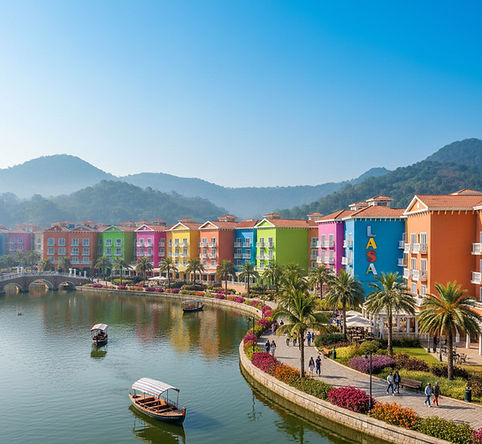
Lavasa is a beautifully planned lakeside hill city near Pune, inspired by the Italian town of Portofino. Known for its colorful waterfront buildings, peaceful promenade, and scenic hills, it offers a relaxing escape with modern comforts, making it ideal for couples, families, and leisure travelers.
Highlights
-
Vibrant lakeside promenade with cafés, restaurants & boutique stays
-
Colorful European-style architecture (Portofino-inspired)
-
Surrounded by rolling hills, waterfalls & lush greenery
-
Activities: boating, cycling, nature walks & photography
-
Calm, slow-paced atmosphere—perfect for a weekend getaway
Experiences
-
1. Lakeside Promenade Walks
-
A scenic walkway with waterfront views, eateries, and bright Mediterranean-style buildings.
-
2. Water Activities
-
Enjoy boating, kayaking, or lakeside relaxation (availability varies seasonally).
-
3. Nature Trails & Cycling
-
Beautiful forested hills and quiet tracks ideal for walking, cycling, and outdoor exploration.
-
4. Photography
-
Lavasa’s colorful architecture, serene lake, and monsoon greenery make it a photo-friendly destination.

Travel Tips
-
Roads to Lavasa are scenic but involve ghat sections—drive carefully.
-
Activity availability may change based on season and local regulations.
-
Combine Lavasa with Pune or Mulshi for a full-day or overnight trip.
Matheran – Asia’s Only Vehicle-Free Hill Station
Matheran is a unique eco-friendly hill station near Mumbai and Pune, famous for its cool climate, red-mud pathways, misty forests, and scenic viewpoints. As Asia’s only automobile-free hill station, Matheran offers a peaceful, pollution-free environment perfect for nature lovers, families, and trekkers.

Highlights
-
No vehicles allowed inside — quiet, clean, and nature-dominant
-
Over 30 viewpoints including Panorama Point, Echo Point & Louisa Point
-
Matheran Toy Train (UNESCO tentative heritage) – scenic ride through forests
-
Dense evergreen forests with monkeys, birds & seasonal waterfalls
-
Ideal weekend getaway from Mumbai & Pune
Experiences
-
1. Toy Train Ride
-
A heritage narrow-gauge journey offering beautiful forest views — one of Matheran’s signature experiences.
-
2. Viewpoints & Sunsets
-
Walk or ride on horseback to various points offering panoramic views of the Sahyadri mountains.
-
3. Nature Walks
-
Explore trails lined with tall trees, red soil paths, and fresh mountain air — no vehicle noise at all.
-
4. Neral–Matheran Trek
-
A scenic trek for adventure lovers, offering railway track views and forest landscapes.
Kolhapur – Heritage, Temples & Cultural Heart of Maharashtra
Kolhapur, a vibrant city in southern Maharashtra, is a treasure trove of heritage, spirituality, and culture. From grand temples and royal palaces to bustling markets, Kolhapuri cuisine, and the legendary Kolhapuri chappals, this city offers travelers an authentic Maratha experience. With Christone Holidays, every visit becomes a journey into Kolhapur’s heart, blending culture, spirituality, and shopping adventures.
Highlights
-
Mahalaxmi Temple – Iconic 7th-century temple dedicated to Goddess Mahalaxmi.
-
New Palace & Kolhapur Museum – Royal heritage palace showcasing Maratha architecture and artifacts.
-
Panhala Fort – Historic hilltop fort with panoramic views and trekking paths.
-
Rankala Lake – Serene lakeside ideal for evening strolls and boat rides.
-
Kolhapuri Cuisine – Famous for spicy mutton, tambada rassa, and traditional snacks.
-
Kolhapuri Chappals & Handicrafts – Iconic leather footwear, handcrafted locally, along with jewelry and textiles.
-
Local Markets – Bustling bazaars offering authentic Maratha souvenirs.
Experiences for Travelers
-
Spiritual Journey at Mahalaxmi Temple
-
Feel the devotion and architectural grandeur of one of Maharashtra’s most revered temples. Christone Holidays ensures travelers get the full cultural context and spiritual insight.
-
2. Explore Royal Heritage at New Palace & Museum
-
Walk through royal chambers, view ancient artifacts, and dive into Maratha history—a must for culture enthusiasts.
-
3. Trekking & Sunset Views at Panhala Fort
-
Experience a trek across ancient fort walls and watchtowers. Enjoy the mesmerizing Sahyadri sunset—a memory Christone Holidays highlights for travelers.
-
4. Leisure at Rankala Lake
-
Boating or lakeside strolls are perfect for families, couples, and nature lovers seeking a calm escape.
-
5. Culinary Exploration
-
Savor Kolhapuri flavors at local eateries—spicy curries, street snacks, and sweets create an immersive cultural taste journey.
-
6. Kolhapuri Chappals & Souvenir Shopping
-
Explore the local markets for authentic Kolhapuri leather chappals, handcrafted handbags, and traditional textiles. Christone Holidays encourages travelers to take home these iconic pieces of Maratha heritage.
Nagpur – The Orange City & Gateway to Central India
Nagpur, famously known as the “Orange City of India”, is a dynamic blend of urban vibrancy, cultural heritage, and natural beauty. Nestled in the heart of Maharashtra, it offers travelers a mix of historical monuments, spiritual sites, lush forests, and unique local experiences. With Christone Holidays, your journey through Nagpur becomes a rich exploration of its history, greenery, and culinary delights.
Highlights
-
Mahalaxmi Temple – Iconic 7th-century temple dedicated to Goddess Mahalaxmi.
-
New Palace & Kolhapur Museum – Royal heritage palace showcasing Maratha architecture and artifacts.
-
Panhala Fort – Historic hilltop fort with panoramic views and trekking paths.
-
Rankala Lake – Serene lakeside ideal for evening strolls and boat rides.
-
Kolhapuri Cuisine – Famous for spicy mutton, tambada rassa, and traditional snacks.
-
Kolhapuri Chappals & Handicrafts – Iconic leather footwear, handcrafted locally, along with jewelry and textiles.
-
Local Markets – Bustling bazaars offering authentic Maratha souvenirs.

Experiences for Travelers
-
1. Spiritual & Heritage Walk at Deekshabhoomi
-
Witness the massive stupa where Dr. B.R. Ambedkar embraced Buddhism. Christone Holidays ensures travelers understand its historical and cultural significance.
-
2. Sunset Views from Sitabuldi Fort
-
Climb or drive to the fort for panoramic cityscapes. A perfect spot for photography and historical exploration.
-
3. Lakeside Relaxation at Futala & Ambazari
-
Enjoy evening walks, boating, and sunset views. Christone Holidays recommends a serene lakeside picnic experience.
-
4. Explore Local Culture & Museums
-
Nagpur Central Museum and Raja Dinkar Kelkar Museum bring the region’s history, art, and culture alive for travelers.
-
5. Nature & Adventure at Seminary Hills
-
A refreshing escape for hiking, birdwatching, and capturing scenic views of Nagpur from above.
-
6. Taste & Experience Nagpur Oranges
-
No visit is complete without tasting Nagpur’s sweet, tangy oranges. Visit local orchards to see cultivation and enjoy fresh fruit—Christone Holidays makes it an interactive experience.
-
7. Family & Leisure at Maharajbagh Zoo & Gardens
-
Ideal for children and families, offering greenery, animal sightings, and leisurely strolls.
Maharashtra Coastal Circuit
Malvan – Vengurla – Kunkeshwar – Ganpatipule – Ratnagiri-Sindhudurg
Explore one of India’s most beautiful coastal belts, stretching across the pristine Konkan coastline. This circuit blends beaches, sea forts, temples, backwaters, seafood, and traditional Konkan culture — perfect for families, couples, and leisure travelers looking for a scenic holiday.


📍 1. Malvan
Highlights
-
Sindhudurg Fort (Maratha sea fort)
-
Tarkarli Beach – clear waters, snorkeling & scuba diving
-
Devbagh Backwaters & Tsunami Island
-
Malvani cuisine – seafood, Solkadhi, coconut curries
Experience
Dive into adventure with water sports, explore the historic sea fort, and relax on white-sand beaches.
📍 2. Vengurla
Highlights
-
Vengurla Beach – quiet, scenic and less crowded
-
Sagareshwar Beach – golden sands
-
Lighthouse viewpoints
-
Cashew, mango & kokum plantations
Experience
A peaceful coastal town ideal for nature lovers with calm beaches and photogenic landscapes.
Sindhudurg & Malvan – Forts, Beaches & Coastal Beauty
📍 3. Kunkeshwar
Highlights
-
Kunkeshwar Shiva Temple (sea-facing temple)
-
Gorgeous, untouched beach stretch
-
Coastal village culture
Experience
A spiritual and serene coastal spot where the ancient Shiva temple sits right by the Arabian Sea — perfect for sunsets and peaceful walks.
📍 5. Ratnagiri
Highlights
-
Ratnadurg Fort overlooking the sea
-
Mandavi Beach, Bhatye Beach
-
Marine museum & lighthouse
-
Alphonso mango farms
-
Ancient temples & coastal architecture
Experience
Known for heritage forts, mango orchards, coastal temples, and peaceful beaches — a perfect end to the coastal journey.
📍 4. Ganpatipule
Highlights
-
Famous Ganpatipule Temple (swayambhu Ganesh)
-
Clean, blue-water beach
-
Aare–Ware Sea View Point
-
Water sports (seasonal)
Experience
A blend of spirituality and seaside charm — ideal for families and pilgrims, with scenic viewpoints and a calm beach environment.
📍6.Sindhudurg Fort (The Crown Jewel)
-
Built by the great Maratha ruler Chhatrapati Shivaji Maharaj in the 17th century, this impregnable fortress is an engineering marvel, constructed on an offshore island. Walk its massive ramparts, see the sacred Shivlinga, and find the imprint of Shivaji's hand and foot in a hidden spot.
Experience
A short boat ride to this 17th-century island fortress built by Shivaji. Walk historic ramparts, find hidden temples and freshwater wells, and see Shivaji’s handprint in stone. Panoramic sea views and living history await.
✨ Who Is This Circuit For?
-
Beach lovers
-
Seafood enthusiasts
-
Nature & photography lovers
-
Couples & families
-
Heritage & culture travelers
Alibaug – Beaches, Forts & Coastal Retreats
Alibaug is one of Maharashtra’s most popular coastal getaways, known for its clean beaches, historic sea forts, chic cafés, and stylish boutique stays. Just a short ferry ride from Mumbai, it offers the perfect blend of relaxation, water activities, and coastal charm.
🌴 Alibaug – The Coastal Escape of Maharashtra
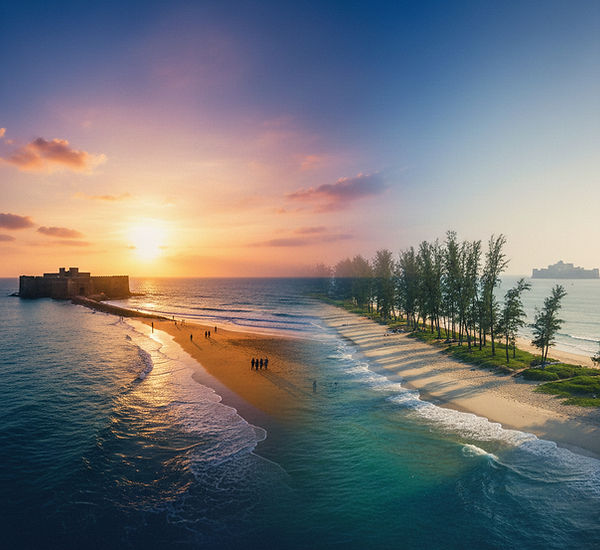
Alibaug Beach – Signature Sunset Shore
A wide, breezy beach where evenings glow gold and the sea reflects the sky.
Travelers love Alibaug Beach for its relaxed vibe—horse carts, seaside chaat, and the quiet thrill of watching Kolaba Fort appear on the horizon. With Christone Holidays, this becomes your perfect first chapter in Alibaug’s coastal story.
Kolaba Fort – Walk to a Sea Fortress
A 300-year-old island fort that rises with pride from the ocean.
Accessible during low tide, this fort feels like an adventure in slow motion—walking across the sea bed, waves brushing your ankles, and history whispering through stone corridors. Christone Holidays helps travelers time this experience perfectly.
Alibaug merged coastline view with Kolaba Fort rising from the sea, calm Varsoli Beach, blue Kashid waters
Varsoli Beach – Calm, Clean & Peaceful
Soft sands, casuarina trees, and a soothing silence.
Varsoli is where travelers come to simply exhale. No crowds, no chaos—just the sea breathing gently. Christone Holidays recommends it for those who want the “true coastal detox.”
Kashid Beach – Blue Waters & Beautiful Mornings
One of Maharashtra’s most picturesque beaches.
The long 3-km shoreline with clear waves feels almost Mediterranean. Ideal for photography, morning walks, and quiet reading time. A Christone Holidays favorite for couples and solo travelers.
Nagaon Beach – Water Sports Playground
Nagaon Beach – Water Sports Playground
Parasailing, jet skis, banana boats—Nagaon brings energy to your coastal holiday. Christone Holidays blends adventure with safety, ensuring fun without the fuss.
Revdanda Fort & Beach – Ruins by the Sea
A Portuguese legacy meeting a peaceful black-sand beach.
Travelers love the mysterious charm—arches, broken walls, and a quiet shoreline where history meets solitude. Christone Holidays suggests this spot for photography enthusiasts.
Korlai Fort & Lighthouse – Turquoise Sea Views
A panoramic lookout point over the Arabian Sea.
Travelers are always fascinated by Janjira’s engineering—19 massive bastions, swirling history, and ocean all around. Christone Holidays includes this as a must-see architectural wonder.
Murud–Janjira Fort – The Unsinkable Island Fortress
A mighty marine fort accessible only by boat.

Travelers are always fascinated by Janjira’s engineering—19 massive bastions, swirling history, and ocean all around. Christone Holidays includes this as a must-see architectural wonder.
Konkan’s Legendary Sea Fort Trail – Janjira • Korlai • Revdanda
Akshi Beach – Birds, Breeze & Long Walks
A quiet escape for nature-loving travelers.
Ideal for sunrise strolls and birdwatching—Akshi brings calmness in every frame. Christone Holidays recommends this for mindful travel experiences.
Mandwa Beach – The Gateway from Mumbai
Mandwa Beach – The Gateway from Mumbai
With the Mandwa ferry jetty nearby, this is where many journeys begin. Christone Holidays turns this gateway into a stylish beachfront experience.


Alibaug’s Hidden Coastal & Cultural Gems – Beaches, Heritage & Sacred Sites
Brahma Kund (Alibaug Town)
Pristine shoreline surrounded by casuarina trees.
Sacred stepped tank with mythological significance.
Sasawane Beach & Karmarkar Museum – Art Meets Sea
A beautiful mix of sculptural heritage and coastal charm.
Travelers enjoy the blend of creativity and calm waters. Christone Holidays includes this for culture-focused itineraries.
Chaul – Layers of History
A heritage-rich village with temples, churches & historic ruins.
Chaul’s cobblestone feel and old-world atmosphere give travelers a glimpse into Konkan’s multicultural past. Christone Holidays adds storytelling to this historical walk.
Awas Beach
Pristine shoreline surrounded by casuarina trees.
Ideal for peaceful, luxury-stay travellers.
Awas Beach
Pristine shoreline surrounded by casuarina trees.
Ideal for peaceful, luxury-stay travellers.
Alibaug Coastal Drive – Scenic Konkan Journey
The Alibaug Coastal Drive from Revdanda → Kashid → Murud is one of Maharashtra’s most scenic and unforgettable road trips. Winding along the Konkan coast, this route treats travelers to endless coconut groves, sparkling turquoise Arabian Sea views, and curving coastal roads that seem made for leisure drives. Every turn opens up a new frame: sunlit beaches, historic sea forts, quaint fishing villages, and dramatic cliffs. Christone Holidays curates this drive so travelers can pause, explore, and photograph at iconic viewpoints without losing the leisurely pace that makes Konkan unique.
Highlights of the Drive
-
Coconut Groves & Greenery: Lush, swaying palms lining the road.
-
Ocean Vistas: Blue Arabian Sea visible across cliffs and shorelines.
-
Historic Stops: Revdanda Fort, Kolaba Fort views from afar, Murud–Janjira Fort boat trips.
-
Beachside Breaks: Pause at quiet beaches like Kashid and Mandwa for sunset or sunrise.
-
Photography & Nature: Ideal for capturing coastal landscapes, sunsets, and wildlife glimpses along the roadside.
Travel Tips
-
Start early to enjoy soft morning light on the beaches.
-
Stop at Revdanda and Kashid for local seafood and photo ops.
-
Keep the drive slow to fully appreciate the panoramic coastline.
-
Combine with Murud–Janjira Fort for a historic finale.

Murud–Janjira Fort – Historic Finale of the Drive“Panoramic Views of Arabian Sea from the Coastal Route”
Ajanta & Ellora – UNESCO Ancient Cave Wonders
Where art, faith, and stone come alive.
The Ajanta & Ellora Caves are not just monuments—they are windows into India’s spiritual evolution. Set deep in the Sahyadri hills, these ancient rock-cut wonders carry stories carved over two millennia. Travelers walk through dimly lit cave corridors where monks once meditated, observe murals that still glow with Buddhist philosophy, and stand before monolithic temples that defy imagination.
At Ajanta, the Buddhist cave paintings feel almost ethereal—narrating Jataka tales, royal life, and spiritual teachings with brush strokes preserved since the 2nd century BCE.
At Ellora, the scale overwhelms you: Hindu, Buddhist, and Jain caves co-exist harmoniously. The iconic Kailasa Temple, carved from a single mountain, remains one of the world’s greatest sculptural achievements.

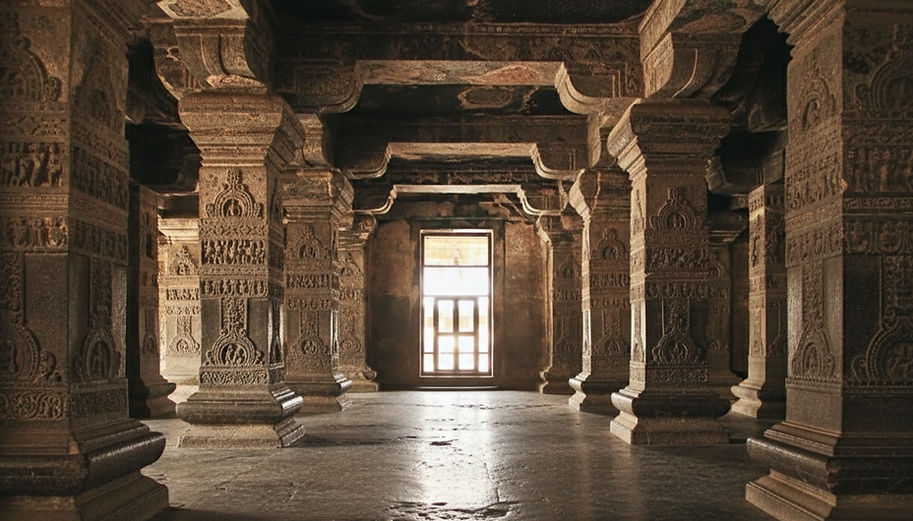
Inside the Ajanta Caves — a masterpiece of ancient Indian rock-cut engineering, with intricate pillars, hallways, and centuries-old artwork carved directly into the mountain.
The magnificent Kailasa Temple at Ellora Caves — a UNESCO World Heritage marvel carved entirely from a single rock, showcasing India’s extraordinary ancient craftsmanship.
Rock-Cut Construction Explained – Ajanta Caves & Ellora Caves-
A masterpiece of engineering carved directly into living rock.
Rock-cut architecture is one of India’s oldest and most advanced construction traditions. Ajanta and Ellora are the finest examples—entire monasteries, temples, halls, and sculptures carved from a single hillside without using bricks, mortar, or external structural support.
🟠 Ajanta Caves – Rock-Cut Construction in Detail
Hand-crafted from basalt cliffs using simple tools
Ellora (600–1000 CE) consists of 34 caves carved directly into volcanic basalt cliffs over 400 years.
Ajanta’s 30 caves were carved between 2nd century BCE and 6th century CE from steep horseshoe-shaped cliffs. Craftsmen cut horizontally into the basalt rock face using iron chisels, stone hammers, wooden mallets, and controlled fire-fracturing.
How Ajanta Was Built
-
Cliff selection – Builders chose basalt layers soft enough to carve but strong enough to hold arches and ceilings.
-
Horizontal excavation – Work began from the outside, moving inward, carving the façade first.
-
Creating columns & hall spaces – Pillars, ceiling beams, doorways, and chaitya halls were carved from the same rock without cutting them out, ensuring structural stability.
-
Interior shaping – Monks’ cells, prayer halls, and sanctuaries were sculpted by removing rock layer by layer.
-
Plastering & painting – Walls were coated with lime plaster, then painted with natural pigments—giving Ajanta its iconic murals.
-
Drainage & ventilation – Channels were dug to manage water flow and light.
-
Why Ajanta’s Rock-Cut Design Is Important
.
-
It shows early Buddhist engineering and monastic planning.
-
Frescoes survived because the rock cavity provided stable temperatures.
-
It is a rare example where architecture, sculpture, painting, and geology merge harmoniously.
🟣 Ellora Caves – Rock-Cut Construction in Detail
One of the world’s most advanced multi-religious rock-cut complexes
Ellora is an open book of religious harmony, where Hindu, Buddhist, and Jain caves coexist seamlessly. Students of culture, theology, and architecture value Ellora for its demonstration of how ancient Indian civilizations embraced diversity.
Three Architectural Traditions Under One Cliff
-
Hindu caves – Grand, complex, richly carved, multi-storeyed.
-
Buddhist caves – Large prayer halls with ribbed vaults & monasteries.
-
Jain caves – Precise carvings, geometric pillars, and delicate friezes.
-
Ellora Caves – 34 Multi-Faith Caves Reflecting India’s Spiritual Unity
Why it’s valuable for learners:
-
Comparative study of three religions in one complex.
-
Architectural innovations, such as multi-storey caves, intricate columns, and sculptural programs that show mythological evolution.
-
Evidence of societal integration—craftsmen from different faiths working together.
For travelers, it’s a rare place where faith, creativity, and harmony meet in stone.
Kailasa Temple – The World’s Largest Monolithic Marvel
(Top-Down Carving)
“unbelievable until seen”
Kailasa is a once-in-a-lifetime experience for both students and historians. Carved from a single basalt hilltop, it is a technological miracle of the ancient world—equivalent to modern engineering feats but achieved 1,200 years ago.
Educational & cultural importance:
-
Top-down excavation technique still puzzles archaeologists and engineers.
-
Massive scale: over 200,000 tons of rock removed without modern tools.
-
Advanced planning: perfect symmetry, drainage systems, and seamless sculpting.
-
Mythological storytelling through sculpture panels, invaluable for students of ancient religion and iconography.
-
TTravelers often describe Kailasa as “unbelievable until seen”—a structure that redefines what human hands can create.
Ancient Frescoes & Carvings – Vibrant, Symbolic & Historic
The colors and details still feel alive—despite being painted almost two thousand years ago
Students and history enthusiasts. They reveal:
-
Natural pigments extracted from minerals and plants.
-
Iconographic symbols depicting virtues, cosmic cycles, and Buddhist philosophy.
-
Early artistic techniques like shading, blending, and narrative framing.


Sahyadri Setting – Forested Cliffs, River Valleys & Tranquil Viewpoints
The ancient connection between nature and spirituality.
Kailasa is a once-in-a-lifetime experience for both students and historians. Carved from a single basalt hilltop, it is a technological miracle of the ancient world—equivalent to modern engineering feats but achieved 1,200 years ago.
Highlights
-
Ajanta Caves – Timeless Buddhist murals & monastic architecture
-
Ellora Caves – 34 multi-faith caves symbolizing India’s spiritual unity
-
Kailasa Temple – A monolith carved top-down, unmatched worldwide
-
Ancient frescoes & carvings – Still vibrant, deeply symbolic
-
Sahyadri setting – Forested cliffs, river valleys, and tranquil viewpoints
Experience
-
With Christone Holidays, travelers explore these caves not just as tourists but as seekers—experiencing silence inside ancient monasteries, understanding cosmic symbolism behind carvings, and witnessing the grandeur of India’s artistic past.
This journey feels like stepping into a living museum where every wall whispers history.
Aurangabad: Beyond Ajanta & Ellora | Heritage Gateway
The Beating Heart of the Deccan's Heritage.
Welcome to Christone Holidays' definitive guide to the other Aurangabad—the historic city brimming with hidden gems, magnificent architecture, and living culture that often stands in the shadow of its UNESCO-listed neighbors. While Ajanta and Ellora draw the crowds, the true spirit of the Deccan awaits you here, in its bustling lanes, formidable forts, and serene monuments.
Aurangabad: A Heritage Capital Waiting to Be Explored
Aurangabad is not just a gateway; it is a destination. Named after the last great Mughal emperor, Aurangzeb, it is a city where medieval grandeur meets vibrant local life. Christone Holidays specializes in crafting immersive journeys that unveil the city's authentic character, taking you far beyond the typical tourist trail.
The Crown Jewels of Aurangabad City
Bibi Ka Maqbara: The Monument of Love
Often called the "Taj of the Deccan," this 17th-century mausoleum was built by Prince Azam Shah for his mother, Dilras Banu Begum. While reminiscent of the Taj Mahal, it possesses a quiet, melancholic beauty all its own, set within lush, garden quadrants.
Christone Holidays Experience: We arrange visits during the golden hours of sunrise or late afternoon, when the white marble facade glows and the crowds are thin, allowing for a truly reflective experience.
Daulatabad Fort: The Unconquered Citadel
A masterpiece of medieval military engineering, this 12th-century fort stands on a 200-meter-high conical hill. Its reputation as "unconquerable" is well-earned, thanks to a complex series of defenses: a deep moat, a confounding labyrinth, and ingenious gateways. The climb to the top rewards you with panoramic views and a thrilling journey through history.

Aurangabad Heritage Tourism: Bibi Ka Maqbara and Daulatabad Fort, Maharashtra - Christone Holidays
Panchakki (The Water Mill): An Engineering Marvel
This 17th-century Sufi complex hides a brilliant feat of hydraulic engineering. An underground channel brings water from a spring 8 km away to power a flour mill, all by gravity. It's a peaceful spot that showcases the scientific acumen of the era.
Hidden Historical Gems
-
Aurangabad Caves: Overlooking the city, these 12 Buddhist caves (6th-7th century AD) offer serenity, simple carvings, and a stunning vantage point for sunset views. They provide a quiet contrast to the more famous sites.
-
Soneri Mahal (Golden Palace): Now housing a museum, this 17th-century palace offers glimpses into the region's past through sculptures, weapons, and artifacts, set within its distinctive yellow walls.
-
Himroo Factory & Showroom: Witness the legacy of a 14th-century weaving craft. Himroo, a unique fabric blend of silk and cotton, often with Persian motifs, was born here during the reign of Mohammad Tughlaq.
-
Shah Ganj: The old city market area, centered around a historic tank, offers a slice of local life and is a great place to see traditional architecture.
Cultural & Spiritual Enclaves
-
Khuldabad (The City of Eternal Glory): A short drive away, this walled town is a spiritual center. It houses the simple tomb of Emperor Aurangzeb and several other Sufi saints' dargahs, radiating a powerful atmosphere of devotion.
-
Ghrishneshwar Temple: One of the 12 sacred Jyotirlingas of Lord Shiva, this temple is an active site of pilgrimage and a beautiful example of temple architecture, located near the Ellora caves area.
Ready to discover the authentic Aurangabad?
Contact Christone Holidays today. Let us craft your perfect journey into the heart of the Deccan's heritage, far from the well-trodden path.
Christone Holidays | Crafting Authentic Heritage Experiences | Aurangabad Specialists
Ratnagiri: The Konkan Coast Gem | Architectural Heritage, Beaches & Alphonso Magic
Welcome to Christone Holidays' exclusive guide to Ratnagiri—a destination where coastal beauty meets extraordinary architectural heritage. Famous for its golden Alphonso mangoes, Ratnagiri also boasts a remarkable collection of Indo-European palaces, medieval forts, sacred cave temples, and unique Konkan vernacular architecture that tells the story of Maratha naval glory, Burmese exile, and Portuguese influence.

Explore Ratnagiri's architectural heritage with Christone Holidays"
🕌 Sacred Architecture & Temple Styles
Konkan Architectural Heritage Tours
Swayambhu Ganpati Temple, Ganpatipule
Unique temple architecture where the sanctum sanctorum is built around a self-originated (Swayambhu) natural rock formation of Lord Ganesha. Features:
-
Traditional Konkan temple architecture with pyramid-shaped shikara
-
Direct beachfront location—unusual temple positioning
-
400-year-old worship tradition in original form
Sangameshwar Temple Complex
Ancient temple architecture dating to the Silhara dynasty (9th-13th century CE), showcasing:
-
Early medieval Deccan temple architecture
-
Intricate stone carvings and iconography
-
River confluence setting following ancient Hindu architectural principles
-
Archaeological significance with Mauryan period connections
Marleshwar Temple & Waterfall Cave
Unique cave temple architecture where the shrine is naturally formed behind a waterfall:
-
Natural rock-cut sanctum
-
Seasonal waterfall curtain acting as temple entrance
-
Fusion of nature worship and temple architecture
Marleshwar Temple & Waterfall Cave
Unique cave temple architecture where the shrine is naturally formed behind a waterfall:
-
Natural rock-cut sanctum
-
Seasonal waterfall curtain acting as temple entrance
-
Fusion of nature worship and temple architecture
🏘️ Konkan Vernacular & Colonial Architecture
Traditional Wada Architecture
Experience authentic Konkan wooden houses (Wadas) featuring:
-
Laterite stone foundations with wooden superstructure
-
Sloping Mangalore-tiled roofs for monsoon climate
-
Central courtyards and verandahs
-
Intricate wood carvings and ornamental details
Portuguese-Inspired Coastal Architecture
Influence visible in:
-
Goan-style churches in nearby coastal villages
-
Hybrid residential structures blending European and local styles
-
Lighthouse architecture at Ratnagiri Point
🏛️ Architectural & Heritage Marvels of Ratnagiri
Architectural fusion and the story of Burma's last king in exile.

Thibaw Palace: The Burmese Exile Residence
A stunning example of Indo-Burmese-European fusion architecture, this palace was built in 1910-11 as the exile home of King Thibaw, Burma's last monarch. The structure features:
-
Burmese-style sloping roofs with Indian teak woodwork
-
European-style arches and verandahs
-
Traditional Konkan laterite stone construction
-
Beautifully landscaped gardens overlooking the Arabian Sea
Ratnadurg Fort: The Sea Fortress
A magnificent example of medieval Maratha military architecture, strategically built on a cliff overlooking the Arabian Sea. Notable features:
-
Double fortification walls with bastions
-
Unique seaward-facing defense design
-
Bhagawati Temple within the fort complex (16th century)
-
Lighthouse with panoramic coastal views
Architectural Highlight: The ingenious use of natural cliff formation as part of the defensive structure.
Jaigad Fort: The Confluence Citadel
Perfectly preserved sea fort at the meeting point of Shastri River and Arabian Sea, showcasing:
-
Complete fort layout with intact bastions, gates, and walls
-
Water reservoir systems within fort premises
-
Strategic positioning demonstrating Maratha naval architecture
🏛️Someshwar Rajwadi Temple, Ratnagiri: Architectural & Spiritual Marvel
"Where Every Stone Teaches"! 🏛️✨
Someshwar Rajwadi Temple: A Case Study in Konkan Royal Patronage Architecture
Welcome to Someshwar Rajwadi Temple, an architectural masterpiece and spiritual sanctuary in Ratnagiri that beautifully exemplifies the fusion of Konkan temple architecture with royal patronage.
Where Every Stone Teaches — Christone Holidays at Someshwar Rajwadi Temple


🏛️ Architectural Significance
Someshwar Rajwadi Temple stands as a brilliant example of late medieval Konkan temple architecture with distinctive features:
Architectural Style & Elements:
-
Primary Deity: Lord Shiva (Someshwar)
-
Architectural Period: 18th-19th century
-
Style: Konkan Hemadpanthi influence with local adaptations
-
Unique Feature: Royal patronage architecture (Rajwadi = of the royal family)
Key Architectural Components:
-
Garbhagriha (Sanctum Sanctorum):
-
Houses the ancient Shiva Linga
-
Stone-carved ceiling with geometric patterns
-
Restricted sanctum design typical of Konkan temples
-
-
Mandapa (Hall):
-
Intricately carved wooden pillars
-
Traditional Konkan roof structure with sloping design
-
Stone flooring with cooling properties
-
-
Shikhara (Tower):
-
Moderate height, pyramidical structure
-
Simplistic yet elegant design compared to North Indian Nagara style
-
Laterite stone construction (typical Konkan material)
-
-
Boundary Wall & Entrance:
-
Fortified temple complex design
-
Ornate entrance arch (Mahadwar)
-
Traditional lamp pillars (Deepastambha)
-
🎯 Christone Holidays' Architectural Tour Integration
How We Include Someshwar Rajwadi Temple:
Option 1: Temple Architecture Circuit (Full Day)
-
Morning: Someshwar Rajwadi Temple (Konkan architecture)
-
Afternoon: Sangameshwar Temple (Silhara dynasty style)
-
Evening: Ganpatipule Temple (beachfront shrine architecture)
-
Theme: Evolution of Konkan Temple Architecture
Cultural Significance:
-
Major Shiva worship center in the region
-
Festival celebrations: Mahashivratri, Shravan month
-
Local community rituals and ceremonies
-
Architectural reference point for Konkan temple studies
Option 2: Rural Temple Experience (Half Day)
-
Focus: Someshwar Rajwadi Temple + Local village visit
-
Activities:
-
Temple architecture walkthrough
-
Interaction with temple priests
-
Traditional temple art observation
-
Village architecture documentation
🔍 Unique Architectural Features to Note
-
Material Usage:
-
Local laterite stone for structure
-
Wood from Konkan forests for pillars and ceilings
-
Traditional mortar (chuna-surkhi) techniques
-
Climate-Responsive Design:
-
Ventilation systems for humid climate
-
Natural cooling through stone construction
-
Monsoon-resistant sloping roofs
-
Artistic Elements:
-
Minimalistic carvings (compared to elaborate Hoysala style)
-
Geometric patterns rather than figurative sculptures
-
Functional aesthetics over ornamental excess
🎓 Educational Value for Architecture Enthusiasts
Study Points:
-
Konkan Vernacular Temple Architecture
-
Local Material Application
-
Climate-Responsive Traditional Design
-
Royal vs. Community Temple Architecture Differences
-
Preservation Techniques for Laterite Structures
Day Program: Rural Architectural Discovery
-
8:00 AM: Depart from Ratnagiri
-
9:00 AM: Someshwar Rajwadi Temple visit (architecture focus)
-
11:00 AM: Interaction with temple caretakers and local artisans
-
12:30 PM: Traditional Konkan lunch in village
-
2:00 PM: Documentation and photography session
-
3:30 PM: Visit to nearby traditional Wada house
-
5:00 PM: Return to Ratnagiri with field notes discussion
📸 Photography Guidelines
Recommended Shots:
-
Structural Details: Pillars, ceilings, entrance arch
-
Material Textures: Laterite stone, wood carvings
-
Spatial Sequences: Approach, entrance, courtyard, sanctum
-
Light Patterns: Sunlight through openings, shadow play
-
Context Shots: Temple within village landscape
Best Equipment:
-
Wide-angle lens for interiors
-
Tripod for low-light interiors
-
Polarizing filter for stone texture enhancement
-
Notebook for architectural sketches
🌟 Why Include in Your Architectural Tour?
-
Authentic Konkan Temple Experience: Less commercialized than major temples
-
Architectural Purity: Well-preserved original features
-
Educational Value: Perfect case study for vernacular architecture
-
Cultural Immersion: Experience rural temple traditions
-
Photographic Potential: Excellent light and textures
📞 Plan Your Architectural Pilgrimage
-
Christone Holidays at Someshwar Rajwadi Temple for architecture students, heritage photographers, and cultural travelers seeking authentic Konkan temple experiences beyond tourist circuits.
Christone Holidays | Architectural Heritage Specialists
Preserving and Presenting Konkan's Built Heritage
Someshwar Rajwadi Temple isn't just a heritage site—it's a complete architectural textbook built in laterite and wood. Christone Holidays transforms it into a living classroom where every joint teaches, every stone explains, and every space demonstrates the intelligence of Konkan's traditional builders.
Ready to establish Ratnagiri as India's next major architectural study destination? This comprehensive framework positions Someshwar Rajwadi Temple as a world-class educational resource in vernacular architecture studies.
Preserving and Presenting Konkan's Built Heritage
Contact us to customize your temple architecture tour including Someshwar Rajwadi Temple and other Konkan marvels.
"Stones of Faith: Konkan Temple Architecture"
Mahabaleshwar: The Crown Jewel of the Sahyadris
Welcome to Christone Holidays' premier guide to Mahabaleshwar—Maharashtra's most celebrated hill station, where colonial charm meets breathtaking natural beauty. Perched at 1,353 meters in the Sahyadri range, this evergreen paradise has been the summer retreat of choice since the British Raj, offering cool breezes, misty valleys, strawberry fields, and panoramic views that have inspired poets and travelers for centuries.
Why Mahabaleshwar with Christone Holidays?
We don't just show you Mahabaleshwar—we help you experience its soul. From sunrise points that touch the clouds to sunset vistas that paint the sky, from historic colonial bungalows to bustling Mapro Garden cafes, we craft journeys that balance iconic sights with hidden gems, ensuring you take home memories, not just photographs.

-
Where love rises with the sun, and glows with the stars. ❤Christone Holidays: We turn moments into memories.
Christone Holidays | MAHABALESHWAR'S UNMISSABLE HIGHLIGHTS
1. Panoramic Points & Valley Views
-
Arthur's Seat: The most famous viewpoint, overlooking the Savitri River gorge
-
Wilson Point: Highest point in Mahabaleshwar & perfect for sunrise
-
Kate's Point: Stunning view of Dhom Dam and surrounding valleys
-
Sydney Point: Panoramic vista of Pratapgad Fort and Krishna Valley
-
Lodwick Point: Historical point named after General Lodwick
2. Sacred & Spiritual Sites
-
Krishnabai Temple: Ancient temple dedicated to Lord Krishna, with a carved stone shivling
-
Mahabaleshwar Temple: One of the 12 Jyotirlingas, housing a self-originated lingam
-
Panchganga Temple: Where five rivers are believed to originate
-
Old Mahabaleshwar: The original sacred settlement with timeless spiritual energy
3. Natural Wonders & Waterfalls
-
Lingmala Waterfall: Tiered waterfall amidst dense forest (best in monsoon)
-
Dhobi Waterfall: Accessible via a scenic trail, perfect for nature walks
-
Venna Lake: Heart of Mahabaleshwar's activities—boating, horse rides, snacks
-
Elphinstone Point: Named after the British Governor, offering valley views
4. Colonial Heritage & Architecture
-
St. Peter's Church: Maharashtra's oldest church (built 1842)
-
Bombay Point: Historic sunset viewing spot
-
The Club: Colonial-era building reflecting British hill station architecture
-
Old Circuit House: Glimpse into Raj-era administrative buildings
COLONIAL HERITAGE & ARCHITECTURE - MAHABALESHWAR
-
Whispers of an Era: Colonial Heritage Architecture of Mahabaleshwar
Architectural Details to Highlight:
-
St. Peter's Church:
-
Stone construction with Gothic pointed windows
-
Steeply pitched roof
-
Small cemetery with old tombstones
-
Wooden doors with iron fittings
-
-
The Club:
-
Wide wooden verandahs with railings
-
Timber frame construction
-
Chimneys (suggesting fireplaces)
-
Outdoor seating with wicker chairs
-
-
Old Circuit House:
-
Symmetrical colonial administrative design
-
Large multi-pane windows
-
Stone foundation with wood upper structure
-
Flagpole with historical flag
-


Echoes of the Raj: Colonial Mahabaleshwar – St. Peter's Church, The Club & Circuit House
🍓 THE STRAWBERRY & FOOD TRAIL
Mahabaleshwar is synonymous with strawberries! Our curated experiences include:
-
Strawberry picking at local farms (December-April)
-
Mapro Garden visit for jams, crushes, and chocolate-dipped strawberries
-
Local tasting tours: Fresh strawberries with cream, strawberry wine, corn pattice
-
Culinary workshops: Learn to make strawberry desserts
-
"The Red Gold Trail: Strawberries, Smiles & Scenic Delights"
Book Your Mahabaleshwar Getaway
Whether you're seeking a family vacation, romantic escape, spiritual retreat, or photographic expedition—Mahabaleshwar offers magic for every traveler. Christone Holidays turns that magic into memories.
Ready to breathe the cool Sahyadri air?
Contact Christone Holidays today—where every mountain has a story, and every view feels like home.
Christone Holidays | Sahyadri Specialists | Creating Hill Station Memories
Panchgani: The Serene Plateau of the Sahyadris
Welcome to Christone Holidays' complete guide to Panchgani—the "Hill of Five Villages"—perched gracefully at 1,334 meters in the Sahyadri range. Known for its legendary Table Land, old-world charm, British-era boarding schools, and crisp, unpolluted air, Panchgani is not just a destination—it's a retreat for the soul, a canvas of green plateaus, strawberry fields, and whispering pine forests.
Why Mahabaleshwar with Christone Holidays?
We don't just show you Mahabaleshwar—we help you experience its soul. From sunrise points that touch the clouds to sunset vistas that paint the sky, from historic colonial bungalows to bustling Mapro Garden cafes, we craft journeys that balance iconic sights with hidden gems, ensuring you take home memories, not just photographs.
Christone Holidays | PANCHGANI'S UNFORGETTABLE HIGHLIGHTS
1.Natural Wonders & Iconic Landscapes
Table Land: Asia's second-largest volcanic plateau—a vast, flat expanse offering breathtaking valley views and sunset horse rides.
-
Sydney Point: Panoramic view of Krishna Valley, Dhom Dam, and Kamalgad Fort.
-
Parsi Point: Sweeping views of the Krishna Valley and Dhom Dam, especially beautiful at sunrise.
-
Devil's Kitchen: A deep, dramatic ravine with mythological and historical significance.
-
Echo Point: Where your voice returns to you amidst open green expanses.
2. Cultural & Historical Gems
-
Rajpuri Caves: Sacred caves dedicated to Lord Kartikeya, with natural water ponds.
-
Harrison's Folly: A quiet, scenic viewpoint known for its solitude and beauty.
-
The Old Streets: Walk through Panchgani's charming market and colonial-era buildings.
-
Historic Boarding Schools: St. Peter's School, Kimmins School, and others reflecting British architectural heritage.
3. Spiritual & Wellness Retreats
-
Kamalgad Fort Temple: A small temple atop Kamalgad Fort with spiritual vibes.
-
Morning Yoga on Table Land: Unwind amidst nature's expanse.
-
Meditation Points: Numerous quiet corners offering perfect solitude.
4. Local Experiences & Seasonal Delights
-
Strawberry & Mulberry Farms: Visit during season (Dec–Apr) for picking and tasting.
-
Horse Riding on Table Land: A nostalgic Panchgani experience.
-
Local Honey & Jams: Fresh produce from valley-side apiaries.
-
Mapro Garden: Taste fresh fruit products, enjoy garden seating, and scenic views.
Lonavala & Khandala – Your Perfect Hill Station Escape
Escape the city grind and embrace the misty magic of Maharashtra’s most beloved twin hill stations. At Christone Holidays, we don’t just book trips—we craft immersive experiences that let you truly disconnect, recharge, and create unforgettable memories in the lap of the Sahyadris.
The Twin Hill Stations: What's the Difference?
-
Lonavala: More commercial, bustling with hotels, resorts, and shops (especially for the famous Chikki). It has more tourist attractions, eateries, and is generally the main base for visitors.
-
Khandala: Located just 5 km ahead on the Mumbai-Pune Expressway, it's slightly quieter, more scenic, and known for its dramatic views and quieter retreats. The two blend into each other seamlessly.
Crafting Timeless Memories, One Journey at a Time
We are more than a travel agency; we are your personal architects of wonder. With meticulous planning, local expertise, and a passion for seamless experiences, we transform your dream destinations into chapters of your life's greatest adventure.
Find Your Escape, Your Way
Top Attractions & Things to Do
Scenic Points & Nature:
-
Tiger's Leap: A cliff-top with a sheer drop, shaped like a leaping tiger. Offers breathtaking valley views, especially in the mist.
-
Lion's Point (aka Sunrise Point): The most famous sunset and sunrise point. Panoramic views of the valley, spectacular during monsoon with clouds floating below.
-
Rajmachi Point: Offers a distant view of the historic Rajmachi Fort and the Ulhas Valley.
-
Bhushi Dam: The iconic monsoon spot! Water overflows the steps creating a natural waterfall where people love to get soaked. Very crowded on weekends.
-
Kune Falls: A stunning 3-tiered waterfall (200m tall) located between Lonavala and Khandala, especially powerful in monsoon.
Local Experiences:
-
Eat Chikki & Fudge: Lonavala is famous for its variety of Chikki (peanut, sesame, dry fruit brittle) and chocolate fudge. Magannlal & Sons and Chikki Maison are iconic shops.
-
Have Irani Tea & Bun Maska: At spots like Kinara Dhaba or local Irani cafes.
-
Drive/Ride the Old Mumbai-Pune Road (NH48): Far more scenic and winding than the expressway, passing by most viewpoints.

Historical & Cultural:
-
Karl Caves: Ancient Buddhist rock-cut caves (2nd century BC) with intricate carvings and a massive Chaitya hall. A must-visit for history lovers.
-
Lohagad & Visapur Forts: Popular trekking destinations. Lohagad Fort (Iron Fort) is a moderately easy trek with a magnificent hilltop structure and views. Visapur Fort is taller and more challenging.
-
Rajmachi Fort: A more demanding but incredibly rewarding trek through lush greenery. You can also visit the twin forts of Shrivardhan and Manaranjan
Family & Leisure:
-
Ryewood Park & Shivaji Udyan: Central, well-maintained gardens perfect for a relaxed stroll and family picnics.
-
Della Adventure Park (on Pune road): For thrill-seekers - offers ATV rides, rock climbing, zip-lining, and more.
-
Kaivalyadhama Yoga Institute: A renowned center for those interested in yoga and wellness.


lonavala-local-experiences-food-drive-merged with Christone Holidays
This image encapsulates the soul of a trip to Lonavala—it’s not just about the sights, but the tastes, the iconic shops, and the joyful journey along the legendary old road. It invites the viewer to savor the destination
Local Experiences:
-
Eat Chikki & Fudge: Lonavala is famous for its variety of Chikki (peanut, sesame, dry fruit brittle) and chocolate fudge. Magannlal & Sons and Chikki Maison are iconic shops.
-
Have Irani Tea & Bun Maska: At spots like Kinara Dhaba or local Irani cafes.
-
Drive/Ride the Old Mumbai-Pune Road (NH48): Far more scenic and winding than the expressway, passing by most viewpoints.
Ready to Breathe the Mountain Air?
Let’s design your perfect hill station story.
Tell us your travel dates, group, and what you dream of doing—we’ll craft a personalized Lonavala & Khandala itinerary just for you.
📞 Call/WhatsApp: [+91 9539949900]
📧 Email: info@christoneholidays.com
🌐 Website: https://www.christoneholidays.com/maharashtra-mumbai-tour-packages
The Christone Difference: Where Precision Meets Passion
-
Bespoke Itineraries: We listen. Your holiday is crafted from scratch, reflecting your pace, your interests, and your dreams. No two journeys are alike.
-
Local Insider Knowledge: Go beyond the guidebooks. Our deep-rooted connections unlock hidden gems, authentic experiences, and cultural immersion you won't find anywhere else.
-
Seamless, Stress-Free Travel: From the first inquiry to your happy return, we handle every detail—flights, visas, transfers, hotels, and activities. Your only job is to enjoy.
-
24/7 Dedicated Support: Travel with confidence. Our concierge team is just a call away, anytime, anywhere, for assistance or a simple change of plans.
-
Value Beyond Price: We secure the best value through our partnerships, ensuring luxury, comfort, and exclusive access that fits your budget.
Discover, Learn, Explore: Student Educational Tour of Lonavala, Khandala & Panchgani with Christone Holidays
Western Ghats Classroom: An Experiential 4-Day Educational Tour for Students
🌐 Website: https://www.christoneholidays.com/maharashtra-mumbai-tour-packages
Journey Beyond Textbooks into the Heart of Maharashtra's Hill Stations with Christone Holidays' Expertly Curated Learning Adventure.
Join Christone Holidays for an unforgettable 4-day, 3-night student educational tour from Mumbai. Explore Lonavala's caves, Khandala's viewpoints & Panchgani's plateaus through immersive, curriculum-linked experiences in geography, history & environmental science.
Day 1: Arrival & Immersion – Mumbai to the Misty Hills of Lonavala
Gateway to the Ghats: From Urban Sprawl to Verdant Valleys
Transition from the buzz of Mumbai to the serene biodiversity of the Western Ghats, your open-air classroom for the next four days.
Description:
Christone Holidays welcomes students to an experiential educational tour that begins as you depart Mumbai. Witness the dramatic transformation of landscape from the coastal city to the lush escarpments of the Sahyadri range. After a journey filled with initial observations, you'll arrive in the iconic hill station of Lonavala. The evening is dedicated to orientation, where our expert guides from Christone Holidays will frame the tour's core themes: geology, sustainable ecology, and colonial history. A special screening of a documentary on the Western Ghats, a UNESCO World Heritage Site, will set the context, followed by a group discussion on microclimates and the science behind hill station weather patterns. This first day with Christone Holidays is designed to shift perspectives and prepare young minds for hands-on discovery.
Places Covered: Enroute journey from Mumbai, Lonavala hill station check-in.
Day 2: Chronicles in Stone & Water – Lonavala & Khandala Exploration
Ancient Engineering and Natural Wonders: A Day of Caves, Dams & Viewpoints
Decode ancient Buddhist architecture, understand hydrological systems, and survey panoramic valleys—all in one immersive day.
Description:
Day two with Christone Holidays plunges students into the rich tapestry of the region's history and geography. The morning begins at the magnificent Karla Caves, where students will marvel at 2nd-century BCE rock-cut technology, studying Buddhist iconography and ancient engineering marvels firsthand. Next, the focus shifts to water management at the iconic Bhushi Dam, offering practical insights into hydrodynamics and monsoon impact. After a picnic lunch amidst the greenery of Ryewood Park, the journey continues to Lion's Point in Khandala. Here, students conduct a topography survey, learning about valley formation, cloud physics, and the region's unique biosphere. The day culminates with a visit to a traditional Chikki factory, linking local industry to economics and food science. An evening workshop on sustainable tourism, led by Christone Holidays facilitators, encourages students to brainstorm solutions for preserving these fragile ecosystems.
Places Covered: Karla Caves, Bhushi Dam, Ryewood Park, Lion's Point (Khandala), Local Chikki Factory.
Day 3: The Plateau Journey – Lonavala to Panchgani’s Farms & Vistas
From Volcanic Plateaus to Strawberry Farms: Panchgani’s Geographic Bounty
Traverse to Asia's second-largest plateau and delve into the science of sustainable agriculture in the "Strawberry Garden of Maharashtra."
Description:
Christone Holidays guides the cohort from the rugged ghats to the breathtaking tablelands of Panchgani. The centerpiece is the massive Table Land, a volcanic plateau that serves as a live lesson in geology and earth history. Students will walk its expanse, discussing its formation and ecological significance. The learning then turns delicious with a visit to a Strawberry Farm, where principles of horticulture, drip irrigation, and agri-business come alive. Following this, a tour of the famous Mapro Garden reveals the journey from farm to fork—and bottle—highlighting food processing, organic farming, and eco-friendly branding. After checking into your Panchgani stay, an engaging debate on "Tourism vs. Conservation" sharpens critical thinking. The day concludes with a cultural evening, celebrating the local heritage of the region, a perfect blend of academic and experiential learning curated by Christone Holidays.
Places Covered: Table Land (Panchgani), Local Strawberry Farm, Mapro Garden.
Day 4: Synthesis & Departure – Panoramas, Presentations & Return to Mumbai
Reflection from the Viewpoints: Culminating a Journey of Learning
Present your findings against a backdrop of majestic valleys, synthesizing four days of exploration before the journey home.
Description:
The final day of this Christone Holidays educational tour begins with an invigorating morning walk to Sydney Point for bird watching and a reflection on the region's avian biodiversity. After breakfast, students gather at the scenic Parsi Point for the tour's academic culmination
After a final lunch together, the group begins its return journey to Mumbai, with facilitators leading a reflective discussion to consolidate the learning experience. Students depart not just with souvenirs, but with field notes, certificates, and a transformed understanding of the Western Ghats—the core mission of every Christone Holidays experiential tour.
Places Covered: Sydney Point, Parsi Point, Return journey to Mumbai.
Book This Transformative Educational Journey Today!
Let Christone Holidays turn the majestic Western Ghats into your students' most memorable classroom. Contact us for detailed itineraries, pricing, and customizations for your school group.
Elephanta Caves, Mumbai – Rock-Cut Legacy of Ancient India
Where Stone Becomes Story, and History Breathes in Silence
The Elephanta Caves are a collection of rock-cut cave temples dating back to the 5th to 8th centuries CE. They are primarily dedicated to the Hindu god Shiva. The island was named "Elephanta" by the Portuguese, after a stone elephant statue they found near the landing area (now moved to Mumbai's Dr. Bhau Daji Lad Museum).
About Elephanta Caves
Rising quietly from the waters of Mumbai Harbour, the Elephanta Caves stand as one of India’s most remarkable examples of early rock-cut architecture. Carved directly into solid basalt rock between the 5th and 8th centuries CE, this UNESCO World Heritage Site reflects the artistic brilliance, engineering precision, and philosophical depth of ancient India.
Located on Elephanta Island (Gharapuri), just a short ferry ride from the Gateway of India, the caves were not built but sculpted from within, transforming a natural hill into a monumental expression of stone, symmetry, and sacred geometry. Every pillar, corridor, and relief was meticulously chiseled using simple tools—yet the results remain timeless.
Architectural Significance
The Elephanta Caves are celebrated for their monolithic construction, where entire halls, columns, and sculptures were carved from a single rock mass. The main cave follows a carefully planned square layout supported by massive pillars, demonstrating advanced knowledge of structural balance and spatial design.
At the heart of the complex lies the iconic Trimurti sculpture—a majestic three-faced form carved in high relief, symbolizing different aspects of cosmic power. Surrounding panels narrate stories through stone, blending movement, proportion, and emotion with remarkable restraint and sophistication.
Historical & Cultural Importance
Elephanta is not merely an artistic site—it is a historical archive in stone. The caves reflect a period when art, philosophy, and craftsmanship flourished together, revealing insights into India’s ancient belief systems, social structure, and architectural innovation.
Over centuries, the caves have endured natural weathering and human impact, yet they continue to inspire historians, architects, scholars, and travelers seeking a deeper connection with India’s past.


Why Visit Elephanta Caves with Christone Holidays
At Christone Holidays, we believe the journey is as meaningful as the destination. A visit to Elephanta Caves is not just sightseeing—it is an immersive heritage experience.
Our curated Mumbai heritage journeys offer:
-
Insight-driven exploration with historical context
-
Seamless ferry arrangements and guided visits
-
Thoughtful pacing for deeper observation and learning
-
A travel philosophy that encourages seeing, not rushing
Let us help you experience Elephanta not as a monument, but as a living chapter of human creativity carved in stone.
Plan Your Heritage Journey
Step beyond modern Mumbai and into an era where architecture spoke the language of eternity. Discover the Elephanta Caves with Christone Holidays—where every journey opens your eyes to the beauty that time cannot erase.
🌍 Explore India’s heritage with purpose.
🔗 Visit: www.christoneholidays.com
Mumbai – Tadoba Tiger Reserve
From City Skylines to Wild Tiger Trails


Journey from the vibrant pulse of Mumbai, India’s financial capital, to the raw wilderness of Tadoba Andhari Tiger Reserve, Maharashtra’s most celebrated tiger habitat. This route captures a powerful contrast—where modern urban life gradually gives way to dense teak forests, silent lakes, and thrilling wildlife encounters.
For travelers with Christone Holidays, this journey is not just about reaching Tadoba—it’s about experiencing the transition itself. From coastal cityscapes and historic landmarks to central India’s untouched forests, the Mumbai–Tadoba trail reflects our belief that the journey is as meaningful as the destination.
Why Travel from Mumbai to Tadoba Tiger Reserve
-
Urban to Wild Experience – Witness a dramatic shift from Mumbai’s fast-paced lifestyle to Tadoba’s serene jungle ecosystem
-
India’s Top Tiger Reserve – Tadoba is renowned for frequent tiger sightings and rich biodiversity
-
Educational & Nature-Focused – Ideal for wildlife enthusiasts, photographers, students, and nature learners
-
Smooth Connectivity – Well-connected via Nagpur, making it a seamless wildlife extension from Mumbai
-
Authentic Maharashtra Landscape – Explore the lesser-seen heart of the state beyond popular tourist circuits
Tadoba Tiger Reserve – A Wilderness Highlight
-
Located in eastern Maharashtra, Tadoba Andhari Tiger Reserve is the state’s oldest and largest protected forest. Known for its open terrain, bamboo groves, and water bodies, Tadoba offers exceptional opportunities to observe:
-
Bengal tigers in their natural habitat
-
Leopards, sloth bears, wild dogs, and gaur
-
Over 280 species of birds and diverse flora
-
Jeep safaris through core zones like Moharli, Kolsa, and Tadoba reveal a living classroom of ecology, conservation, and natural balance—making it an enriching experience beyond tourism.
Ideal for These Travelers
-
Wildlife & nature lovers
-
Educational and study tours
-
Photography-focused journeys
-
Slow, meaningful travel seekers
-
Domestic and international guests exploring India’s natural heritage
Travel with Christone Holidays
At Christone Holidays, we curate journeys that allow you to see, feel, and understand the places you visit. The Mumbai–Tadoba Tiger Reserve section is designed for travelers who value depth, learning, and authentic experiences—where every mile tells a story.
From the city that never sleeps to forests that breathe in silence—this is Maharashtra, experienced the Christone way.
Shirdi – Spiritual Serenity
Where Faith, Simplicity, and Inner Peace Converge
Shirdi, a humble town in Maharashtra, is one of India’s most revered spiritual destinations—synonymous with Sai Baba, whose teachings of love, compassion, faith, and patience continue to inspire millions across the world. More than a pilgrimage site, Shirdi is a space of quiet reflection, devotion, and emotional healing, where the material world gently fades into spiritual calm.
With Christone Holidays, a journey to Shirdi is thoughtfully designed to go beyond rituals. It is an opportunity to slow down, reflect inward, and experience the profound serenity that defines this sacred town.

The Spiritual Essence of Shirdi
-
Shirdi’s spiritual energy lies in its simplicity. Sai Baba lived and preached unity beyond religion, encouraging harmony among all faiths. His life and philosophy are deeply woven into the town’s atmosphere, making every step feel contemplative and meaningful.
-
Key spiritual landmarks include:
-
Shirdi Sai Baba Temple – The heart of devotion and daily aartis
-
Dwarkamai – The sacred mosque where Sai Baba spent much of his life
-
Chavadi – A site of spiritual rituals and historical significance
-
Samadhi Mandir – The final resting place of Sai Baba
-
Each place carries stories of humility, miracles, and unwavering faith.
Why Visit Shirdi
-
Deep Spiritual Calm – A peaceful retreat from fast-paced life
-
Universal Appeal – Welcoming devotees from all religions and backgrounds
-
Structured Pilgrimage Experience – Well-organized darshan and rituals
-
Reflective Atmosphere – Ideal for meditation, prayer, and introspection
-
Cultural & Devotional Learning – Understand the philosophy of Sai Baba beyond legends
Ideal for These Travelers
-
Spiritual seekers and pilgrims
-
Senior travelers and family groups
-
Soul-searching and wellness-focused journeys
-
Cultural and devotional explorers
Travel with Christone Holidays
At Christone Holidays, we believe spiritual travel is about connection—within and beyond. Our Shirdi journeys are curated with care, comfort, and respect for devotion, allowing you to focus on what truly matters: peace of mind and spiritual fulfillment.
Shirdi is not just a place you visit—it is a feeling you carry back with you.
Nashik: The Wine Capital of India & Land of Legends
Explore Nashik, a city of ancient temples like Trimbakeshwar, vibrant vineyards, and the serene Godavari river. Your complete guide to attractions, wine tours, festivals, and planning your trip
Nashik Tourism | Temples, Wineries, Sula Vineyards & Travel Guide


Close-up view of carved stone steps at Panchavati Ghat with floating flowers | Historic bathing ghat in Nashik Maharashtra
Intricate stone carvings on Kalaram Temple spire Nashik | Heritage temple architecture Maharashtra
Panchavati Ghats - Where the Godavari Flows with History
Location: Banks of Godavari River, Panchavati area, Nashik
Experience the Soul of Nashik
Historical & Mythological Significance:
Panchavati Ghats form the spiritual heart of Nashik, where the sacred Godavari River flows through the city. According to Hindu mythology, this is where Lord Rama, Sita, and Lakshmana spent significant time during their 14-year exile. The name "Panchavati" translates to "garden of five banyan trees" - believed to be the exact spot where their hermitage was located.
Key Features:
-
Ram Kund
-
Most sacred bathing tank in Nashik
-
Believed to have been created by Lord Rama himself
-
Where water from all holy rivers converges during Kumbh Mela
-
Special Ritual: Devotees perform "Narayan Nagbali" and "Kalsarpa Shanti" poojas
-
-
Ghats Architecture
-
Series of stone steps leading to the river
-
Multiple smaller kunds (water tanks) for specific rituals
-
Ancient stone carvings and sculptures
-
Continuous chants and temple bells creating divine ambiance
-
-
Spiritual Experience
-
Daily morning and evening aarti (prayer ceremony with lamps)
-
Priests conducting rituals and blessings
-
Pilgrims bathing in holy waters for purification
-
Meditative atmosphere at sunrise
-
Kumbh Mela Connection:
Panchavati Ghats transform into the main venue during the Nashik Kumbh Mela, one of the largest religious gatherings in the world. Millions of devotees gather here to bathe in the Godavari at the most auspicious astrological moments.
🛕 Kalaram Temple - The Black Stone Marvel
Location: Panchavati area, near the Godavari River
Architectural Splendor:
Kalaram Temple, built in 1792, is renowned for its stunning black stone architecture. The entire temple, including the main idols, is carved from black stone, giving it its name ("Kala" = black, "Ram" = Lord Rama).
Unique Features:
-
Main Deities:
-
Black stone idols of Lord Rama, Sita, and Lakshmana
-
Idols are approximately 2 feet tall
-
Carved from single black stone pieces
-
-
Architectural Highlights:
-
70-foot high gold-plated copper dome
-
32 beautifully carved pillars
-
14-step staircase leading to sanctum
-
14-ton copper-plated Nandi (bull) in courtyard
-
Intricate carvings depicting scenes from Ramayana
-
-
Historical Significance:
-
Site of Dr. B.R. Ambedkar's temple entry satyagraha (1930)
-
Center of Dalit rights movement in pre-independence era
-
Built by Sardar Rangarao Odhekar after divine vision
-
Spiritual Importance:
The temple follows strict traditional rituals and is considered one of the most important Rama temples in Maharashtra. The annual Ram Navami festival sees thousands of devotees participating in celebrations.
⛰️ Trimbakeshwar Jyotirlinga Temple
Location: Trimbak, 28 km from Nashik city
One of the 12 Jyotirlingas:
Trimbakeshwar houses one of the 12 sacred Jyotirlingas of Lord Shiva, making it one of India's most significant pilgrimage sites.
Unique Aspects:
-
The Sacred Jyotirlinga:
-
Unique three-faced linga representing Brahma, Vishnu, Shiva
-
Water continuously drips on the linga from the mountain
-
Linga is adorned with crown of diamonds, emeralds, and other precious stones
-
Crown is believed to be from the era of Pandavas
-
-
Godavari Origin:
-
Temple is at source of Godavari River
-
Kushavarta Kund (sacred tank) marks river's origin
-
Devotees take holy dip before temple entry
-
-
Architectural Style:
-
Built in 18th century by Peshwa Balaji Bajirao
-
Stone architecture with intricate carvings
-
Massive courtyard can accommodate thousands
-
Blend of Mughal and Maratha architectural styles
-
Rituals & Significance:
-
Narayan Nagbali and Tripindi Shraddha rituals performed
-
Believed to liberate ancestors from curses
-
Maha Shivratri celebrations draw massive crowds
-
Kumbh Mela alternate venue between Nashik and Trimbak
🕉️ Saptashrungi Devi Temple
Location: Saptashrungi Hill, 60 km from Nashik
One of the 51 Shakti Peethas:
The temple is one of the Shakti Peethas where Goddess Sati's limbs fell. Specifically, it's believed to be where her right arm fell.
Unique Features:
-
Hilltop Location:
-
Situated 4,600 feet above sea level
-
460 steps to reach temple (ropeway available)
-
Panoramic views of surrounding valleys
-
-
Self-Manifested Idol:
-
Natural rock formation appearing as Goddess
-
Covered in sindoor (vermilion powder)
-
Eight-armed idol visible from distance
-
Approximately 10 feet high
-
-
Access & Pilgrimage:
-
Navaratra festivals see lakhs of devotees
-
Special arrangements during Chaitra and Ashwin Navratri
-
Jivati village at foothill provides accommodation
-
☸️ Pandavleni Caves (Ancient Rock-Cut Monasteries)
Location: Trimbak Road, Nashik
Historical Treasure:
Though not a traditional temple, Pandavleni is a group of 24 Buddhist caves dating back to 3rd century BC to 2nd century AD, representing ancient spiritual learning.
Key Features:
-
Cave Complex:
-
Cave 18: Main Chaitya (prayer hall) with stupa
-
Cave 3: Largest vihara (monastery) with detailed carvings
-
Inscriptions in Brahmi script recording donations
-
Water harvesting system still visible
-
-
Spiritual & Historical Value:
-
Evidence of Buddhist, Jain, and Hindu influences
-
Served as monsoon retreat for Buddhist monks
-
Ancient trade route location
-
Inscriptions mentioning Satavahana kings
-
🕌 Kapaleshwar Temple
Location: Near Ram Kund, Panchavati
Hidden Gem:
A rock-cut Shiva temple believed to be built in the 6th century AD, making it one of Nashik's oldest continuously functioning temples.
Unique Aspects:
-
Built below ground level (unusual architecture)
-
Natural spring flows through sanctum
-
Simple yet powerful spiritual energy
-
Less crowded, offering peaceful worship experience
🌟 Why These Temples Matter
These sacred sites represent 3,000 years of continuous spiritual tradition:
-
Mythological Era: Panchavati from Ramayana times
-
Ancient Period: Pandavleni from Buddhist era
-
Medieval Period: Early temple constructions
-
Modern Era: Continued worship and preservation
Each temple offers a different dimension of Nashik's spiritual heritage - from river worship at the ghats to mountain spirituality at Saptashrungi, from ancient cave meditation to elaborate temple rituals.
"In Nashik, every stone tells a story of devotion, every river ripple carries a prayer, and every temple bell echoes through centuries of faith."
The Many Faces of Nashik
Nashik, nestled along the sacred Godavari River in Maharashtra, is a city where every corner tells a story. Renowned as one of the holiest sites for the Kumbh Mela, it's also the burgeoning 'Wine Capital of India.' From the spiritual solace of ancient temples to the contemporary charm of world-class wineries, Nashik offers an unforgettable journey for pilgrims, travelers, and enthusiasts alike.
🍇 Nashik Vineyards: India's Wine Capital


White Wines:
-
Chenin Blanc - Crisp, acidic (Nashik's specialty)
-
Sauvignon Blanc - Citrusy, refreshing
-
Viognier - Floral, aromatic
-
Chardonnay - Buttery, oaky
Why Nashik is India's Wine Capital:
Nashik's unique terroir - with its 700-meter altitude, volcanic soil, and moderate climate - creates perfect conditions for grape cultivation. The region produces over 70% of India's wine and is home to 50+ vineyards and wineries.
Geographical Advantage:
-
Location: Along the Godavari river basin
-
Altitude: 600-900 meters above sea level
-
Soil: Volcanic, well-draining
-
Climate: Moderate temperatures, low humidity
-
Rainfall: 600-700 mm annually (ideal for grapes)
📊 Wine Varietals Grown in Nashik
Red Wines:
-
Cabernet Sauvignon - Full-bodied, rich in tannins
-
Shiraz/Syrah - Spicy, bold flavors
-
Merlot - Soft, fruity
-
Zinfandel - Jammy, high alcohol content
-
Tempranillo - Earthy, Spanish variety
Sparkling & Dessert Wines:
-
Brut - Dry sparkling
-
Demi-Sec - Semi-sweet sparkling
-
Late Harvest - Sweet dessert wines
-
Port-style - Fortified wines
Premium Experiences
-
Harvest Season Activities (Jan-Mar)
-
Grape picking/stomping
-
Blending workshops
-
Barrel tasting
🎭 Vineyard Experiences & Activities
-
Guided Winery Tours (₹300-800)
-
Vineyard walk
-
Production facility visit
-
Cellar/tank room
-
Bottling plant
-
-
Wine Tasting Sessions (₹500-2,000)
-
4-8 wine samples
-
Cheese/chocolate pairings
-
Expert guidance
Festivals & Events:
-
SulaFest (February) - Music, food, wine festival
-
Grape Harvest Festival (January-March)
-
Wine & Food Pairing Weekends (Monthly at various vineyards)
-
New Release Parties (Seasonal)
🌿 Sustainable & Organic Vineyards
Eco-Friendly Practices in Nashik:
-
Water Conservation: Drip irrigation systems
-
Organic Farming: Vallonné, Sula's organic range
-
Solar Power: Many vineyards using solar energy
-
Waste Management: Recycling grape waste
-
Community Initiatives: Supporting local villages


🏙️ Pune: The Cultural & Educational Capital of Maharashtra
City Identity:
Pune, often called the "Oxford of the East" and "Cultural Capital of Maharashtra," seamlessly blends historic grandeur with modern dynamism. From its Maratha Empire roots to its current status as India's premier education and IT hub, Pune offers a unique juxtaposition of tradition and innovation.
"Pune is not just a city; it's an emotion for those who've lived its vibrant dichotomy of ancient glory and youthful innovation."
Pune doesn't just welcome you - it embraces you with centuries of culture, modern energy, and the warmth of its people. It's where tradition types code, warriors' forts overlook tech parks, and every meal tells a story of Maratha valor and contemporary creativity.
🌟 Pune in a Nutshell
For History Buffs:
Explore Shaniwar Wada, Sinhagad, Aga Khan Palace
For Foodies:
Misal Pav trail, street food on FC Road, fine dining in KP
For Students:
University campus life, cafes, cultural events
For Professionals:
IT parks, networking events, work-life balance
For Families:
Gardens, educational institutes, safe neighborhoods
For Spiritual Seekers:
Temples, meditation centers, Osho resort
🎓 Education Hub - "Oxford of the East"
Premier Institutions:
InstitutionSpecializationGlobal Recognition
University of Pune-ComprehensiveOne of India's largest
IIT Pune-TechnologyPremier engineering
NID Pune-DesignTop design school
AFMC-MedicinePremier medical college
FLAME University-Liberal ArtsInnovative curriculum
Symbiosis-Multiple disciplinesInternational campuses
Geographical Advantage:
-
Location: Western Maharashtra, Deccan Plateau
-
Altitude: 560 meters above sea level
-
Climate: Pleasant year-round (compared to Mumbai)
-
Distance from Mumbai: 150 km (3 hours by expressway)
-
Rivers: Mula, Mutha, Pavana flowing through city
🏛️ Historical Significance
Key Historical Periods:
-
Maratha Empire Era (17th-18th Century)
-
Capital under Chhatrapati Shivaji Maharaj's rule
-
Shaniwar Wada - Seat of Peshwa power
-
Center of Maratha military and administration
-
-
British Colonial Period
-
Poona Cantonment established
-
Educational institutions founded
-
Summer capital of Bombay Presidency
-
-
Post-Independence Growth
-
Automotive and manufacturing hub
-
IT and education expansion
-
Cultural renaissance
-
💻 IT & Corporate Hub
Major IT Parks:
-
Hinjewadi IT Park - "Rajiv Gandhi Infotech Park"
-
2,800 acres, Phase I-IV
-
Companies: Infosys, Wipro, Tech Mahindra, Cognizant
-
-
Magarpatta City
-
Integrated township with IT offices
-
Cybercity model with residential areas
-
-
Kharadi IT Park
-
Growing hub with multinationals
-
Student Culture:
-
Over 800,000 students from across India/world
-
Vibrant cafe and study culture
-
Festivals: PULSE (cultural), MindSpark (tech)
-
Areas: FC Road, JM Road, Kothrud (student hubs)
Automotive Manufacturing:
-
"Detroit of India" for two-wheelers
-
Major Companies: Bajaj Auto, Tata Motors, Mercedes-Benz
-
Auto Cluster: Chinchwad, Bhosari industrial areas
🕌 Cultural & Heritage Sites
1. Shaniwar Wada
Historical Significance: 18th-century fortification palace of Peshwas
Highlights:
-
Massive teak gates (Delhi Darwaza)
-
Light and sound show narrating Maratha history
-
Remains of fountain complex
-
Mystery: Allegedly haunted, nighttime restrictions
2. Aga Khan Palace
Historical Importance: Gandhi imprisonment site (1942-44)
Features:
-
Italian arches and spacious lawns
-
Gandhi museum with personal artifacts
-
Samadhis of Kasturba Gandhi and Mahadev Desai
-
Architectural beauty with 2.5 km perimeter
3. Sinhagad Fort
Location: 30 km southwest of Pune
Historical Significance:
-
Site of Tanaji Malusare's battle (1670)
-
Name meaning: "Lion's Fort"
Experience: -
Trekking routes (2-3 hours)
-
Panoramic views of Sahyadris
-
Historical structures and temples
-
Local food: Pithla-bhakri, curd
4. Raja Dinkar Kelkar Museum
Collection: Over 20,000 artifacts of Indian daily life
Highlights:
-
Mastani Mahal reconstruction
-
Musical instruments section
-
Lamps, nutcrackers, doorframes collection
-
Ph.D. research facility for Indian art
5. Pataleshwar Cave Temple
8th-century rock-cut temple dedicated to Shiva
Unique Aspect:
-
Fully functional temple inside basalt rock
-
Similar to Ellora caves but within city
-
Jain temple adjacent to it
-
Quiet oasis amidst urban chaos
🎭 Arts & Culture Scene
Performing Arts:
-
Sawai Gandharva Bhimsen Mahotsav
-
Annual December music festival
-
Classical music (Hindustani)
-
Attracts top Indian musicians
-
Venue: New English School Ramanbaug
-
-
Rangbhumi - Theater Culture
-
Marathi theater stronghold
-
Experimental plays at Sudarshan Rangmanch
-
Annual festivals: Pune International Film Festival
-
-
Art Galleries:
-
Jehangir Art Gallery (outpost)
-
Mahabaleshwar Art Gallery
-
Museum of Art at Bund Garden
-
Literary Culture:
-
Pune International Literary Festival
-
Bookstores: Popular, Manneys, Crossword
-
Poetry slams and open mics (cafe culture)
Street Food Hubs:
-
FC Road - College street food
-
Sandwiches, Chinese, chaat
-
Cafe culture: German Bakery, Cafe 1730
-
-
JM Road - Variety and vibrancy
-
Multi-cuisine options
-
Ice creams: Natural's, Havmor
-
-
Tilak Road - Traditional focus
-
Pure veg options
-
Sweet shops: Kayani, Chitale
-
🛕 Spiritual & Temple Circuit
1. Dagdusheth Halwai Ganpati Temple
Significance: One of Maharashtra's most revered Ganesh temples
Features:
-
Gold idol weighing approx. 7 kg
-
Annual Ganeshotsav with massive celebrations
-
Trust manages educational and medical charities
-
Location: Heart of old Pune city
2. Parvati Hill Temple Complex
Location: One of Pune's highest points
Temples:
-
Parvati Temple (main deity)
-
Devdeveshwar Temple (Shiva)
-
Vishnu Temple
-
Kartikeya Temple
Bonus: Panoramic city views from top
3. ISKCON NVCC Temple
Recent Addition: Inaugurated 2018
Features:
-
World's tallest Radha-Krishna temple (351 ft)
-
Cultural center with exhibitions
-
Robotic shows and interactive displays
-
Vedic planetarium experience
4. Chaturshringi Temple
Location: Hillside temple northwest of city
Unique Festival: Navratri celebrations with 40,000+ devotees
Deity: Goddess Chaturshringi (form of Durga)
Accessibility: 100 steps climb with panoramic views
🌳 Gardens & Natural Spaces
1. Osho Teerth Gardens
Location: Koregaon Park
Features:
-
Zen-style gardens with waterfalls
-
Meditation spaces amidst nature
-
Bamboo groves and water bodies
-
Entry: Maroon robe mandatory (available for rent)
2. Empress Garden
Historical: Laid out in 1860s
Highlights:
-
Botanical collection with rare species
-
Butterfly garden
-
Children's play area
-
Flower shows during winter
3. Pashan Lake
Bird Watching Paradise:
-
Migratory birds (Oct-Mar)
-
Species: Flamingos, kingfishers, cormorants
-
Walking track around lake
-
Best time: Early morning
4. Khadakwasla Dam
Location: 20 km from city
Activities:
-
Picnic spot with dam views
-
Boating facilities
-
Nearby: Sinhagad Fort, Peacock Bay
-
Sunset point popular with locals
🍽️ Food & Culinary Scene
Traditional Maharashtrian:
-
Misal Pav - Spicy sprouted curry
-
Best at: Bedekar, Shri Krishna
-
Variations: Puneri, Nagpuri, Kolhapuri
-
-
Bakarwadi - Sweet-spicy snack
-
Chitale Bandhu - Famous brand from Pune
-
Fresh and packaged varieties
-
-
Puran Poli - Sweet flatbread
-
Festival specialty
-
Best during: Holi, Ganeshotsav
-
Fine Dining & International:
-
Koregaon Park: Italian, Japanese, Continental
-
Viman Nagar: Breweries and pubs
-
Baner: Multi-cuisine family restaurants
🏃♂️ Lifestyle & Wellness
Yoga & Meditation Centers:
-
Kaivalyadhama (Lonavala, near Pune)
-
Research-based yoga institute
-
Teacher training courses
-
Historical: Founded 1924
-
-
Osho International Meditation Resort
-
Dynamic meditation techniques
-
Multinational community
-
Requirements: Medical certificate, HIV test
-
Adventure Sports:
-
Trekking in Sahyadris
-
Popular treks: Sinhagad, Torna, Rajgad
-
Season: Post-monsoon (Oct-Feb)
-
Groups: Pune Trekkers, Giripremi
-
-
Paragliding
-
Kamshet: 45 km from Pune
-
Training schools available
-
Best season: October to May
-
-
Cycling Groups
-
Pune Cycling community
-
Routes: Riverfront, hills
-
Events: Critical Mass monthly rides
-
Ganeshotsav Special:
-
5,000+ Ganesh mandals across city
-
Visarjan processions with lakhs of participants
-
Lalbaugcha Raja style pandals in various areas
-
Security and traffic arrangements massive scale
Awards & Rankings:
-
2nd most liveable city in India (EIU)
-
Top IT destination after Bangalore/Hyderabad
-
Best city for education (multiple surveys)
-
Cleanest city in Maharashtra (Swachh rankings)
International Connections:
-
Sister cities: San Jose (USA), Bremen (Germany)
-
International schools: Numerous options
-
Expat community: Growing in Koregaon Park
🛍️ Shopping Destinations
Traditional Markets:
-
Tulsi Baug
-
For: Traditional clothes, pooja items
-
Specialty: Silk sarees, jewelry
-
Atmosphere: Old-world charm
-
-
Laxmi Road
-
Festival shopping destination
-
Range: Clothes, utensils, electronics
-
Experience: Bustling, crowded, vibrant
-
-
Fashion Street
-
Budget fashion
-
College student favorite
-
Bargaining essential
-
Modern Malls:
-
Phoenix Marketcity (Viman Nagar)
-
Largest mall in Pune
-
Luxury brands and entertainment
-
-
Amanora Town Centre (Hadapsar)
-
Integrated township mall
-
Adventure sports: iSky
-
-
Seasons Mall (Magarpatta)
-
Premium shopping
-
Fine dining options
-
Specialty Shopping:
-
Camp Area: Imported goods, military surplus
-
MG Road: Footwear and accessories
-
Juna Bazaar (Sunday): Antiques and collectibles
🌿 Green Pune Initiatives
Environmental Projects:
-
Riverfront Development
-
Mula-Mutha river cleaning
-
Walking and cycling tracks
-
Status: Ongoing, partial completion
-
-
Urban Forests
-
Warje Urban Forest - Community project
-
Biodiversity parks in development
-
Tree transplantation policy for infrastructure
-
-
Waste Management
-
Solid waste management plants
-
Composting initiatives in societies
-
Plastic ban enforcement
-
📜 Heritage Experiences with Christone Holidays

1. Shaniwar Wada: Palace of the Peshwas
Christone Holidays Experience: "Step through the Delhi Darwaza with our expert historians who'll reveal both the 18th-century Maratha administration and how this space transforms during modern-day light and sound shows. Our exclusive twilight tour shows the palace in dual timelines - imagining the Peshwa court while witnessing current cultural events. Package includes: Guided historical narration, traditional Maharashtrian welcome, evening light show tickets." Modern Connection Point: Evening light shows using projection mapping Cultural festivals held in the complex Urban landscape visible from palace walls Photography sessions with period costumes available
2. Aga Khan Palace: Living History Museum
Christone Holidays Experience: "Walk where Gandhi walked, but with our dual-narrative guides who explain both the 1942-44 imprisonment period and the palace's current role as a cultural and meditation center. Special access to archives not open to public, and spinning wheel demonstrations connecting historical activism with modern wellness practices." Modern Connection Point: Gandhi museum with interactive displays Yoga and meditation sessions in the lawns Art exhibitions in palace halls Educational workshops for schools
3. Sinhagad Fort: Where Valor Meets Adventure
Christone Holidays Experience: "Trek the same path as Tanaji Malusare's warriors with our adventure-history guides. Experience battle reenactment demonstrations at key points, then enjoy modern adventure activities at the summit. Our 'Time-Trek' package includes historical narration, traditional 'pithla-bhakri' lunch, and optional paragliding from fort viewpoints." Modern Connection Point: Trekking trails maintained for modern adventurers Local food stalls serving traditional with modern twists Paragliding operations from nearby hills Photography points with historical information boards
🕌 Additional Heritage Sites in Our Montage
4. Pataleshwar Cave Temple: Rock-Cut Spirituality
Christone Holidays Experience: "Experience 8th-century rock-cut architecture that remains a living, functioning temple. Our guides explain the archaeological significance while you participate in modern-day rituals. Special evening aarti experience showing how ancient worship continues unchanged." Modern Connection: Still actively worshipped daily Jain temple addition showing religious continuity Urban oasis amidst bustling city
5. Raja Dinkar Kelkar Museum: Artifacts Alive
Christone Holidays Experience: "Not just viewing artifacts, but experiencing history through interactive sessions. Try playing ancient musical instruments, learn about traditional crafts from artisans, and see Mastani Mahal reconstruction that inspired modern interior design." Modern Connection: Live demonstrations by craftsmen Research facilities for scholars Cultural workshops for all ages
6. Parvati Hill Temple Complex: Panoramic Legacy
Christone Holidays Experience: "Climb the same steps as Peshwa pilgrims to reach temples that offer both spiritual solace and breathtaking city views. Our sunrise/sunset packages show Pune's transformation from historical city to modern metropolis." Modern Connection: Viewing decks with historical information Photography tours capturing old and new Pune Fitness enthusiasts using steps for exercise
📞 Booking & Information
Christone Holidays - Pune Heritage Specialists
-
Website: www.christoneholidays.com
-
Special Page: https://www.christoneholidays.com/maharashtra-mumbai-tour-packages
-
Phone: +91-95-39949900(Pune Heritage Desk)
Mumbai: The Maximum City
Where heritage, dreams, and the future walk the same streets.
Mumbai is not just a destination—it is an emotion. A city of contrasts where colonial architecture stands beside glass towers, where ancient traditions coexist with fast-paced modern life, and where every street tells a story of resilience, ambition, and diversity. At Christone Holidays, we curate Mumbai journeys that go beyond sightseeing, allowing you to truly experience the city’s rhythm, soul, and everyday beauty.


Mumbai is a phenomenon—a city of stark contrasts where relentless ambition coexists with deep-rooted tradition. It is overwhelming, inspiring, challenging, and unforgettably vibrant. It doesn't just move; it hurtles forward, dragging dreams and dreamers along in its wake.

Gateway of India & Colaba
-
Why visit: Iconic arch monument overlooking Arabian Sea, Mumbai's most famous landmark
-
Don't miss: Ferry rides to Elephanta Caves, street photography, Taj Mahal Palace Hotel
-
Best time: Early morning or sunset to avoid crowds
-
Nearby: Colaba Causeway for shopping, Leopold Cafe (historic bar)
Gateway by Night: A Christone View
A dark sea cradles specks of light—
the ferry's wake, a silver thread.
Against the black, the Gateway stands,
in gilded robes of night be dressed.
It is a door that opens on
a land of dreams both old and new.
Its arch, a frame for what's behind—
a city climbing toward the moon.
No longer thrones or soldiers pass
beneath its cold and carven stone,
but Christone travellers, hearts alight,
with wanderlust they call their own.
They pause in wonder, maps in hand,
and see what centuries have planned.
But look! Beyond its silent strength,
where stone gives way to steel and glass,
a second city climbs the sky—
a thousand windows, hour by hour,
hold lives that glimmer, fade, and pass.
And Christone guides with knowing smile
point toward the stars, mile by mile,
their itineraries, bold and grand,
unfold like treasures in the sand.
Two worlds in one: the steadfast arch,
the climbing towers, bold and stark.
The past is lit in steady gold;
the future, in an electric arc.
And Christone Holidays, like the tide,
brings dreamers standing side by side.
A doorway to the sea it stays,
yet holds a city in its gaze.
And every soul that Christone brings
finds wings upon these stone-made things.
🏛️ Gateway of India
Mumbai by Travel Style
Gateway of India & Colaba form the historic heart of tourist Mumbai—a vibrant district where colonial grandeur meets modern hustle, street markets buzz beside luxury hotels, and the Arabian Sea frames every view.
🏛️ Gateway of India
Historical Significance
-
Built: 1911-1924 (to commemorate King George V's 1911 visit)
-
Architecture: Indo-Saracenic style (blend of Hindu, Muslim, Roman arches)
-
Materials: Yellow basalt, reinforced concrete
-
Dimensions: 26 meters high, central dome 15 meters in diameter
-
Historical Moment: Last British troops left India through this gate in 1948
Visitor Experience
What to Do:
-
Photography: Day vs night (both spectacular)
-
Ferry Rides: To Elephanta Caves (1 hr), Alibaug, or harbor tours
-
People Watching: Tourists, locals, vendors, photographers
-
Horse Carriage Rides: "Victoria" rides around area (negotiate price)
Best Times:
-
Early Morning (6-8AM): Peaceful, soft light, fewer crowds
-
Late Evening (7-10PM): Beautifully lit, lively atmosphere
-
Avoid: Midday heat (crowded, harsh light)
Ferry Information:
-
Elephanta Caves: 9AM-2PM departures, return by 5PM, ₹220-250 round trip
-
Harbor Cruise: 30-45 mins, ₹100-150
-
Buy tickets: Official booths near monument (avoid touts)
🛍️ Colaba Area Guide
Colaba Causeway (Main Street)
Shopping Experience:
-
Length: 1.5 km from Regal Cinema to Colaba Market
-
Best Buys:
-
Leather goods (bags, jackets)
-
Silver jewelry
-
Cotton kurtas, embroidered textiles
-
Souvenirs (mini Gateway replicas, postcards)
-
Antiques & curios
-
-
Bargaining: Start at 40% of quoted price
-
Atmosphere: Chaotic, colorful, sensory overload
Luxury & Heritage:
-
Taj Mahal Palace Hotel (1903)
-
Architectural marvel, blend of Islamic, Renaissance, Edwardian
-
Worth visiting for: Sea Lounge (tea), Harbour Bar, architecture tour
-
Dome bar offers best Gateway views from land
-
-
Royal Bombay Yacht Club (1846)
-
Colonial-era members' club (limited public access)
-
🗺️ Walking Tour Route (2-3 Hours)
Start: Gateway of India
→ Taj Mahal Palace Hotel (exterior walk)
→ Apollo Bunder Waterfront
→ Regal Cinema (Art Deco, 1933)
→ Colaba Causeway shopping stretch
→ Cafe Mondegar (refreshment stop)
→ Leopold Cafe
→ Kala Ghoda art district begins
→ Museum of Mumbai (formerly Prince of Wales Museum)
→ Jehangir Art Gallery
→ National Gallery of Modern Art
→ End at Oval Maidan/Cricket viewing
Distance: ~2.5 km walkable route
Chhatrapati Shivaji Maharaj Terminus - Historic railway station in India| Christone Holidays
Chhatrapati Shivaji Maharaj Terminus (UNESCO World Heritage Site) Chhatrapati Shivaji Maharaj Terminus (CSMT) is one of Mumbai’s most extraordinary landmarks and a globally celebrated UNESCO World Heritage Site. Built in 1887, this historic railway terminus is a magnificent fusion of Victorian Gothic Revival architecture and traditional Indian design, reflecting Mumbai’s transformation during the British colonial era. More than a railway station, CSMT stands as a symbol of India’s engineering brilliance, artistic excellence, and cultural evolution. The structure is renowned for its ornate stone carvings, pointed arches, ribbed vaults, stained glass windows, domes, turrets, and flying buttresses, all meticulously crafted using Indian sandstone and limestone. Intricate sculptures representing progress, agriculture, commerce, and science highlight how architecture was used to narrate the aspirations of a rising global city. Despite being one of the busiest railway stations in India, Chhatrapati Shivaji Maharaj Terminus continues to function seamlessly while preserving its historic grandeur—a rare balance of heritage and living urban infrastructure. Recognized by UNESCO for its outstanding universal value, the site represents the finest example of late 19th-century railway architecture in the world. With Christone Holidays, travelers experience CSMT not just as a photo stop, but as a heritage narrative. Our guided experiences decode the architectural symbolism, colonial history, urban planning, and cultural significance behind this iconic monument—making it an essential highlight for heritage travelers, students, architects, and international visitors exploring Mumbai. Chhatrapati Shivaji Maharaj Terminus is not just a station—it is Mumbai’s timeless gateway to history.


Interior of Chhatrapati Shivaji Maharaj Terminus highlighting historic railway hall, arches, columns, and Victorian Gothic design
Architectural & Educational Value
Chhatrapati Shivaji Maharaj Terminus (UNESCO World Heritage Site)
Chhatrapati Shivaji Maharaj Terminus (CSMT), Mumbai, is one of the world’s finest examples of Victorian Gothic Revival architecture adapted to the Indian climate and cultural context. Designed by British architect Frederick William Stevens and completed in 1887, the monument represents a landmark moment in global railway architecture and urban planning during the late 19th century. Architectural Significance The design of CSMT blends European Gothic principles with Indian craftsmanship, creating a unique Indo-Victorian architectural language. Key architectural features include: Central ribbed dome inspired by Gothic cathedrals, symbolizing progress and civic pride Pointed arches and flying buttresses providing structural stability and visual rhythm High vaulted ceilings enabling natural ventilation in Mumbai’s tropical climate Stained glass windows depicting motifs of commerce, agriculture, engineering, and modernity Load-bearing stone masonry, carved from locally sourced sandstone and limestone Symmetrical planning reflecting Victorian ideals of order and industrial efficiency Unlike purely decorative monuments, CSMT was conceived as a functional public infrastructure, combining aesthetics with engineering precision—a hallmark of advanced railway design of its era. Urban & Engineering Value CSMT played a central role in shaping Mumbai as a global port city and economic powerhouse. The terminus functioned as a gateway for trade, migration, and industrial growth, influencing the city’s rail network and urban expansion. Its continued operation as one of India’s busiest railway stations demonstrates the durability and foresight of its engineering design. Educational Importance For students and academic travelers, Chhatrapati Shivaji Maharaj Terminus serves as a living classroom offering insights into: Colonial-era architecture and construction techniques Adaptive design for tropical environments Urban planning during the Industrial Revolution The evolution of public infrastructure in India Heritage conservation of active-use monuments Architecture students, historians, civil engineering learners, and cultural studies groups gain hands-on exposure to how design, technology, and society intersect within a single structure.
Learning Experience with Christone Holidays
Learning Experience with Christone Holidays With Christone Holidays, the educational experience at CSMT goes beyond observation. Our guided architectural briefings interpret design elements, construction logic, historical context, and conservation challenges in a structured, curriculum-friendly format. This makes CSMT a cornerstone experience within student tours, heritage walks, and educational travel programs in Mumbai. Chhatrapati Shivaji Maharaj Terminus stands as a timeless lesson in architecture, engineering, and urban vision—an essential educational landmark curated thoughtfully by Christone Holidays.

Marine Drive, famously known as the Queen’s Necklace, is one of Mumbai’s most iconic coastal landmarks. This elegant, arc-shaped boulevard stretches along the Arabian Sea, connecting Nariman Point to Girgaon Chowpatty, and represents the city’s timeless relationship with the ocean. At sunset, the promenade transforms into a glowing curve of lights—resembling a necklace—offering panoramic sea views and a serene escape from Mumbai’s vibrant pace. Designed during the Art Deco era, Marine Drive is not just a scenic walkway but an architectural and urban planning landmark. The surrounding Art Deco buildings, now recognized as part of Mumbai’s UNESCO-listed architectural ensemble, add cultural depth to this coastal experience. Gentle sea breezes, rhythmic waves, and open horizons make Marine Drive a favorite for evening walks, photography, and quiet reflection.
Marine Drive is where Mumbai pauses, breathes, and watches the sun disappear into the Arabian Sea.
With Christone Holidays, Marine Drive is experienced as more than a photo stop. Our curated journeys allow travelers to slow down, observe local life, understand coastal urban design, and absorb the relaxed spirit that defines Mumbai’s shoreline. Whether as part of a luxury city tour, coastal exploration, stopover experience, or student urban studies program, Marine Drive remains an essential highlight of Mumbai travel.
Haji Ali Dargah is not just a place of worship—it is where faith, sea, and humanity meet in quiet harmony.
Haji Ali Dargah – A Symbol of Faith, Harmony & the Sea Haji Ali Dargah is one of Mumbai’s most revered and visually striking spiritual landmarks, located on a narrow causeway in the Arabian Sea off the coast of Worli. Built in the 15th century, this Indo-Islamic monument houses the tomb of Saint Pir Haji Ali Shah Bukhari, a respected Sufi saint, and stands as a powerful symbol of Mumbai’s deep-rooted harmony of faiths. Surrounded by water on all sides, the dargah appears to float between sea and sky, creating a spiritual atmosphere that is both serene and awe-inspiring. The structure reflects Indo-Islamic architectural influences, with white marble surfaces, domes, minarets, and intricate jali work, offering a timeless visual contrast against the blue expanse of the Arabian Sea. What makes Haji Ali Dargah truly unique is its universal appeal. Devotees and visitors from all religions walk the causeway during low tide, embodying Mumbai’s inclusive spirit and cultural coexistence. The rhythmic sound of waves, combined with the simplicity of the shrine, creates a deeply reflective experience—far removed from the city’s fast pace. With Christone Holidays, a visit to Haji Ali Dargah is approached with cultural sensitivity and insight. Our curated Mumbai journeys interpret the monument’s spiritual significance, historical context, coastal setting, and social importance, making it a meaningful stop for heritage travelers, students, international visitors, and reflective explorers.
Juhu Beach and Girgaon Chowpatty, commonly known as Chowpatty Beach, represent the most vibrant and people-driven side of Mumbai’s coastline. These iconic beaches are not about isolation or luxury—they are about local life, culture, and everyday joy. From morning walkers and sunset watchers to families, street performers, and food vendors, the beaches capture Mumbai in its most human and expressive form. Juhu Beach is famous for its expansive shoreline, lively atmosphere, and proximity to Mumbai’s film and cultural districts. Chowpatty Beach, located at the northern end of Marine Drive, holds deep cultural importance and frequently becomes the city’s stage for festivals, public gatherings, and celebrations. Both beaches offer front-row views of the Arabian Sea, where the city slows down and connects with nature. With Christone Holidays, Juhu and Chowpatty are experienced as cultural landscapes, not just coastal attractions. Our curated experiences interpret the social rhythm, culinary traditions, and urban character of Mumbai’s beaches—making them ideal stops for student groups, stopover travelers, photographers, and those seeking authentic local experiences. Juhu & Chowpatty Beach reflect Mumbai’s soul—open, energetic, and deeply connected to the sea.

Cinematic Mumbai – Highlights
-
Explore the birthplace of Bollywood, India’s iconic film industry
-
Visit legendary film studios and shooting locations across Mumbai
-
Discover historic single-screen cinemas and art deco theatres
-
Walk through neighborhoods featured in classic and modern Indian films
-
Learn how cinema shaped Mumbai’s culture, fashion, music, and language
-
Experience real locations used in blockbuster films and web series
-
Understand the evolution of Indian cinema from black-and-white films to global productions

How Travelers Can Experience Cinematic Mumbai
With Christone Holidays
-
Guided Film Location Tours
Visit famous movie shooting spots in South Mumbai, Bandra, Juhu, and Andheri with expert storytelling and historical context. -
Studio Experience
Explore working film studios and learn about sets, sound stages, editing, and production processes (subject to availability). -
Cinematic Heritage Walks
Walk through art deco precincts, historic theatres, and colonial backdrops that have featured in decades of Indian cinema. -
Behind-the-Scenes Insights
Gain exposure to filmmaking disciplines—direction, cinematography, music, costume, and production design. -
Student & Educational Programs
Structured experiences for film, media, and mass communication students focusing on cinema history and industry practices. -
Cinematic Coastal Moments
Experience iconic sea-facing locations like Marine Drive and Juhu Beach that appear repeatedly in Indian cinema. -
Short Stopover Experiences
Curated 4–6 hour cinematic experiences ideal for travelers with limited time in Mumbai.
Cinematic Mumbai – Highlights
-
Explore the birthplace of Bollywood, India’s iconic film industry
-
Visit legendary film studios and shooting locations across Mumbai
-
Discover historic single-screen cinemas and art deco theatres
-
Walk through neighborhoods featured in classic and modern Indian films
-
Learn how cinema shaped Mumbai’s culture, fashion, music, and language
-
Experience real locations used in blockbuster films and web series
-
Understand the evolution of Indian cinema from black-and-white films to global productions
A journey through history, culture, innovation, and thrilling theme park experiences
Mumbai is one of India’s most powerful learning destinations—a city where history, culture, architecture, cinema, and modern entertainment coexist in one dynamic urban landscape. Designed especially for school and college groups, the Student & Educational Experience in Mumbai by Christone Holidays blends academic enrichment with excitement, ensuring students learn deeply while staying engaged and inspired.
This program combines UNESCO World Heritage Sites, cultural landmarks, cinematic learning, coastal studies, and a full-day experience at Monetaria Village (theme & learning park), creating a balanced and memorable educational tour.
Educational Focus Areas
🏛 Historical Learning
-
Colonial and pre-colonial Mumbai heritage
-
Indo-Saracenic, Victorian Gothic & Art Deco architecture
-
UNESCO World Heritage Sites and conservation awareness
🌏 Cultural Understanding
-
Religious harmony and cultural coexistence
-
Local traditions, urban lifestyles, and social history
-
Cinema as a reflection of society and identity
🎬 Cinematic & Media Exposure
-
Bollywood as India’s largest creative industry
-
Film locations and cinematic storytelling
-
Media, communication, and creative career insights
🎢 Experiential Learning & Theme Park Exposure
-
Learning through play, simulation, and adventure
-
Team-building, problem-solving, and interactive activities
-
Exposure to modern recreation-based education
Monteria Village Educational Theme Experience
Learning Through Experience | Leadership | Adventure
Curated by Christone Holidays
Experience hands-on leadership, adventure, and interactive learning at Official Monteria Village Website, a premier educational theme park curated for student groups by Christone Holiday
Monteria Village is a purpose-designed educational theme and experiential learning park that transforms learning beyond classrooms. Set in a safe, controlled environment, the village offers hands-on activities, leadership challenges, cultural simulations, and adventure-based learning, making it an ideal destination for school and college student groups. Integrated seamlessly into student tours by Christone Holidays, Monteria Village combines education, engagement, and excitement, ensuring students learn by doing—building confidence, teamwork, and problem-solving skills along the way.
Educational Value
Monteria Village focuses on experiential education, where participation becomes the teacher.
Key Learning Outcomes
-
Leadership & Teamwork Development
Group challenges encourage cooperation, communication, and decision-making. -
Practical Problem-Solving Skills
Real-life simulations promote analytical thinking and adaptability. -
Confidence & Personality Building
Activities help students overcome hesitation and develop self-belief. -
Experiential & Activity-Based Learning
Learning concepts are absorbed naturally through action and reflection.
Why Monteria Village with Christone Holidays?
At Christone Holidays, Monteria Village is not just a visit—it is a structured learning experience.
Our Approach Includes:
-
Pre-visit orientation & learning objectives
-
Guided activity flow with trained coordinators
-
Age-appropriate program design
-
Safety-first supervision and logistics management
-
Post-activity reflection sessions
This ensures every student gains measurable learning value, not just entertainment.
Experiences & Activities
Students participate in a carefully curated mix of educational, cultural, and adventure-based modules, including:
-
Interactive learning zones & role-based activities
-
Team challenges and leadership tasks
-
Cultural exposure programs & group engagement activities
-
Adventure and confidence-building modules
-
Recreation blended with structured learning sessions
Each activity is supervised by trained facilitators, ensuring safety, discipline, and educational alignment.
Why Monteria Village with Christone Holidays?
At Christone Holidays, Monteria Village is not just a visit—it is a structured learning experience.
Ideal For
-
School educational tours
-
College industrial & exposure visits
-
Leadership and personality development programs
-
Experiential learning initiatives
-
Student group tours with academic goals

Monteria Village with Christone Holidays

Why It Matters
In today’s world, education goes beyond textbooks. Monteria Village empowers students to:
-
Learn through real-world interaction
-
Strengthen social and leadership skills
-
Experience education in an engaging, memorable format
With Christone Holidays, Monteria Village becomes a meaningful chapter in every student’s learning journey.
Imagicaa Theme Park – Educational & Experiential Learning Day
Science | Design | Experiential Learning | Recreation
Curated by Christone Holidays
Imagicaa Theme Park is India’s most advanced themed entertainment destination, offering far more than thrill rides. For student groups, Imagicaa becomes a live learning laboratory, where physics, engineering, design, psychology, and teamwork come alive through immersive experiences. As part of the Student & Educational Experience in Mumbai by Christone Holidays, Imagicaa is planned as a dedicated full-day program, ensuring students gain both educational insight and recreation-based learning in a structured, safe, and supervised environment.
Educational Value
Imagicaa allows students to experience academic concepts in motion, turning theory into real-world understanding.
Key Learning Outcomes
-
Physics in Motion
Understanding gravity, acceleration, momentum, and force through rides and simulations. -
Engineering & Ride Design
Exposure to mechanical systems, safety engineering, and structural design principles. -
Psychology of Entertainment
How storytelling, visuals, sound, and design influence emotions and human behavior. -
Experiential & Applied Learning
Learning concepts through observation, participation, and reflection rather than textbooks.
Experiences & Learning Highlights
Students engage in a balanced mix of thrill, observation, and structured discussion, including:
-
Theme-based rides demonstrating scientific principles
-
Simulated environments & immersive storytelling zones
-
Group participation rides promoting teamwork and confidence
-
Observation of safety systems, ride operations, and crowd management
-
Recreation blended with guided learning interpretation
All experiences are carefully paced to suit school and college student groups.
Educational Value
Imagicaa allows students to experience academic concepts in motion, turning theory into real-world understanding.
Key Learning Outcomes
-
Physics in Motion
Understanding gravity, acceleration, momentum, and force through rides and simulations. -
Engineering & Ride Design
Exposure to mechanical systems, safety engineering, and structural design principles. -
Psychology of Entertainment
How storytelling, visuals, sound, and design influence emotions and human behavior. -
Experiential & Applied Learning
Learning concepts through observation, participation, and reflection rather than textbooks.
Why Imagicaa with Christone Holidays?
At Christone Holidays, Imagicaa is designed as a learning-focused experience, not just a leisure outing.
Our Structured Approach Includes:
-
Dedicated full-day scheduling (no city rush)
-
Pre-visit briefing on learning concepts
-
Guided ride selection suitable for student groups
-
On-ground coordination and supervision
-
Post-visit reflection & learning discussion
This approach ensures students return with knowledge, confidence, and memorable experiences.
Ideal For
-
School educational tours
-
College exposure & experiential learning programs
-
Science, physics & engineering interest groups
-
Student leadership & bonding experiences
-
Curriculum-supported recreational learning
Why Imagicaa Matters in Student Travel
Imagicaa helps students:
-
Visualize science and engineering in real life
-
Build confidence through adventure-based learning
-
Strengthen peer bonding and teamwork
-
Balance academic learning with joyful experiences
With Christone Holidays, Imagicaa becomes a day of purposeful learning through fun.


Students can enjoy a full-day educational and experiential learning program at the Official Imagicaa Theme Park Website, India’s premier destination for interactive rides and immersive entertainment curated by Christone Holidays.
Bandra–Worli Sea Link
Modern Engineering Icon of Mumbai
Architectural & Educational Briefing
The Bandra–Worli Sea Link, officially known as the Rajiv Gandhi Sea Link, is one of India’s most significant examples of modern cable-stayed bridge engineering. Stretching across Mahim Bay, the bridge connects Bandra in the western suburbs to Worli in South Mumbai, dramatically improving urban mobility while becoming a defining symbol of Mumbai’s contemporary skyline.
From an educational perspective, the Sea Link represents:
-
Advanced civil engineering and cable-stayed design
-
Marine construction techniques used in open-sea conditions
-
Urban infrastructure planning in high-density coastal cities
-
Sustainability challenges of large-scale coastal development
For students and architecture enthusiasts traveling with Christone Holidays, the Bandra–Worli Sea Link offers a valuable case study in how infrastructure reshapes cities, balancing functionality, aesthetics, and environmental considerations.
Students exploring Mumbai’s heritage and cultural landmarks can refer to the Official Mumbai Suburban Places of Interest portal for detailed information on key attractions


Plan Your Incredible Maharashtra with Christone Holidays Today!
Mumbai is more than a city—it is a living classroom, a cultural mosaic, and a vibrant urban adventure. From heritage sites and coastal beauty to thrilling theme parks and cinematic experiences, Christone Holidays ensures every journey is memorable, educational, and inspiring.
Connect with us to plan your next adventure:
-
Email: info@christoneholidays.com
-
WhatsApp / Phone: +91 9539949900
-
Visit: www.christoneholidays.com
Let Christone Holidays guide you through the wonders of Maharashtra—plan your incredible journey today!